The HiGuppy Journal
Guppy Inbreeding: Risks, Signs and How to Avoid It
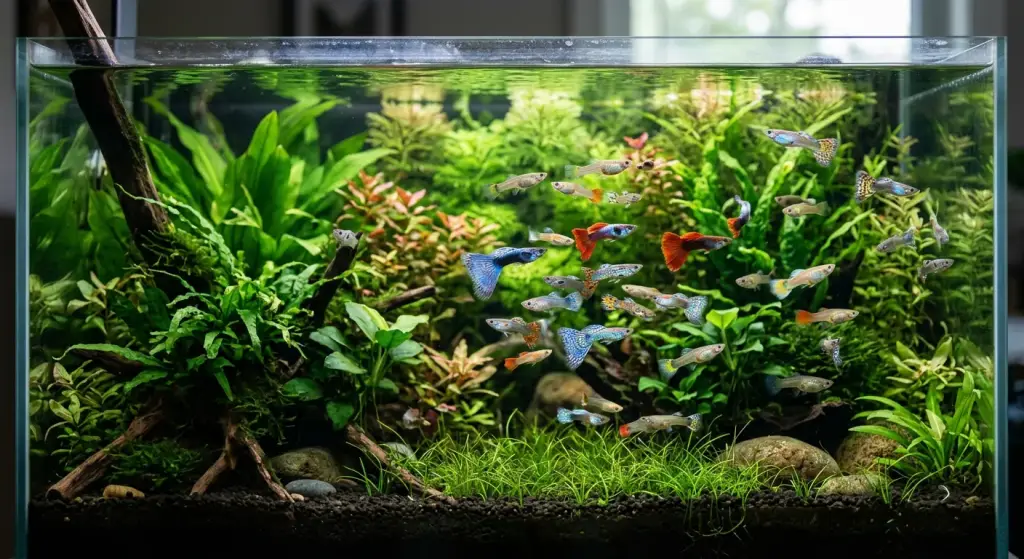
Is guppy inbreeding bad? Not always, but it carries real risks. Guppy inbreeding means breeding closely related fish, such as siblings or parents and offspring. Done carefully, breeders use it to lock in a color or pattern. Done carelessly, it can lead to weak, small or deformed fish and fewer fry. For daily care basics, start with our complete guppy care guide.
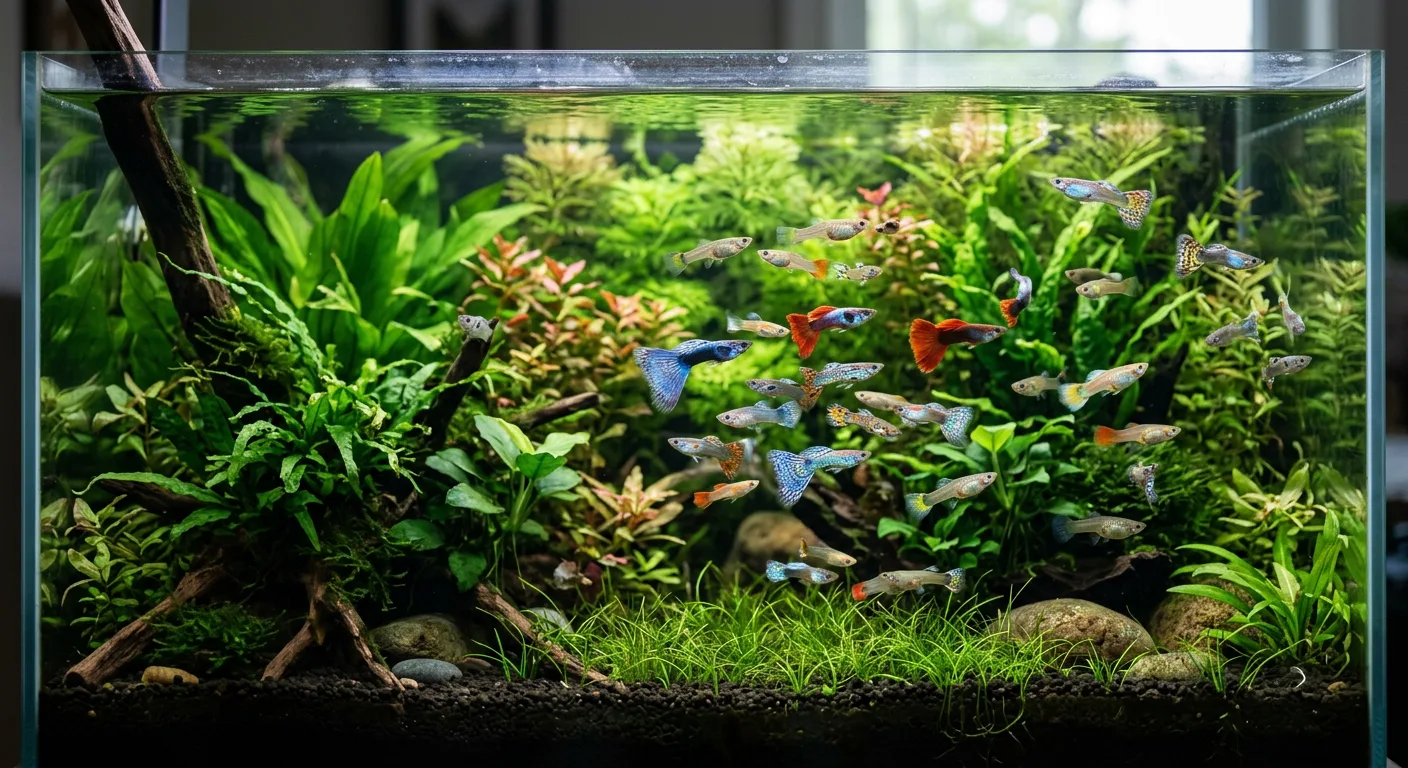
Guppies breed so easily that guppy inbreeding happens by accident in many home tanks. This guide explains what it is, what problems hobbyists commonly report, how to spot them and how to keep your line healthy. Effects vary by strain and by how many generations are involved, so treat the advice as general guidance rather than fixed rules.
What does guppy inbreeding actually mean?
Guppy inbreeding is mating between fish that share close ancestors. Because a single female can store sperm and drop fry every month or so, a small group left alone can quickly turn into a tank full of siblings, cousins and parents breeding together. Each generation that stays closed makes the fish more genetically alike.
That sameness is useful when you want a consistent look, which is why many strains are kept as defined pattern lines. It becomes a problem when nobody manages it. If you are new to how mating works, read how to breed guppies first.
Inbreeding, line breeding and outcrossing compared
| Method | What it is | Main benefit | Main risk |
|---|---|---|---|
| Inbreeding | Close relatives paired, such as siblings | Fixes traits quickly | Weak or deformed fish if unmanaged |
| Line breeding | Related fish, but chosen carefully | Keeps a look with more control | Still needs strict selection |
| Outcrossing | Unrelated fish of a similar strain | Adds fresh genes | Traits may vary for a few generations |
Signs of guppy inbreeding problems
No single sign proves inbreeding, because poor water and bad food cause similar issues. Still, when several appear together in a long-running closed colony, it is worth taking seriously:
- Smaller adults than earlier generations.
- Bent spines, short bodies or crooked fins.
- Fewer fry per drop, or more stillborn fry.
- Slow growth and weak fry that die early.
- Fish that get sick easily or seem short-lived.
- Males that stay dull or have poorly formed tails.
If your fry keep dying, also check water quality using our guide to why guppy fry die before blaming genetics.
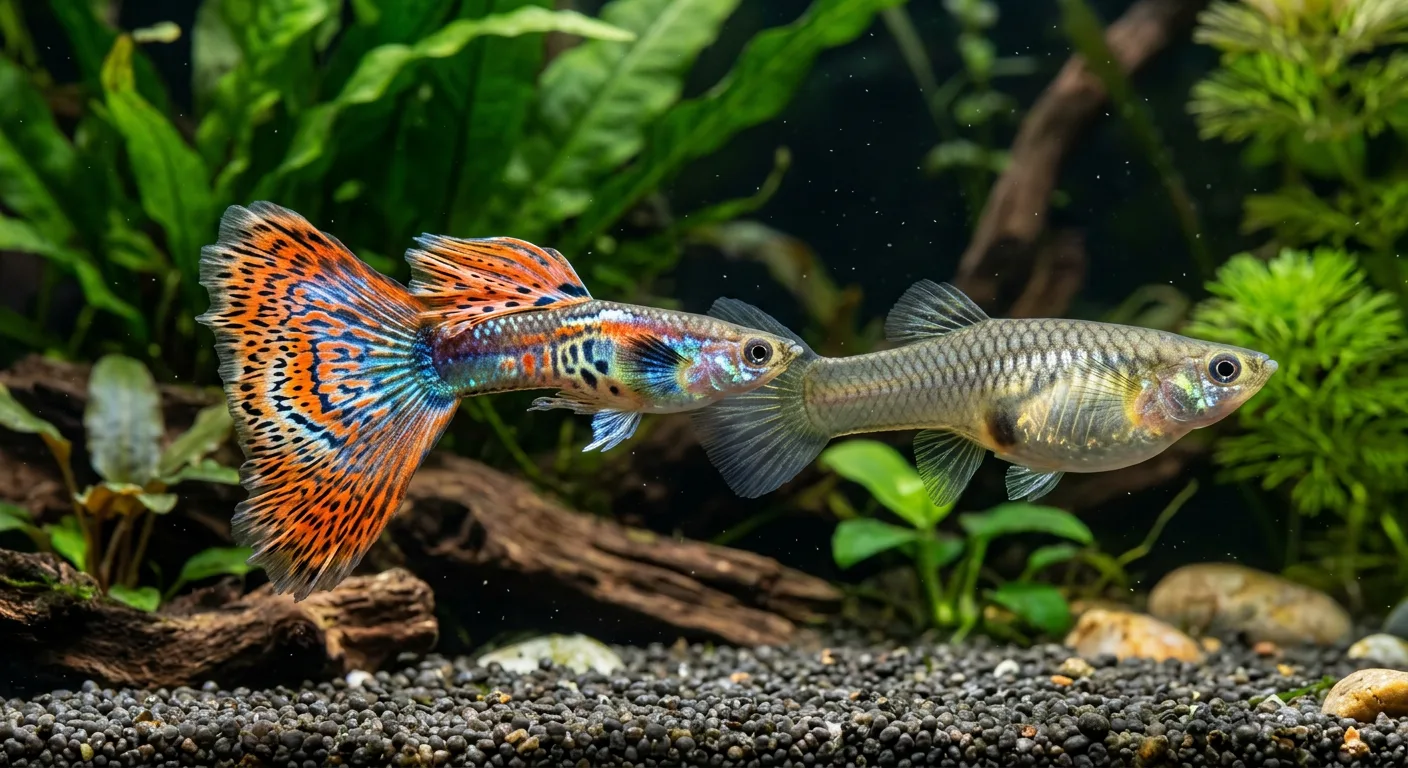
Why guppy inbreeding causes trouble
Every fish carries some harmful gene copies that stay hidden when paired with a different, healthy copy. When relatives mate, there is a higher chance both parents pass on the same harmful copy, and the problem shows up in the fry. Over several generations this can add up. The exact impact depends on the starting stock, so some lines tolerate it longer than others.
Guppy inbreeding is not automatically fatal to a colony, and many fancy strains were developed with close breeding. The key is selection: breeders keep only the strongest fish and avoid pairing weak ones.
How to avoid guppy inbreeding in a home tank
You do not need a fishroom to keep a line healthy. These habits help:
- Start with fish from more than one source or family line.
- Keep a good number of breeding fish rather than a single pair.
- Add unrelated males or females every few generations.
- Rehome or remove weak, deformed or small fish instead of breeding them.
- Do not let fry grow up and breed with their own parents unplanned.
Our male vs female guppy guide helps you separate the sexes early, and a dedicated breeding tank keeps pairings under your control.
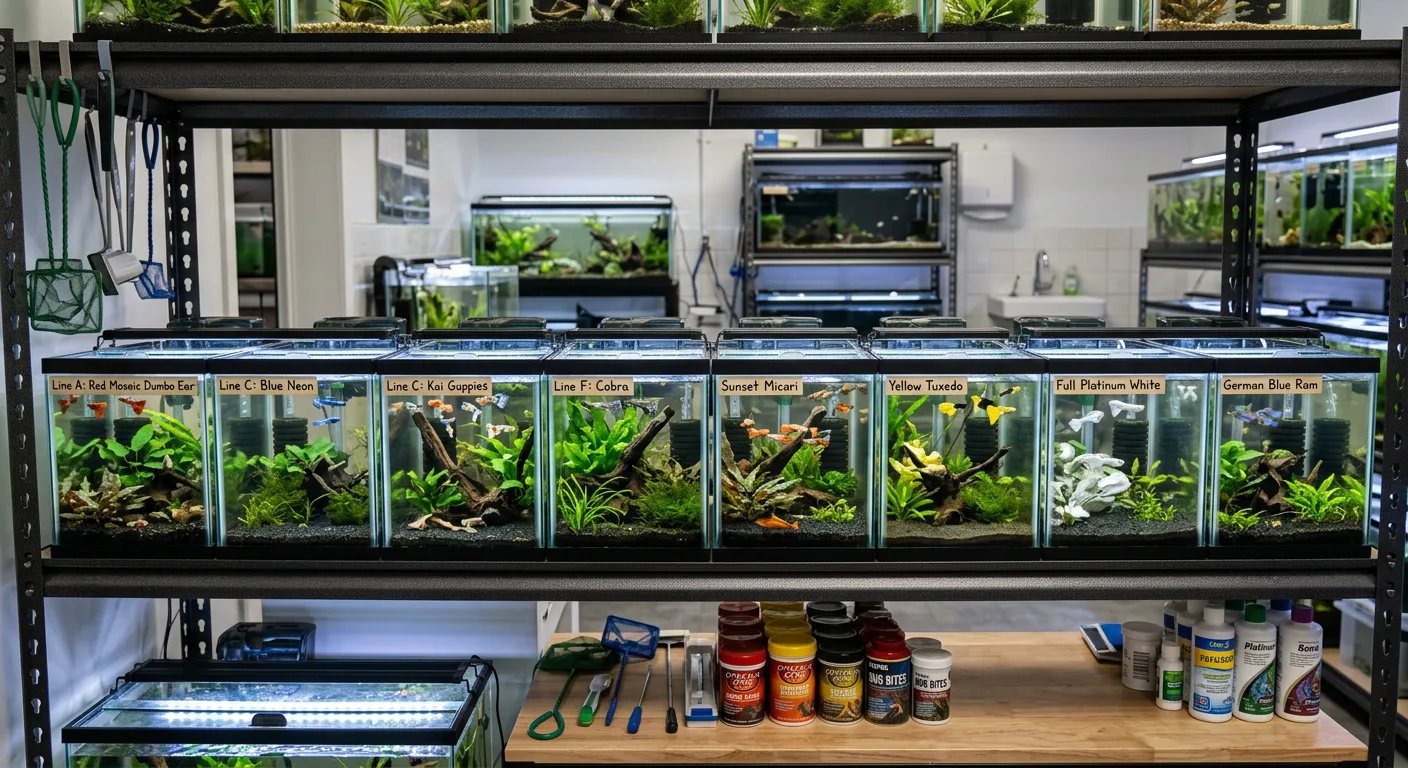
Using guppy inbreeding on purpose
Some hobbyists deliberately use guppy inbreeding to fix a trait such as a tail color. The method is simple in theory and demanding in practice: pair related fish with the trait you want, raise a lot of fry, then keep only the best few and discard the rest. It needs space, time and the willingness to cull, which means removing fish that do not meet your standard.
| Step | What to do | Why |
|---|---|---|
| 1 | Choose strong, healthy parents | Starts with good genes |
| 2 | Raise many fry per round | Gives you more to select from |
| 3 | Keep only the best fish | Prevents weak traits spreading |
| 4 | Outcross when quality drops | Restores vigor |
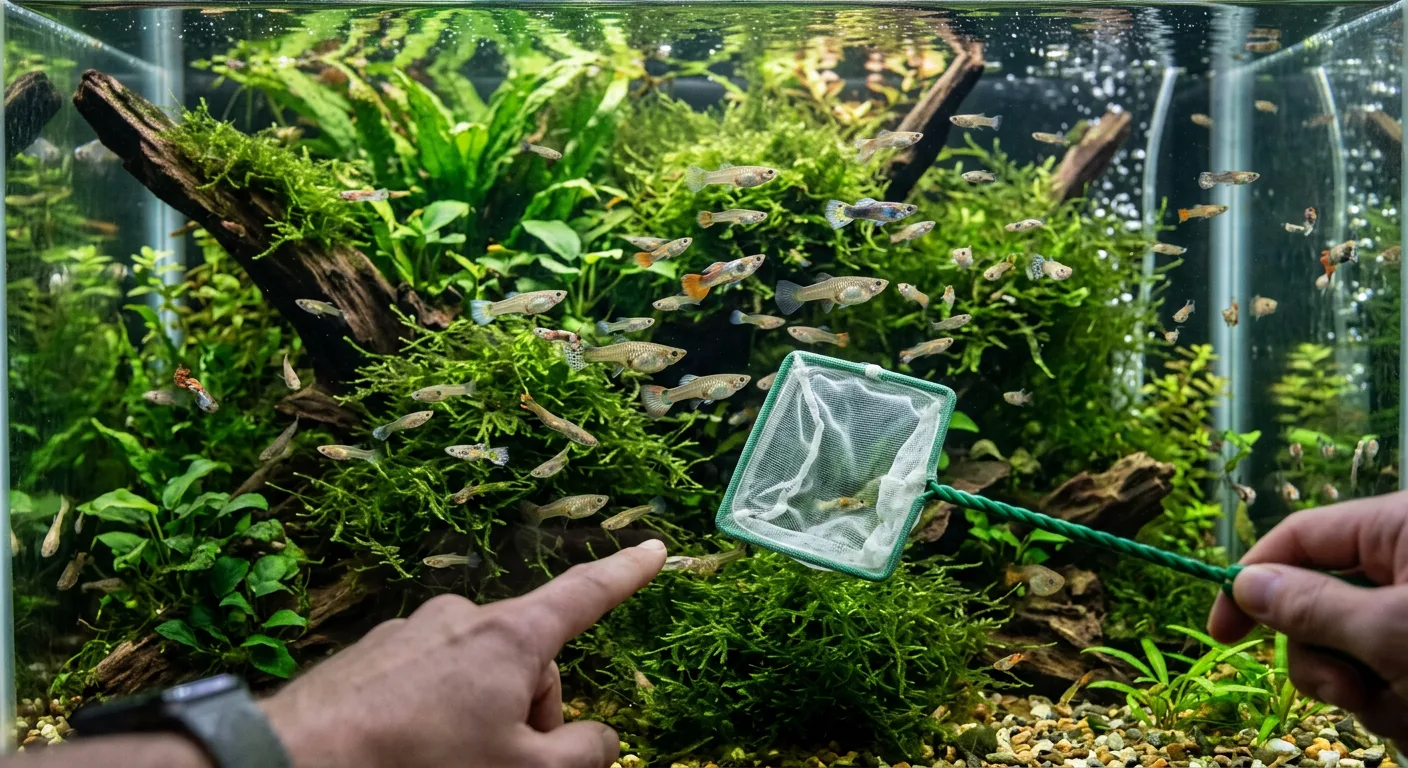
How inbreeding affects fry and long-term health
Hobbyists often notice the first effects in the fry rather than the adults. Drops get smaller, a few fry are born deformed, and survivors grow unevenly. Over time the colony may feel “tired”: fish look fine but live shorter lives or fall ill more easily when water changes slightly. These are general observations from breeders, not a guaranteed outcome, and good husbandry can hide the issue for a while.
Because fry from a closed colony look alike, it is easy to miss slow decline. Keeping simple notes helps: write down the date of each drop, how many fry you get, how many reach adulthood and any deformities you see. After a few rounds the numbers will show whether the line is holding steady or slipping. Compare with our how many babies guppies have article to see what a normal drop can look like.
Can guppies from the same pack be related?
Yes. Fish sold together as a pack, pair or trio are often from the same family, so they may already be close relatives. That is fine for a first round, but plan ahead. If you want to keep breeding for many generations, buy a second group from a different source and keep both sets of fry separate until you decide how to cross them. This single habit prevents most guppy inbreeding trouble in home tanks.
A simple rotation plan
Keep two small tanks, A and B, each with its own line. Breed within each tank for one or two rounds, then swap a male between them. You get fresh genes without losing the look of either line. Label tanks and note which fish moved so you can trace results later. Even a basic plan like this beats leaving everything in one crowded tank where every fish can mate with every other fish.
Tank care still matters
Good water cannot erase genetics, but poor water makes every weakness worse. Keep temperature steady, feed varied foods in small portions and test regularly. Our guppy water parameters guide lists the values to watch. Healthy conditions let you judge your fish fairly, because problems you see are less likely to come from the tank.
What to do if your colony is already inbred
Do not panic. Add unrelated fish of a similar strain, ideally from a different source, and let them breed with your stock. Raise fry with good food and clean water so genetics are not the only weight on their health. Our raising guppy fry article covers feeding and tank care.
You can browse unrelated stock in our breeder trios category to refresh a line. Keep this guppy care resource handy, and read about the species on Wikipedia if you want background on wild populations.
FAQ
Is guppy inbreeding always harmful?
No. Controlled close breeding with strict selection is used to fix traits. Harm appears when weak fish keep breeding and no fresh genes are added.
How many generations of guppy inbreeding are safe?
There is no fixed number. It depends on the stock and your selection, so watch fish size, fry numbers and health, and outcross when quality slips.
Can brother and sister guppies breed?
Yes, they can and often do in shared tanks. One or two rounds is not usually disastrous, but repeated sibling pairing without selection raises the risk.
How do I know if my guppies are inbred?
Look for a pattern over time: shrinking size, deformities, fewer fry and early deaths. Rule out water problems first, since they cause similar signs.
How do I fix guppy inbreeding?
Add unrelated fish of a similar strain, remove weak individuals from breeding and keep water and feeding consistent so fry can develop well.
Behind the care guides
Care begins with steady systems
Our guppy guides focus on practical routines: keep water stable, observe fish closely and allow for natural variation.

Care systems
Steady water, thoughtful care
Gentle filtration and regular observation support healthy aquarium routines.

Natural variation
Every guppy is different
Color, size and fin shape vary with strain, age and each individual fish.
Editorial illustrations for context; they do not depict HiGuppy's exact facility or current fish stock.