The HiGuppy Journal
Can Guppies Eat Bloodworms? Safe Types, Portions and Tips
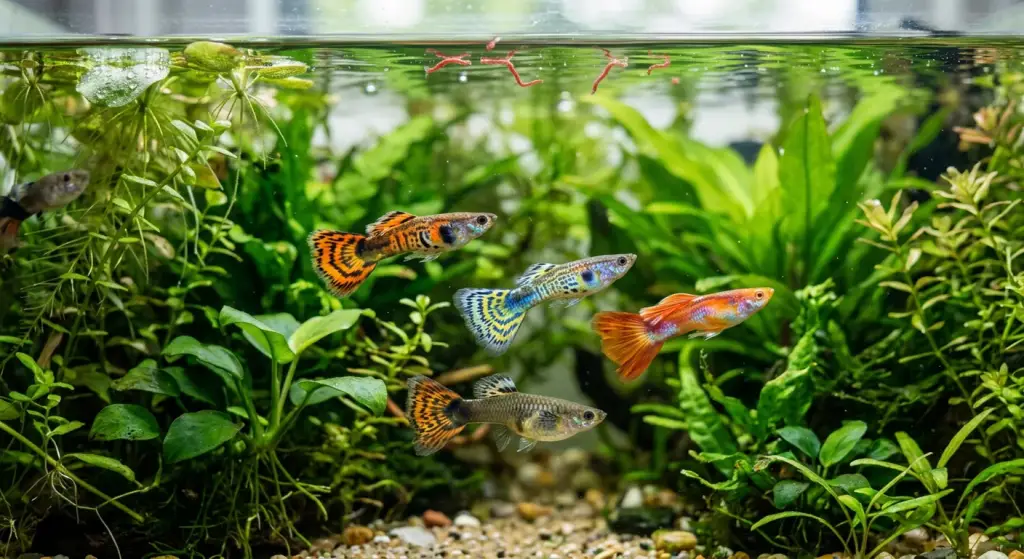
Can guppies eat bloodworms? Yes. Guppies can eat bloodworms, and most take them eagerly, but they work best as an occasional treat rather than a daily staple. Offer a small pinch once or twice a week alongside a quality flake or micro pellet. Our guppy care guide covers the full feeding routine.
Below you will see which forms of bloodworms are safe, how much to feed, and what to watch for so treats never harm your fish.
Can guppies eat bloodworms safely?
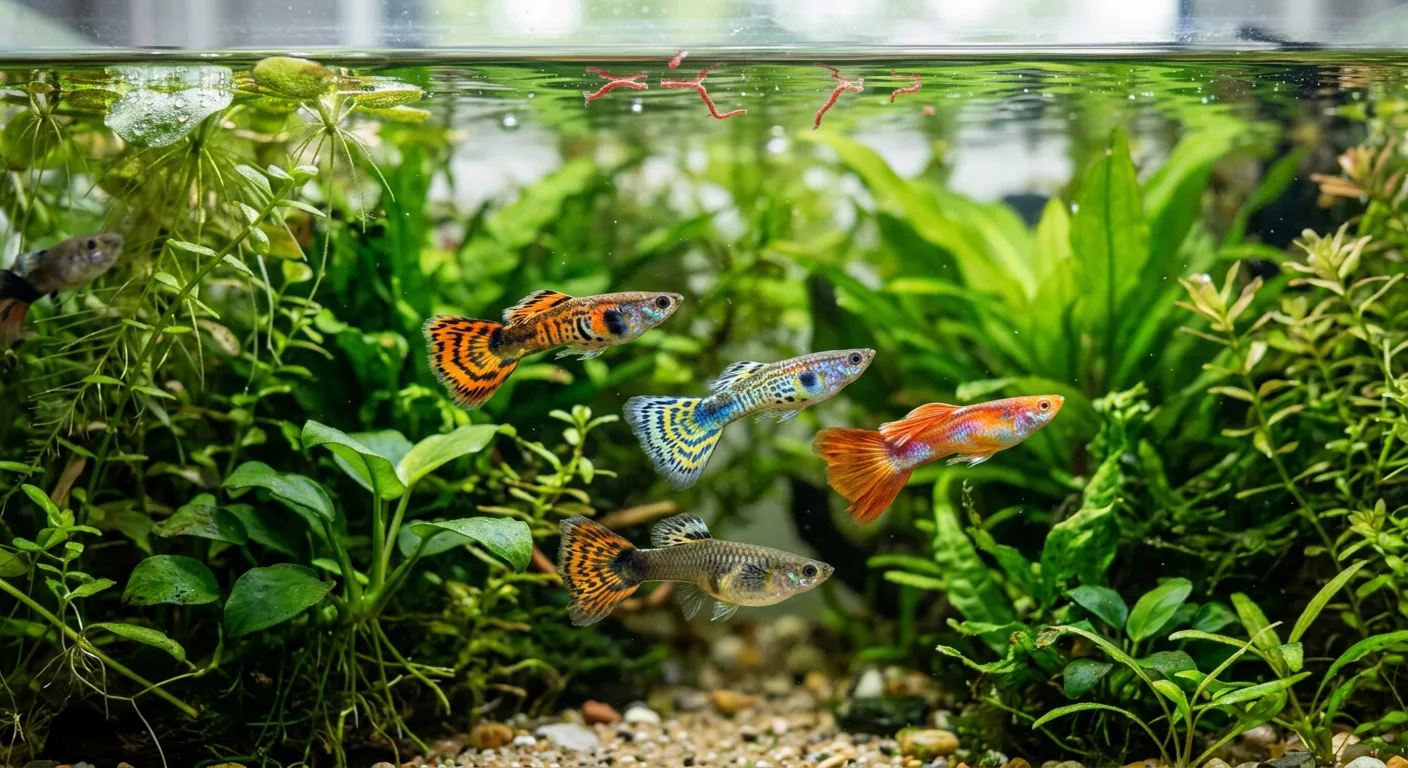
When keepers ask can guppies eat bloodworms, the short answer is yes. Bloodworms are the larvae of midge flies and are a protein-rich food that many small fish enjoy. Guppies are omnivores, so they do best with a mix of protein and plant matter rather than meat alone.
The key is moderation. Bloodworms are rich, and too many can lead to bloating or fouled water. If a guppy looks swollen, see our guide to the bloated guppy.
Types of bloodworms for guppies
| Form | Pros | Cautions |
|---|---|---|
| Frozen | Close to natural, usually well accepted | Thaw first, rinse, feed small portions |
| Freeze-dried | Easy to store, convenient | Soak briefly so it does not swell inside the fish |
| Live | Very attractive to fish | Source matters, since live foods can carry pathogens if not from a clean supplier |
| Dried pellets with bloodworm | Balanced as part of a formula | Check the ingredient list |
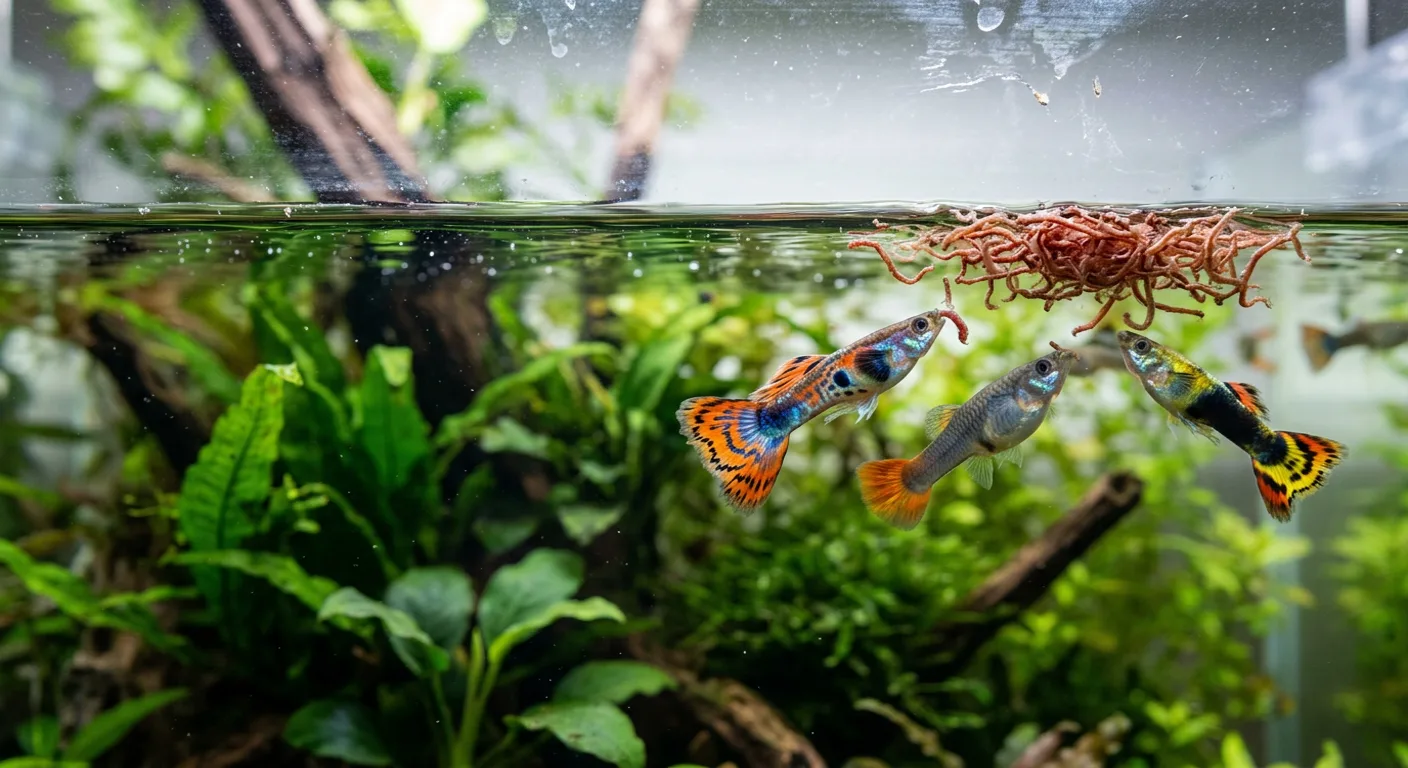
How often to feed bloodworms to guppies
A reasonable approach is one to two small treat feedings per week. Give only what the fish finish in about a minute or two, then remove leftovers. Fry and small guppies need very tiny pieces, so crush or choose appropriately sized food.
For the basic schedule, read how often to feed guppies, and avoid the problems described in overfeeding guppies.
Prepare frozen or freeze-dried bloodworms
- Thaw frozen cubes in a small cup of tank water.
- Soak freeze-dried pieces for a minute before feeding.
- Use a small pinch, not a whole cube, for a small group.
- Remove uneaten food after a few minutes.
Benefits and risks of bloodworms
Bloodworms add variety and protein, which many keepers use to encourage activity and condition. Variety also makes feeding more interesting for the fish.
The risks are mostly about quantity. Too much rich food can cause digestive trouble, and leftovers rot quickly in warm water. Never rely on bloodworms alone, because a varied diet is generally healthier. For color-focused diets, see best food for guppy color growth.
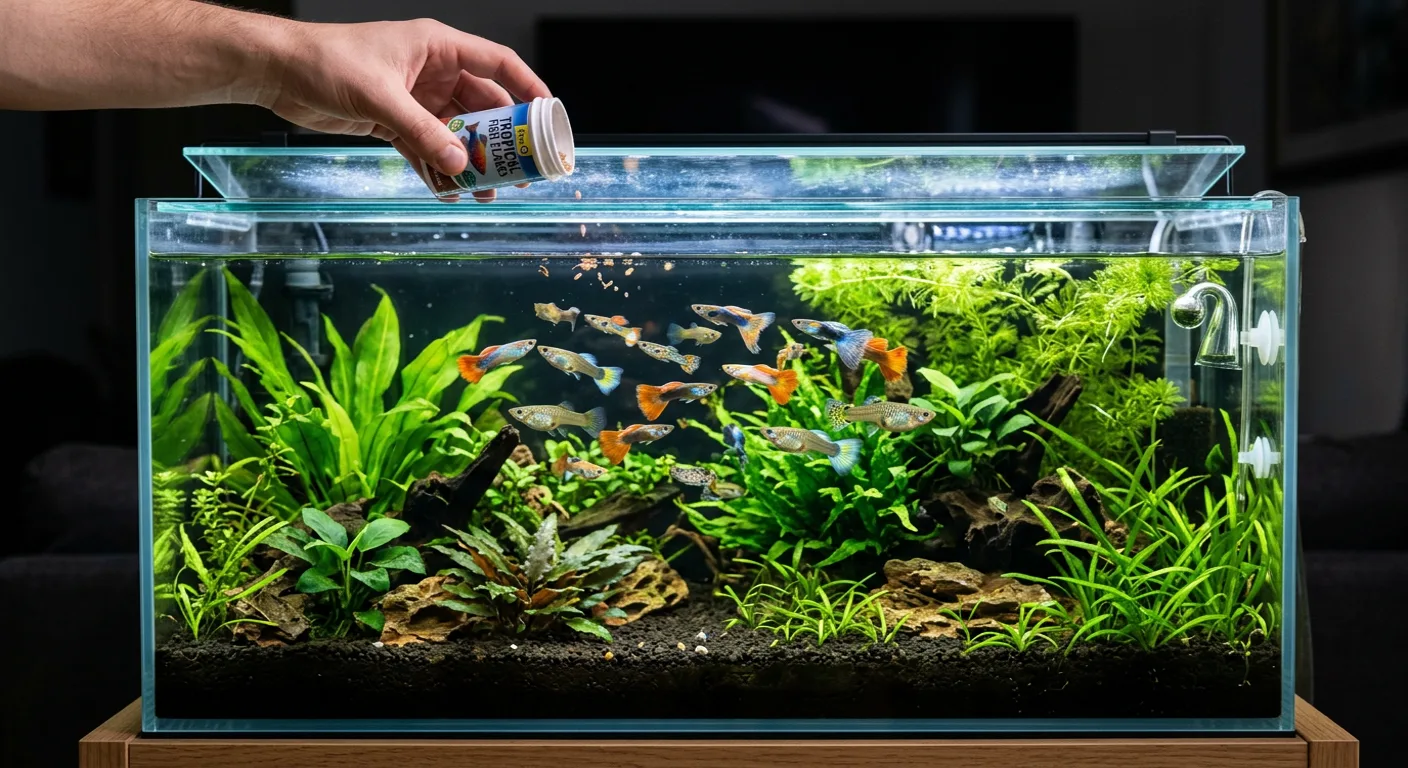
A simple weekly feeding plan
| Day | Food |
|---|---|
| Mon, Wed, Fri, Sun | Quality flakes or micro pellets |
| Tue | Small pinch of bloodworms |
| Thu | Vegetable-based or spirulina food |
| Sat | Flakes, or a short fast day if the fish look full |
Adjust to your group size and watch their bellies. Healthy guppies look rounded but never swollen.
Why guppies like bloodworms
In the wild, guppies feed on small insects, larvae, algae and other tiny organisms near the surface and mid-water. Bloodworms resemble the kind of live prey their instincts respond to, which is why even picky fish often rush toward them. That strong response is useful for keepers: a new or shy guppy that ignores flakes will often start eating once it sees a treat, and a good appetite is one of the easiest signs of health to watch.
It also explains why overfeeding is so easy. Fish that look hungry are not always hungry, and guppies will keep eating whatever is offered. You are the one who controls the portion, so measure by what they finish quickly, not by how eagerly they beg.
How to feed bloodworms step by step
- Start with a small group feeding of regular food so the strongest fish do not take everything.
- Prepare the bloodworms as described above, making sure frozen cubes are fully thawed and freeze-dried pieces are softened.
- Drop a tiny amount near the surface or use a small feeding spoon so it spreads out.
- Watch for one to two minutes. If everything vanishes quickly, you can add a very small second pinch.
- Net out or siphon anything left over before it decays.
- Skip the next regular meal portion if the fish look very full.
If you keep males and females together, check that smaller or more timid fish are getting a share. A balanced group ratio helps reduce chasing at feeding time, as explained in male to female guppy ratio.
Signs you are feeding too much
- Uneaten food sits on the substrate after a few minutes.
- The water turns cloudy or smells off soon after feedings.
- Guppies have swollen bellies or stringy waste trailing behind them.
- Ammonia or nitrite readings climb after treat days.
If you notice any of these, cut portions, do a partial water change and return to simple flakes for a few days. Cloudy water has several causes, which we cover in cloudy guppy tank water.
Other treats to rotate with bloodworms
| Treat | Role in the diet |
|---|---|
| Brine shrimp | Protein-rich treat, popular with most guppies |
| Daphnia | Gentle, often used to add variety |
| Spirulina flakes | Plant-based support for a balanced diet |
| Blanched vegetables | Occasional fiber, see our vegetable feeding guide |
Rotating foods is simpler than hunting for one perfect product. If you want to try plant foods, read can guppies eat vegetables for easy options.
Common mistakes with bloodworms
The first mistake is feeding a whole frozen cube to a small tank. Most of it will go uneaten and pollute the water. The second is dropping dry freeze-dried pieces straight in, which can swell after being eaten. The third is using bloodworms as the only food because the fish love them. Guppies thrive on variety, so treat bloodworms like dessert and keep the base diet balanced.
Water temperature and tank size also matter. In a small or warm tank, leftover food breaks down faster, so keep portions even smaller and test the water regularly. A tidy routine of small meals, weekly partial water changes and a quick look at every fish at feeding time prevents most diet-related problems before they start.
Keep your guppies healthy and well fed
Good feeding starts with healthy stock. Browse our live male guppies and set up the tank before they arrive. For general background on the species, see Guppy on Wikipedia. When in doubt, revisit the complete guppy care resource.
FAQ
Can guppies eat bloodworms every day?
It is better not to. Bloodworms are rich, so most keepers feed them as a treat once or twice a week and use a balanced flake or pellet for daily meals.
Can guppy fry eat bloodworms?
Only in very small pieces. Fry have tiny mouths, so crush the food finely or use foods made for fry, and feed sparingly.
Are frozen or freeze-dried bloodworms better for guppies?
Both work. Frozen is closer to natural and often well accepted, while freeze-dried is convenient if you soak it first. Choose whichever you can feed in small, fresh portions.
Can bloodworms make guppies sick?
Overfeeding can cause bloating or poor water quality. Feed small amounts, remove leftovers, and buy from a reputable supplier, especially for live food.
What else can guppies eat besides bloodworms?
Guppies do well on quality flakes or micro pellets, plus occasional treats such as brine shrimp, daphnia and soft vegetables. Variety keeps the diet balanced.
Behind the care guides
Care begins with steady systems
Our guppy guides focus on practical routines: keep water stable, observe fish closely and allow for natural variation.

Care systems
Steady water, thoughtful care
Gentle filtration and regular observation support healthy aquarium routines.

Natural variation
Every guppy is different
Color, size and fin shape vary with strain, age and each individual fish.
Editorial illustrations for context; they do not depict HiGuppy's exact facility or current fish stock.