The HiGuppy Journal
How to Buy Wholesale Guppies: A 6-Step Buyer’s Checklist
How to buy wholesale guppies? To buy wholesale guppies well, decide your strain and quantity first, ask the seller for a clear grade and count, confirm shipping method and live-arrival terms in writing, and budget a quarantine tank for the whole lot. Start with one test lot before you scale up.
Whether you run a shop, breed for sale or just want a big colony, buying in bulk saves money only when the fish arrive healthy. This guide to how to buy wholesale guppies builds on our guppy care guide and walks through sourcing, grading, shipping and the first weeks after arrival.
What counts as a wholesale guppy order?
There is no single legal definition. In practice a wholesale guppy order is a larger lot of the same fish, sold at a lower price per fish than single retail purchases. Lots are usually counted in pairs, trios or groups of males, females or mixed juveniles. Always ask each seller exactly what their lot contains.
Wholesale lots are popular with:
- Local fish stores that restock popular colours regularly.
- Hobby breeders building a new line or refreshing genetics.
- Aquascapers and clubs that need many matching fish for several tanks.
Step 1: Decide the strain, sex ratio and size
Know what you want before you message anyone. A clear spec avoids disappointment and lets you compare sellers fairly. Decide:
- Strain or colour: one strain or several. Read same-strain vs mixed-strain wholesale orders to pick.
- Sex mix: males only for colour, or pairs and trios for breeding.
- Age: juveniles are cheaper and ship well, adults show full colour sooner.
- Quantity: only what your tanks can hold. See how many guppies per gallon.
Step 2: Compare sellers when you buy wholesale guppies
Price matters, but it is only one of several factors when you learn how to buy wholesale guppies. Use this table to compare each seller side by side.
| What to check | Good sign | Red flag |
|---|---|---|
| Photos | Recent photos of the actual fish | Only stock or copied pictures |
| Grading | Clear description of size and quality | Vague “mixed” with no detail |
| Packing | Described bagging, insulation and heat or cold packs | No details on packing |
| Live arrival terms | Written policy and claim window | “No refunds” with no explanation |
| Communication | Fast, specific answers | Slow or evasive replies |
You can browse our wholesale guppy lots to see how a lot is described, and compare it with any other seller you are considering.
Step 3: Check quality before you pay
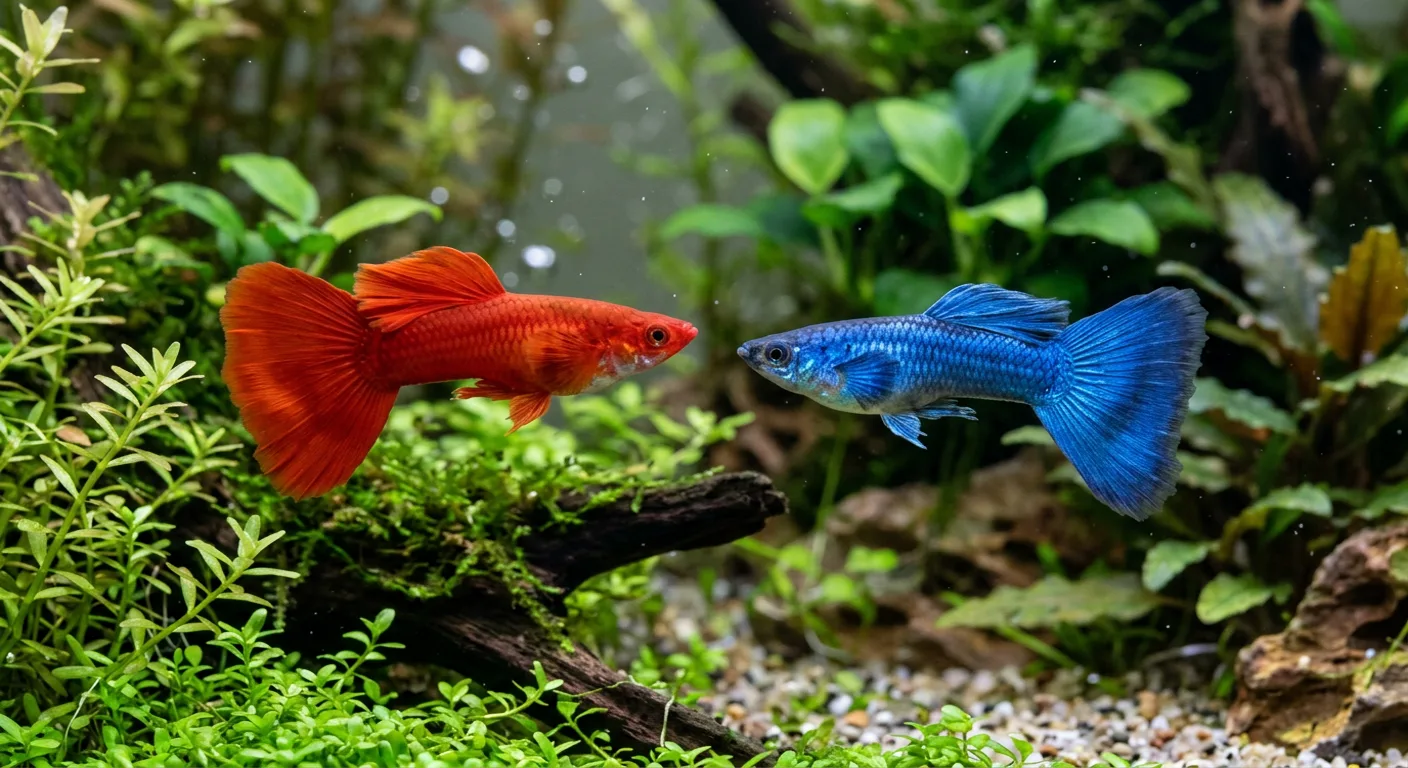
Ask for a short video or fresh photos of the exact lot. Look for fish that swim actively, hold their fins open and show even colour. Our guide on how to choose healthy guppy fish online covers the signs in detail.
Signs of a healthy lot
- Fins open, no clamping, no ragged edges.
- Smooth bodies without white spots, fuzz or swollen bellies.
- Eating readily and schooling rather than hiding.
Signs to walk away
- Many fish gasping at the surface or sitting on the bottom.
- Visible white spots, cottony patches or pinecone scales (see guppy dropsy).
- A seller who will not show current stock.
Step 4: Understand shipping before you order
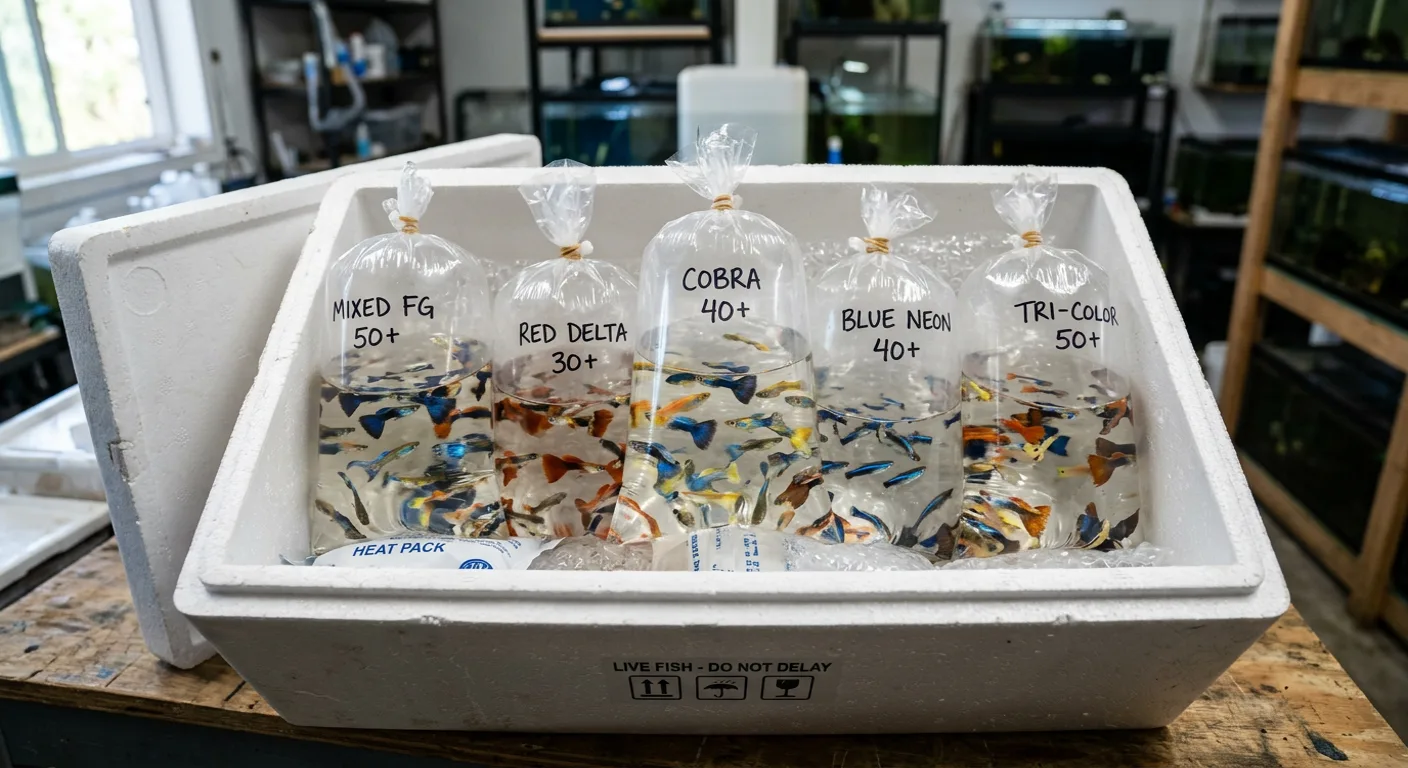
Live fish are the riskiest part of a bulk order. Ask how fish are packed, how long transit usually takes and what happens if a flight is delayed. Our wholesale guppy shipping guide explains packing, transit time and seasons in more depth.
Before paying, confirm in writing:
- The shipping method and expected transit time.
- Whether heat or cold packs are used for your season.
- The live-arrival policy and how long you have to report problems.
- Who is responsible for delays or customs paperwork.
Step 5: Prepare tanks before the box arrives
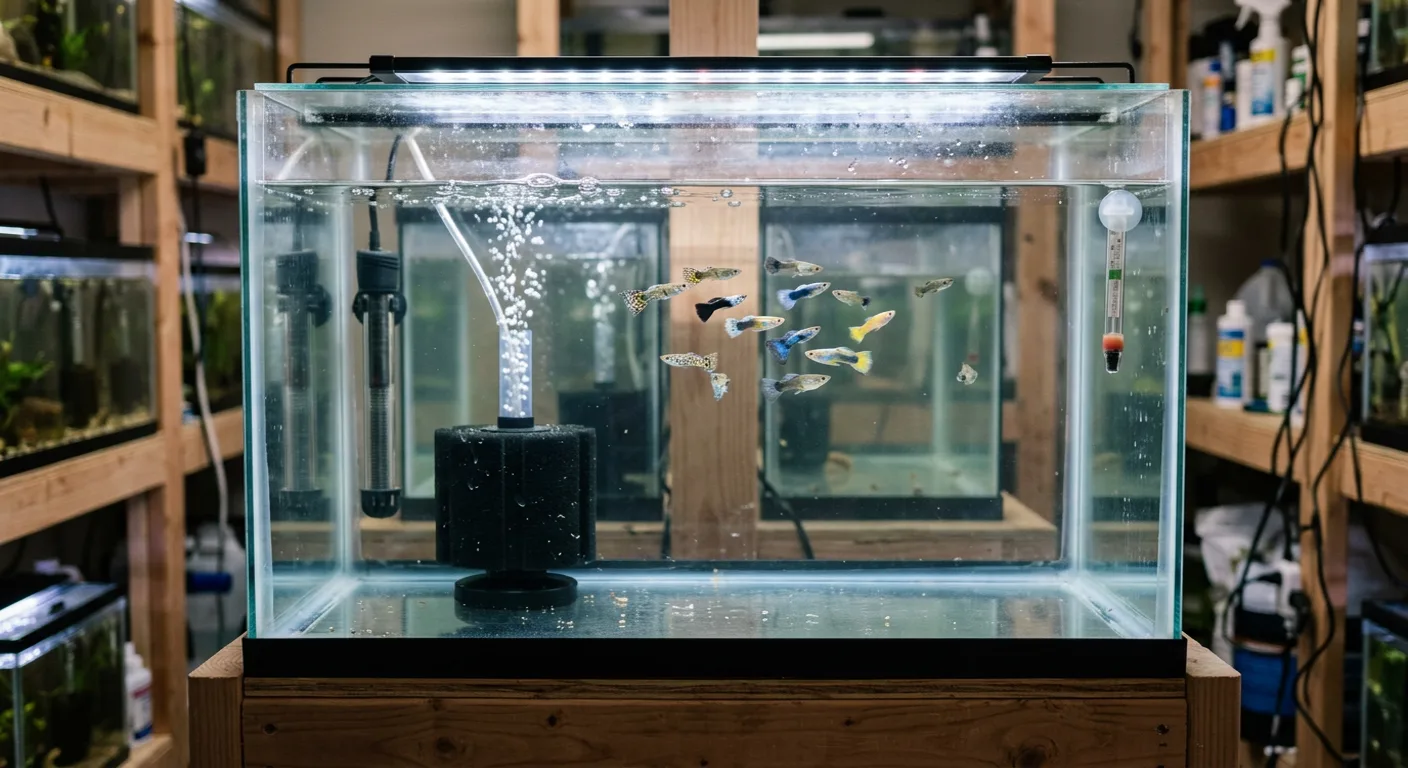
A cycled, heated quarantine tank should be ready before delivery. Large lots add a lot of waste fast, so set up a spare tank with a gentle sponge filter and keep extra dechlorinated water ready. If you are unsure how, follow our tank cycling checklist.
| Item | Why you need it |
|---|---|
| Quarantine tank | Keeps new fish apart from existing stock |
| Sponge filter | Gentle flow and biological filtration |
| Heater and thermometer | Steady temperature after transit |
| Dechlorinator | Safe water for the first changes |
| Test kit | Check ammonia and nitrite in the first days |
Step 6: Acclimate and quarantine the whole lot
When the box arrives, open it in dim light, float the bags and acclimate slowly. Our guide on what to do when guppies arrive has the full routine. Then keep the group separate and watch them. The steps in how to quarantine new guppy fish apply equally to a bulk lot.
Record arrival date, count and any losses. This log helps you compare sellers and report problems inside the claim window.
How much should you budget?
Prices change by strain, size and season, so avoid fixed numbers and work from your own quotes. When you plan how to buy wholesale guppies, add up every cost, not just the fish:
- Fish price for the full lot, including any extra fish offered to cover transit losses (ask if this applies).
- Shipping and packing, which can be a large share of a small order.
- Quarantine setup: tank, filter, heater and medication kept on hand.
- Food and water for a bigger group of fish over the first month.
Divide the total by the number of healthy fish that survive quarantine. That figure, not the sticker price, tells you which seller is actually cheaper. Smart buyers who know how to buy wholesale guppies treat the first order as a trial and rate the seller on arrival condition, accuracy of the description and how well problems were handled.
How often should you reorder?
If you resell or breed, reorder small and often instead of one huge lot. Fresh genetics every few months keep a colony vigorous, and smaller lots are easier to quarantine properly. Match the order size to the tank space you actually have free that week.
Common mistakes when buying wholesale guppies
- Ordering more fish than your tanks can safely hold.
- Choosing only on price and ignoring grading and packing.
- Skipping quarantine because the fish “look fine”.
- Not reading the live-arrival terms before paying.
- Ordering a huge first lot instead of a small test order.
Guppies (Poecilia reticulata) are hardy, but bulk shipping adds stress; see the general overview of the guppy on Wikipedia for background on the species. For routine husbandry once the fish settle in, return to our complete guppy care resource.
FAQ
How many guppies are in a wholesale lot?
It varies by seller. Lots can be counted in pairs, trios or groups of ten or more fish. Always confirm the exact count, sex ratio and size in writing before you pay.
Is it cheaper to buy guppies wholesale?
Usually the price per fish is lower in bulk, but shipping, losses and quarantine costs can reduce the saving. Compare the total landed cost, not only the per-fish price.
Should I buy wholesale guppies as juveniles or adults?
Juveniles are generally cheaper and ship well, but take weeks to show full colour. Adults show their quality immediately, which helps if you need to judge the strain.
Do I need to quarantine wholesale guppies?
Yes. Even healthy-looking fish can carry parasites or disease after shipping. A separate quarantine tank protects your existing fish and gives time to spot problems early.
What should I do if some guppies arrive dead?
Photograph the bags and fish straight away, keep the packaging and contact the seller inside their claim window. A clear written policy before ordering makes this much easier.
Behind the care guides
Care begins with steady systems
Our guppy guides focus on practical routines: keep water stable, observe fish closely and allow for natural variation.

Care systems
Steady water, thoughtful care
Gentle filtration and regular observation support healthy aquarium routines.

Natural variation
Every guppy is different
Color, size and fin shape vary with strain, age and each individual fish.
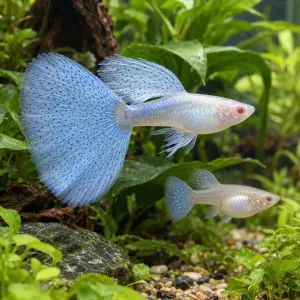
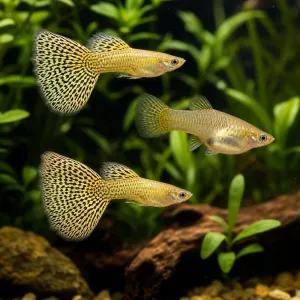
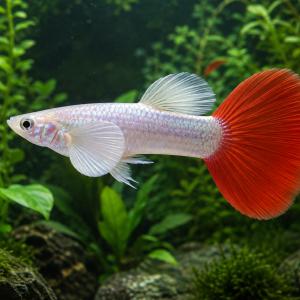
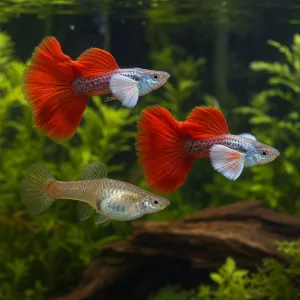
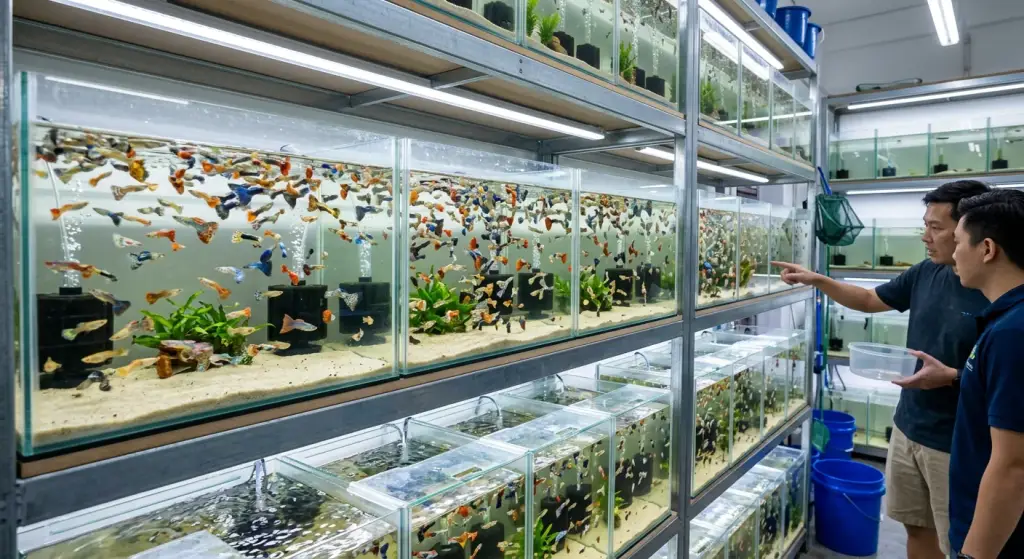
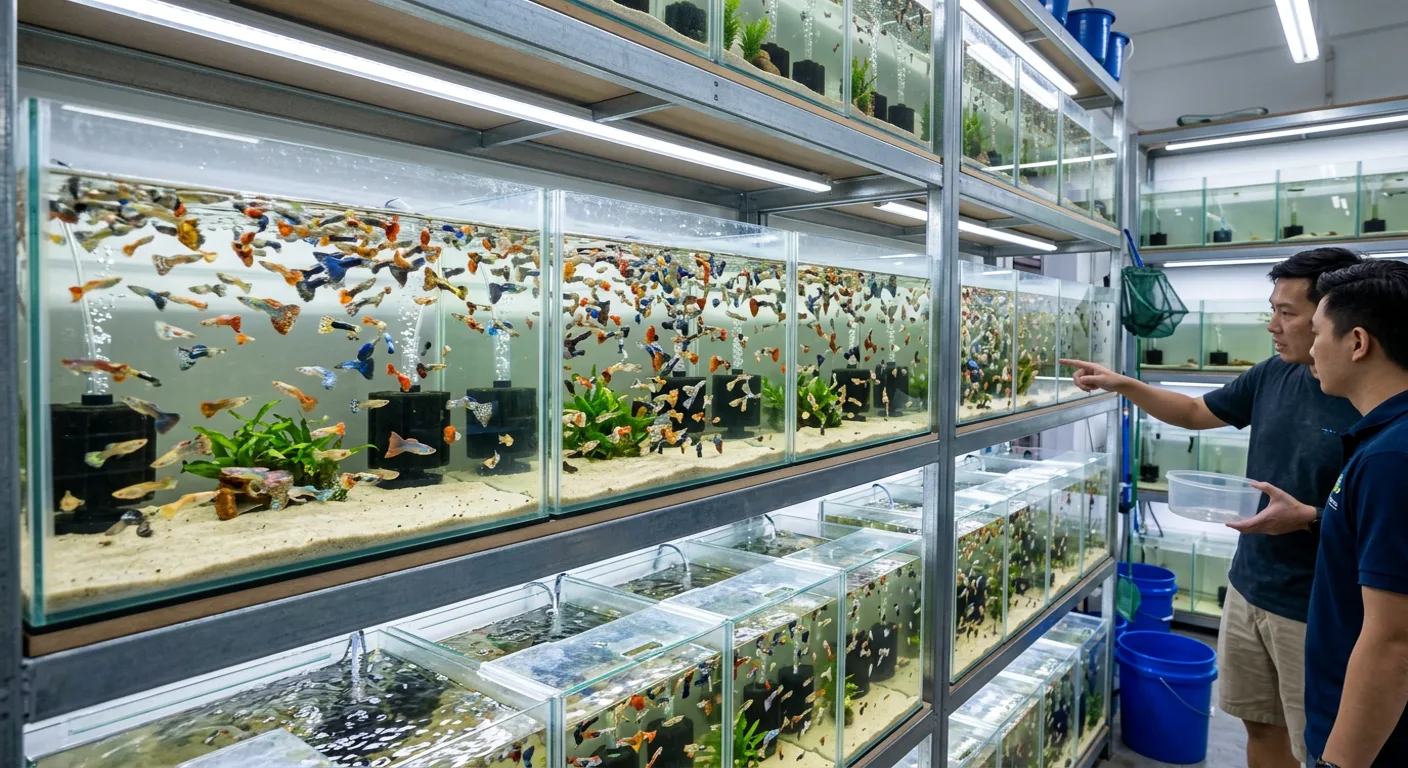
Editorial illustrations for context; they do not depict HiGuppy's exact facility or current fish stock.