The HiGuppy Journal
Same-Strain vs Mixed-Strain Wholesale Guppy Orders: Which Is Better?
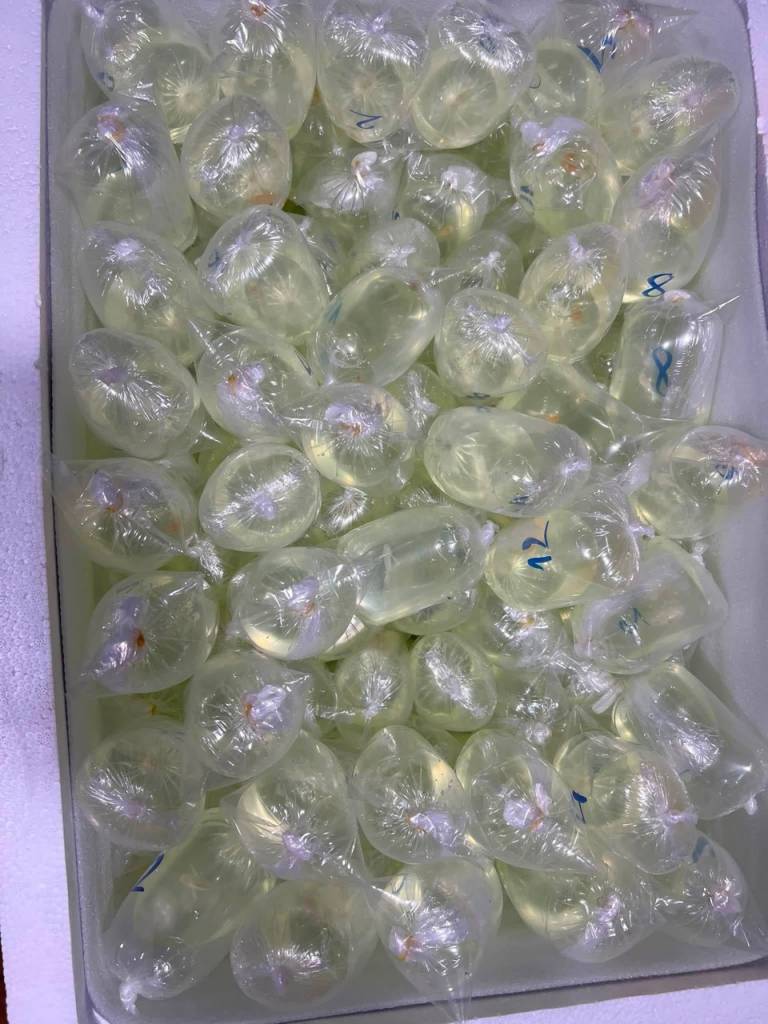
Quick answer: For same-strain vs mixed-strain guppy orders, match the lot to your goal. Choose a same-strain wholesale guppy lot when consistent labeling or a line-focused project matters. Choose a mixed-strain lot when an agreed assortment fits your retail or display plan. In either case, confirm counts, fish format, permitted substitutions, the professional transshipper, receiving arrangements and written terms before payment. A strain name alone is not proof of breeding history.
Comparing same-strain vs mixed-strain wholesale guppy orders affects more than color variety. It changes how the lot is selected, labeled, received, quarantined, displayed, marketed, and tracked after arrival. This guide explains the practical differences so aquarium stores, breeders, resellers, clubs, and larger projects can request a more accurate quote.
For current availability, order-specific minimums, preparation estimates, shipping options, and written commercial terms, use the HiGuppy Wholesale Guppies & Bulk Live Fish Orders page.
Same-strain vs mixed-strain wholesale guppy orders
| Decision factor | Same-strain lot | Mixed-strain lot |
|---|---|---|
| Primary goal | Consistency, line projects, or repeatable retail presentation | Visual variety, broader selection, or multi-tank displays |
| Lot definition | One named strain with written size, sex, and quantity requirements | Several named strains or an agreed trait range with defined proportions |
| Availability | Depends on having enough ready fish from one line | Can use several available lines, but the mix still needs approval |
| Receiving plan | Keep the line separated from other arrivals | Prepare labels and tanks for each strain or assortment group |
| Substitutions | Usually more restrictive | May allow alternatives within agreed limits |
| Best fit | Breeders, specialty stores, and line-focused buyers | General retailers, displays, clubs, and variety-focused projects |
What is a same-strain wholesale guppy order?
A same-strain order is a wholesale lot built around one named guppy strain or one clearly defined line. The buyer may also specify the desired count, sex ratio, approximate size or life stage, acceptable visual range, and whether the fish are intended for retail, breeding, or display.
“Same strain” does not mean every fish will be visually identical. Guppies are living animals, and natural variation can appear in color intensity, pattern placement, fin shape, body size, and maturity. A useful quote therefore defines the expected range rather than promising cloned appearance.
Advantages of a same-strain lot
- Easier to present as one named strain in a specialty retail section
- Better suited to buyers developing or expanding a breeding line
- Simpler labeling when all fish belong to one agreed strain
- More useful when the buyer needs a specific color or pattern direction
- Clearer expectations when substitutions are not acceptable
Limitations of a same-strain lot
- A large count may not be available from one ready line at the requested time.
- Sex ratio and size requirements can further reduce the available lot.
- Strict grading or narrow visual requirements may require more preparation time.
- A buyer may need to accept a smaller quantity, a later target window, or a different approved strain.
What is a mixed-strain wholesale guppy order?
A mixed-strain order combines multiple named strains or several guppy types within a written assortment plan. The assortment may be organized by exact strain counts, approximate proportions, color families, fin traits, sex format, or another agreed range.
The word “assorted” is too vague by itself. It should be clarified before the quote is accepted. For example, an assortment could mean four named strains in similar quantities, a seller-selected mix of approved colors, or a mixed-male display lot with exclusions for unwanted traits.
Advantages of a mixed-strain lot
- Creates broader visual variety for a retail or display environment
- Can make use of several available lines rather than depending on one large strain lot
- Allows buyers to test customer interest across multiple colors and patterns
- Can support multi-tank projects when each group is labeled and separated
- May provide more flexibility when acceptable alternatives are defined
Limitations of a mixed-strain lot
- The buyer needs a stronger labeling and receiving system.
- Mixing fish immediately can make strain tracking and health observation difficult.
- The final proportions depend on ready inventory unless exact counts are confirmed.
- A mixed lot should not be marketed later as one pure breeding line.
- Unclear substitution rules can create mismatched expectations.
Which wholesale guppy lot is better for your goal?
For aquarium stores
A same-strain lot works well when the store wants a focused display, a premium named line, or a repeatable product category. A mixed-strain lot may be more useful when customers respond to variety and the store has enough quarantine and display space to keep groups organized.
For breeders
Breeders usually benefit from a clearly defined same-strain request, especially when line identity, sex ratio, or specific traits matter. The buyer should still ask about expected variation and should not assume that visual similarity alone proves genetic uniformity. Review the pairs, trios, and breeding-group guide when choosing a fish format.
For resellers and general assortments
A mixed-strain lot can provide a broader catalog without requiring a high count from each individual line. The written request should state whether substitutions are allowed, whether named strains are required, and whether the mix will be sold by strain or as an approved assortment.
For schools, clubs, and display projects
Mixed-strain lots can be visually engaging, but the project still needs adequate receiving systems, stable water, and a plan for population growth. Same-strain groups may be easier when the project includes observation, comparison, or breeding documentation.
How to define a mixed assortment clearly
A useful assortment request replaces general phrases with measurable limits. Instead of asking for “a colorful mix,” give the seller a framework that can be reviewed against actual inventory.
- State the estimated total quantity.
- List preferred strains, colors, patterns, or fin traits.
- Identify traits or strains that are not acceptable.
- Explain whether proportions must be equal or can vary.
- Specify the desired sex ratio and approximate size.
- State whether approved substitutions are allowed.
- Explain how many receiving tanks are prepared.
- Provide the destination and target delivery window.
Browse the guppy strains and types guide before submitting the request if you need help describing colors, patterns, or named lines.
Receiving and quarantine differences
The receiving plan should match the lot structure. Plan a separate observation or quarantine system for a same-strain shipment rather than adding it straight to established stock. A mixed-strain shipment may need additional separation so each strain, bag group, or commercial lot can be observed without losing its identity.
- Label tanks before the shipment arrives.
- Keep a record connecting each bag to its receiving tank.
- Use dedicated nets or sanitize equipment between systems.
- Confirm heaters, filters, and water parameters before delivery.
- Do not combine groups until the receiving and observation plan allows it.
- Follow the written acclimation guide on arrival.
For route planning, weather holds, tracking, and buyer responsibilities, review the Shipping Policy and the existing Wholesale Guppy Shipping Guide for Retailers.
For receiving-system planning, UF/IFAS fish health management guidance recommends separating incoming fish from established populations and using dedicated equipment for quarantine systems. Plan that separation before either type of lot arrives.
Substitutions and written approval
Substitutions should never be assumed. In a same-strain order, an alternate strain can change the purpose of the purchase. In a mixed-strain order, an unapproved replacement can distort the assortment or add a trait the buyer cannot use.
A clear quote should state which substitutions are permitted, which changes require approval, and what happens when the requested lot is not available. The final written wholesale quote or agreement should control the confirmed lot, pricing, payment, preparation estimate, shipping plan, and order-specific arrival terms.
Separate the international and domestic receiving plans
For a HiGuppy order, record the route as Vietnam → professional transshipper → final buyer. Ask who receives each leg, who supplies its tracking reference, and who records the handoff. These details belong in the order brief, not in an assumption that one tracking number or one arrival policy covers every stage. Review the current international shipping route with the transshipper before finalizing the request.
Use the wholesale guppy lot formats to explain the type of order you are discussing. A reference listing is a starting point for an availability check, not evidence that a particular quantity, strain mix or delivery date is reserved.
A reusable assortment brief
The following is a planning template, not an offer of available stock. Replace the placeholders with your requirements and leave any uncertain item marked “please confirm.”
- Purpose: retail display, a named-line project, or another clearly described use.
- Lot: [total count], [named strain or agreed mix], [fish format], [approximate life stage].
- Assortment: [preferred groups and counts]; excluded traits: [list]; substitutions: written approval required.
- Route: [destination country and city], [professional transshipper], [domestic receiving contact].
- Receiving: [labeled systems prepared], [person responsible for inspection], [available receiving window].
- Confirmation needed: current availability, complete itemized quote, separate route charges, applicable arrival terms and next proposed dispatch window.
For a small line-focused project rather than a bulk order, compare the current pair listings and the guppy breeding preparation guide. Choose by your prepared space and purpose, not just the name of the format.
Wholesale guppy quote checklist
- Buyer name, store, organization, or project
- Same-strain or mixed-strain preference
- Estimated quantity and desired fish format
- Preferred strains, traits, and acceptable variation
- Sex ratio and approximate size or life stage
- Permitted substitutions and non-negotiable exclusions
- Destination country, city and postal code, plus the professional transshipper contact
- Target timing and flexibility
- Number and capacity of prepared receiving systems
- Arrival-day contact and receiving availability
Send these details through the HiGuppy contact page. HiGuppy can then review current live inventory and propose a lot that is practical to prepare, pack, ship, receive, and support.
Frequently asked questions
Is a same-strain wholesale guppy order genetically identical?
No. Guppies are living animals and visual variation can occur within a strain. The quote should define the expected phenotype, size, sex, and acceptable range without promising identical fish.
Can I request exact quantities for every strain in a mixed lot?
You can request them, but the final counts depend on current ready inventory. Exact proportions are only confirmed when they appear in the written quote.
Is a mixed-strain order always easier to fill?
Not necessarily. It may provide more inventory flexibility, but strict proportions, sex ratios, size requirements, and exclusions can still make the lot complex.
Can mixed-strain wholesale guppies share one receiving tank?
That depends on the receiving plan, tank capacity, quarantine goals, and whether the buyer needs to preserve strain identity. Separate labeled systems usually make observation and recordkeeping clearer.
Do retail live-arrival terms automatically apply to wholesale orders?
Confirm the shipment stage and the written order terms. HiGuppy’s current international Live Arrival / DOA policy applies at the professional transshipper’s inspection of the Vietnam shipment. The later domestic leg follows the transshipper’s own terms; it is not a second HiGuppy claim window.
Final decision
Choose a same-strain wholesale guppy order when consistency, line identity, or breeding purpose is the priority. Choose a mixed-strain order when variety is the priority and the assortment can be defined, received, and tracked responsibly. In both cases, a complete request produces a more accurate availability review and reduces misunderstandings about substitutions, timing, shipping, and arrival support.
Behind the care guides
Care begins with steady systems
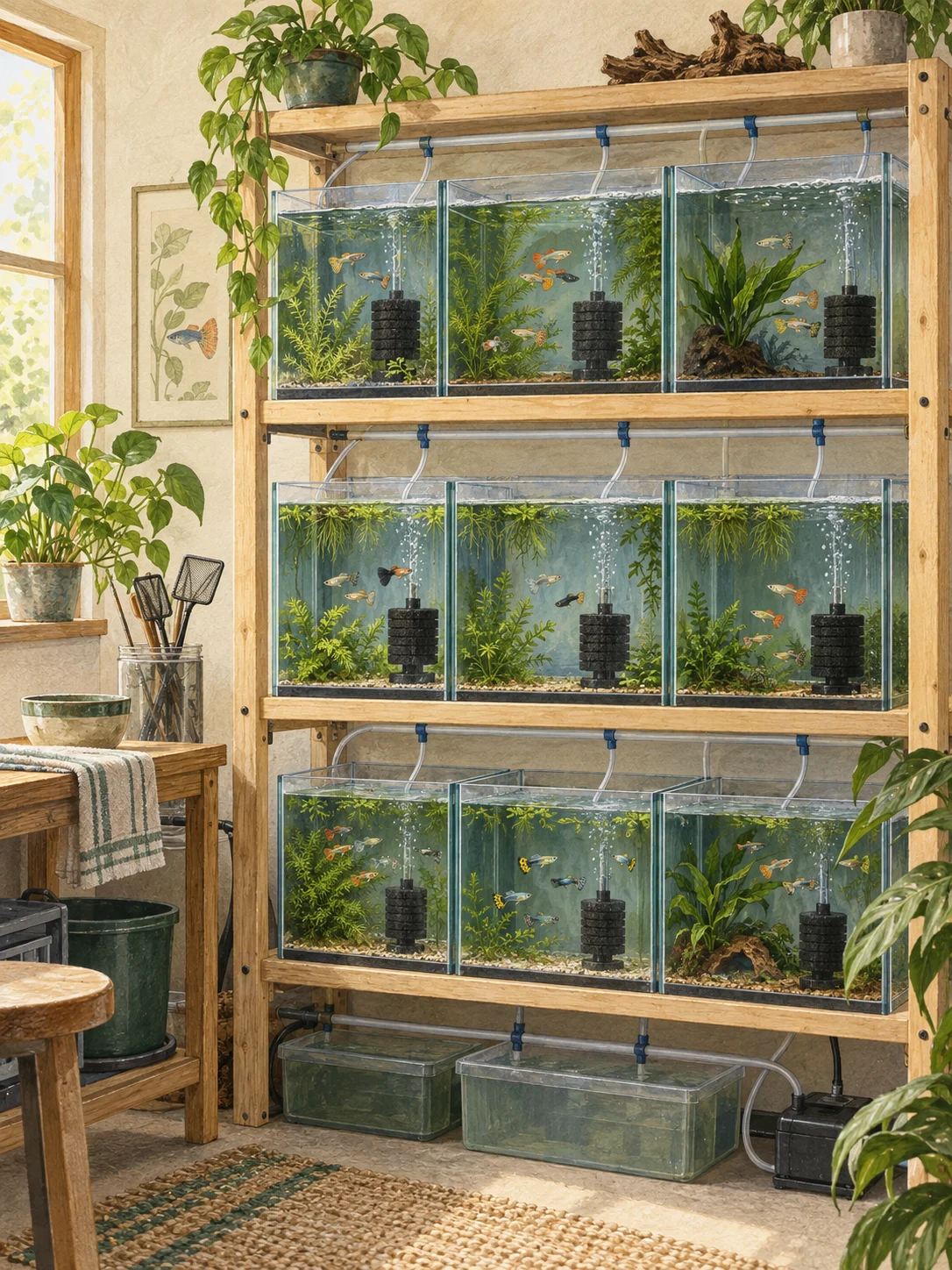
Our guppy guides focus on practical routines: keep water stable, observe fish closely and allow for natural variation.
Care systems
Steady water, thoughtful care
Gentle filtration and regular observation support healthy aquarium routines.

Natural variation
Every guppy is different
Color, size and fin shape vary with strain, age and each individual fish.
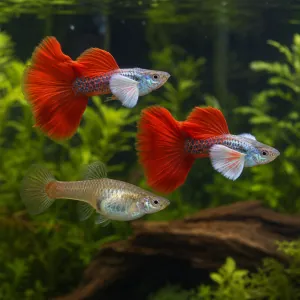
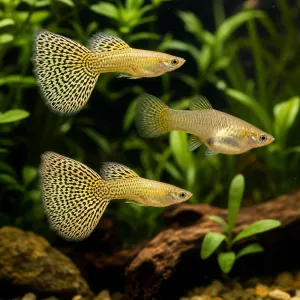
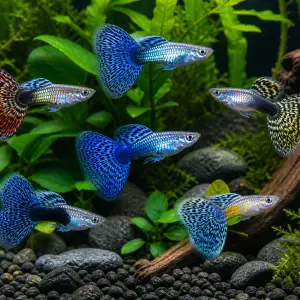
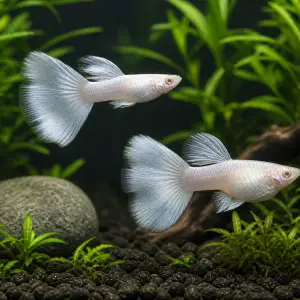
Editorial illustrations for context; they do not depict HiGuppy's exact facility or current fish stock.