The HiGuppy Journal
How Often to Feed Guppies: Adult & Juvenile Schedule
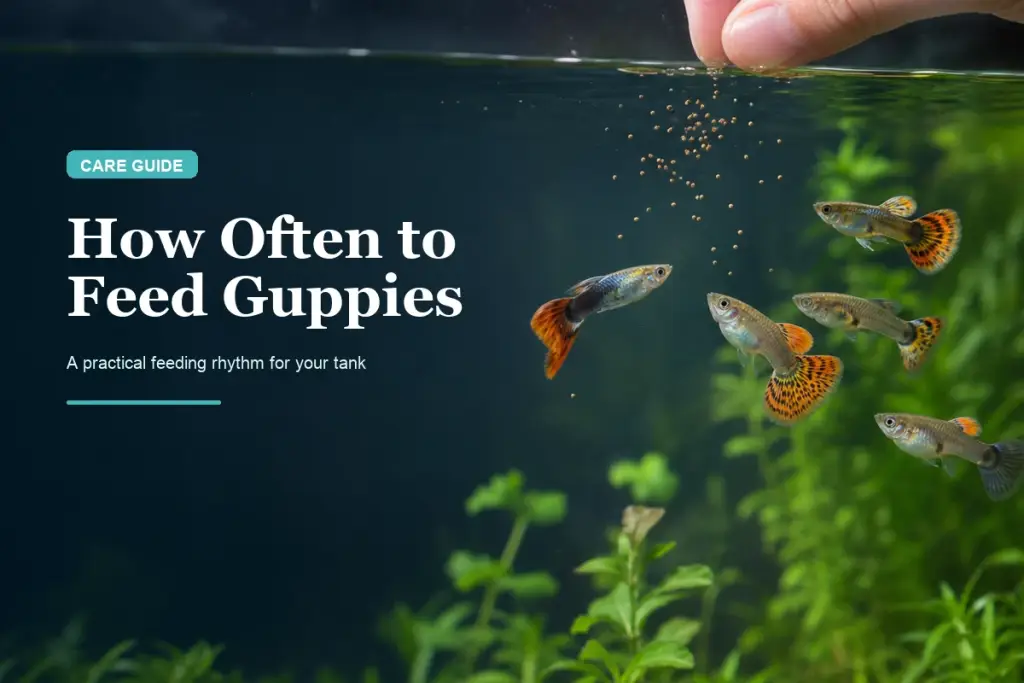
Quick answer: how often to feed guppies depends on age, tank conditions, food type, and what the fish actually eat. Offer small portions they can consume promptly. Many adult home tanks use one or two small daily feedings, while growing fry may need a different plan. Avoid turning a schedule into a reason to overfeed.
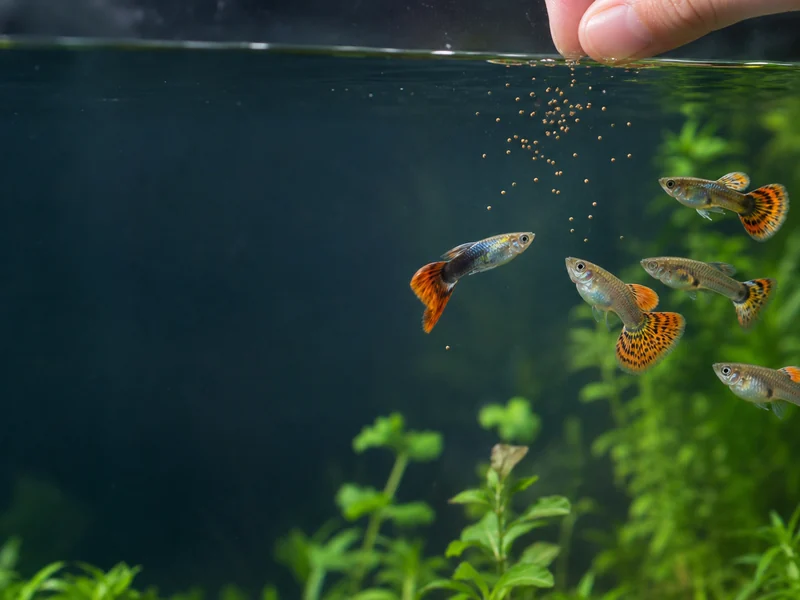
Use observation, not a fixed scoop
The useful amount is not the largest amount fish will chase. Offer a small portion and watch whether food is eaten without accumulating in the substrate or filter. Leftover food adds waste, which can affect water quality and make it harder to understand why fish are stressed. If food regularly remains after a short feeding, reduce the next portion and test the water.
Adults, fry, and breeding groups need different planning
Adult guppies in a stable community tank often suit a simple small-portion routine. Fry are growing and may need appropriately sized food and more frequent, carefully managed opportunities to eat. Breeding groups can also produce fry unexpectedly, so do not increase feeding without also checking filtration, water-change capacity, and space for additional fish.
- Adult guppies: begin with a modest once- or twice-daily routine and adjust to consumption and water tests.
- Fry: use suitably sized foods and plan feeding around grow-out capacity, not just faster growth.
- New arrivals: let fish settle after acclimation; do not feed heavily on arrival day.
- Vacation plans: avoid automatic overfeeding devices unless they have been tested on the established tank first.
Build variety without overcomplicating the diet
A quality staple food can be the base of the routine. Variety may include appropriately prepared frozen, live, or other foods that suit the tank and are sourced safely. Introduce one change at a time so you can observe consumption and water quality. A food marketed for color or growth does not replace stable water, a cycled filter, or sensible portions.
Signs the feeding plan needs review
- Food is routinely left behind or trapped in the substrate.
- Water tests change after feeding or the tank develops excess waste.
- Fish are not eating after a move, shipment, or tank change.
- Fry are present but there is no plan for space, filtration, or water changes.
- You are increasing food to solve a problem without checking temperature, water quality, and stress factors.
Related guides
Pair this routine with the Best Food for Guppies guide and the Complete Guppy Care Guide. If you are raising young fish, see the current Guppy Fry Packs listings only after you have a suitable grow-out plan.
Behind the care guides
Care begins with steady systems
Our guppy guides focus on practical routines: keep water stable, observe fish closely and allow for natural variation.
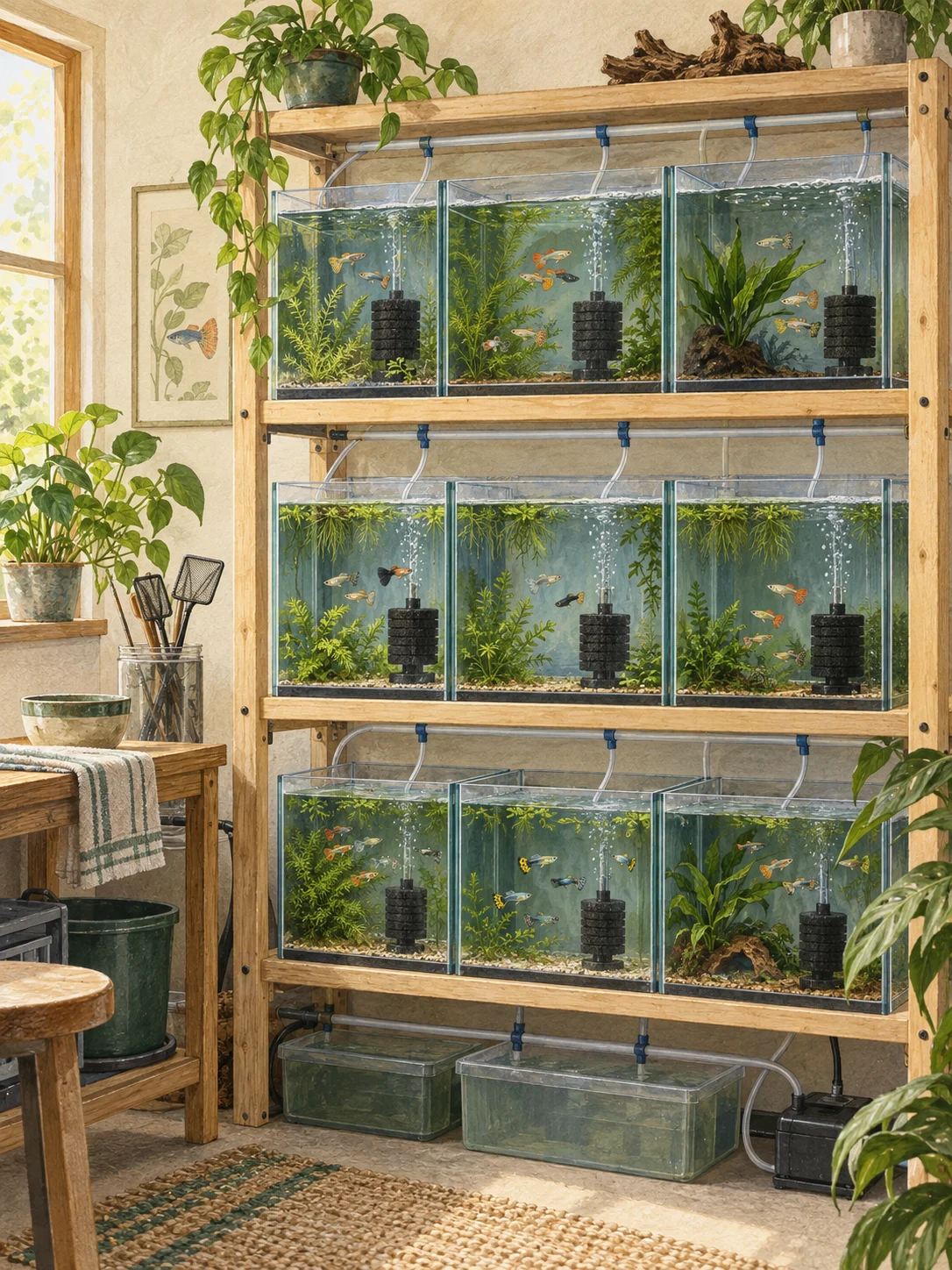
Care systems
Steady water, thoughtful care
Gentle filtration and regular observation support healthy aquarium routines.
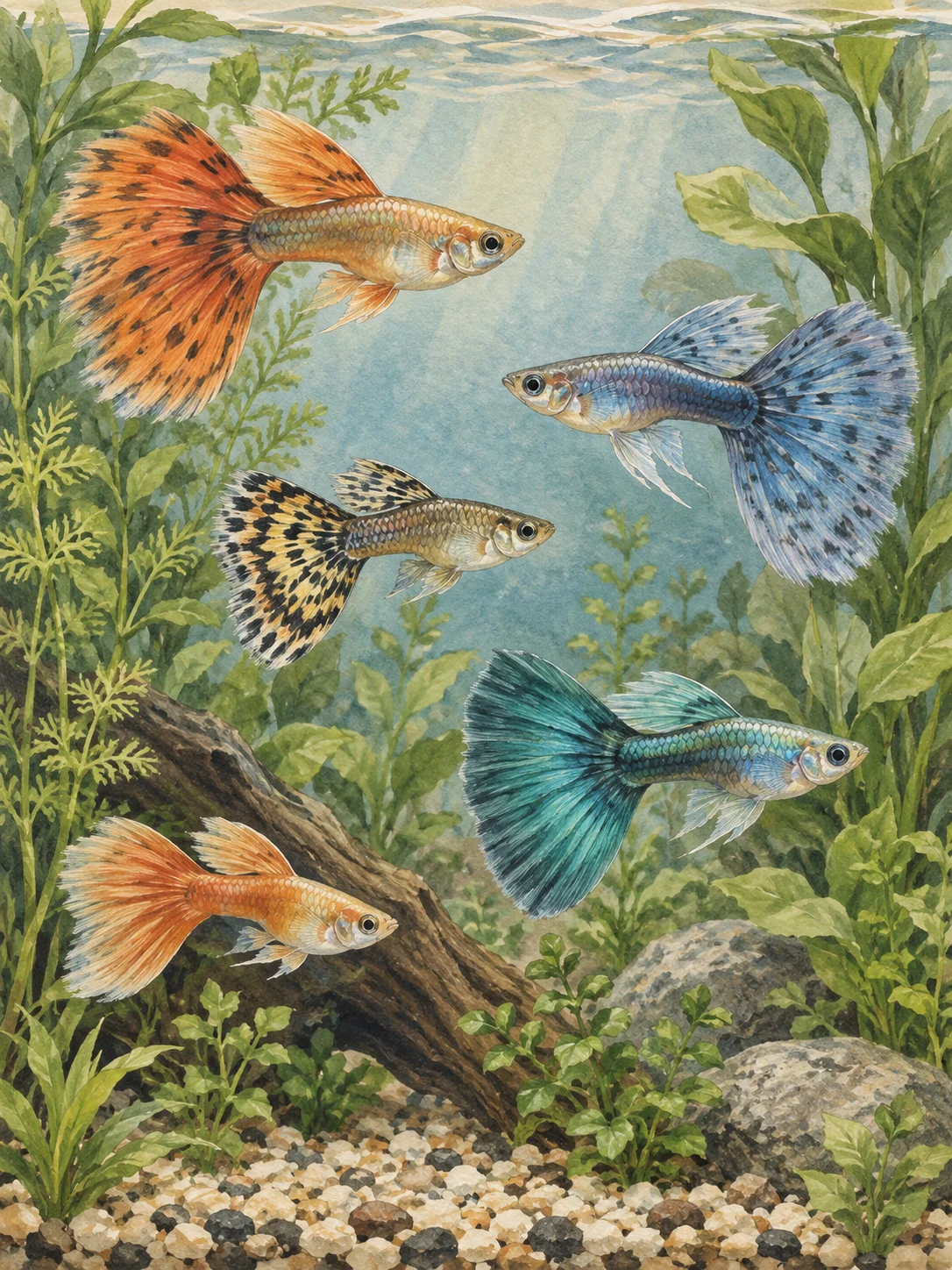
Natural variation
Every guppy is different
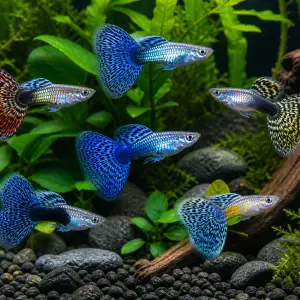
Color, size and fin shape vary with strain, age and each individual fish.
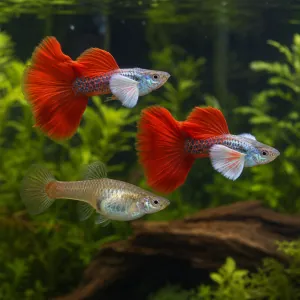
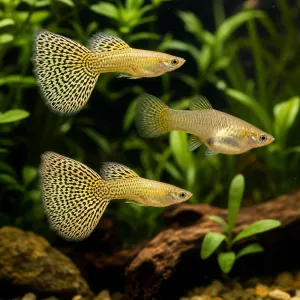
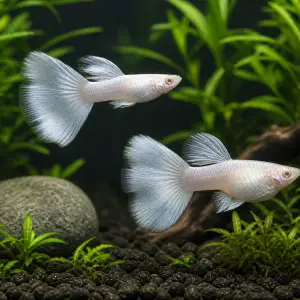
Editorial illustrations for context; they do not depict HiGuppy's exact facility or current fish stock.