The HiGuppy Journal
How Long Do Guppies Live? Lifespan and Care Factors
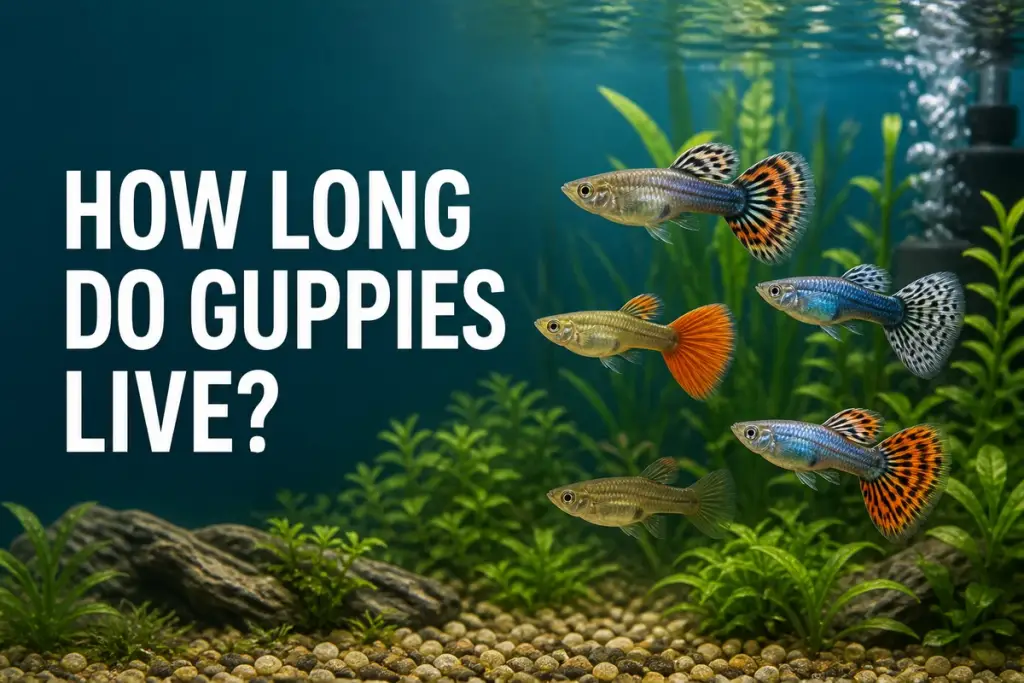
How long do guppies live? Guppies are often described as living about two to three years in a home aquarium, but that is a planning range, not a fixed outcome. Genetics, age at purchase, stable water quality, temperature, nutrition, social stress, and disease exposure all influence how long an individual fish may live.
A lifespan estimate is useful only when it helps you make better care decisions. It cannot tell you the exact age of a fish from a store, predict how an individual will respond to stress, or separate normal aging from a developing health problem. The more practical question is: which parts of daily aquarium care can you control?
What is a realistic guppy lifespan?
For routine aquarium planning, many keepers use roughly two to three years. Some guppies die younger, while some live longer. Research on guppy aging and life history also shows that lifespan is variable rather than a single species-wide deadline. Studies have recorded guppies reaching three years and beyond, but that evidence should not be turned into a promise for every pet fish.
Age at purchase is a major unknown. A colorful adult male may already be well into adulthood when you bring him home. A younger fish may have more of its natural lifespan ahead, but size and appearance alone do not provide a reliable birthday. Track how long the fish has been in your care and judge changes against its own normal behavior.
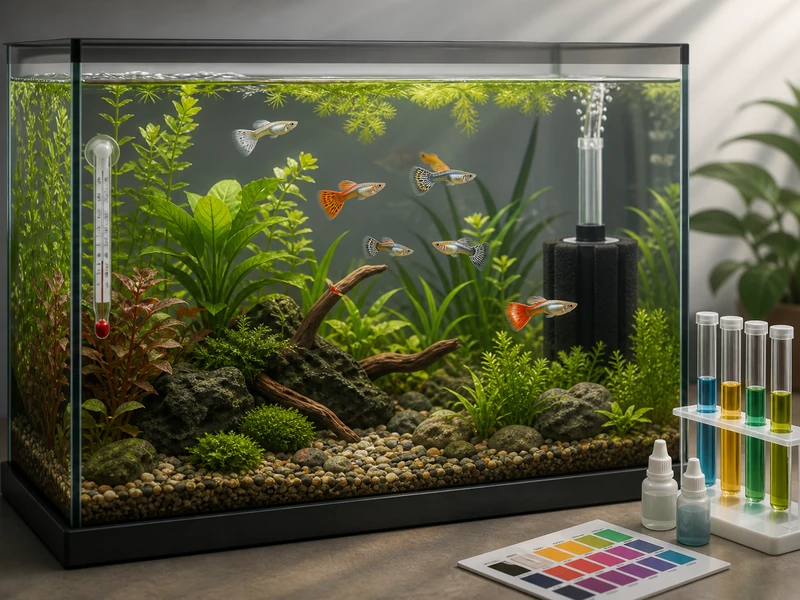
Seven factors that can influence how long guppies live
1. Starting age, genetics, and early history
You usually do not know a purchased guppy’s exact age, early nutrition, transport history, or previous water conditions. Genetic background and life-history differences also affect development and aging. This is why two fish in the same aquarium can have different outcomes even when they receive the same care.
2. A mature biological filter
A new aquarium can look clean before its biofilter is ready to process waste. Research on microbial communities in recirculating aquaponic systems describes nitrification as a core nitrogen transformation supported by those communities. For a home aquarium, the practical lesson is to cycle the tank, test ammonia and nitrite, and choose equipment that provides steady biological filtration. If you are comparing filter styles, start with the best filter for guppies guide.
3. Stable water quality
Ammonia, nitrite, nitrate, pH, alkalinity, temperature, and dissolved oxygen all help describe the environment your fish must live in every hour. A clear tank is not automatically a stable tank. Test on a consistent schedule, record results, and make measured corrections rather than waiting for fish to look unwell. The water parameters guide explains what the main readings mean.
4. Temperature without sudden swings
Guppies are ectotherms, so water temperature affects their physiology and behavior. Controlled research has found that developmental temperature changes guppy growth and maturity patterns, while other studies show temperature-related changes in swimming behavior. The takeaway for a home aquarium is stability within an appropriate range—not deliberately pushing the tank hotter or cooler to chase a lifespan number. Use a reliable thermometer and read the guppy temperature guide for practical setup advice.
5. Sensible stocking and social conditions
More fish create more waste and can increase competition. A crowded tank is also harder to keep stable when feeding, filtration, or maintenance slips. Choose the group size around the aquarium’s real volume, filtration, maintenance capacity, and the needs of every species present. Provide open swimming space, plant cover, and places where fish can move away from persistent attention.
6. Balanced feeding and body condition
Offer an appropriate varied diet in portions the fish can finish without leaving excess food to decay. Watch body condition over time instead of reacting to one meal. A fish that repeatedly loses weight, stops competing for food, or behaves differently deserves closer observation of both the animal and the aquarium conditions.
7. Lower exposure to preventable stress
Transport, abrupt parameter changes, aggression, poor water quality, and introduction of new pathogens can all add stress. Keep new-fish observation and quarantine practices separate from illness assessment or treatment advice. If a fish becomes ill, collect water-test results and clear observations, then seek qualified aquatic veterinary or experienced professional help when needed.
A practical routine for long-term guppy care
- Start with a cycled tank. Confirm that the biofilter can process the aquarium’s waste load before adding a full group.
- Establish a baseline. Record temperature and water-test results when the tank and fish appear stable.
- Observe briefly every day. Look at appetite, swimming, breathing, fins, body condition, and social interactions.
- Maintain on evidence. Use test results, stocking, and tank maturity to guide water changes instead of relying only on the calendar.
- Change one thing at a time. Avoid sudden, unnecessary adjustments that make it harder to identify what helped or hurt.
- Keep a simple log. Note new fish, maintenance, unusual behavior, test results, and major equipment changes.
For the broader care framework, use the complete guppy care guide. If you are still choosing fish and equipment, browse the current HiGuppy shop only after you know what your aquarium can responsibly support.
Normal aging or a care problem?
An older guppy may become less active or show gradual changes in body condition, but age should not be the automatic explanation for a sudden change. Rapid breathing, loss of balance, refusal to eat, abrupt isolation, clamped fins, or a fast decline can also occur with water-quality problems, injury, social stress, or disease. Check the environment first and document what changed.
Do not begin medication merely because a fish seems old. Treatments can add risk when the underlying problem is unclear. A careful water check, recent-history review, and qualified guidance provide a safer starting point than guessing.
Frequently asked questions
How long do guppies live in a home aquarium?
About two to three years is a common planning range, but individual lifespan varies. Starting age, genetics, temperature, water quality, nutrition, social conditions, and disease exposure all matter.
Can a guppy live longer than three years?
Yes, longer-lived individuals have been documented. Treat that as possible variation rather than the expected outcome for every fish, especially when the age at purchase is unknown.
Do male or female guppies live longer?
Sex, reproductive history, genetics, and environment can shape life-history patterns, but sex alone is not a dependable way to predict one pet guppy’s lifespan. Plan care around the individual and the tank.
Does warmer water shorten a guppy’s life?
Temperature influences metabolism, development, and behavior, but aquarium owners should not manipulate temperature solely to extend life. Keep it stable and appropriate for guppies and their tank mates.
How can I tell how old my guppy is?
You usually cannot determine an exact age from appearance. Size, color, and fin development can suggest life stage, but genetics, sex, nutrition, and rearing conditions create substantial variation.
What is the most useful thing I can do for long-term care?
Maintain a mature, appropriately stocked aquarium and use regular observation plus water testing to catch change early. Consistent basics are more useful than trying to optimize a single number.
Sources used for this guide
- Reznick et al.: senescence and post-reproductive lifespan in guppies
- Woodhead: aging changes across the guppy lifespan
- Mahmud-Al-Hasan et al.: developmental temperature and guppy life-history traits
- Auer et al.: oxygen availability, growth, and maturation in guppies
- Wongkiew et al.: nitrogen transformations and microbial communities in aquaponic systems
Behind the care guides
Care begins with steady systems
Our guppy guides focus on practical routines: keep water stable, observe fish closely and allow for natural variation.
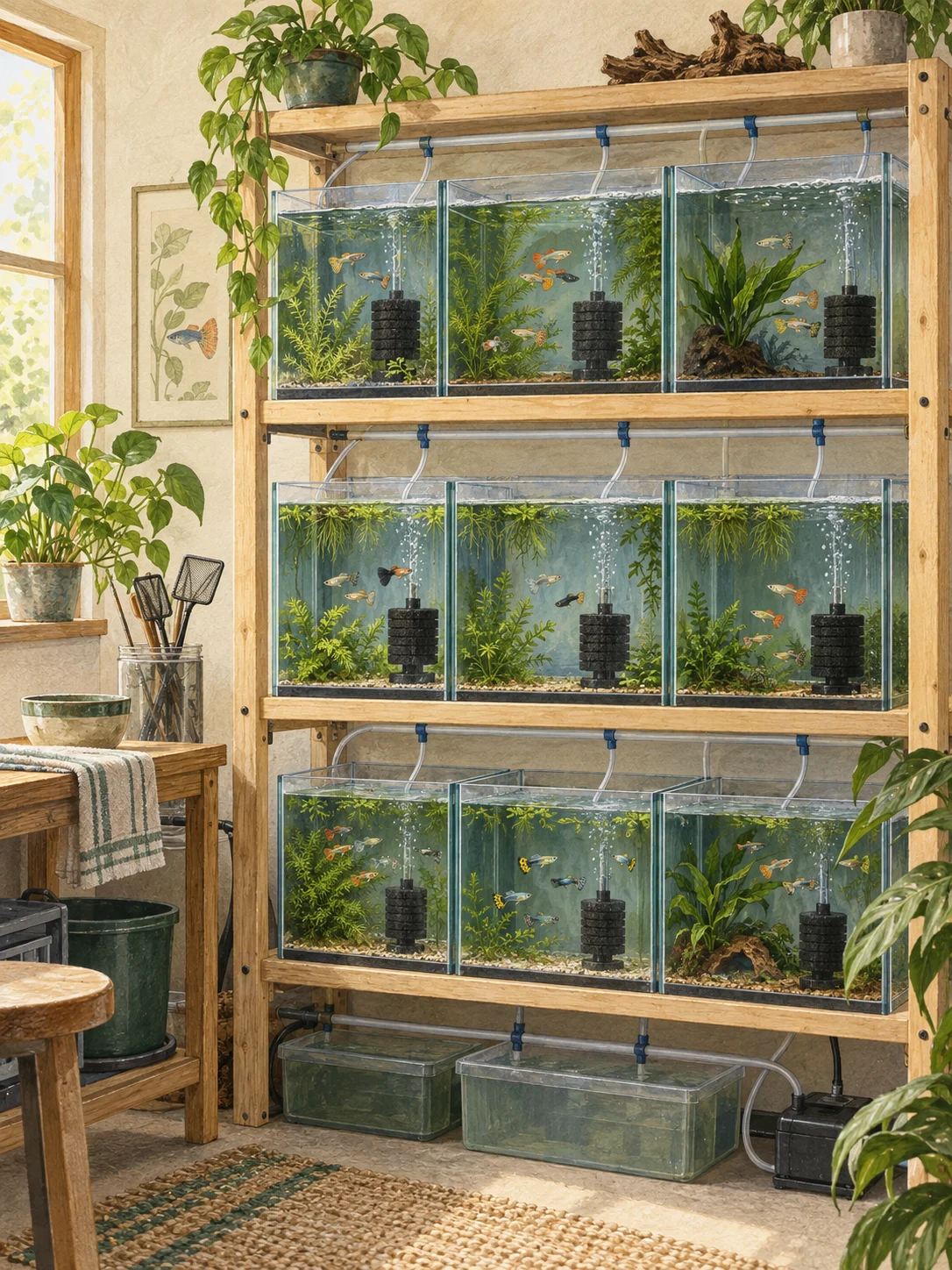
Care systems
Steady water, thoughtful care
Gentle filtration and regular observation support healthy aquarium routines.
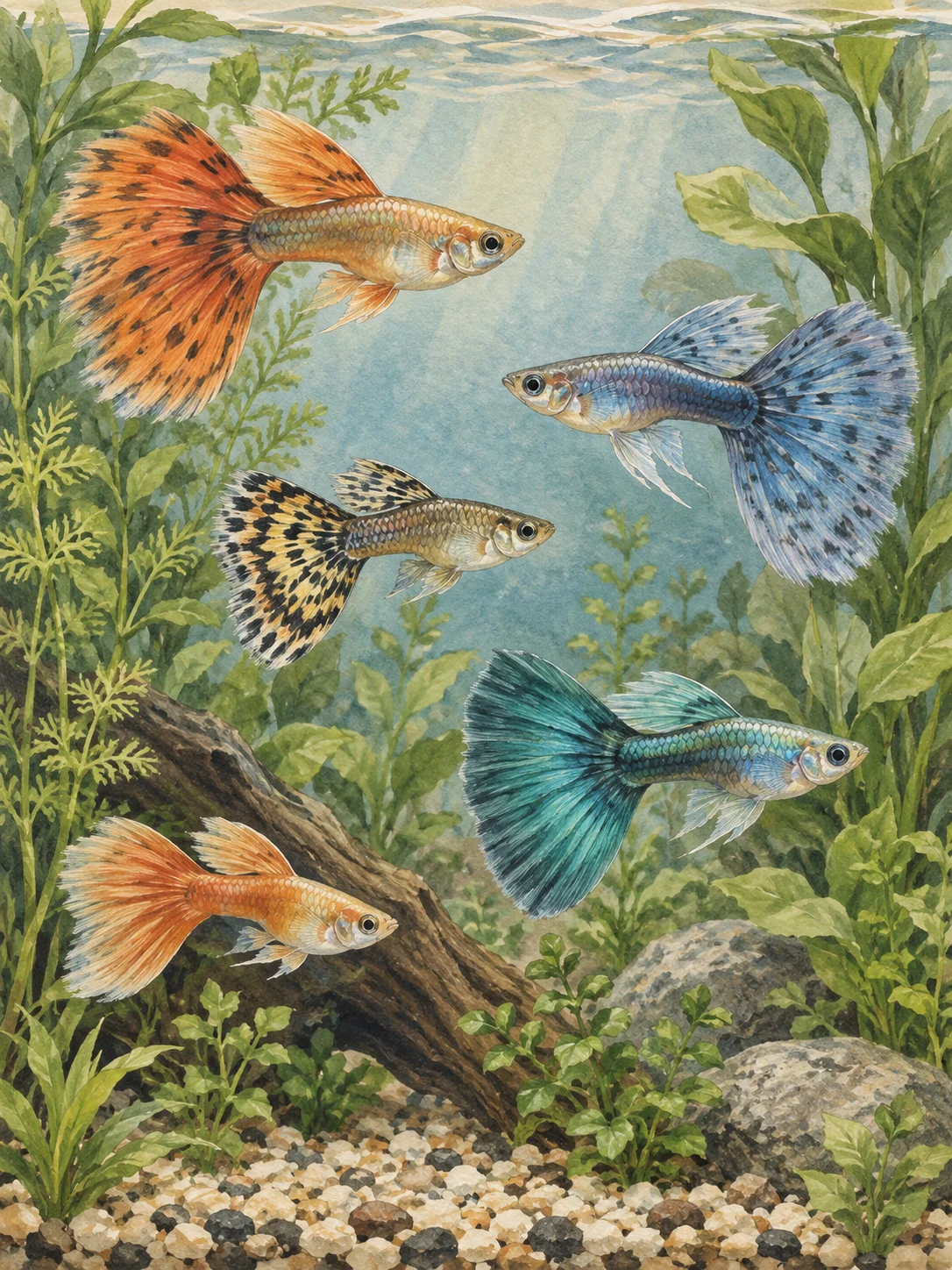
Natural variation
Every guppy is different
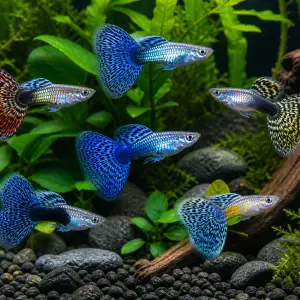
Color, size and fin shape vary with strain, age and each individual fish.
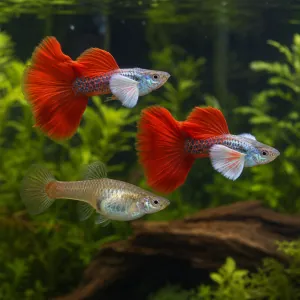
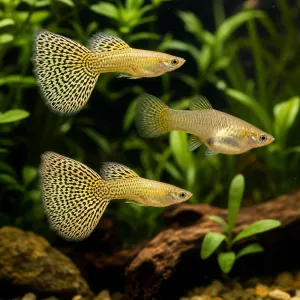
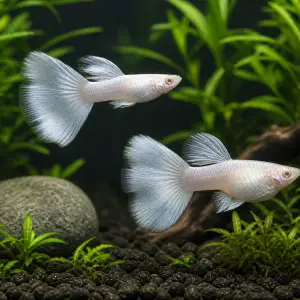
Editorial illustrations for context; they do not depict HiGuppy's exact facility or current fish stock.