The HiGuppy Journal
Red Guppies: Full Red, Koi, Mosaic & Care Guide
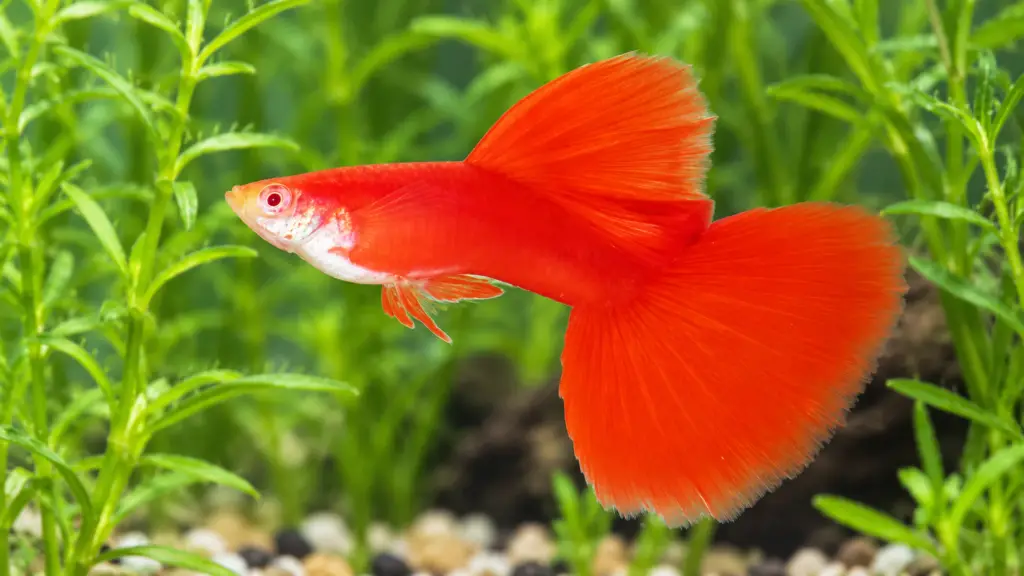
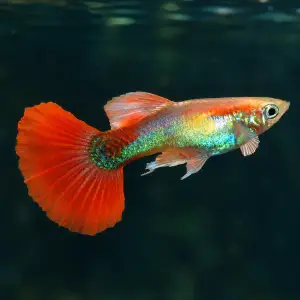
What are red guppies? Red guppies are selectively bred guppy fish (Poecilia reticulata) with red or red-orange color on their body, fins or tail. Full Red, Red Mosaic, Red Koi, Red Lace and Red Dragon are different hobby descriptions—not separate species or identical bloodlines. They need ordinary guppy care: a cycled freshwater aquarium, stable moderately hard water, peaceful companions and suitable feeding. Check actual fish before ordering.
“Red” tells you something about visible color, but not automatically how much of the fish is red, which patterns are present, or whether it comes from a documented breeding line. A pale-bodied male with a bright red fan tail can look very different from a mostly red Full Red male, a red-patterned Mosaic or a Red Koi. This guide focuses on identification, practical care and buying decisions; our guppy color types overview covers the entire color palette.
Full Red vs Red Mosaic vs Red Koi vs Red Dragon
These names are not interchangeable. In breeder and seller listings, color, pattern, fin shape and pigment traits are often combined. The same fish might have a red tail and still be sold under a more specific pattern name. Use the following chart as a visual guide rather than as a universal show-standard classification.
| Name on a listing | Typical visible features | What to verify |
|---|---|---|
| Full Red | Red coverage over much or most of the body and fins, often with limited contrasting markings | How far red extends on the actual fish and whether both sexes resemble the pictured line |
| RREA Full Red | A Full Red-type line labeled Real Red Eye Albino (RREA), with albino-related eye pigmentation | Ask whether the eye and body traits of the available fish really match the label; RREA alone is not a care recipe |
| Red Mosaic | Red or red-orange fins with irregular contrasting spots or patchwork marks | The tail’s mosaic markings, not just how saturated the red appears |
| Red Koi | Red/orange-and-light color blocking reminiscent of koi patterns | Where the colors appear on the actual fish; “Koi” is a visual trade name |
| Red Lace | Red fin areas marked by fine net-like lace lines | Look for readable delicate mesh in the dorsal and tail fins |
| Red Dragon | Red or orange-red fins combined with dragon-style reflective or scale-pattern body traits | Whether the advertised body pattern is actually present; Dragon is not a separate species |
A fish with a red tail and a dark rear-body Tuxedo patch may also be called Half Black Red, which is another different appearance. For pattern-focused identification, use our Red Lace guide and Red Dragon guide. The labels are descriptive and may vary between breeders; they do not certify genetic purity or availability.
RREA Full Red: a mostly red look with another trait
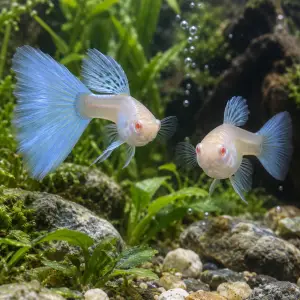
A label such as RREA Full Red combines a predominantly red appearance with an albino-related eye designation. The hobby abbreviation RREA is commonly used for Real Red Eye Albino, but the seller should be able to show the eye and body traits of the actual fish. A red-eye label does not mean the fish needs different pH, temperature or a special color-enhancing supplement. Assess overall health, fin structure, swimming and origin before deciding a particular fish is suitable for your breeding project.
HiGuppy currently has an RREA Full Red catalog listing. Photos may be representative illustrations; a listing does not automatically confirm current stock, fish sex or an identical red shade.
Red Mosaic: red color plus a patchwork tail
Mosaic refers to a tail marking pattern rather than the fish’s body pigment by itself. A Red Mosaic guppy can have dark spots or broken bars over red fins, with patterns varying by line and maturity. If the tail is largely plain red, it may not fit a seller’s own Mosaic description even if the fish has an impressive red color. Compare the entire tail in a recent side-view video and ask to see how adult fish in the line develop.
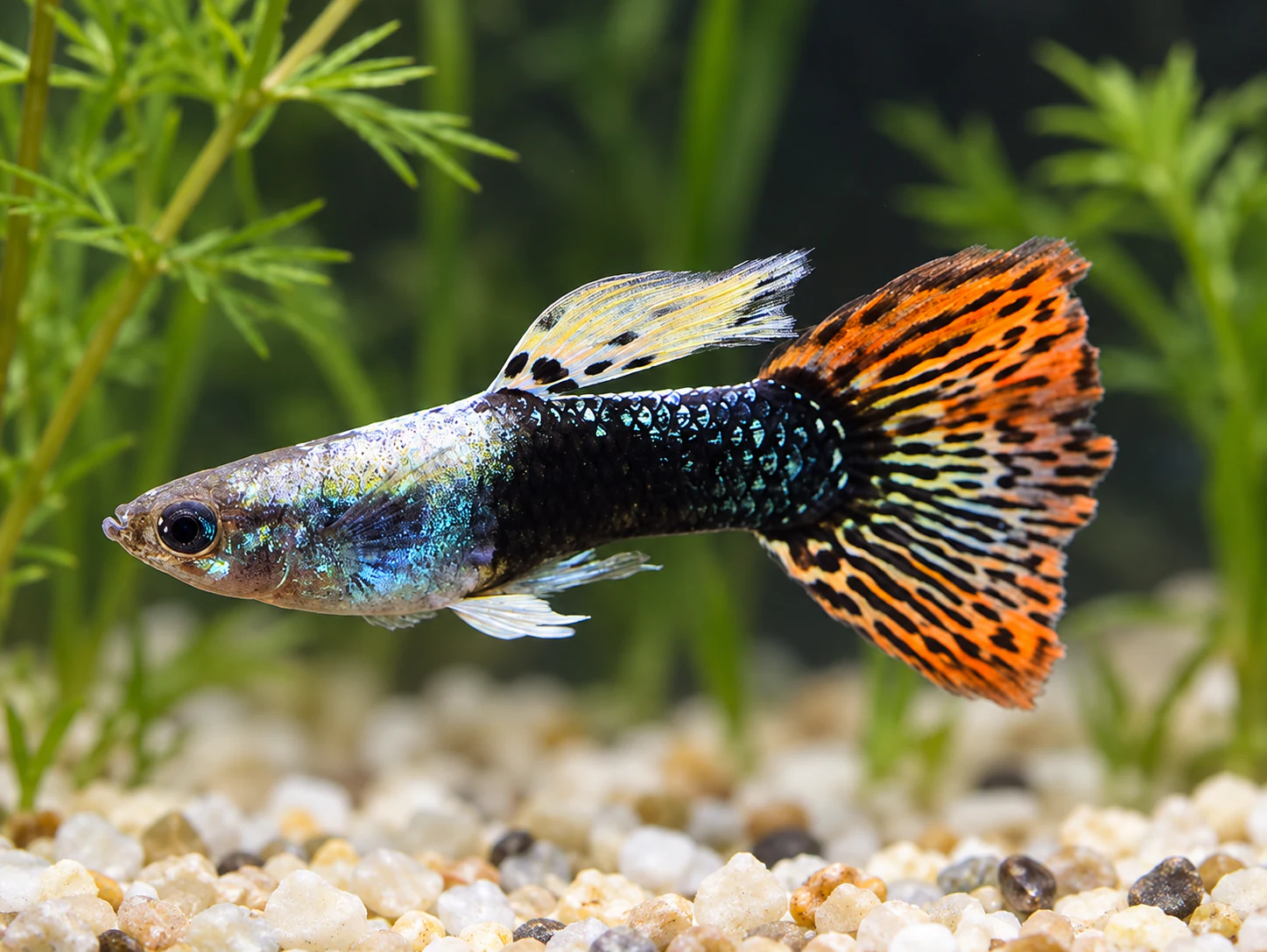
A separate Red Mosaic product page shows how this trade term is used in the catalog; ask for real, current footage before buying.
Red Koi: a different kind of red color placement
Red Koi is generally used for a red/orange-and-light color pattern reminiscent of koi carp, sometimes with a bright head region or contrasting body blocks. It is not another fish species and does not mean every Red Koi has exactly the same marking boundaries. Albino Red Koi adds a different pigment trait; compare eyes, fins and the actual color blocks instead of assuming the word “Albino” makes the fish more colorful or healthier.
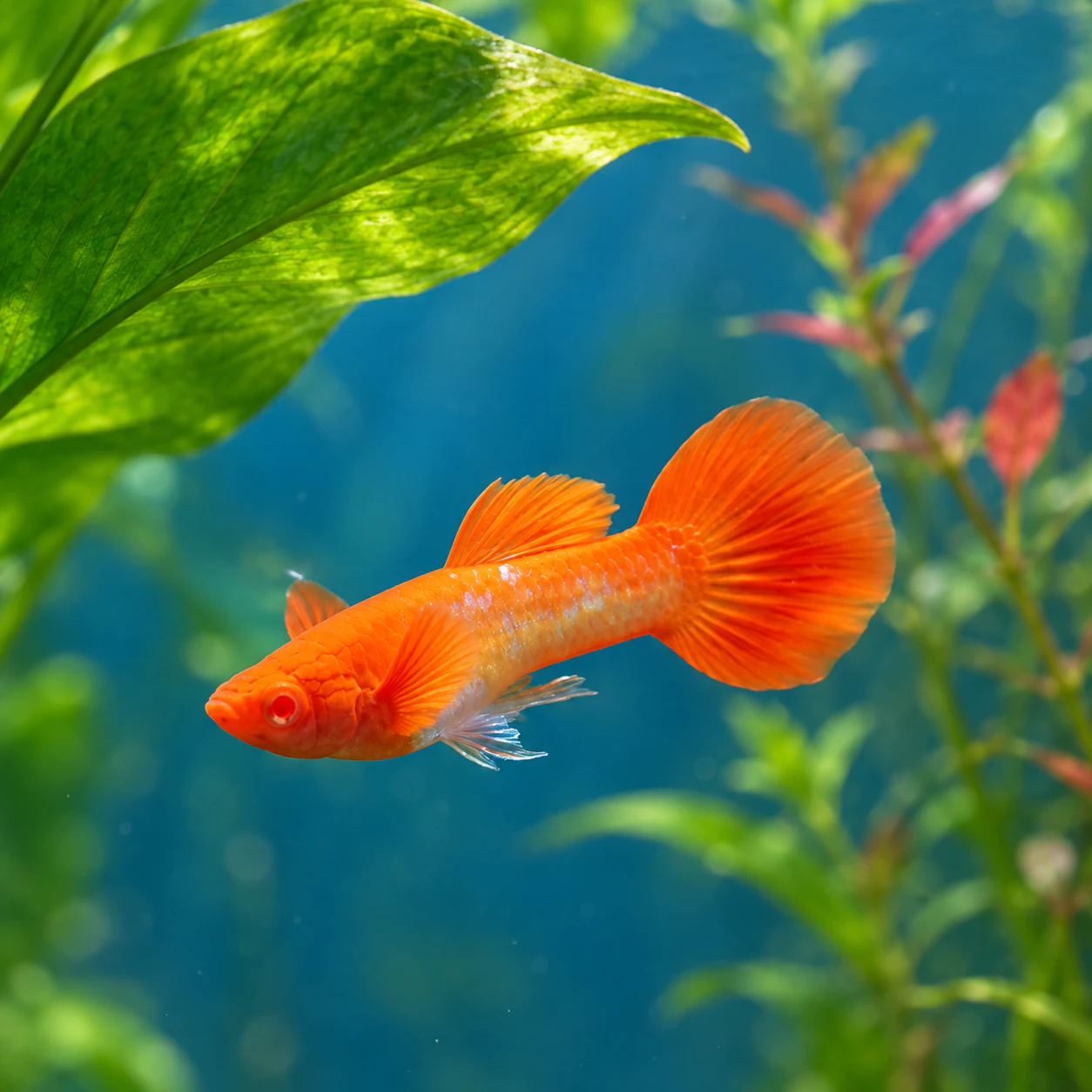
HiGuppy has an Albino Red Koi listing, which is useful as a label example. Availability and shipping eligibility need separate confirmation.
What about Red Fire and other red names?
“Red Fire,” “Red Flamingo,” “Red Tuxedo” and similar names are often breeder or seller descriptions of color coverage, body contrast or fin style. They are not a promise that a fish will stay one exact photographic hue under every aquarium light. A Red Fire fish might appear deeply red-orange without the same all-over red coverage of a Full Red line, depending on how the seller uses the name.
For example, HiGuppy has a separate Red Fire Guppy product listing. When comparing different sellers, ask for a neutral-light side profile of the exact fish, not just the most saturated catalog thumbnail.
Tank size and water parameters for red guppies
All these forms belong to Poecilia reticulata. The published species information from Seriously Fish reports a broader temperature range of 17–28°C (63–82°F), pH 7.0–8.5 and general hardness 8–30 dGH. The OATA guppy/molly care sheet provides a general temperature range of 20–28°C and emphasizes established filtration and water testing. A practical everyday target for many fancy guppy tanks is 24–26°C (75–79°F), pH roughly 7.2–8.0 and GH around 8–15 dGH, while avoiding sudden adjustments.
| Tank requirement | Reasonable starting target | What matters most |
|---|---|---|
| Aquarium volume | A cycled 10 US gallon (38 L) tank for a limited adult-only group; 20 gallons (76 L) for more room | Tank length, live plants, group size and fry determine realistic stocking |
| Temperature | About 24–26°C (75–79°F) | Stability; avoid sudden temperature shifts |
| pH | About 7.2–8.0 | Measure local water instead of using chemicals to chase a precise number |
| General hardness (GH) | About 8–15 dGH | Guppies generally suit moderately hard water; source water testing helps |
| Ammonia and nitrite | 0 ppm | Biological filtration needs to be established before fish arrive |
| Nitrate | Keep low and monitor trends | Match partial water changes to feeding, waste and stocking |
| Water movement | Gentle to moderate filtration | Large tails may struggle in excessive current, and bare intakes can trap small fish |
Guppies frequently produce fry when males and females are mixed. A tank comfortable for a few adults can become overcrowded after repeated births. Plan for additional grow-out room or a male-only display if you do not want breeding. A starting maintenance routine of approximately 20–30% partial water changes weekly can work in many aquariums, but adjust to your measurements; clean, dechlorinated and temperature-matched replacement water is essential.
Use the HiGuppy water parameters guide for checking hardness and waste levels. A red body pattern does not justify adding minerals or dye products without understanding the actual water deficiency or need.
Food and red color: genetics before supplements
A varied quality diet can support overall condition, growth and natural color expression. It cannot guarantee a genetically pale fish will become a solid Full Red or that all juvenile offspring will inherit a particular red shade. Use an appropriately sized, nutritionally complete flake or micro-pellet as the main food; offer occasional suitable live or frozen foods, such as brine shrimp or daphnia, if safely sourced.
Most adult guppies do well with one or two modest meals daily, but the amount depends on age, temperature, tankmates and swimming access. Remove uneaten food rather than using heavy feeding to “boost” the red. Overfeeding can degrade water quality and create stress. The feeding-frequency guide explains practical adjustments.
Lighting and aquascaping: show the real red
Red fins often contrast beautifully with green aquatic plants and subdued natural backgrounds, but lighting and photography can change how intense red appears. Warm indoor bulbs may make orange fish seem redder; some blue LED settings change the balance in the other direction. For a fair purchase comparison, use neutral-white lighting and an unfiltered side-view video where the full tail can be seen.
- Give fish both open swimming space and plants or shade so they are not always exposed.
- Avoid sharp decorations and harsh currents that may tear broad tails.
- Keep a regular photoperiod suitable for the aquarium plants instead of leaving bright lights on all day.
- Evaluate red coverage separately on the body, dorsal and tail; avoid comparing completely different camera exposures.
If a fish becomes paler shortly after transport, compare its behavior and water measurements before assuming its strain has lost all color. A consistently healthy fish can still vary in appearance with age, sex and lighting.
Are red guppies compatible with other fish?
Most guppies are peaceful but can be targeted by fin-nipping companions. Choose tankmates based on mature size, temperature, water hardness and behavior rather than red color. A larger well-planned community may work with other compatible peaceful fish; do not add more species solely for color contrast if the aquarium is already full.
Red guppies can live with other guppy colors, but if males and females are present they can interbreed. Separate breeding lines when you need reliable parentage or offspring records; a male-only group avoids fry but still needs enough room and monitoring. See best tank mates for guppies for a more complete compatibility discussion.
Breeding red guppies: why not all fry match
Two visually red fish do not guarantee every fry will show the same red body coverage, tail pattern or eye traits. Fancy-guppy lines can involve several inherited factors, and the common name alone does not prove one simple genetic mechanism. Females can store sperm from earlier matings, so offspring may have uncertain parentage when females have previously shared a tank with other males. Select for strong bodies, normal swimming and overall vigor, not only the deepest red.
- Ask for documented parents and previous fry from the exact line.
- Keep dates, individual breeding groups and offspring traits in a simple record.
- Do not assume a Red Mosaic line will produce all Full Red offspring, or vice versa.
- Provide appropriate space and responsible homes for fish not kept as breeders.
- Never release unwanted guppies into natural waterways.
See keeping a guppy strain consistent for careful line records and realistic expectations.
How to choose healthy red guppies online
Before ordering, ask for clear information about the actual offered fish. A product page may use AI-generated representative artwork or earlier sample photos to illustrate a strain, and that does not confirm the fish you will receive. A healthy real fish with moderate color can be a better purchase than an unusually saturated catalog photo without supporting video.
- Color name: confirm whether the order is Full Red, RREA Full Red, Red Mosaic, Red Koi, Red Lace, Red Dragon or a different trade combination.
- Real footage: request a recent neutral-light side-view video showing the entire body, eyes and fins.
- Fish identity: ask whether images show the exact fish, a representative breeder line or AI artwork.
- Sex and maturity: verify the number of males and females, age, size and any uncolored juveniles.
- Health: inspect swimming, body shape, breathing, fin posture and food response, not just pigment.
- Breeding: request actual parentage and offspring photos if lineage matters; avoid unverified “100% true-breeding” promises.
- Delivery: clarify shipping route, fees, weather and the applicable live-arrival conditions before paying.
HiGuppy currently publishes catalog pages for RREA Full Red, Red Mosaic and Albino Red Koi. These are examples of labels available on the website, not a promise of current inventory, price, sex ratio or a fixed delivery date.
What to do when red guppies arrive
Prepare a fully cycled receiving aquarium or quarantine tank before the shipment is dispatched. Follow the shipping provider’s appropriate acclimation procedure; long-distance sealed bags can develop different water chemistry, so a prolonged drip process in opened shipping water should not be assumed universally safe. Do not mix transport water into an established display tank when transferring the fish. Keep light subdued initially, observe swimming and appetite, and check temperature, ammonia and nitrite.
Mild temporary dullness after travel may differ from illness; persistent gasping, inability to swim, clamped fins or lack of appetite should prompt immediate water testing and appropriate health advice. See quarantining guppies after shipping.
Quick red guppy buying checklist
- I can distinguish Full Red from Red Mosaic, Red Koi and Red Dragon descriptions.
- I have seen current fish footage and know whether gallery images are representative AI art.
- My aquarium is biologically cycled with suitable temperature, hardness and enough space.
- I know the number and sex of fish offered, and I have a plan for fry if breeding is possible.
- I have confirmed the full price, shipping route, transshipper charges and current live-arrival terms.
Frequently asked questions about red guppies
Are red guppies a separate species?
No. Red guppies are selectively bred forms of Poecilia reticulata. Full Red, Red Mosaic, Red Lace, Red Koi and Red Dragon are aquarium-hobby descriptions of appearance or breeding lines.
What is the difference between Full Red and Red Mosaic guppies?
Full Red commonly describes extensive red body and fin coverage. Red Mosaic combines red fins with contrasting irregular tail markings. The names vary by breeder; ask for side-view footage of actual fish.
Is RREA Full Red the same as ordinary Full Red?
RREA commonly refers to Real Red Eye Albino in guppy breeding labels. A Full Red-type fish may also have this eye/pigment trait, but the seller should confirm actual fish characteristics and lineage.
Do red guppies need special water or food?
No color-specific water treatment is needed. Keep a mature, stable aquarium with suitable moderately hard water and offer a varied balanced guppy diet. Red color depends strongly on inherited traits.
Why does my red guppy look less red after shipping?
Lighting, age, individual variation and transport stress can affect appearance. Test water and observe swimming, breathing and feeding; persistent health signs need investigation beyond color alone.
Will Full Red guppies produce only red babies?
Not necessarily. Offspring can vary in color coverage and fin patterns, and females may store sperm from previous matings. Ask for actual breeding records from the specific line.
Can red guppies live with blue or yellow guppies?
Yes, with appropriate space and water parameters. Different color strains may interbreed, so separate them if preserving tracked parentage or specific lines matters.
References and related HiGuppy guides
General guppy husbandry and species ranges: Seriously Fish — Poecilia reticulata and OATA — How to Look After Guppies and Mollies. For red pattern-specific information consult the Red Dragon guide and Red Lace guide. Hobby trade names should not be treated as certified genetic pedigrees, current-stock claims or special care categories.
Behind the care guides
Care begins with steady systems
Our guppy guides focus on practical routines: keep water stable, observe fish closely and allow for natural variation.

Care systems
Steady water, thoughtful care
Gentle filtration and regular observation support healthy aquarium routines.

Natural variation
Every guppy is different
Color, size and fin shape vary with strain, age and each individual fish.
Editorial illustrations for context; they do not depict HiGuppy's exact facility or current fish stock.