The HiGuppy Journal
Java Moss for Guppy Fry: Attach, Trim & Clean
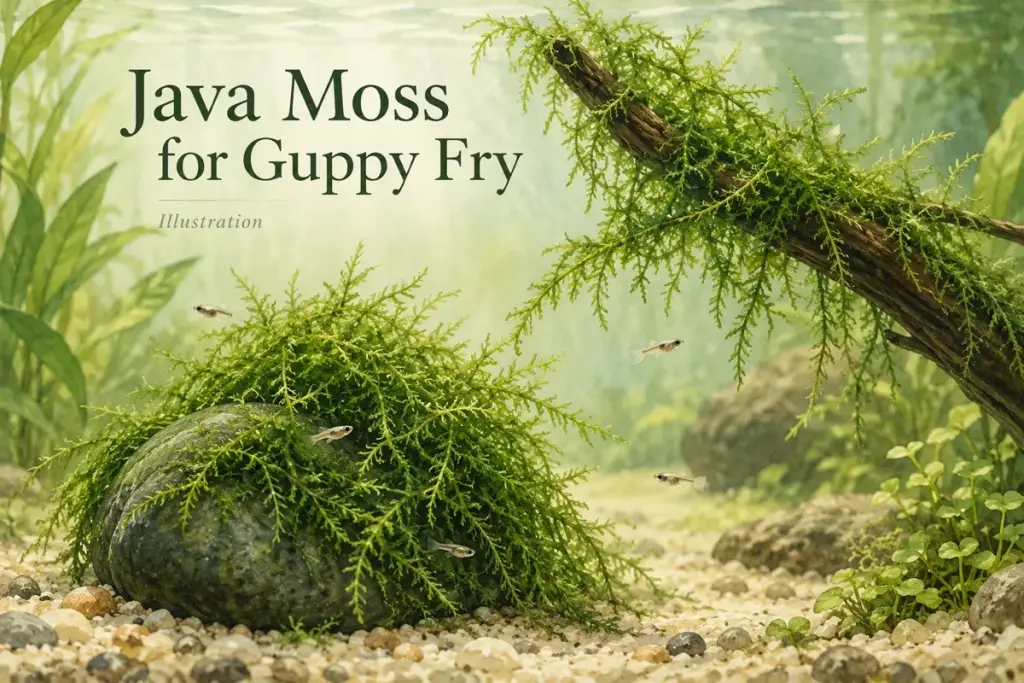
Java moss can give guppy fry places to hide, but it cannot guarantee that fry will survive in a community tank. Attach a modest clump to aquarium-safe wood or rock, leave the filter intake and swimming space open, and trim or clean it where you can see what is happening. Moss is one part of a fry-care plan, alongside suitable feeding, filtration, and water maintenance.
The common name “Java moss” is used loosely in aquarium shops. Check the plant label when possible; this guide focuses on Taxiphyllum barbieri, which Tropica lists as Bogor Moss. The basic approach is simple: secure it, keep it accessible, and do not let dense growth become a hiding place for debris you cannot remove.
What Java moss can do for guppy fry
A compact moss patch adds texture and small gaps that young guppies can use as cover. Tropica lists Bogor Moss as low demand, able to grow across surfaces, and useful as a hiding place for young fish in breeding aquariums. That is a useful planting benefit, not a promise that a particular number of fry will make it to adulthood.
Adult guppies may eat their own newborns, and other tank inhabitants may also treat tiny fry as food; Aqueon’s livebearer guidance notes that guppies may eat their young. Moss can make it harder for adults to reach every hiding place, but it does not separate the fish. If your goal is to raise a planned group of fry, use the moss as extra cover and follow a separate grow-out plan. Our raising guppy fry guide covers that broader setup.
Choose a placement you can maintain
Start with clean, healthy aquarium-grown moss from a source that identifies the plant. Rinse it gently in dechlorinated or aquarium water and pick out loose debris or visible hitchhikers. A quick inspection is easier before the moss goes into the tank than after it has spread around a piece of wood.
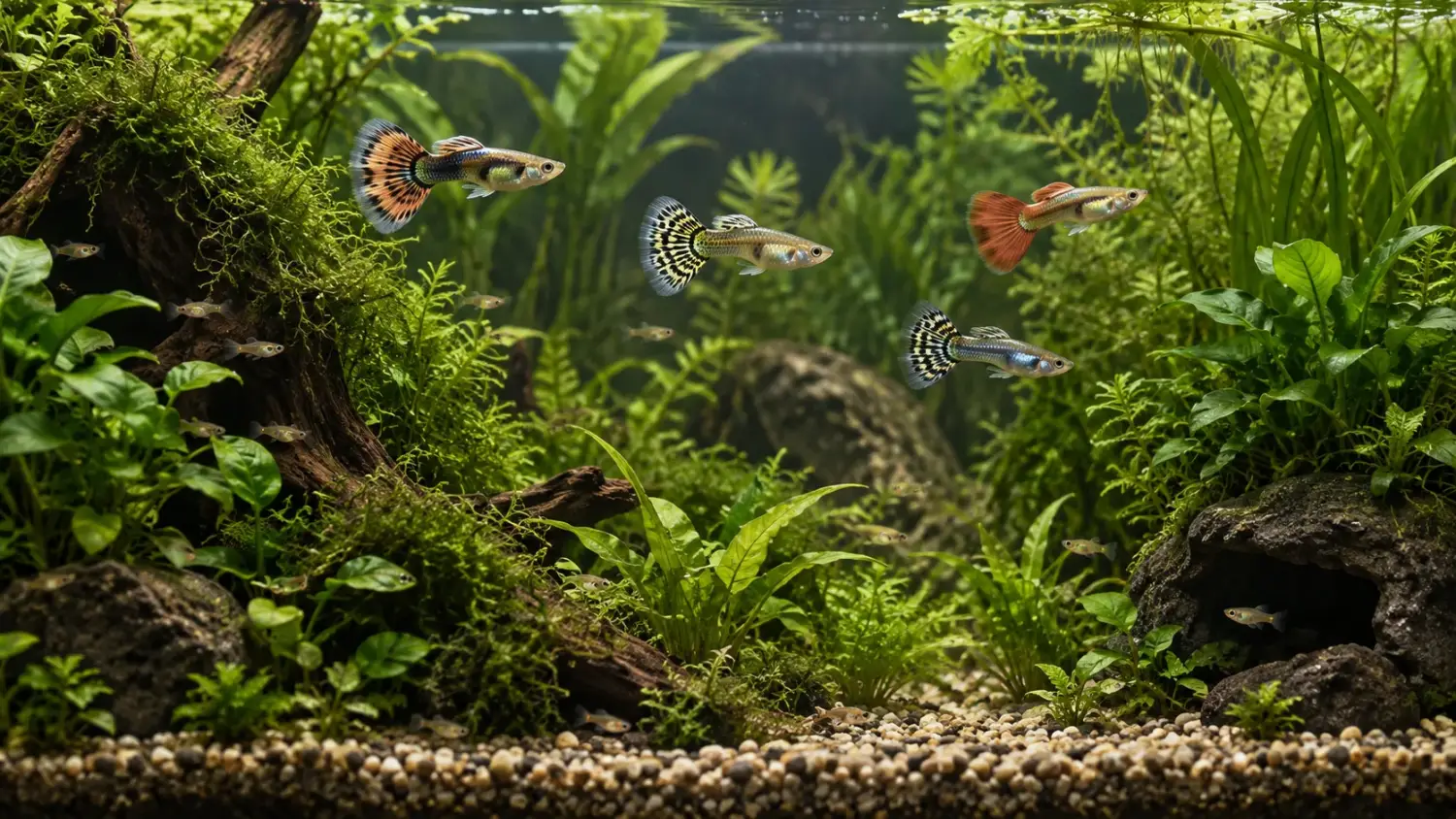
Attach moss to a small, removable piece of aquarium-safe hardscape if you can. Place it where you can see the front and sides without lifting décor, and keep a clear route to the filter intake. A patch in a quiet corner may feel sheltered, but it still needs enough circulation that waste does not collect unnoticed. Keep an open lane where guppies can feed and swim.
For more plant choices, compare this approach with the best live plants for guppies. Some keepers prefer to combine moss with floating or stem plants; the right mix depends on how much space and cleaning access the aquarium has.
How to attach Java moss step by step
- Spread the moss into a thin layer over the part of the rock or wood you want covered. A thinner start is easier to inspect than a thick wad.
- Secure it with cotton thread or fishing line, following Tropica’s plant guidance. Keep the line snug against the hardscape and avoid loose loops that could catch fins or become tangled.
- Set the piece in the tank and check it from several angles. It should not rock into the glass, block the filter intake, or cover the surface outlet.
- Observe it during normal feeding and filter operation. If the moss traps food or sways heavily in the flow, move it or reduce the patch before adding more.
The thread is there to hold the moss while it takes hold; you do not need to bury the plant or pack it into a ball. Tropica’s Bogor Moss profile says the plant grows on surfaces and can be secured with cotton thread or fishing line. Avoid craft materials, loose rubber bands, or unknown adhesives. If you use any product sold for aquarium use, follow its label and cure it completely before livestock exposure.
Trim without removing every hiding place
There is no universal calendar for trimming. Cut when growth begins to shade nearby plants, interfere with feeding, obscure your view, or catch enough debris that cleaning becomes difficult. Tropica says overgrown patches can be pruned with scissors. Use that as a cue to maintain shape, not to remove all the cover at once.
Before you cut, look through the patch for fry and wait until you can see the blades and the surrounding area clearly. Trim a small section at a time, then collect the loose pieces instead of leaving them to drift into the filter. If you need to shorten the moss substantially, keep another cover patch intact or do the work in stages.
A small, sharp pair of aquarium scissors makes controlled trimming easier. Keep the tool clean and use it only for aquarium work. Avoid pulling the moss by hand: pulling can lift the attachment and disturb fry hiding in the gaps. Recheck the filter intake after trimming, since fragments can travel farther than expected.
Clean trapped food and decaying growth
During ordinary tank maintenance, inspect the moss for uneaten food, leaves, and loose growth. Remove visible debris gently with tweezers or a siphon held where you can see it. Do not push a siphon blindly into the clump; a fry can be nearly invisible against moss, and a sudden vacuum can also uproot the plant.
Remove clearly dying material and collect the cuttings. If debris returns quickly, look at the feeding routine first: a moss patch is not a waste bin. Reduce excess food, thin the growth enough to restore access, and keep the aquarium’s regular water-care routine. Aqueon’s snail guidance notes that dead plant material and organic debris can support nuisance-snail growth. Remove dying material and collect loose cuttings so they do not keep accumulating in the moss; review feeding and cleaning if debris returns quickly.
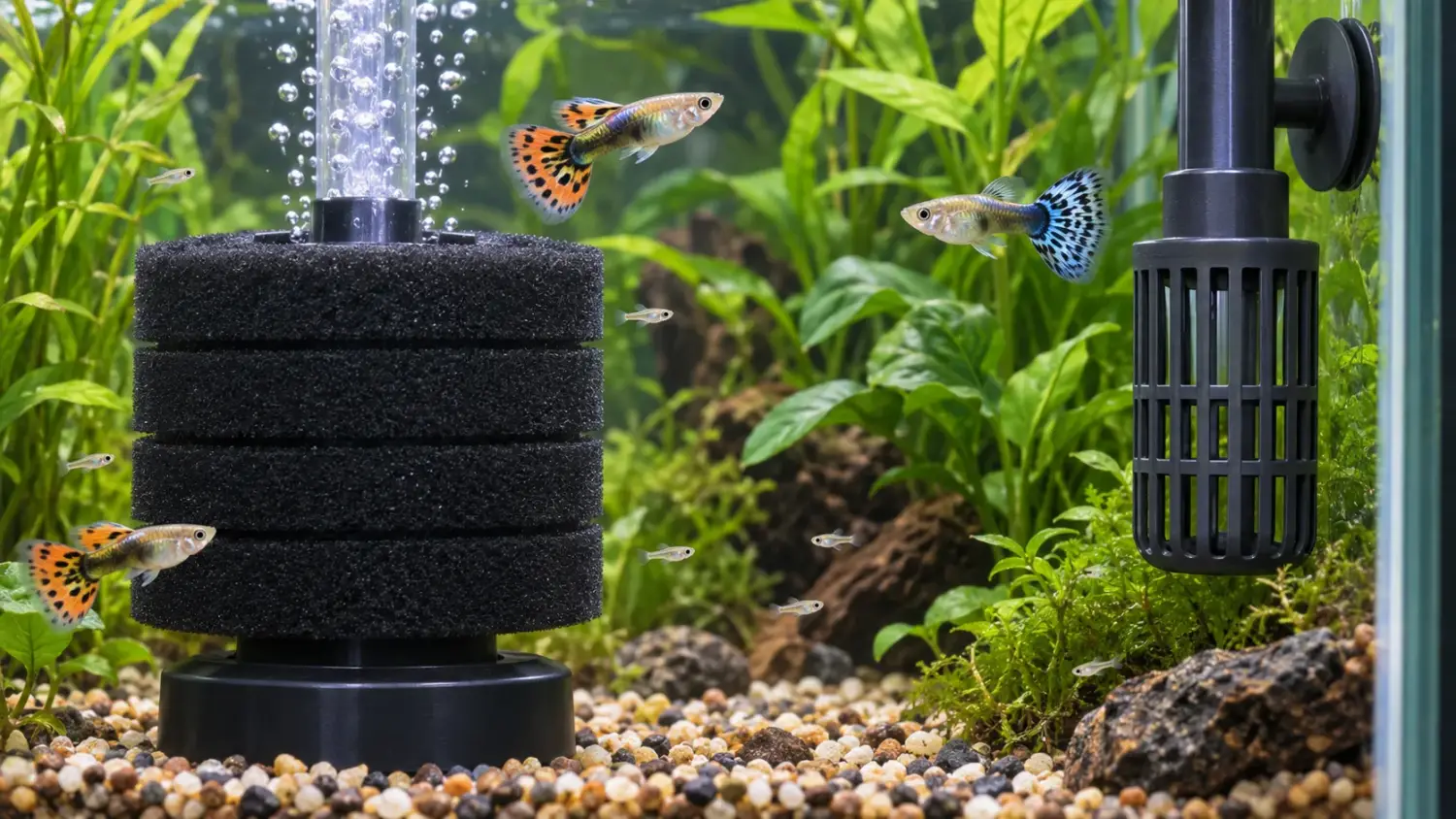
Do not compensate for a dirty patch by increasing flow until fry are being swept around. Check whether the moss can be moved, thinned, or cleaned more easily. A sponge filter for guppy tanks can provide gentle filtration, while a protected intake helps prevent small fry from being drawn in. Aquarium Co-Op’s guppy care guide also recommends cover and fry-conscious filtration.
Keep a separate fry-care plan
If you want to raise fry intentionally, decide in advance whether they will remain with adults or move to a cycled grow-out aquarium. A mature, filtered grow-out space gives you more control over feeding and observation. The moss can travel with them if it is healthy, but it should not be the only plan for protecting babies.
Feed fry food that fits their mouths and remove excess before it breaks down. Check the filter and water quality routinely, especially after birth when the population may change quickly. Our guppy fry feeding schedule and guide to guppy filtration can help you connect the plant choice to daily care.
- Inspect the moss before it enters the aquarium.
- Keep the patch small enough to see and clean.
- Leave the intake, outlet, and feeding area unobstructed.
- Trim in stages and collect loose cuttings.
- Treat moss as extra cover, not a fry-survival guarantee.
Frequently Asked Questions
Is Java moss safe for guppy fry?
Healthy aquarium-grown moss is commonly used as plant cover, and it offers small spaces where fry can hide. Inspect new plants before adding them and keep growth clean. Moss does not replace a cycled filter, appropriate feeding, or a plan for separating fry when needed.
Does Java moss stop guppies from eating their babies?
No. It may give newborn fry more places to retreat, but adult guppies can still reach some of them. If you want to raise a particular group, plan a separate grow-out setup or another suitable separation method.
How often should Java moss be trimmed?
Trim when the clump blocks circulation, collects debris, hides too much of the aquarium, or begins to crowd nearby plants. Growth depends on the tank, so inspect it routinely rather than following a fixed weekly schedule.
Can Java moss grow without being attached?
It can remain loose, but a loose clump is easier to move around and can collect debris. Attaching a thin layer to aquarium-safe wood or rock makes the patch easier to place, inspect, and trim.
Will Java moss keep my tank clean?
No plant can replace routine aquarium care. Moss can provide cover and use light and nutrients as it grows, but you still need to remove excess food and decay, maintain filtration, and monitor the tank.
Behind the care guides
Care begins with steady systems
Our guppy guides focus on practical routines: keep water stable, observe fish closely and allow for natural variation.

Care systems
Steady water, thoughtful care
Gentle filtration and regular observation support healthy aquarium routines.

Natural variation
Every guppy is different
Color, size and fin shape vary with strain, age and each individual fish.
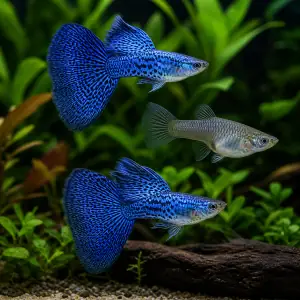
Editorial illustrations for context; they do not depict HiGuppy's exact facility or current fish stock.