The HiGuppy Journal
Corydoras Group Size With Guppies: Sand & Feeding Plan
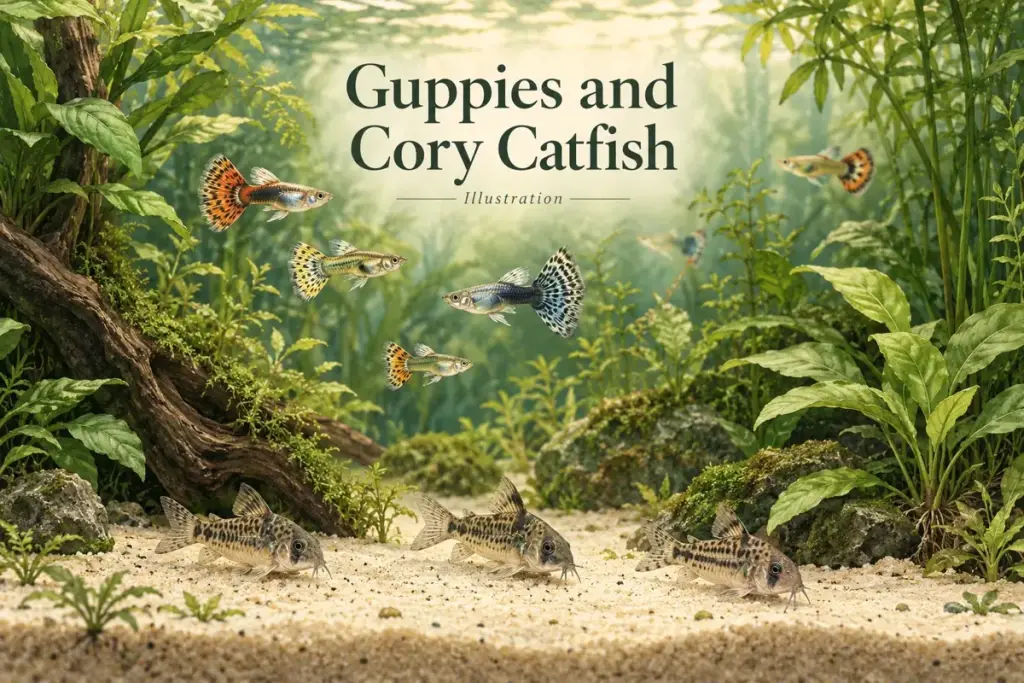
How many Corydoras should you keep with guppies? For a Corydoras group in a guppy tank, choose the exact Cory species first, then plan enough floor space, a suitable same-species shoal and dedicated sinking food. Aquarium Co-Op suggests six or more of one species; Aqueon recommends five or more and notes some mixed-species shoaling. Neither number overrides adult size, water compatibility or the tank’s real capacity.
This guide starts after you have considered whether guppies and Corydoras can coexist. If you still need the general compatibility answer, see Can Guppies Live With Corydoras?. Here the question is more practical: can this particular aquarium accommodate a proper Cory group, a comfortable feeding floor and the guppies already living above it? The answer is based on the species and actual setup, not just whether both fish are called peaceful.
Start with a group-first decision instead of buying one bottom feeder
Corydoras are social fish. A single Cory catfish is not an effective way to fill an apparently empty tank floor. Their foraging and shoaling behavior is best assessed as a group, and both adults and juveniles still need food, oxygen and clean water. Before buying, write down the Cory species, the expected adult size, the number of existing guppies, and the amount of unobstructed floor area.
The widely used Aquarium Co-Op Cory care guide suggests six or more individuals of the same species to help a shoal feel secure. Aqueon’s Corydoras care guide recommends five or more and notes that some different Cory species may group together. These are care recommendations with different starting points, not proof that exactly five or six animals fit every tank.
A conservative beginner plan is to choose one identified species and budget space for roughly six of that species, then adapt to the actual species’ welfare needs. Do not purchase three of one species and three of another merely to satisfy a number on paper: mixed-species social behavior is not guaranteed to be equivalent to a properly sized same-species group.
Identify the Cory species before deciding its group and aquarium
“Cory catfish” covers numerous related fish, not a single adult size or temperature preference. Bronze or albino Corydoras, panda Corydoras, sterbai Corydoras and smaller dwarf forms may differ in body size, typical swimming level and suitable water. A name like “julii Cory” can also be applied loosely in trade, so ask for the exact scientific name where possible.
| Example you may see | Decision to make | Do not assume |
|---|---|---|
| Bronze/albino Corydoras | Allow floor space for a full shoal of relatively substantial adults | A six-fish group fits a tiny tank because each fish looks small in a shop |
| Panda Corydoras | Check its preferred temperature and maintenance needs against your guppies | All Cory species like the same warm water |
| Sterbai Corydoras | Compare adult size and the temperature range of the actual stock | Every Cory species tolerates equally high temperatures |
| Dwarf/pygmy Cory forms | Verify species identity, adult size and whether they use bottom or midwater space | All small Corys behave or stock like bronze Corys |
Aquarium Co-Op notes that Cory species vary substantially in temperature preferences, and Aqueon distinguishes smaller pygmy forms from most larger groups. For a mixed guppy tank, seek the overlap in conditions for both identified species rather than copying a tank-temperature number from a different Cory care sheet.
Use the floor footprint, not just a gallons-per-fish formula
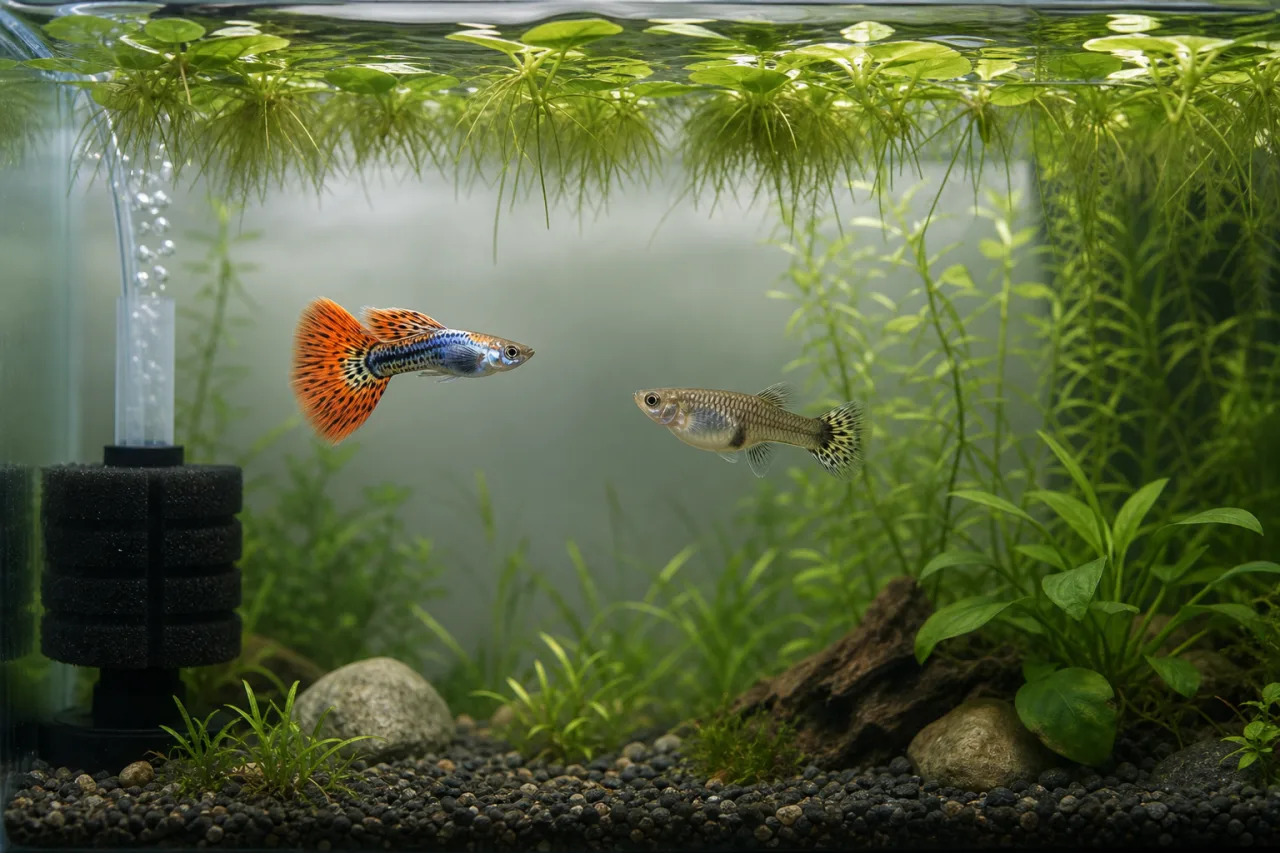
Volume is only one constraint. Corydoras spend much of their time searching the bottom and need accessible places to move, rest and forage. A tall, narrow aquarium and a longer aquarium can hold similar volumes yet offer very different usable bottom area. A 20-gallon long tank often offers a more practical layout for many community groups than a tall tank with little floor space, but tank suitability still depends on the species, number and existing guppies.
| Planning question | A sound arrangement | Reason to postpone adding Corydoras |
|---|---|---|
| Can the tank hold an actual social group? | One identified species in a group suitable to its adult size | Only room for a lone fish or token pair |
| Is usable floor available? | An open foraging patch, refuges and routes between them | Bottom packed with sharp décor, dense ornaments or exposed hardware |
| Is the system biologically established? | Ammonia and nitrite test at zero; filter and aeration operate normally | Recently filled or uncycled aquarium, abnormal water tests |
| Can the stocking level grow? | Space for present guppies, Cory group and future guppy fry if any | Crowding already drives frequent waste, chasing or low oxygen |
| Are water needs compatible? | Measured stable range appropriate to the exact Cory species and guppies | Temperature/hardness compromise would strain one species |
If the group does not fit, the responsible choice is often not adding Corys yet. An empty bottom layer is not a stocking problem. See HiGuppy’s 20-gallon guppy stocking guide for the guppy side of total waste and available space, without treating it as a Cory stocking calculator.
Choose smooth, maintainable substrate for Cory barbels
Corydoras use sensitive barbels around their mouths when searching for food. A soft sand bed or smooth, rounded fine gravel is a common safe choice. Aqueon advises avoiding jagged materials that may damage the barbels; Aquarium Co-Op also emphasizes that poor water quality can contribute to barbel problems, so substrate texture is not the only variable.
Sand is useful when you want food to remain accessible near the surface, but merely labeling a product “sand” does not guarantee that the whole tank is clean or suitable. Examine grain and texture, remove sharp fragments, and avoid compacted trapped waste under decorations. A smooth, accessible floor plus clean water is more meaningful than buying a special color of substrate.
- Inspect the texture by hand outside the tank; avoid jagged gravel and rough chipped ornament bases.
- Leave an open section of bottom so the Cory group can gather and you can see it feed.
- Add planted cover or a safe shaded refuge without covering every inch of foraging space.
- Check that sinking food does not disappear into deep cracks or under decorations.
- Vacuum trapped waste gently when needed, taking care around animals and rooted plants.
For guppy-oriented options, see Best Substrate for a Guppy Tank. This guide focuses on the Cory group’s foraging needs, which is a separate planning question from the overall substrate comparison.
Design two feeding zones so guppies do not take all the food
Guppies tend to rush floating or slowly sinking food. Corydoras are omnivorous bottom feeders that still require a deliberate diet; they are not algae eaters or automatic aquarium cleaners. Do not assume whatever reaches the gravel after the guppies eat will be enough for an entire Cory group.
Aquarium Co-Op recommends a varied diet including sinking wafers and suitable meaty foods, while Aqueon also describes dedicated sinking foods for Corys. An effective mixed-tank routine lets you watch guppies eat near the top and confirm the Cory group receives its own food on an accessible bottom patch.
| Feeding moment | Practical action | What to observe |
|---|---|---|
| Before feeding | Locate the Cory shoal and the clear bottom feeding patch | All or most Corys can reach it without persistent chasing |
| Guppy portion | Offer a suitable small floating or midwater meal | Guppies consume their share without large leftovers |
| Cory portion | Place a measured sinking food where the shoal actually forages | Corys reach food; guppies do not consistently take everything first |
| Five-minute check | Watch the floor; adapt portion, timing or location if needed | No one animal gets excluded; food is not accumulating in hidden debris |
| Later maintenance | Remove uneaten food as appropriate and test water with changing load | Stocking and feeding are not overloading filtration |
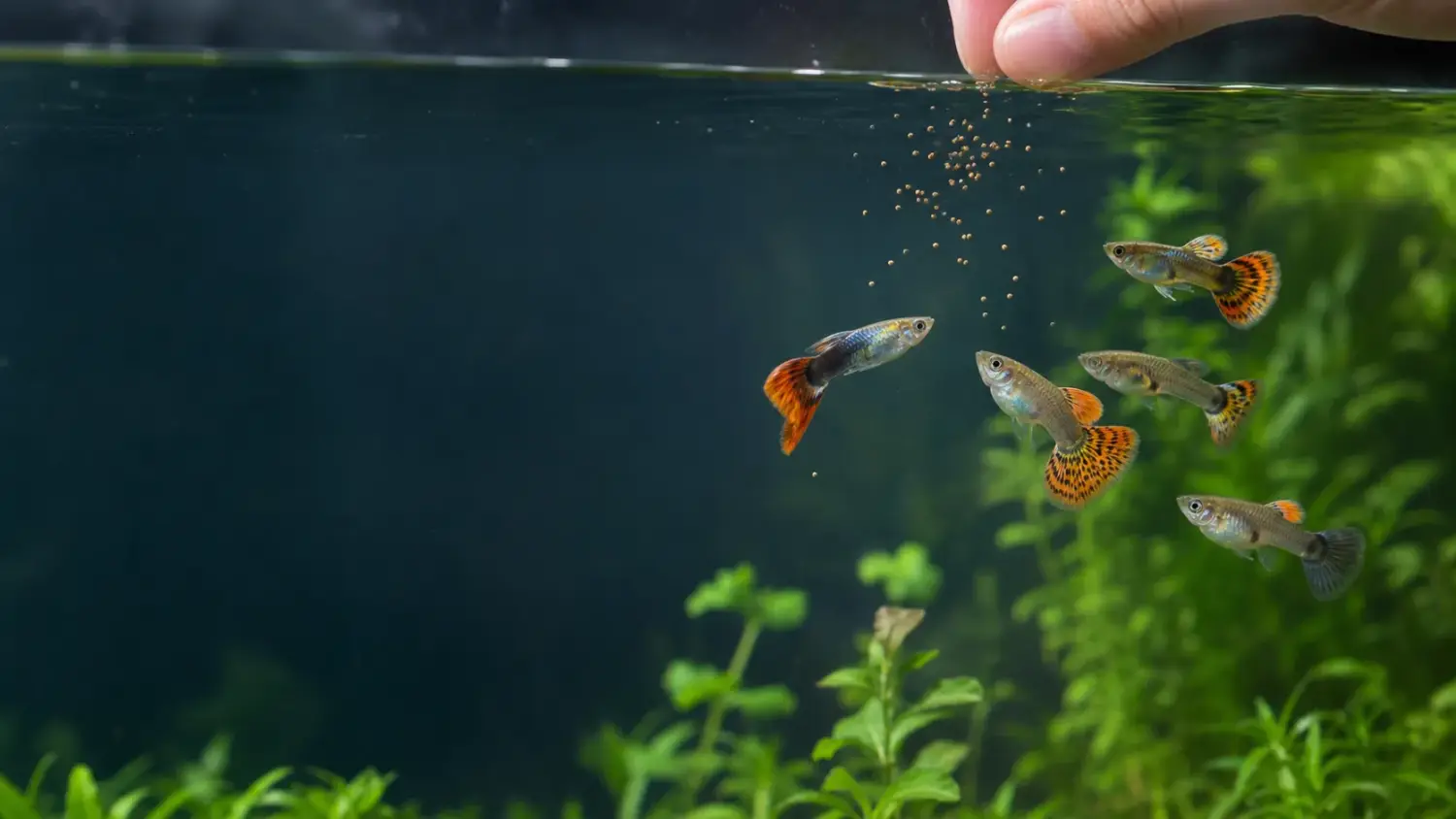
Do not respond to food competition by doubling the entire feeding volume. Instead try a more suitable sinking food, split feeding locations, or adjust timing while monitoring every group’s body condition. HiGuppy’s guppy feeding guide covers how to keep the guppy portion appropriate.
A simple seven-day observation plan after adding a Cory group
The schedule below is a suggested observation log, not a quarantine period, a guarantee of compatibility or a treatment protocol. If fish show urgent breathing difficulty or loss of balance, check water and get qualified help promptly rather than waiting until a planned day.
| Observation point | What to record | Concern worth investigating |
|---|---|---|
| Before introduction | Species, Cory count, guppy count, measured water and floor layout | No stable nitrogen cycle or unresolved temperature mismatch |
| Day 1 | Shoaling versus hiding, breathing and whether food reaches Corys | Persistent frantic swimming, rapid breathing, refusal of all food |
| Days 2–3 | Actual bottom feeding, fin/barbel condition, guppy chasing | Corys repeatedly outcompeted, food trapped under décor |
| Days 4–7 | Shoal activity, waste buildup, test results and fry visibility | Deteriorating water, shrinking food intake or crowding |
| Ongoing | Compare group behavior, feeding and water readings over time | A group needs more floor space than the tank can provide |
Do not assume that a single Cory resting quietly is ill or that occasional dashes to the surface prove oxygen failure. Some Corys gulp air naturally; repeated distress in multiple fish is a different matter that warrants checking water, temperature and filtration.
Water chemistry: plan for the exact Cory species
Guppies often do well in moderately hard, stable freshwater. Corydoras may originate from environments with different hardness, temperature and pH, and captive-bred fish can sometimes tolerate a broader range. It is not accurate to state that every Cory species needs the same water as every guppy strain.
Aqueon’s Corydoras husbandry guide describes approximate care conditions for many captive-bred Corys, while Aquarium Co-Op highlights meaningful species-level temperature differences. Find a stable overlap for the actual animals, test the prepared tank water, and avoid making abrupt changes just to match a generalized number.
For guppy-side pH, GH, KH and ammonia/nitrite checks, use Guppy Water Parameters. If the requirements cannot overlap comfortably, choose another tank arrangement rather than forcing either group into marginal conditions.
Corydoras are not a substitute for fry protection or cleaning
Guppies can produce fry quickly. A peaceful Cory group does not guarantee that every newborn will be left alone in a community aquarium. Corydoras may opportunistically eat small food items including eggs or vulnerable fry they encounter, and guppies themselves can eat their babies. If preserving fry is a priority, use plant cover and a planned separate grow-out system.
Similarly, Corys are fish that eat and produce waste; they do not remove dissolved nitrogen waste or replace maintenance. Keep water changes, filter checks and gentle substrate cleaning in place. Review Guppy Tank Maintenance Schedule before increasing total stocking.
Quarantine and introduce Corys without rushing the tank
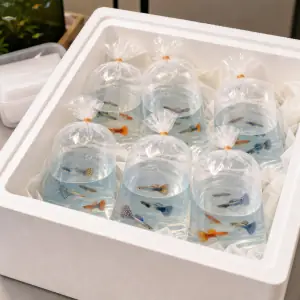
Prepare a suitable observation or quarantine space when possible, and obtain fish from a reputable source with details about the species. Match receiving and acclimation to the actual transport route and the seller’s instructions. Do not automatically keep long-distance transport bags open for prolonged drip acclimation, and never put fish into a tank whose biological filtration has not stabilized.
When adding a group, monitor the bottom and middle of the tank, not only guppy appearance. Some chasing or exploration can occur initially, but repeated exclusion from food, abnormal breathing or damaged barbels requires checking conditions and possible relocation. HiGuppy’s quarantine guide provides a broader new-fish observation workflow.
Troubleshooting: when the Cory group is not settling
- Only one or two Corys are left: check species identification and whether the tank can support an appropriate group; do not rush to buy more without evaluating the cause.
- Guppies take all sinking food: change food delivery time or location; verify Cory body condition and reduce hidden leftovers.
- Barbels look worn: inspect hygiene, substrate, hidden debris and overall fish health; do not assume the sand alone explains it.
- Corys remain unusually inactive or breathe rapidly: test ammonia/nitrite, temperature and oxygenation and consider specialist care.
- The bottom is crowded: move décor or reconsider stocking; no number of algae wafers can compensate for inadequate space.
- Fry survival is poor: arrange fry cover or a separate rearing setup rather than blaming the bottom-dwelling group without evidence.
A group-first approach should make it easier to spot problems: you know which Cory species is being kept, where it feeds, how it normally uses the floor, and whether the aquarium remains stable.
Common mistakes in guppy and Corydoras group planning
- Buying a single Cory because the tank floor looks empty.
- Treating several different Cory species as an automatically equivalent same-species school.
- Using a six-fish recommendation without checking adult size and floor footprint.
- Choosing sharp substrate or leaving trapped food and debris under decorative piles.
- Expecting guppy leftovers or algae alone to feed Corys.
- Adding more food instead of confirming a measured sinking portion reaches the bottom group.
- Assuming peaceful adults guarantee newborn guppy fry will survive.
- Copying one water-temperature setting to every Cory species without checking compatibility.
Frequently asked questions about Corydoras groups with guppies
How many Corydoras should live together in a guppy tank?
Aquarium Co-Op suggests six or more of the same species, while Aqueon recommends at least five. Treat six same-species fish as a conservative planning goal only when the tank can comfortably hold that group; verify species, adult size, floor area and water needs first.
Can I mix different Cory species to make a group of six?
Some Cory species may shoal together, as Aqueon notes, but this is not guaranteed to replace a suitable group of one identified species. A same-species group makes social behavior and care planning more predictable.
Is a 10-gallon tank enough for guppies and six Corydoras?
Do not assume so. Dwarf Cory species have different needs from larger Corys, and existing guppy stocking uses the same filtration and oxygen. Consider the tank’s floor footprint and adult sizes; postpone Corys if a healthy group will not fit.
Do Corydoras need sand or can they use smooth gravel?
Smooth sand or fine, rounded gravel can be suitable. Avoid jagged material, provide open foraging room and keep the substrate clean; barbel damage can also relate to water quality.
How should I feed Corydoras when guppies steal the food?
Offer an appropriate sinking food in an accessible bottom area and watch the Corys eat. If guppies take it first, adjust the time or location rather than adding excess food.
Will Corydoras protect guppy fry?
No. A mixed community aquarium does not ensure fry survival. Adults may eat small fry or eggs opportunistically; prepare cover or a separate fry-rearing setup if raising juveniles is important.
Do Corydoras clean guppy poop or aquarium algae?
They are omnivorous fish, not waste removers or primarily algae eaters. Give them their own diet and maintain normal filtration, water changes and substrate care.
Sources and related HiGuppy guides
Corydoras social behavior, group size, feeding and smooth substrates: Aquarium Co-Op Cory Catfish Care Guide and Aqueon Corydoras Catfish Care Guide. For the broader guppy–Corydoras compatibility question, read Can Guppies Live With Corydoras?. For maintenance and feeding see Best Guppy Tank Substrate, How Often to Feed Guppies, and Guppy Tank Maintenance Schedule. Examples are general husbandry, not a stocking guarantee or diagnosis of a particular tank.
Behind the care guides
Care begins with steady systems
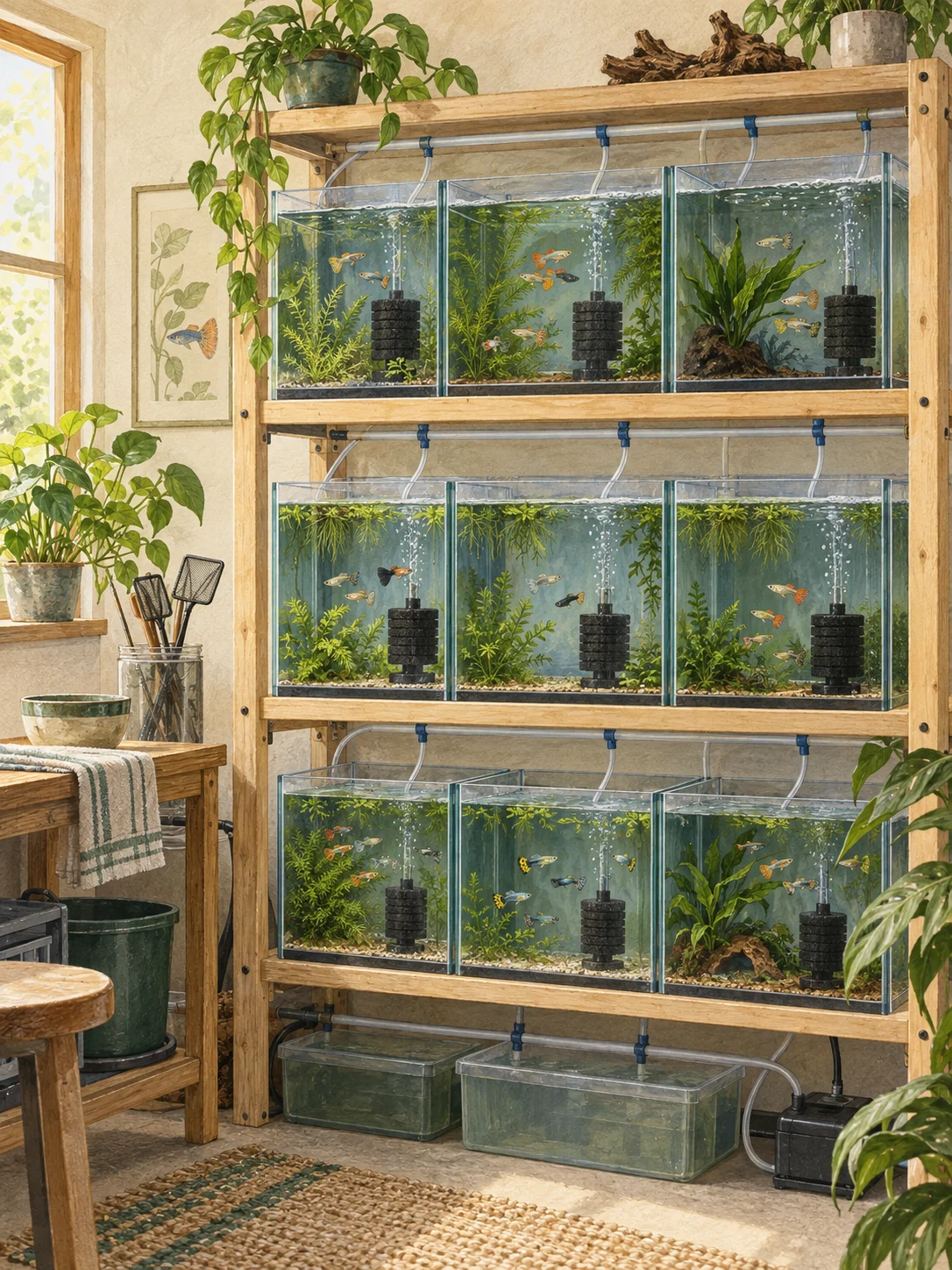
Our guppy guides focus on practical routines: keep water stable, observe fish closely and allow for natural variation.
Care systems
Steady water, thoughtful care
Gentle filtration and regular observation support healthy aquarium routines.
Natural variation
Every guppy is different
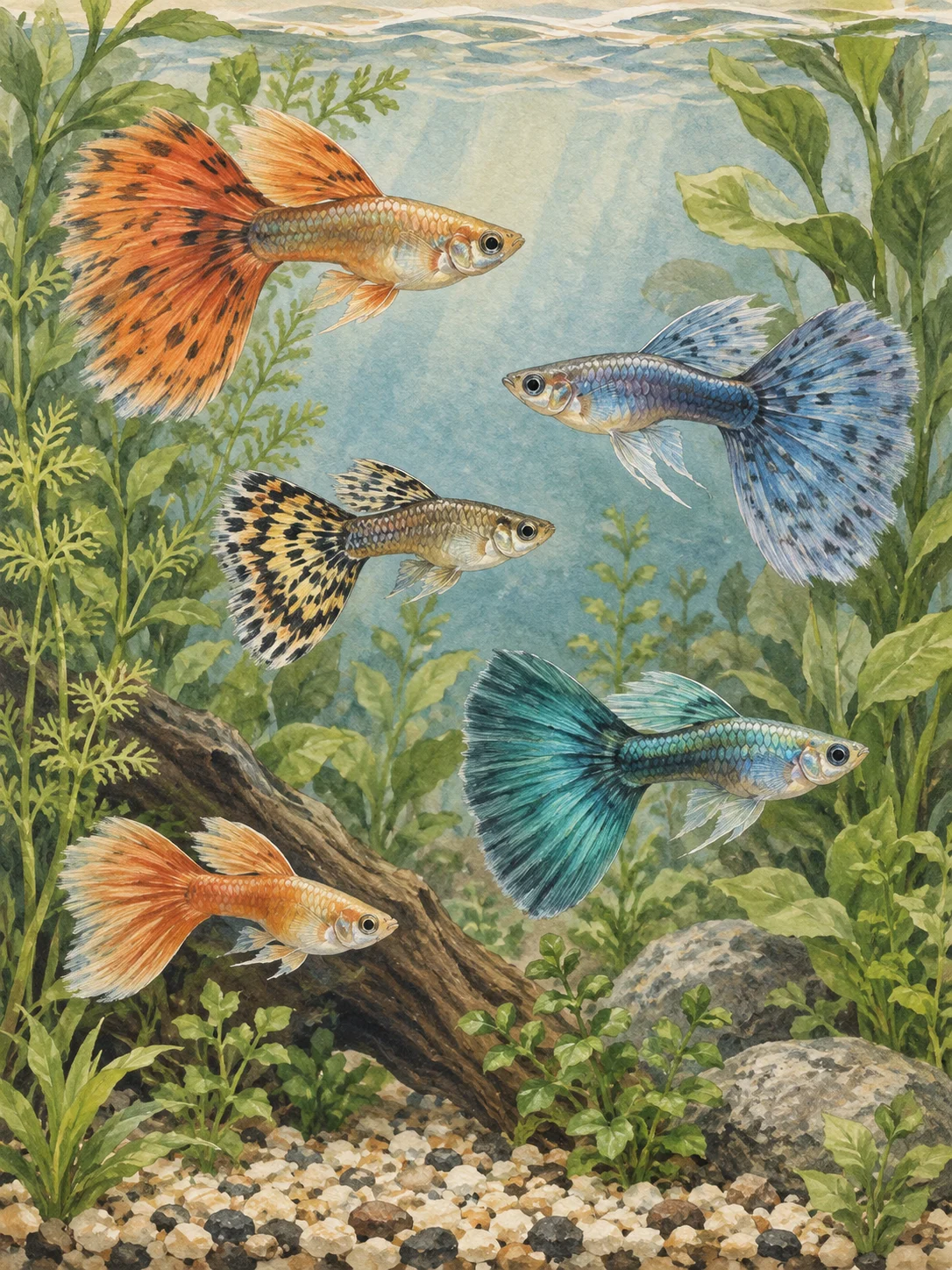
Color, size and fin shape vary with strain, age and each individual fish.
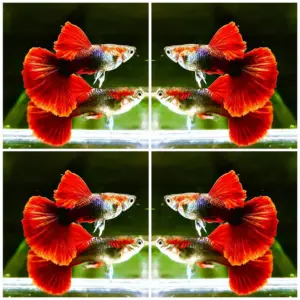
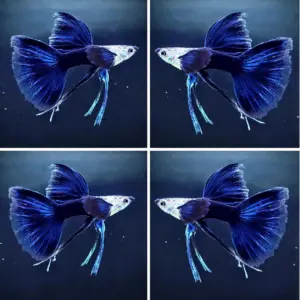
Editorial illustrations for context; they do not depict HiGuppy's exact facility or current fish stock.