The HiGuppy Journal
Koi Guppy Strain Guide: Identification, Care & Breeding
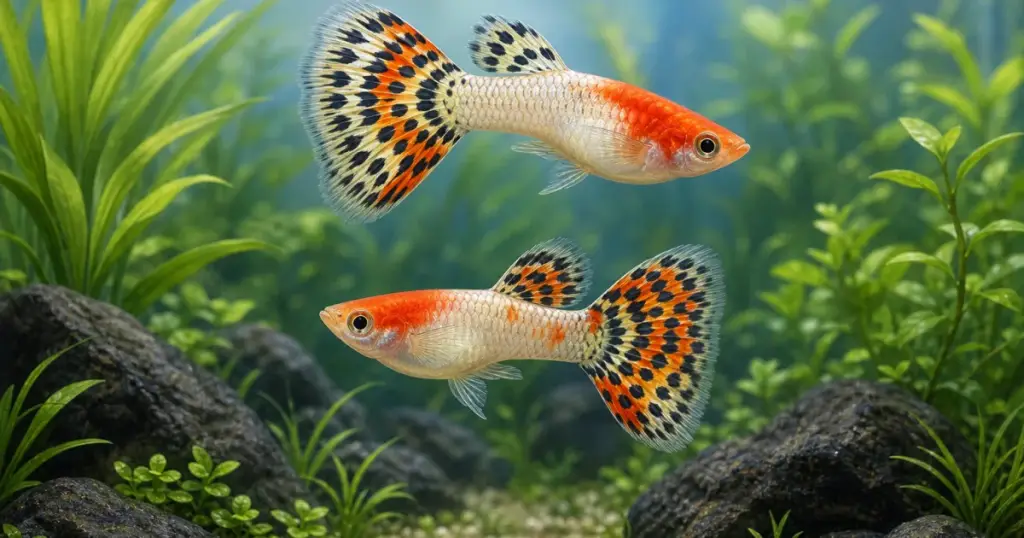
Quick answer: A Koi Guppy is a fancy guppy selected for bold blocks of red, orange, white, cream, or dark color that resemble the contrast seen in koi carp. A healthy line needs ordinary guppy care: stable water, gentle filtration, varied food, peaceful tank mates, and careful acclimation.
How to identify a Koi Guppy
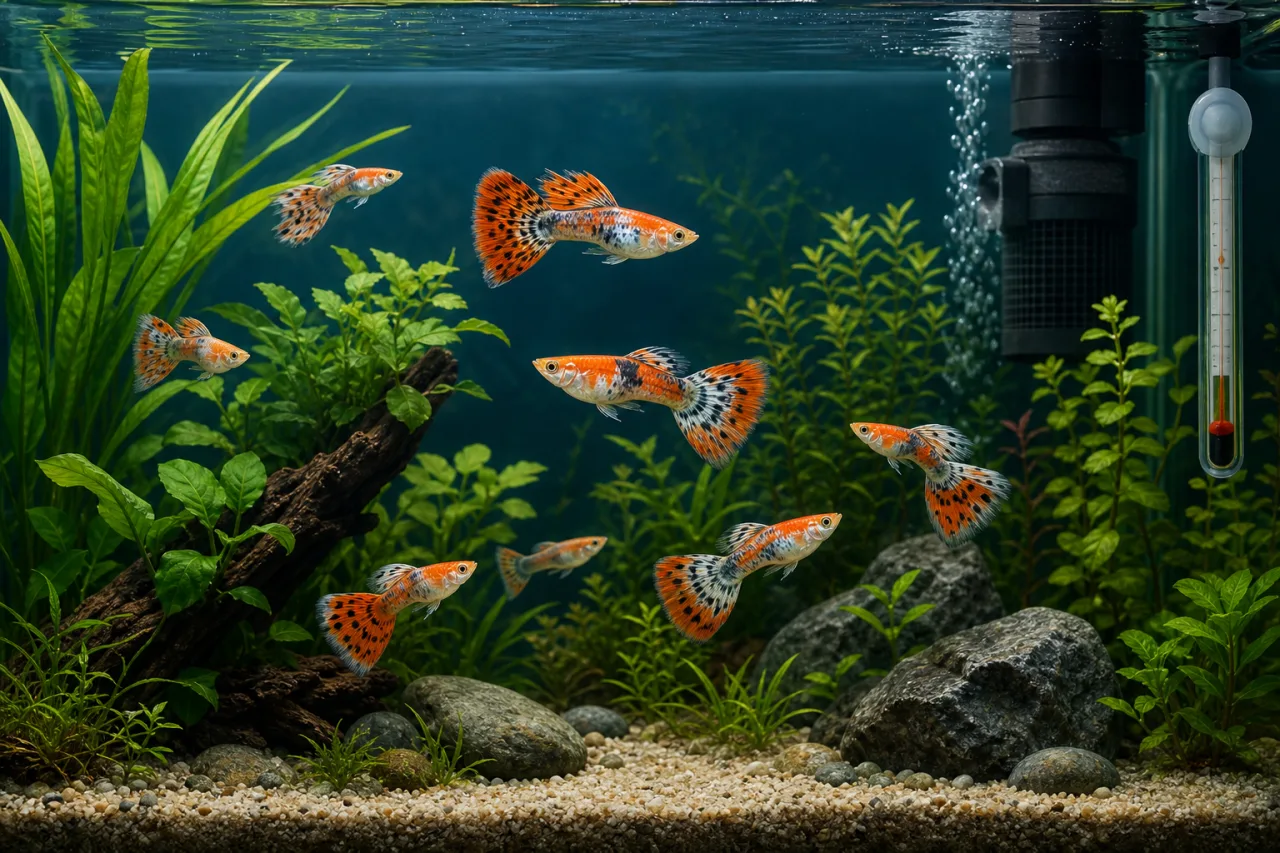
Koi Guppy is a trade and hobby name used for several color lines rather than one guaranteed pattern. The most familiar examples have a pale or light body with orange-to-red color around the head, shoulders, or tail. Some lines include black patches, metallic areas, or tuxedo-like body color.
Face and shoulder color
Look for a clear red or orange area near the face or front body. Coverage varies by line, age, sex, and lighting.
Body contrast
A cream, white, gold, silver, or dark body creates the koi-like contrast. Not every fish will have perfectly even boundaries.
Tail pattern
The tail may be solid, two-tone, spotted, or patterned. Tail shape and color should be evaluated separately from the koi label.
Koi Guppy care at a glance
| Care factor | Practical target |
|---|---|
| Temperature | About 72–80°F (22–27°C), kept stable |
| pH | Approximately 7.0–8.0; avoid rapid swings |
| Ammonia / nitrite | 0 ppm in a fully cycled aquarium |
| Filtration | Reliable biological filtration with moderate flow |
| Tank mates | Peaceful fish that do not chase or nip fins |
| Diet | Quality staple food plus controlled variety |
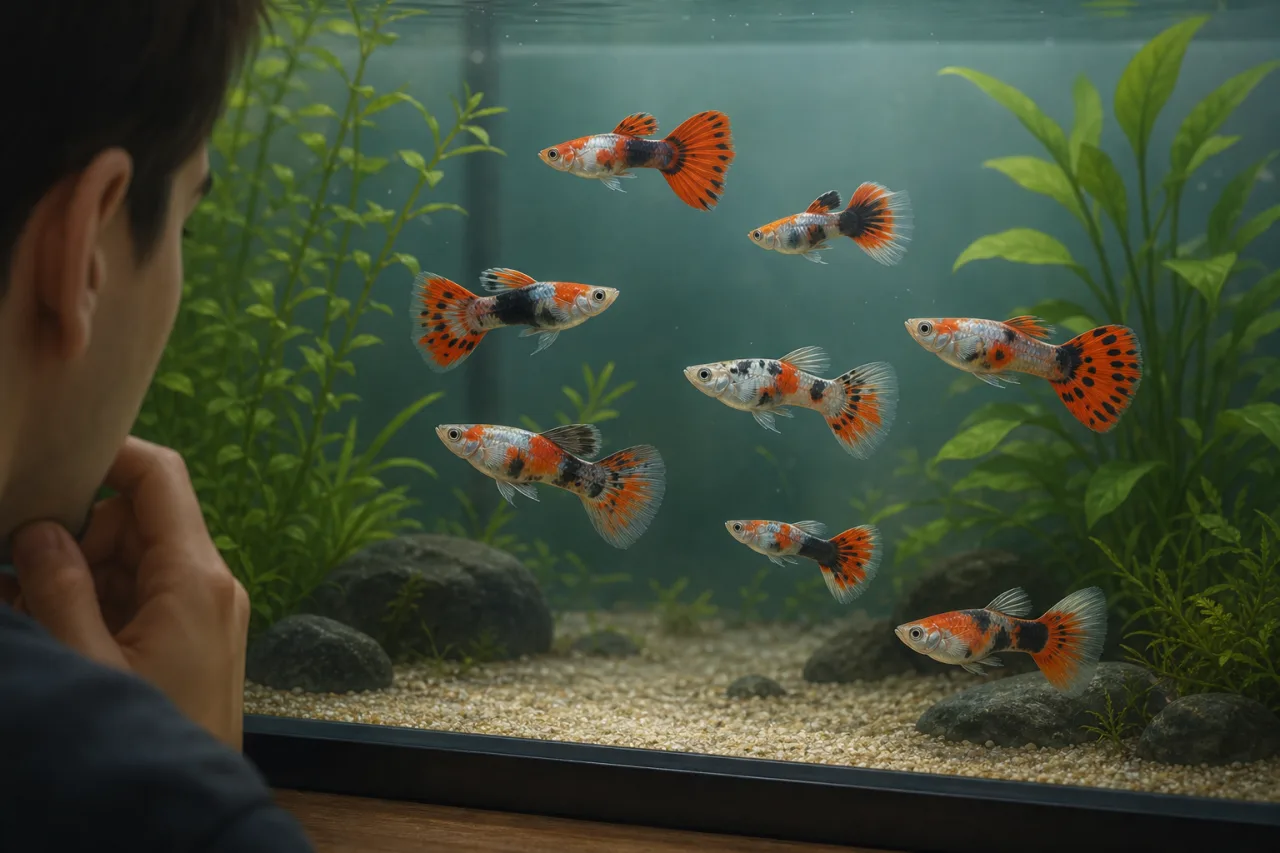
Use the same fundamentals described in the Guppy Care Guide and water parameters guide. Color is not a substitute for vigor: active swimming, an alert response, open fins, and steady feeding matter more than a perfect patch.
Male, female, and selection notes
Male Koi Guppy
- Usually smaller and more intensely colored
- Often has a larger display tail
- Has a pointed gonopodium
Female Koi Guppy
- Usually larger and deeper-bodied
- May show softer or less extensive color
- Has a fan-shaped anal fin
When choosing breeding stock, compare health, body shape, fin condition, swimming ability, and pattern clarity. Juvenile color can change as fish mature, so avoid judging a young fish from one photograph.
Breeding Koi Guppies
Koi Guppies are livebearers. A starting group of one male with two or three females can spread courtship pressure, but the tank must be large enough and closely observed. Dense plants give females resting places and provide cover for fry.
Offspring may vary in head color, body contrast, tail pattern, and overall balance. Keep breeding records and select gradually rather than assuming every fry will match its parents. Read the educational pair vs trio comparison and the breeding hub before planning a line.
After shipping and acclimation
Koi color may appear muted after darkness, fasting, or temperature change in transit. Prepare a cycled aquarium, follow the written acclimation guide, and never judge color while the fish is still stressed in the bag. Review the current shipping policy and live-arrival policy before ordering.
Koi Guppy FAQ
Are Koi Guppies related to koi carp?
No. Koi Guppies are guppies, Poecilia reticulata. The name describes a visual resemblance in color blocking, not a relationship to koi carp.
Do all Koi Guppies have a red head?
No. Red or orange head color is common, but coverage and placement vary between lines and individual fish.
Do Koi Guppies need special food?
No special food is required. Use a balanced guppy staple and rotate suitable foods in small portions while protecting water quality.
Can Koi Guppies live with other guppies?
Yes, if the aquarium is cycled, stocking and sex ratios are sensible, and all fish are healthy and peaceful.
Compare this variety with other educational profiles in the Guppy Strains & Types hub. Product availability changes; only use current listings on the shop page.
Behind the care guides
Care begins with steady systems
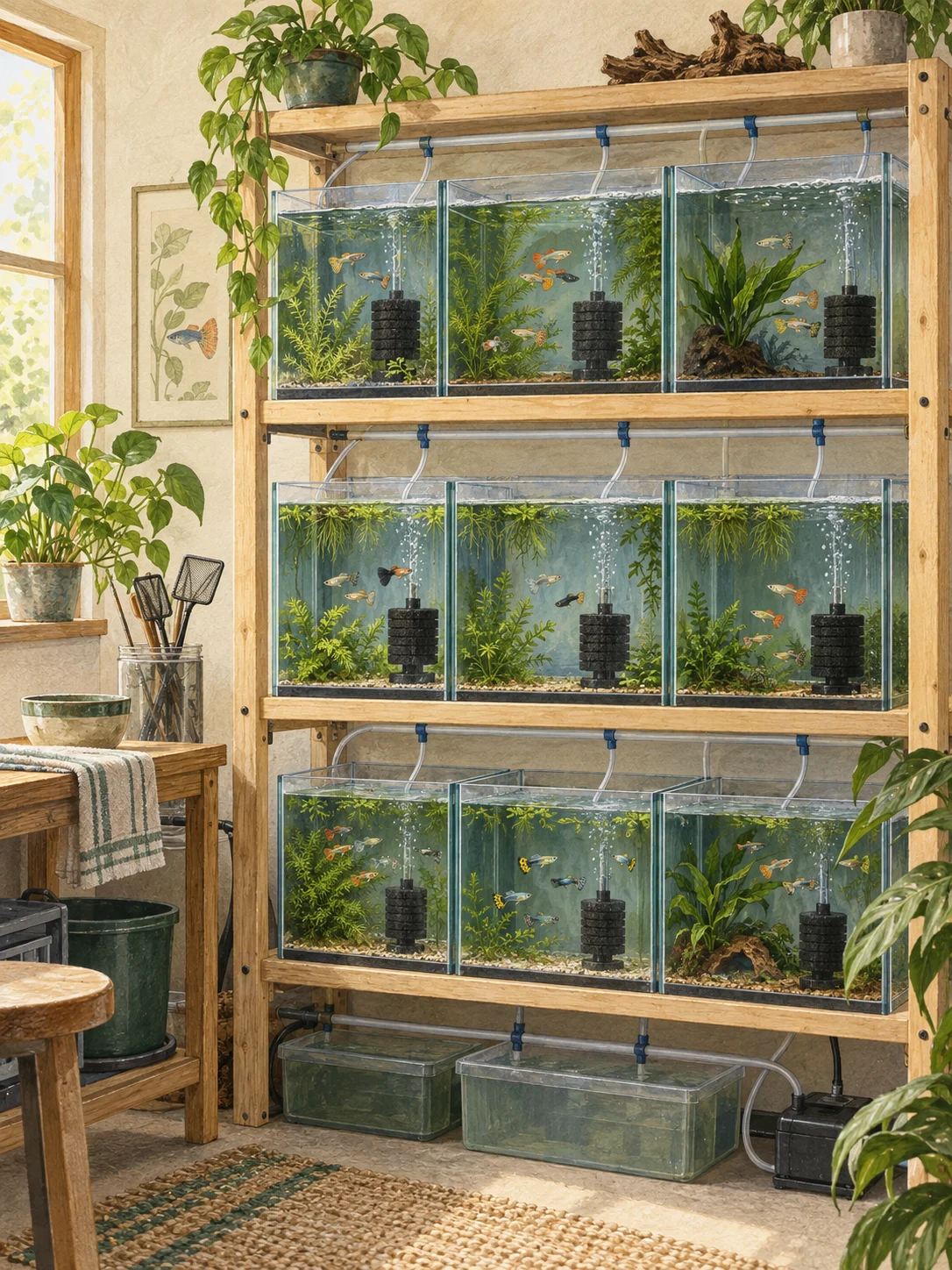
Our guppy guides focus on practical routines: keep water stable, observe fish closely and allow for natural variation.
Care systems
Steady water, thoughtful care
Gentle filtration and regular observation support healthy aquarium routines.
Natural variation
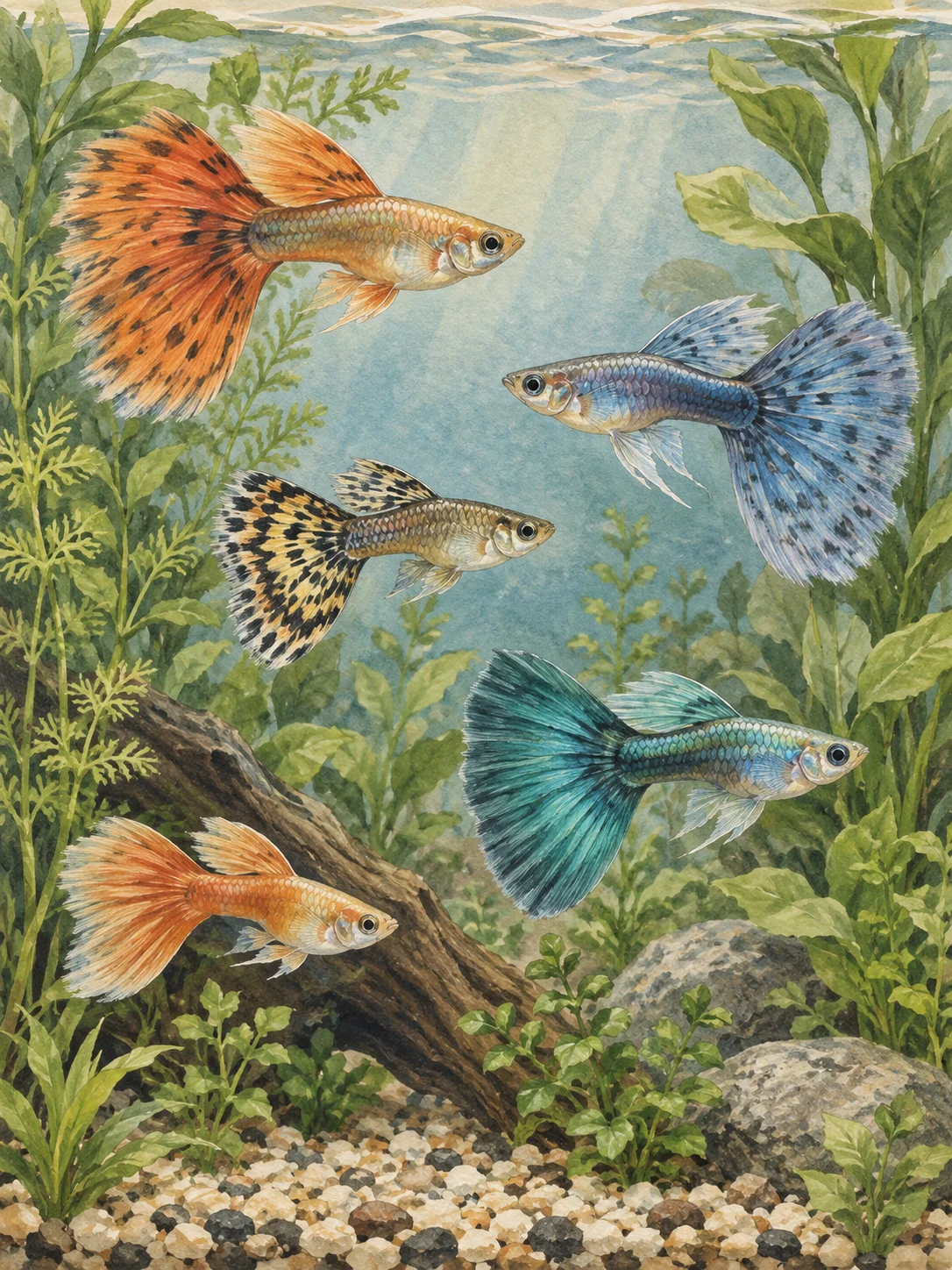
Every guppy is different
Color, size and fin shape vary with strain, age and each individual fish.
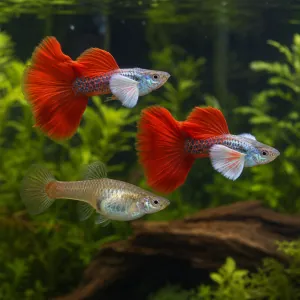
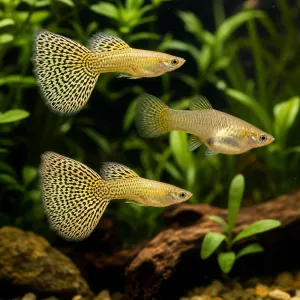
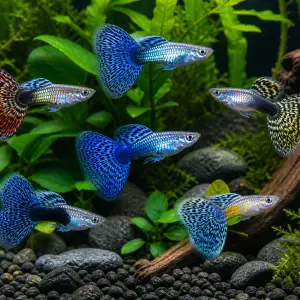
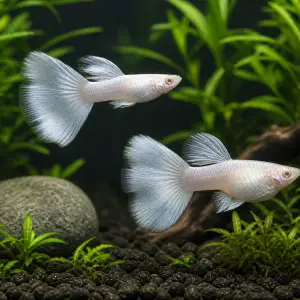
Editorial illustrations for context; they do not depict HiGuppy's exact facility or current fish stock.