The HiGuppy Journal
Can Guppies Eat Peas? How to Prepare, Feed and Fix Constipation
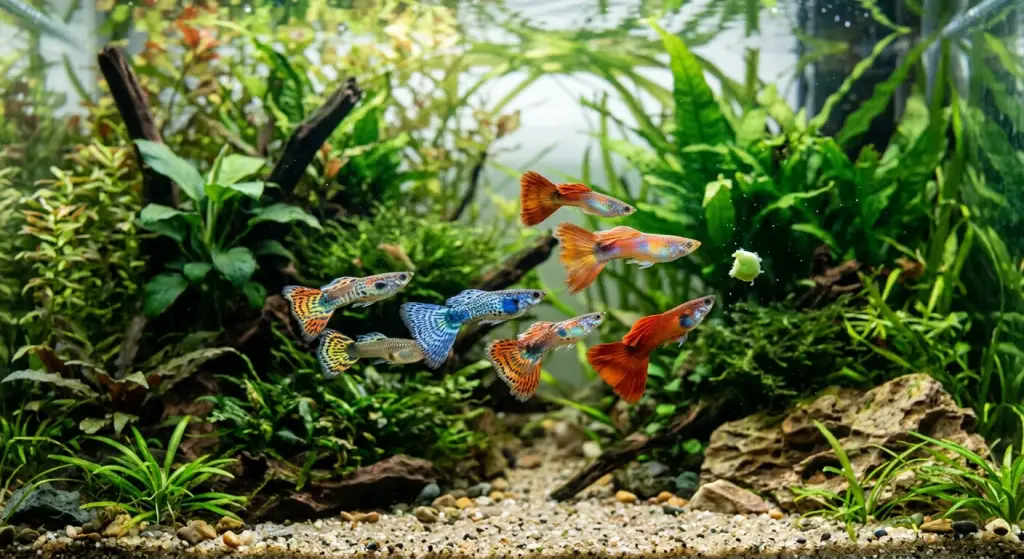
Can guppies eat peas? Yes. Guppies can eat peas safely when the pea is shelled, blanched until soft and mashed or cut into tiny pieces, and fed only as an occasional treat. Peas are widely used by hobbyists to help a constipated fish pass waste, but they are not a complete food and should never replace a quality flake or micro pellet. This guide is part of our complete guppy care guide and shows exactly how to prepare peas, how much to feed, and when peas help or hurt.
Guppies are omnivores with small mouths and short digestive tracts, which is why preparation and portion size matter more than the food itself. Below you will find a step-by-step preparation method, feeding amounts for adults and fry, signs that peas are helping, a table of risks, and answers to the questions keepers ask most.
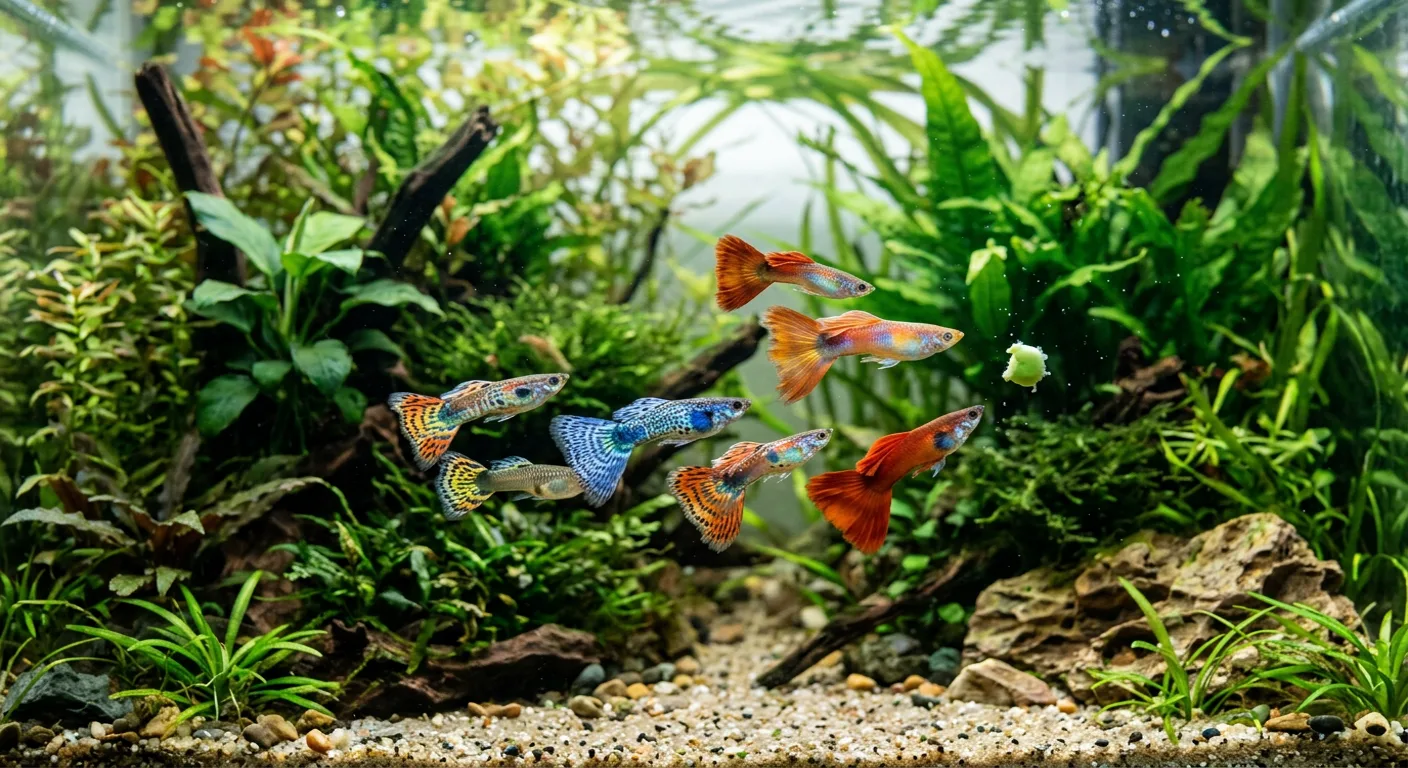
Can guppies eat peas? The short answer and the reason it works
Guppies will accept peas and digest them well when the food is soft. A pea is mostly water, plant fiber and carbohydrate, with small amounts of protein and vitamins. The fiber and soft texture add bulk to the gut, which is why many keepers use peas as a gentle aid when a guppy looks bloated or has not passed waste for a day or two. That said, there is no strong scientific trial on peas in guppies specifically, so treat the advice here as common hobby practice rather than a guaranteed cure.
What a guppy actually eats in nature
Wild guppies feed on small insects, larvae, algae, plant fragments and organic debris. That mix means a guppy in your tank benefits from some plant matter alongside protein. A weekly vegetable treat fits that pattern, while a diet of only peas would leave out the protein and fat that growing and breeding fish need.
Peas as a treat, not a staple
Think of peas as a side dish. A good daily base is a quality flake or micro pellet, as we explain in flakes vs pellets for guppies, with live or frozen foods rotated in. Peas add variety and fiber once or twice a week at most.
Frozen, fresh or canned?
- Fresh or frozen peas: the best choice. Plain frozen garden peas are cheap and easy to thaw.
- Canned peas: usually packed in salt water, so rinse thoroughly or skip them.
- Seasoned or buttered peas: never use them. Salt, butter and spices do not belong in an aquarium.
How to prepare peas for guppies step by step
Preparation is where most mistakes happen. A whole pea or its skin is too large and tough for a guppy, and uneaten pieces foul the water quickly. Follow these steps every time.
The preparation method
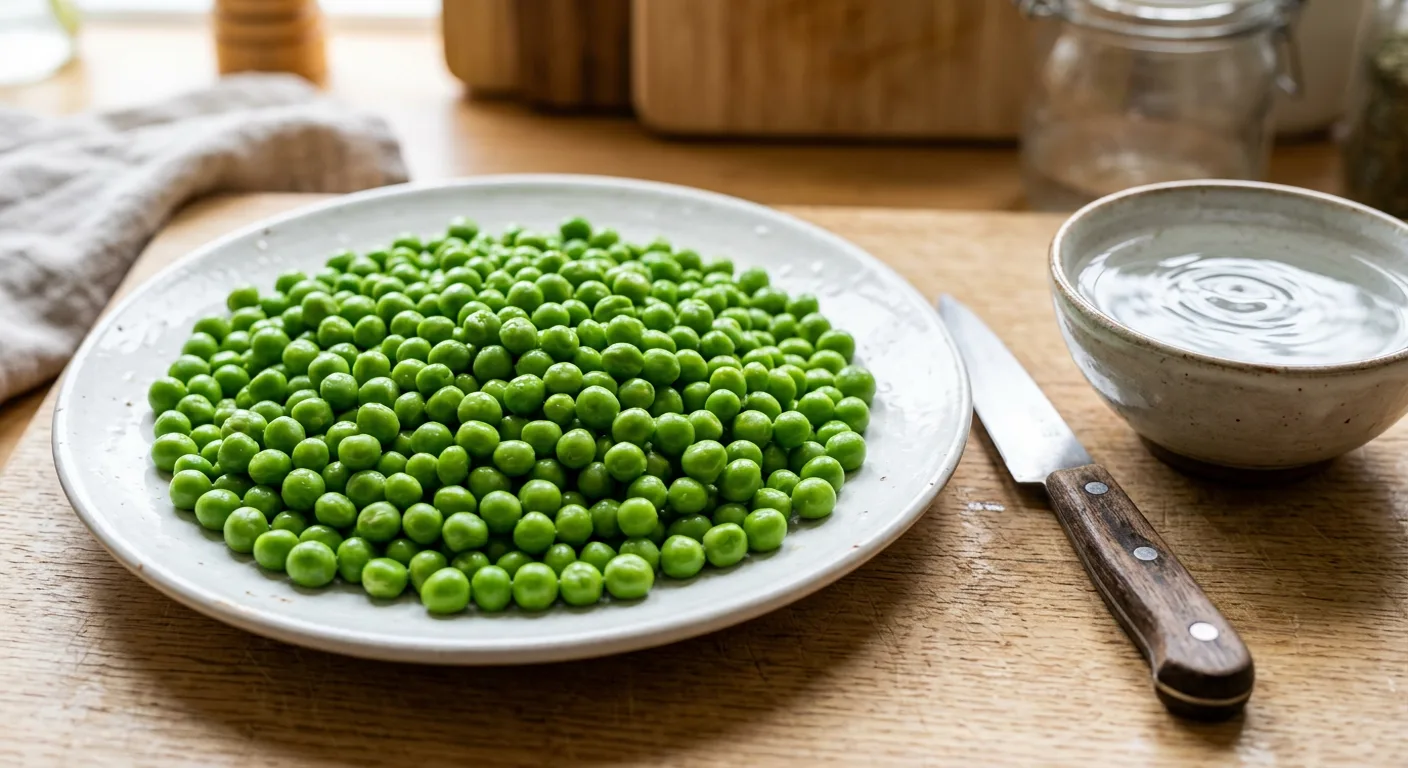
- Choose plain peas. Use fresh or frozen peas with nothing added.
- Blanch or boil them. Cook in plain boiling water for about 2 to 3 minutes until soft, or microwave briefly in a little water.
- Cool them. Move the peas into cold water so you can handle them safely.
- Remove the skin. Squeeze each pea gently between your fingers so the soft inside pops out. Discard the tough skin.
- Mash or cut. Mash the inside into a paste, then roll off tiny pieces about the size of a guppy eye or a grain of rice. For adults, a piece slightly larger than the head of a pin is plenty.
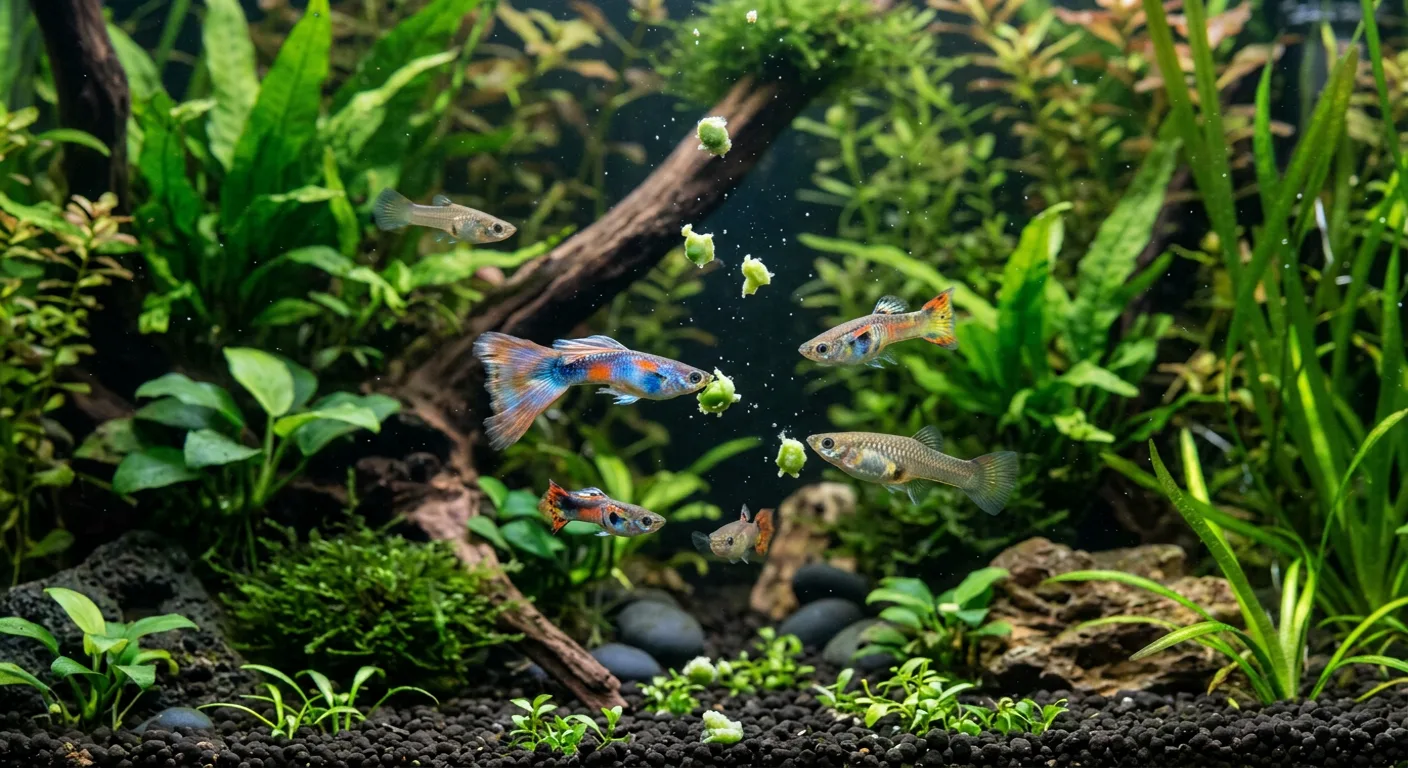
- Offer a small amount. Drop a few tiny pieces into the tank near where the fish are active.
- Remove leftovers. After 5 to 10 minutes, siphon or net out anything uneaten.
How to store prepared peas
Blanch a handful at once and freeze the peeled pieces in an ice cube tray with a splash of tank water. Freeze, pop them out into a bag and thaw one tiny portion when needed. Do not keep thawed peas in the fridge for more than a day or so.
Common preparation errors
- Feeding the skin, which guppies cannot digest well.
- Dropping in a half pea that sinks and rots.
- Adding peas with butter, salt or sauce.
- Feeding warm peas that can stress or harm the fish.
How much and how often to feed peas
Portion control matters because a guppy stomach is about the size of its eye. A little goes a long way, and overfeeding is a leading cause of cloudy water and digestive trouble. For more on this, read our guide to overfeeding guppies.
| Fish | Portion per feeding | How often | Notes |
|---|---|---|---|
| Adult guppy | A few rice-grain-sized pieces for the group | Once or twice a week | Skip a regular meal that day if the tank is crowded |
| Juvenile | Tiny paste, smaller than a grain of rice | Once a week | Mix with powdered food |
| Fry | Very fine paste, only a smear | Occasionally | Prefer baby brine shrimp and fry food |
| Constipated adult | One or two tiny pieces | Once a day for 1 to 3 days | Stop if there is no improvement and review water |
Replace a meal, do not add one
On pea day, swap the pea in for part of the usual meal instead of adding it on top. This keeps total food the same and prevents bloating. Our how often to feed guppies guide gives a full daily schedule.
Feeding a group fairly
Bolder fish will grab most of the pieces. Scatter the food in two or three spots and watch that shy females and smaller males get a share. If a fish never eats, watch for signs of stress and check our guide on signs of stress in guppies.
Peas for constipation and bloating: what to expect
The best known use of peas is for a guppy that looks swollen or is producing little waste. Constipation usually follows overfeeding, a diet of dry food only, or low temperature. A pea can help by adding moisture and fiber, but it is only a first step.
Signs of constipation in guppies
- A swollen belly with scales still lying flat.
- Little or no waste, or waste that is pale and stringy.
- Swimming near the bottom or hanging at the surface.
- Eating less than usual but not clamped or covered in spots.
A simple 3-day plan
- Day 1: Skip the regular dry food and offer one or two tiny pieces of mashed pea.
- Day 2: Offer peas again, and check waste. Do a 25 percent water change with dechlorinated water at matching temperature.
- Day 3: Return to a small amount of normal food. Keep the water at around 76 to 80 °F (24 to 27 °C).
Many fish pass waste within a day or two. If the belly is still large after about three days, or if the fish shows raised scales, move on to a proper diagnosis.
When it is not constipation
A swollen guppy may also be pregnant, fat, or sick. Pinecone-like scales point to dropsy, which is serious, so read our pages on guppy dropsy and bloated guppy causes. Peas will not cure an infection.
Benefits and risks of feeding peas
Peas have clear upsides and a few real risks. The table summarizes both so you can decide when to use them.
| Aspect | Benefit | Risk | How to manage |
|---|---|---|---|
| Fiber | Adds bulk that may ease digestion | Too much can cause loose waste | Feed tiny portions |
| Plant matter | Adds variety to an omnivore diet | Low protein for growth and breeding | Keep a protein-rich base diet |
| Softness | Easy for small mouths when mashed | Whole peas or skins are hard to eat | Peel and mash |
| Water quality | Cheap and easy to prepare | Leftovers rot and raise ammonia | Remove uneaten food in 10 minutes |
| Cost | Very low cost | None directly | Freeze portions to avoid waste |
Water quality after feeding peas
Rotting food produces ammonia, which is toxic to guppies. After a pea feeding, test your water if the tank is small or heavily stocked. Our pages on nitrite poisoning and nitrate in a guppy tank show the targets to aim for: ammonia and nitrite at zero, nitrate as low as practical.
Why not feed peas every day
Daily peas would crowd out protein. Breeding females, growing fry and colorful males all need protein and fat from good quality food, as well as live or frozen foods such as brine shrimp and daphnia. Peas are a helper, not the main act.
Other vegetables guppies can eat
Peas are only one option. If your guppies like plant matter, rotate a few safe vegetables to keep things interesting. Our broader list is in can guppies eat vegetables.
| Vegetable | Preparation | Best use |
|---|---|---|
| Peas | Blanch, peel, mash | Fiber treat and constipation help |
| Zucchini | Blanch, slice very thin or shred | Grazing treat |
| Spinach | Blanch, chop finely | Occasional greens |
| Cucumber | Peel, blanch, shred | Light snack |
| Carrot | Cook very soft, mash | Occasional variety |
Tips for newer keepers
Stick with one new food at a time so you can see how the fish respond. Small is better, and removing leftovers matters more than the exact vegetable.
Tips for experienced keepers
If you breed guppies, use peas sparingly for adults and fry, and focus on live foods and high protein diets for conditioning. For fry, see our guppy fry feeding schedule.
Building a balanced guppy diet around occasional peas
A strong diet is what prevents digestive problems in the first place. Peas should sit alongside good daily feeding habits.
A sample weekly feeding plan
| Day | Morning | Evening |
|---|---|---|
| Monday | Quality flake or micro pellet | Small portion of frozen daphnia |
| Tuesday | Flake or pellet | Flake or pellet |
| Wednesday | Flake or pellet | Tiny pieces of mashed pea |
| Thursday | Flake or pellet | Frozen brine shrimp |
| Friday | Flake or pellet | Flake or pellet |
| Saturday | Flake or pellet | Live or frozen bloodworm, very small amount |
| Sunday | Fasting day or light feed | None |
Adjust to your tank
This is a template, not a rule. A heavily planted tank with natural grazing may need less food, while a tank with many fish needs smaller portions per fish. Always watch bellies and waste, and cut back at the first sign of bloating.
Habits that prevent constipation
- Soak dry food for a minute before feeding.
- Feed only what fish finish in two to three minutes.
- Keep the temperature stable around 76 to 80 °F.
- Do weekly water changes of about 20 to 30 percent.
- Include a fasting day if fish look heavy.
Troubleshooting after feeding peas
My guppies ignore the peas
Some guppies are picky at first. Try a slightly smaller piece, or mix a pinch of the paste with a food they already love. Wait a few days and try again, since fish often accept a new food after seeing others eat it.
The water turned cloudy
Cloudiness after feeding usually means too much food. Net out leftovers, do a partial water change and cut portions next time. Persistent cloudiness points to a bacterial bloom or poor filtration, which our guppy disease prevention guide helps you avoid.
Fish look worse after peas
Stop feeding peas and test the water. If a guppy is bloated with raised scales, clamped fins or white stringy waste, treat it as illness instead of simple constipation. A quarantine tank and a vet or experienced keeper can help.
Common myths about peas and guppies
Peas have a strong reputation in the hobby, and some of it is exaggerated. Knowing what is myth and what is practical helps you avoid wasted effort and unnecessary risk.
Myth: peas cure every swollen belly
Peas address one cause of bloating: a sluggish gut after overfeeding or too much dry food. They do nothing for bacterial infections, internal parasites or organ problems. If you see raised scales, a rapidly worsening belly, or a fish that lies on the bottom, act on the underlying disease instead of repeating peas for a week.
Myth: the more peas, the faster the result
Extra peas simply add more waste to the tank. One or two tiny pieces per fish is enough, and giving more will not speed anything up. Overdoing it can cause cloudy water and a second round of digestive upset.
Myth: dry food swells in the stomach and kills guppies
Dry flake does not explode in a guppy stomach, but overfeeding dry food and skipping variety is a real cause of constipation. Soaking food briefly, feeding smaller portions and adding a fasting day each week prevents most problems without any special treatment.
Real-life example
Imagine a 10 gallon tank with eight guppies fed twice a day. One female looks round and passes little waste. Instead of adding more food, the keeper skips one meal, offers two tiny pieces of peeled pea the next evening, does a 25 percent water change and checks the temperature at 78 °F. Within two days the belly shrinks and waste returns to normal. The same keeper then cuts each meal to what the fish finish in two minutes, which stops the problem from coming back.
Water and tank conditions that support healthy digestion
Digestion depends on more than food. A guppy in cold, dirty or stressful water digests slowly, so check the basics before blaming the diet.
Temperature
Most keepers hold guppies between 74 and 82 °F (23 to 28 °C). Cooler water slows metabolism and digestion, so a heater and a reliable thermometer are worth having. Aim for a steady temperature rather than frequent swings.
Water parameters
Test ammonia and nitrite and keep both at zero. Keep nitrate low with regular water changes, and hold pH around 7.0 to 7.6, as described in our ideal pH for guppies guide. Stable numbers matter more than perfect ones.
Stocking and stress
Overcrowded tanks produce more waste and more competition at feeding time. A quiet, planted tank with a sensible male to female ratio lets fish eat calmly, which supports digestion. If your fish seem slow or tired, read why is my guppy lethargic for the next steps.
Quick checklist
- Use plain fresh or frozen peas only.
- Blanch for 2 to 3 minutes and remove the skin.
- Mash into tiny pieces, about a rice grain or smaller.
- Feed once or twice a week, or daily for 1 to 3 days for constipation.
- Remove leftovers after 5 to 10 minutes.
- Keep a quality flake or pellet as the staple.
- Check water quality after feeding.
- See a diagnosis guide if the belly stays swollen.
Healthy fish start with healthy stock, so browse our male guppies and premium guppy pairs. For background on the species, see Guppy on Wikipedia, and visit our guppy care hub for more feeding guides.
FAQ
Can guppies eat peas every day?
It is better not to. Peas lack the protein and fat guppies need, so daily feeding can hurt growth and breeding. Use them once or twice a week, or daily for a few days only when treating constipation.
Do I need to remove the pea skin for guppies?
Yes. The skin is tough and hard for a guppy to digest. Blanch the pea, squeeze out the soft inside and mash it into tiny pieces.
Are frozen peas safe for guppies?
Yes, plain frozen garden peas are fine. Thaw and blanch them, then peel and mash. Avoid any product with salt, butter or seasoning.
Can guppy fry eat peas?
Fry can eat a very fine paste, but it is not ideal as a main food. Baby brine shrimp and powdered fry food give them the protein they need. Use peas only as an occasional extra.
How long should I leave peas in the tank?
Remove uneaten pieces after 5 to 10 minutes. Soft food breaks down quickly and can raise ammonia. A small net or siphon makes cleanup easy.
Will peas cure a bloated guppy?
Not always. Peas can help simple constipation, but bloating can also come from dropsy, parasites or pregnancy. If the belly stays swollen after about three days or scales stick out, treat it as illness.
What other foods can guppies eat besides peas?
Quality flake or micro pellets, frozen daphnia, brine shrimp and bloodworms, and blanched vegetables such as zucchini or spinach. Rotate foods for a balanced diet.
Behind the care guides
Care begins with steady systems
Our guppy guides focus on practical routines: keep water stable, observe fish closely and allow for natural variation.

Care systems
Steady water, thoughtful care
Gentle filtration and regular observation support healthy aquarium routines.

Natural variation
Every guppy is different
Color, size and fin shape vary with strain, age and each individual fish.
Editorial illustrations for context; they do not depict HiGuppy's exact facility or current fish stock.