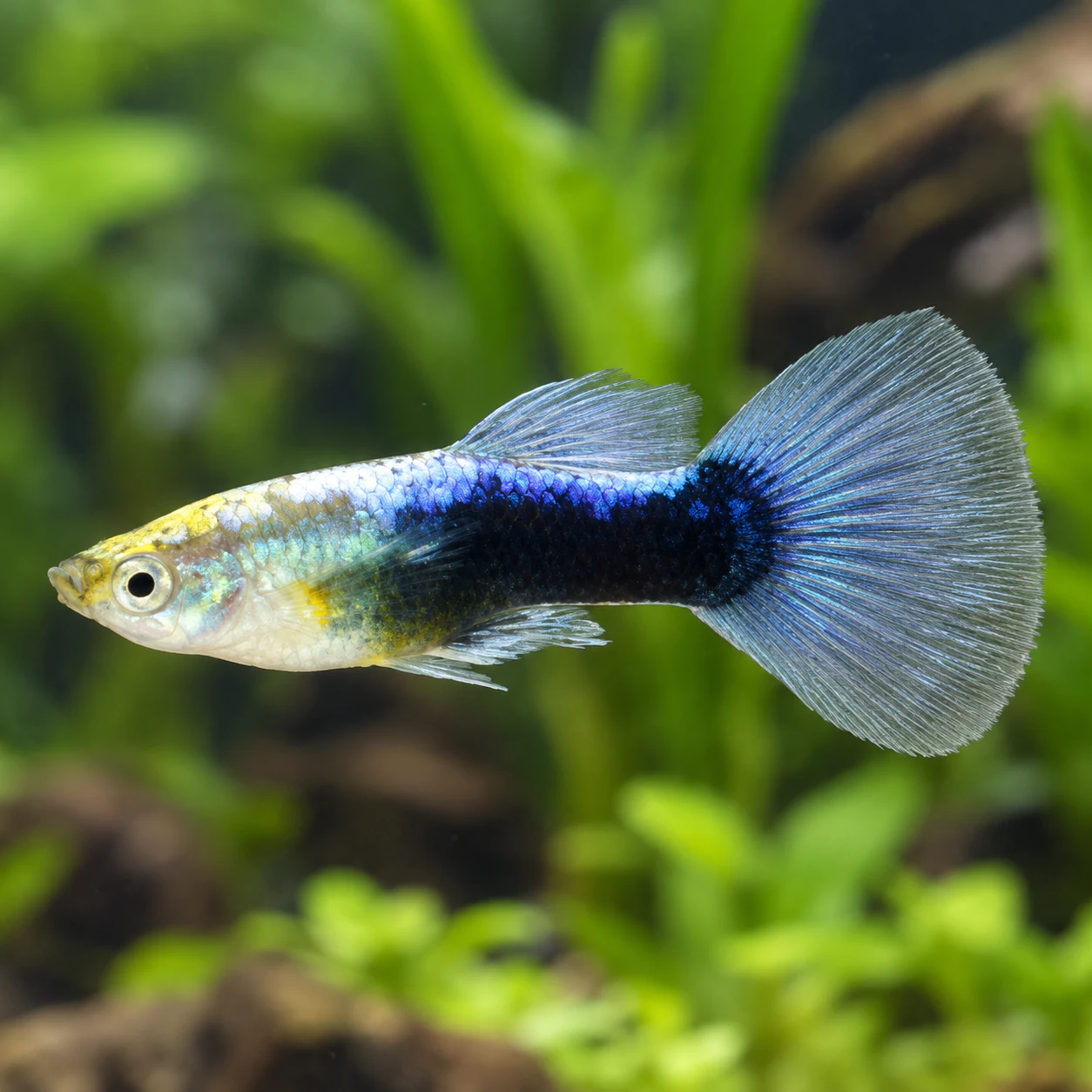
The HiGuppy Journal
Signs of Stress in Guppies: Causes and How to Fix Them
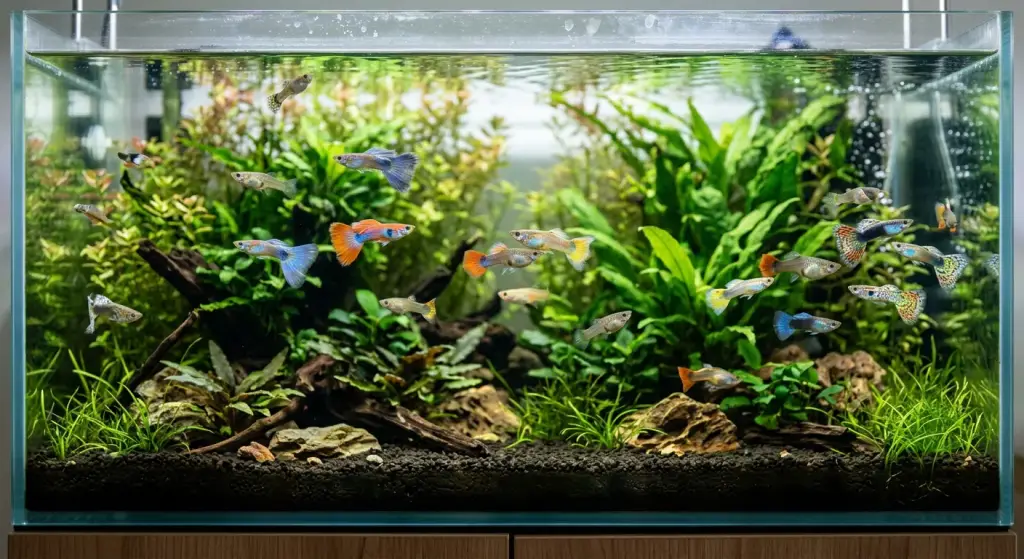
What are the signs of stress in guppies? The most common signs of stress in guppies are clamped fins, hiding, gasping at the surface, faded color, frantic swimming, refusing food and fin nipping. Stress is usually caused by poor water quality, temperature swings, bullying or overcrowding. Fix the cause first, as outlined in our complete guppy care guide.
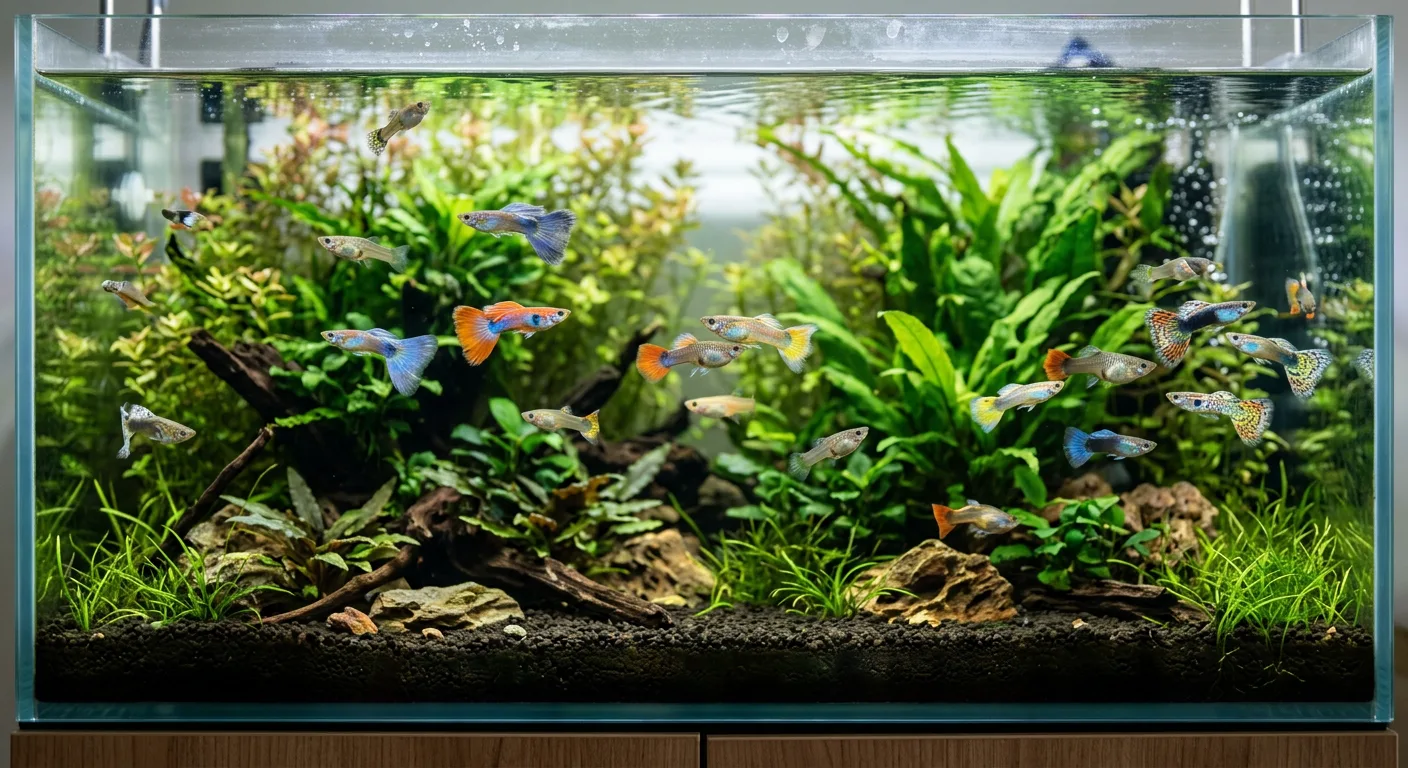
Guppies are hardy, but they cannot tell you something is wrong. Learning the signs of stress in guppies early lets you act before stress turns into disease. This guide lists what to look for, what usually causes it and how to calm a stressed tank. The advice is general, and every tank is different.
What are the signs of stress in guppies?
A relaxed guppy swims openly, flares its tail, eats eagerly and shows steady color. A stressed guppy changes that behavior. One sign alone is not always serious, but several together usually mean something in the tank needs attention.
- Clamped fins: the tail and dorsal fin are held tight against the body.
- Hiding: staying behind decor or in a corner for long periods.
- Gasping at the surface: fast breathing can point to low oxygen or water problems.
- Faded color: a normally bright fish looks pale or dull.
- Erratic swimming: darting, glass surfing or shaking.
- Loss of appetite: ignoring food it normally takes quickly.
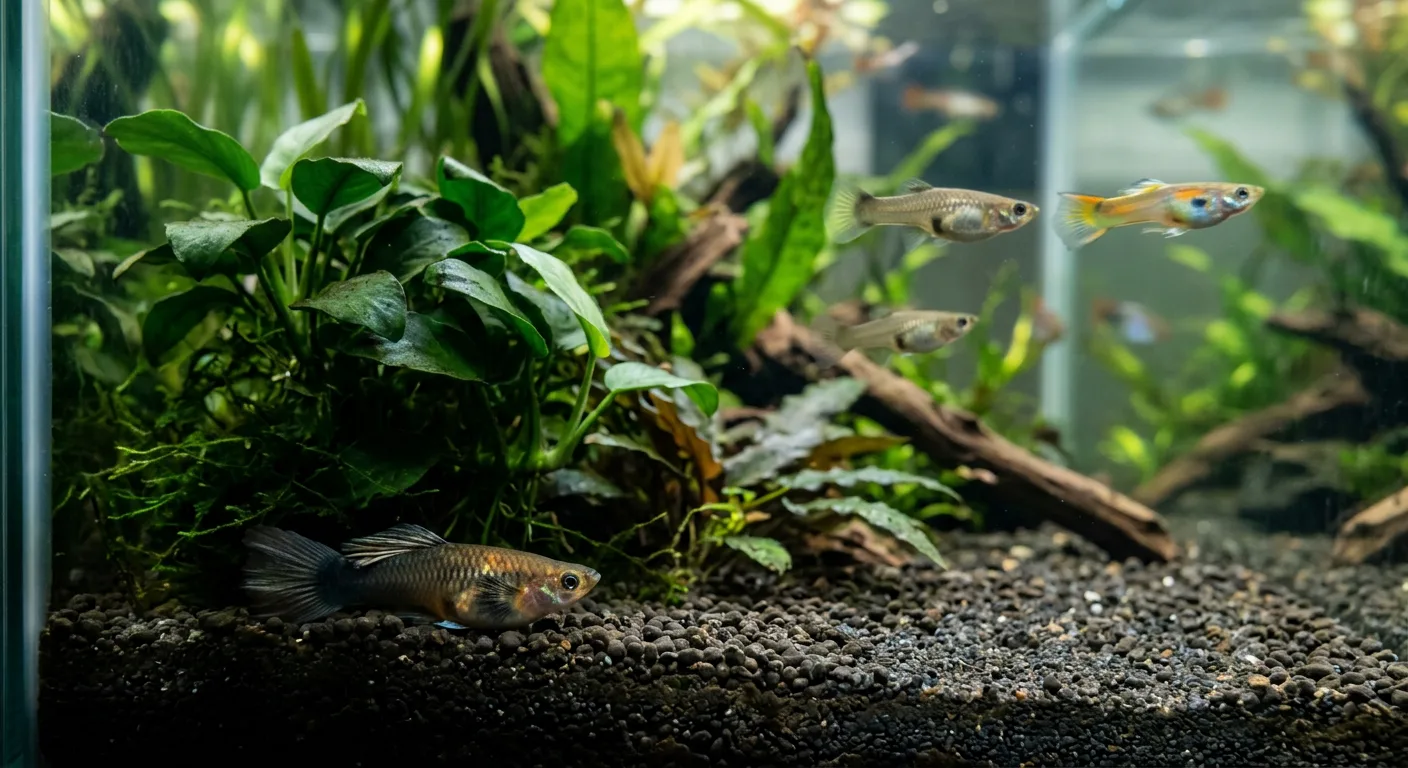
Signs of stress in guppies and what they usually mean
| Sign | Common cause | First thing to check |
|---|---|---|
| Clamped fins | Water quality, cold water, illness | Ammonia, nitrite and temperature |
| Hiding | Bullying, new tank, bright light | Tank mates and hiding spots |
| Gasping at the surface | Low oxygen, ammonia | Filter flow and water tests |
| Faded color | Long-term stress, poor diet | Water changes and food quality |
| Frantic swimming | Sudden parameter change | Recent water change or new fish |
| Fin nipping | Too many males, crowding | Male to female ratio and stocking |
Common causes of guppy stress
Poor water quality
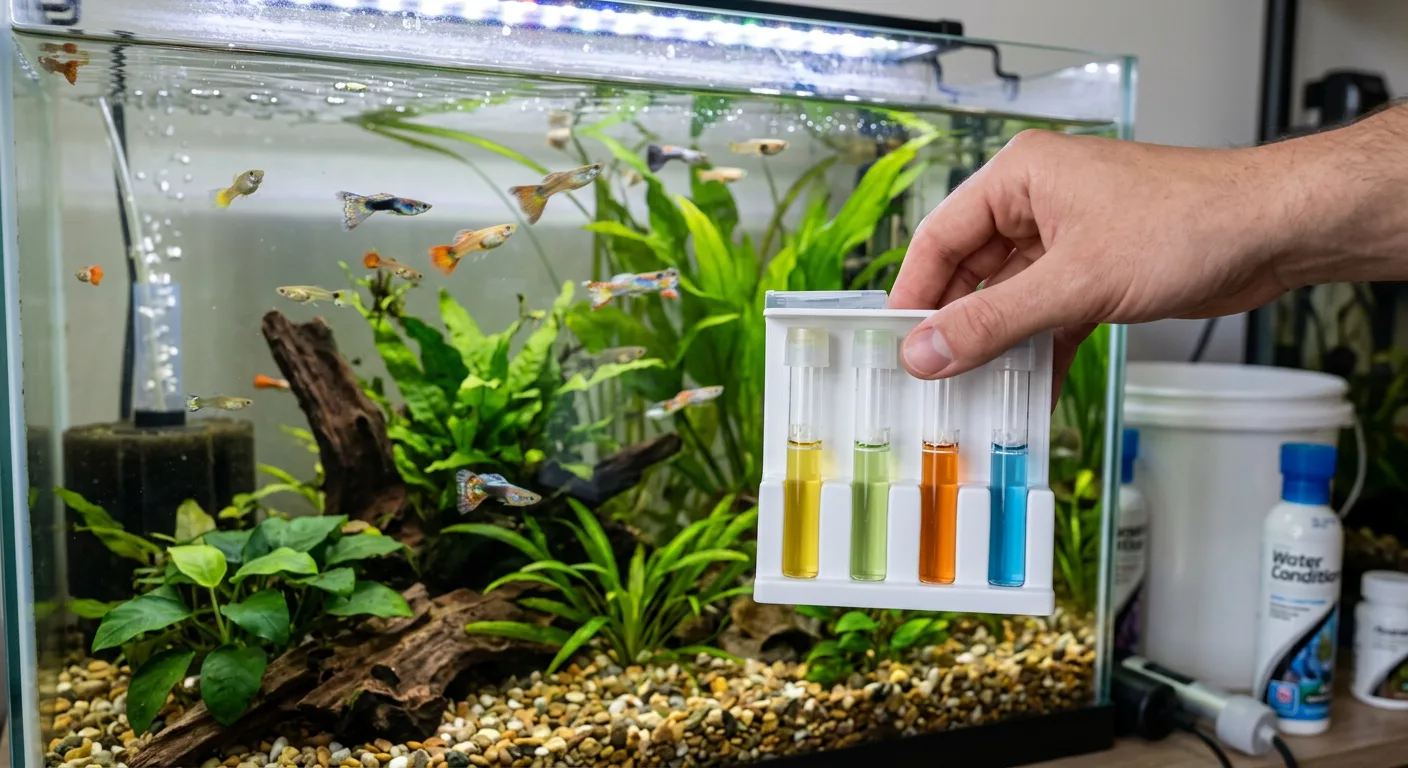
Ammonia and nitrite are the most frequent triggers. Both build up in uncycled or overstocked tanks. Test the water with a liquid kit and read our ammonia poisoning in guppies guide if the numbers are off.
Temperature swings
Guppies tolerate a range, but fast changes are harder on them than a steady temperature. Our guppy water parameters guide covers sensible ranges.
Bullying and wrong ratios
Males chase females constantly when there are too few females. Keeping more females than males spreads out the attention. See the male to female guppy ratio article.
Overcrowding and a new environment
A crowded tank raises waste and competition. Newly arrived fish are also stressed by transport, so give them a quiet first few days. If you just received fish, follow the steps in how to acclimate guppies and keep the lights low at first.
How to calm stressed guppies
- Test the water for ammonia, nitrite, nitrate and pH.
- Do a partial water change with dechlorinated water close to the tank temperature.
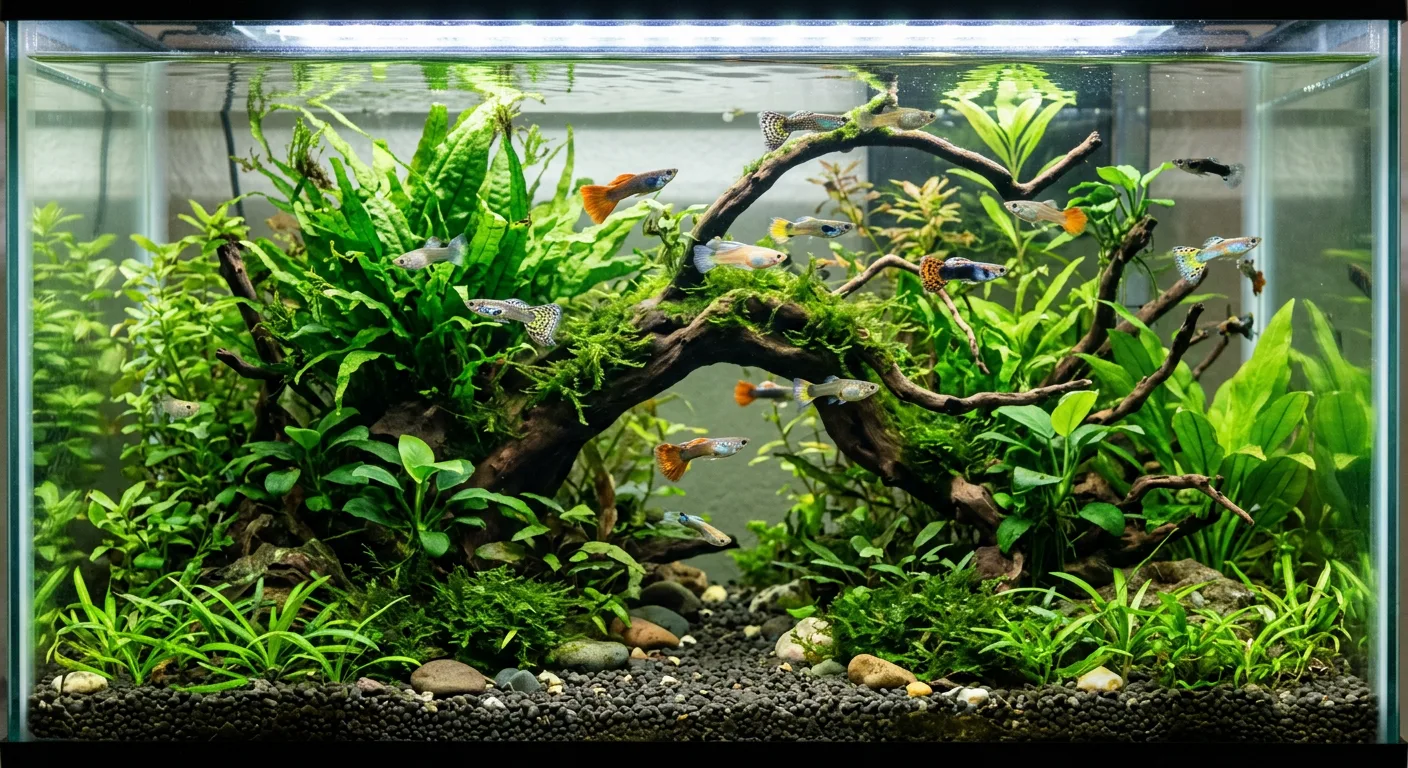
- Add cover: plants and decor give shy fish somewhere to retreat.
- Reduce the cause: remove aggressive fish, add females or move some fish out.
- Feed lightly and remove uneaten food.
- Keep things steady: avoid big changes for several days.
How to tell stress from normal behavior
Not every change is a problem. Guppies rest near plants at night, hide briefly after a water change and may look paler right after being moved. The difference is duration. Normal behavior passes within an hour or so, while stress persists across the day and often comes with other changes. Watch your fish at the same time each day, ideally before feeding, so you learn what normal looks like for your tank.
Males and females also behave differently. Females carrying fry may hang back and breathe a little faster, and males show more chasing in the evening. Comparing a fish to its tank mates is the quickest way to spot the odd one out. If every fish shows the same signs at once, suspect the water. If only one fish does, suspect bullying or illness.
A simple daily check routine
A two-minute check is enough for most home tanks. Spend it looking at the fish rather than the equipment, since behavior usually changes before a test kit shows anything.
- Count the fish and look at where each one is swimming.
- Look at the fins: they should be open, not pinched or ragged.
- Watch the feeding: healthy guppies rush to food.
- Check the filter and heater are running and the water looks clear.
- Test weekly, and any time a fish looks off.
Mistakes that make stress worse
When fish look unwell, keepers often act fast and change too much. Large water changes with cold or untreated water, adding several medications at once and rearranging the whole tank can all add stress on top of the original problem. Change one thing at a time and give it a day or two before judging the result.
Another common mistake is adding new fish straight away to a tank that is already struggling. New arrivals bring their own stress and can carry illness. If the group is unsettled, wait until the signs have cleared and the water tests are stable before adding anyone. A short quarantine for newcomers also protects your existing guppies.
Finally, avoid chasing perfect numbers. A stable tank that is slightly outside a textbook range is usually better for guppies than one that swings back and forth as you adjust it. Aim for steady water, regular small water changes and a calm routine, and most stressed fish settle on their own.
When stress becomes disease
Long-term stress weakens a fish’s defenses, which makes infections more likely. If you also see white spots, torn fins or swelling, treat it as illness. Our guppy clamped fins article is a good next step, and isolating a sick fish in a separate tank can protect the others.
Prevent stress from the start
Start with a cycled tank, a stable heater if your room needs one, and healthy fish. If you are adding to your group, browse our male guppies and pick fish that will suit your stocking plan. You can learn more about the species on Wikipedia. For the full routine, return to the guppy care guide, since knowing the signs of stress in guppies is only half the job.
FAQ
What are the first signs of stress in guppies?
Clamped fins, hiding and a lower appetite are often the earliest changes. Faded color and gasping usually follow if the cause continues.
Can guppies die from stress?
Stress alone is rarely the only factor, but it weakens guppies and makes illness more likely. Acting early on the cause gives them the best chance.
How long does it take a guppy to recover from stress?
It depends on the cause and the fish. Many guppies settle within days once the water and tank mates are sorted out, though some take longer.
Why is my guppy hiding all the time?
Hiding can come from bullying, a new tank, bright light or poor water. Check the water first, then watch for chasing. Our why is my guppy hiding post goes deeper.
Do water changes help stressed guppies?
Yes, when the problem is waste in the water. Use dechlorinated water at a similar temperature and avoid changing too much at once.
Behind the care guides
Care begins with steady systems
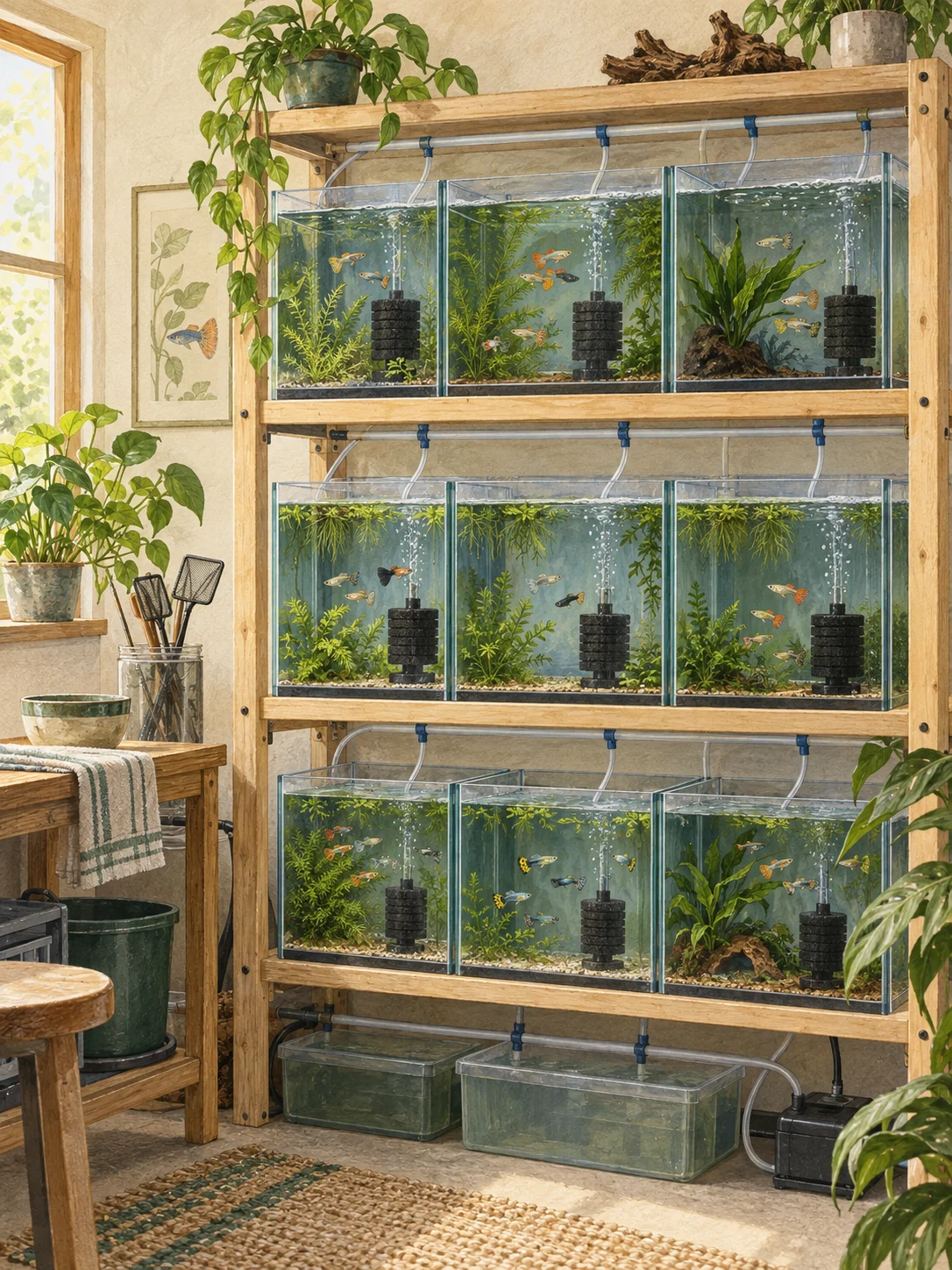
Our guppy guides focus on practical routines: keep water stable, observe fish closely and allow for natural variation.
Care systems
Steady water, thoughtful care
Gentle filtration and regular observation support healthy aquarium routines.
Natural variation
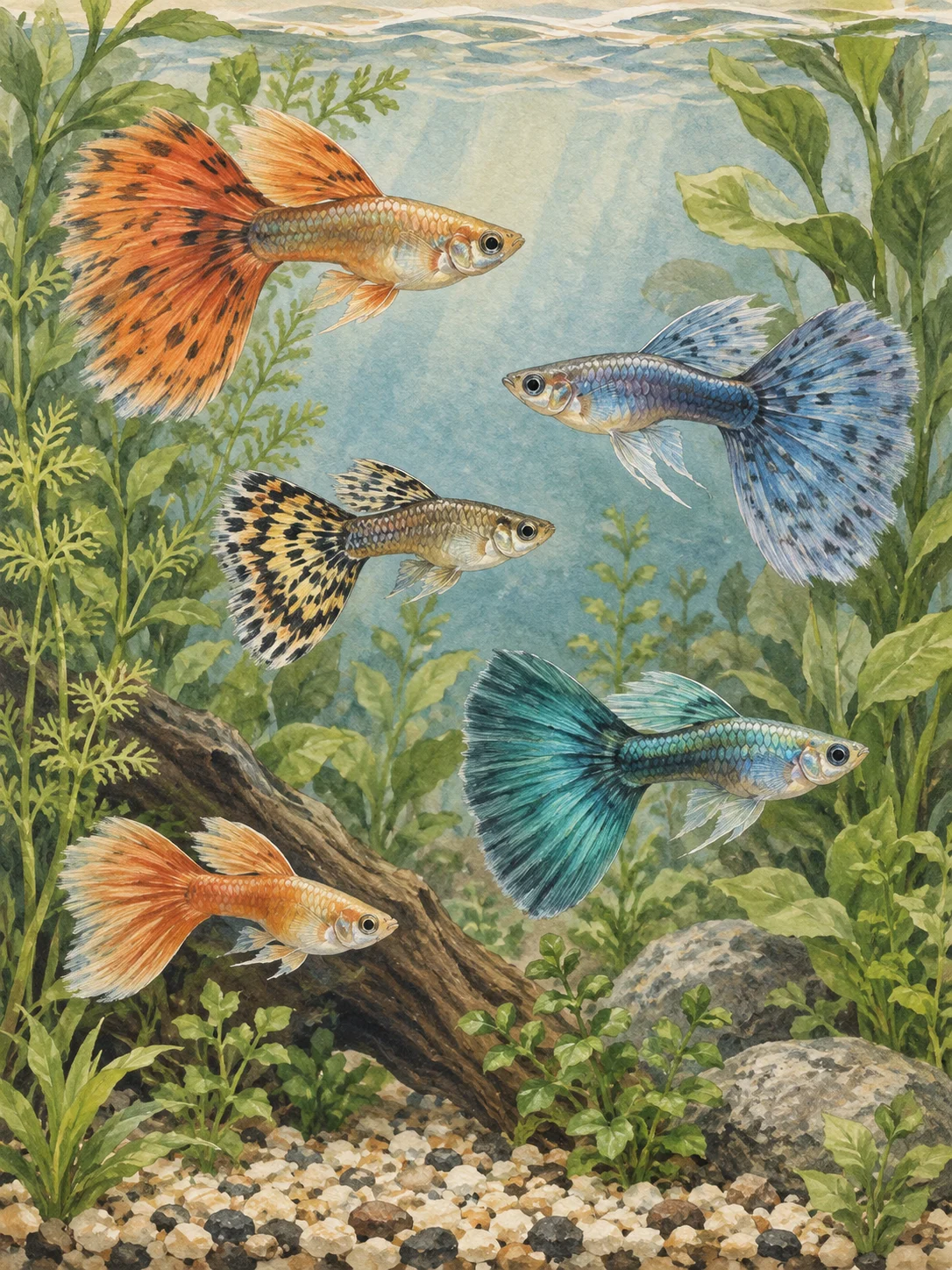
Every guppy is different
Color, size and fin shape vary with strain, age and each individual fish.
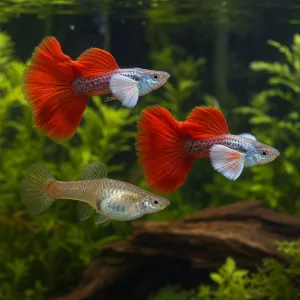
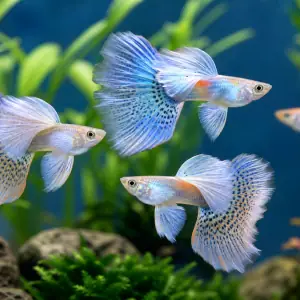
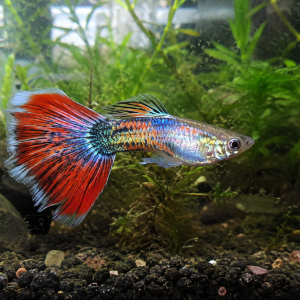
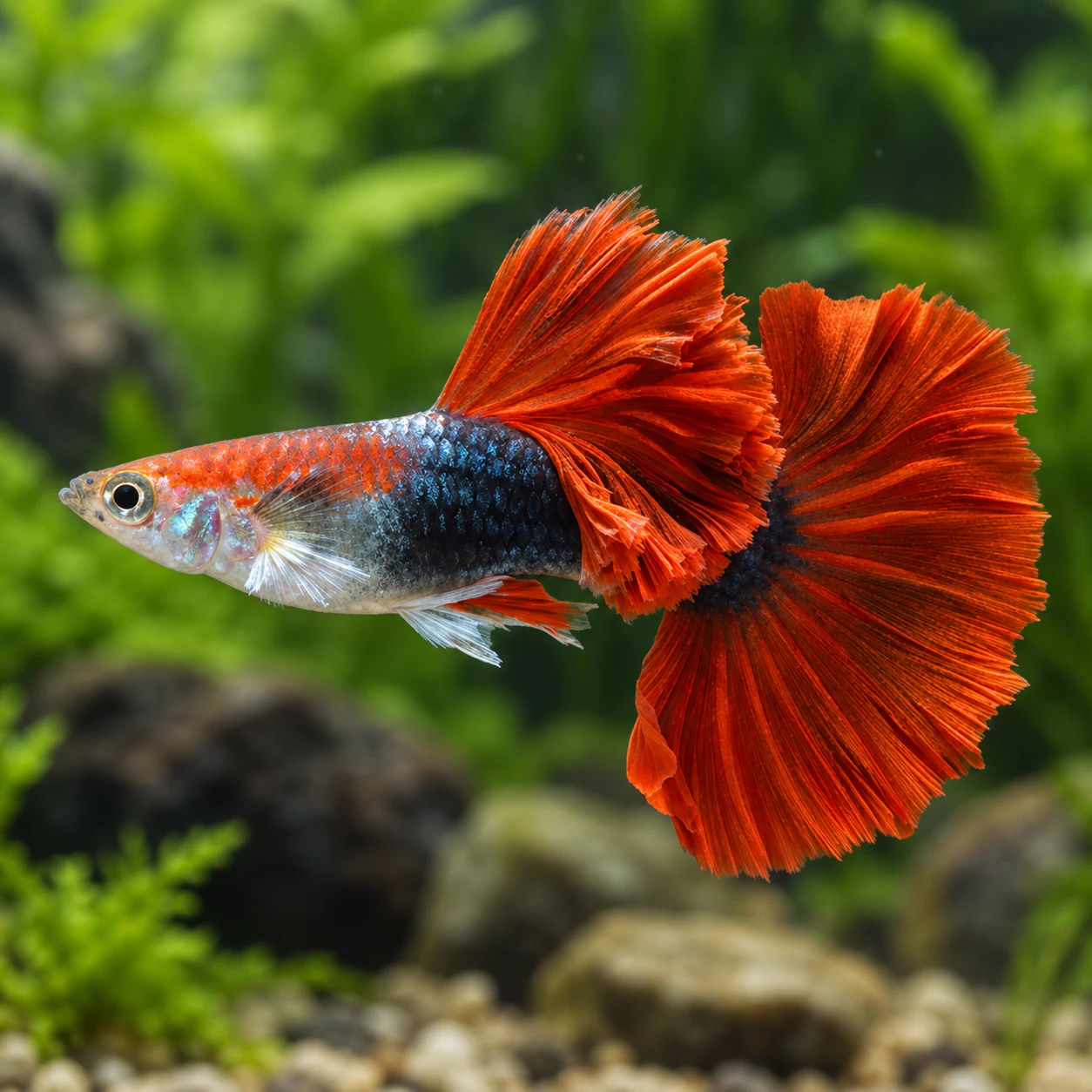
Editorial illustrations for context; they do not depict HiGuppy's exact facility or current fish stock.