The HiGuppy Journal
Do Guppies Need a Heater? When You Can Skip One and When You Cannot
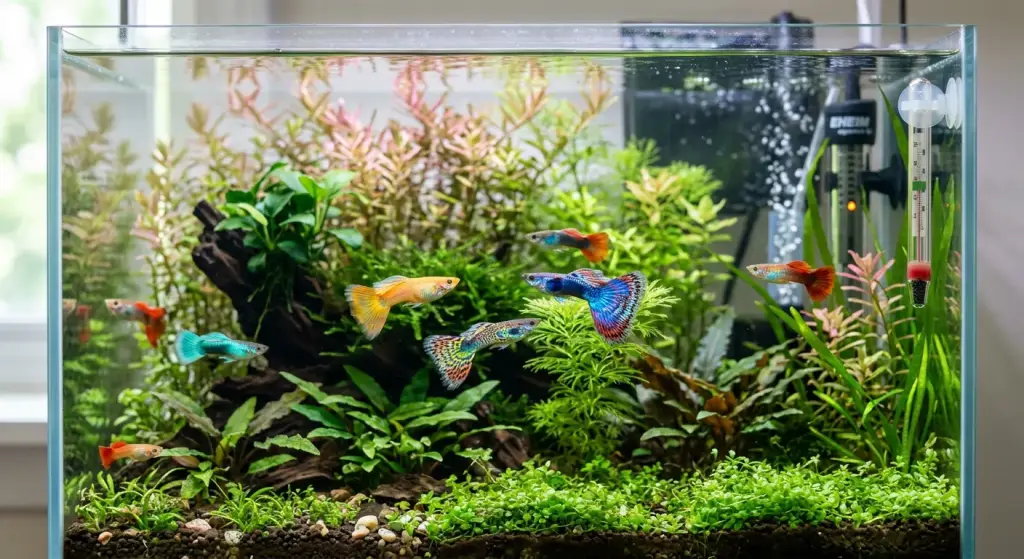
Do guppies need a heater? In most homes, yes. Guppies are tropical fish, and a heater keeps the water steady day and night. Only a room that already stays warm and stable all year may work without one. Aim for roughly 75–80°F (24–27°C) and avoid sudden swings.
The short answer depends on your room, your tank size and the season. This guide on whether do guppies need a heater explains when you can skip one, when you cannot, and how to choose a heater safely. It builds on our guppy care guide, which covers the rest of daily care.
Why temperature matters for guppies
Guppies (Poecilia reticulata) come from warm waters in northern South America and the Caribbean, and they are kept as tropical fish worldwide. You can read the general background in the guppy overview on Wikipedia. Because fish cannot warm themselves, the water temperature sets the speed of their metabolism.
When water is too cool for long periods, guppies often become sluggish, eat less and may be more open to disease. When it swings quickly, they get stressed even if the average looks fine. Stability matters as much as the number itself, which is why a heater and a thermometer are such common tools.
Do guppies need a heater in every tank?
Not literally every tank, but most. A heater is the safest default unless you can prove the water stays warm enough around the clock. Use the table below as a starting point, then confirm with a thermometer for a week or two.
| Situation | Heater needed? | Why |
|---|---|---|
| Room cools at night or in winter | Yes | Night drops and cold seasons pull the water below a comfortable range |
| Small tank (under 10 gallons) | Usually yes | Small volumes change temperature quickly |
| Warm, stable room all year | Maybe not | Check with a thermometer before deciding |
| Quarantine or hospital tank | Yes | Sick or new fish need steady conditions |
| Breeding tank with fry | Yes | Fry grow best in steady, warm water |
If you live somewhere hot, the opposite problem can appear. In that case a thermometer and a cooler spot for the tank matter more than a heater. Our guppy temperature guide covers both situations.
What temperature should a guppy tank be?
Most keepers aim for the middle of the tropical range, around 75–80°F (24–27°C). Some fish tolerate a little outside that, but a steady target inside it is the safer plan. Warmer water speeds growth and breeding, while cooler water slows both.
- Pick one target and set your heater to it.
- Keep daily swings small, ideally only a degree or two.
- Change water slowly and match the temperature of new water to the tank.
Temperature also affects how much oxygen water holds and how quickly waste breaks down, so check it alongside the basics in our guppy water parameters guide.
How to choose a heater for a guppy tank
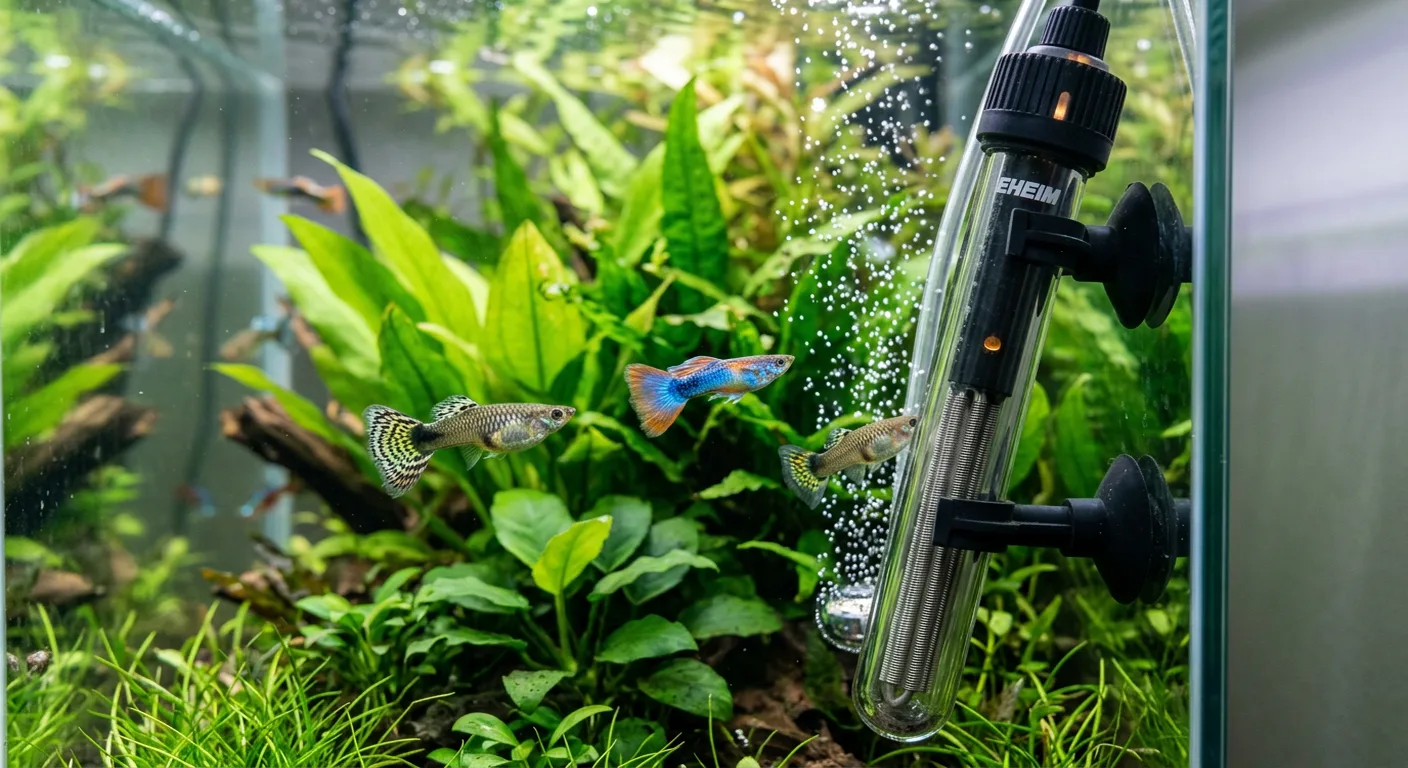
A good heater is simple: reliable, adjustable and the right size. Decide first how big your tank is, then match the heater to it. A common rule of thumb is around 3–5 watts per gallon, but always follow the maker’s size chart, and remember that a cold room needs more power.
| Tank size | Typical heater approach |
|---|---|
| 5 gallons | Small, low-wattage adjustable heater |
| 10 gallons | Low-wattage adjustable heater |
| 20 gallons | Mid-range adjustable heater |
| 29 gallons and up | Larger heater, or two smaller ones for backup |
Look for these features before you buy:
- Adjustable thermostat so you can set your own target.
- Shatterproof or protected housing to reduce breakage.
- Automatic shut-off or overheat protection, if offered.
- Suction cups or a guard so fish cannot burn themselves.
How to set up and check your heater
Install it correctly and it will quietly do its job. Place the heater near the filter output so warm water spreads through the tank, and keep it fully submerged as the instructions require. Let it adjust to the water temperature before switching it on, as most makers recommend.
- Set the heater to your target, such as 78°F (26°C).
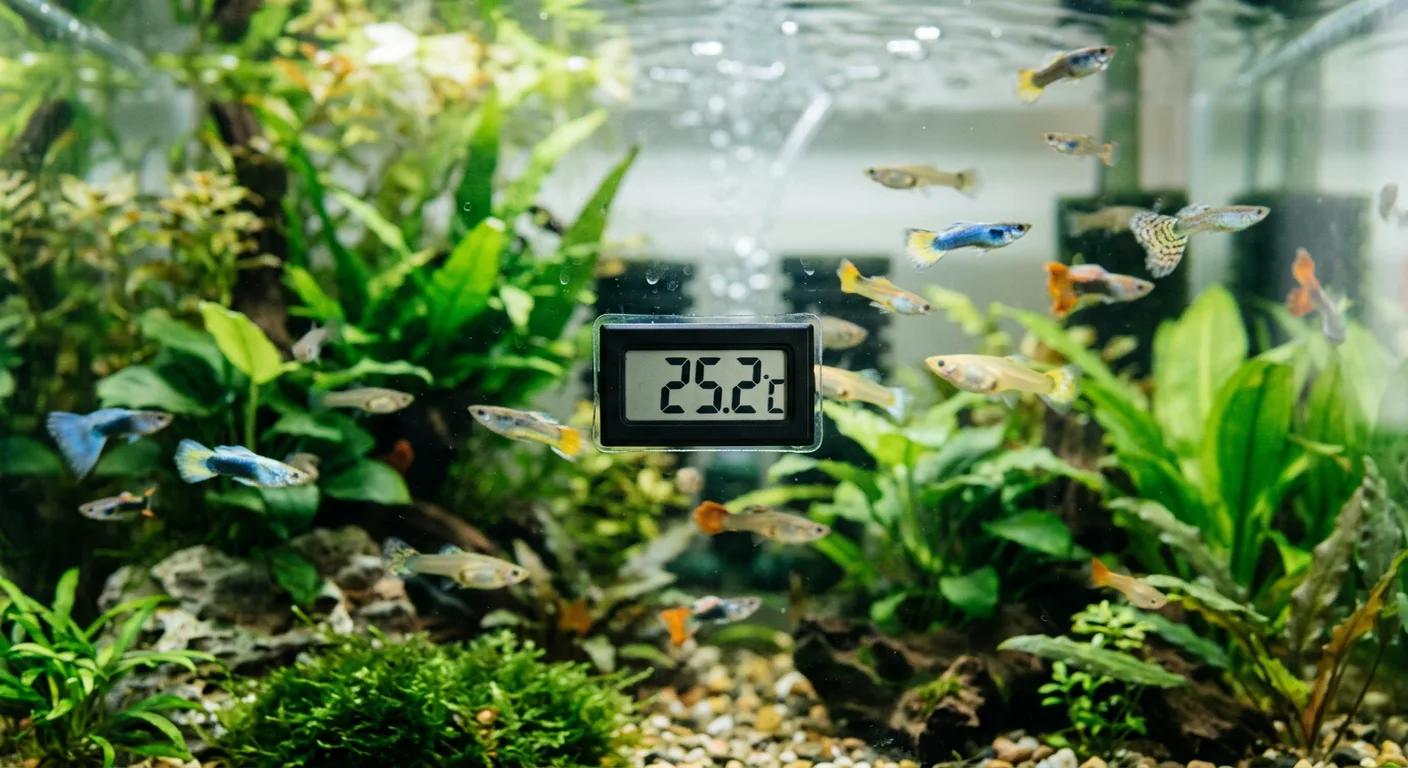
- Add a separate thermometer at the opposite end of the tank.
- Check both readings morning and evening for several days.
- Adjust the dial a little at a time, never in big jumps.
Never trust the heater dial alone. A cheap digital or stick-on thermometer gives you a second opinion, and it is easy to read at a glance.
Signs your guppies are too cold or too warm
Watching behaviour is the quickest way to tell whether the setup works. Guppies that are too cold tend to hover near the bottom, move slowly and show less interest in food. Guppies that are too warm may breathe fast, gather near the surface or dart around restlessly. None of these signs proves a temperature problem on its own, so confirm with your thermometer and basic water tests.
| What you see | Possible temperature link | First step |
|---|---|---|
| Sluggish, sitting low | Water may be too cool | Check thermometer, raise heater slowly |
| Fast breathing at the surface | Water may be too warm | Check thermometer, add airflow, lower setting slowly |
| Fins held close to the body | Stress from swings or cold | Log temperature over a full day |
| Less eating than usual | Cool water or stress | Check temperature and water quality |
So, do guppies need a heater to avoid all of this? A heater cannot fix poor water quality, but it removes one of the most common stress factors and makes every other part of care easier to judge.
Can guppies live without a heater?
Sometimes, yes. In a warm room with a stable temperature, a hardy guppy colony can live without a heater. The risk is that nights, weather changes and air conditioning make the temperature drift. If you want to try, test first: log the temperature for at least a week, including the coldest night, before adding fish.
Even then, a spare heater is cheap insurance. Guppies bought online also arrive after a trip in bags, and the first days at home are when steady warmth matters most. Our guide to heat packs and cold-weather shipping explains why.
Common heater problems and fixes
If you are still asking do guppies need a heater after a failure, remember that heaters can fail like any equipment. Check them regularly.
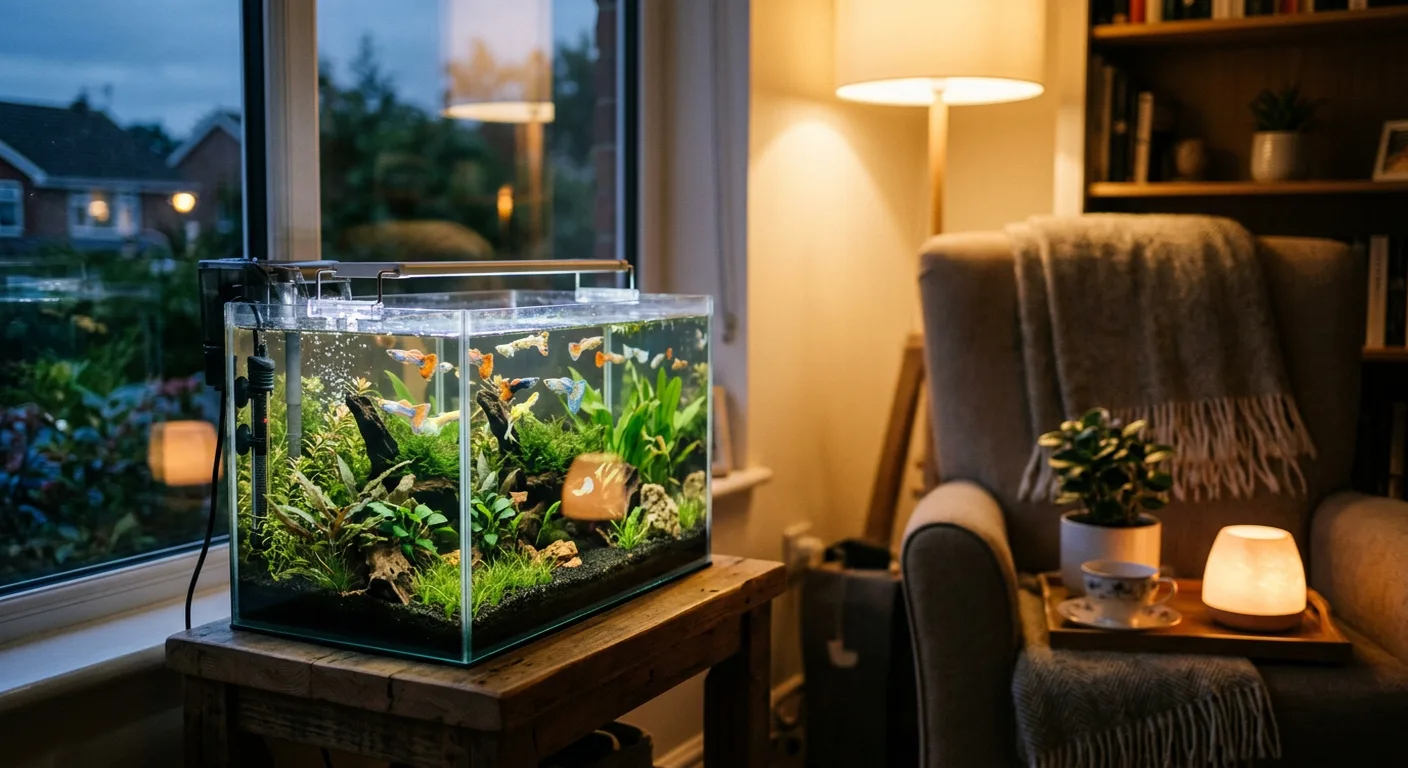
- Water too cold: the heater may be too small, or the room is colder than expected. Move the tank away from drafts and windows.
- Water too warm: lower the setting gradually and check the thermometer is accurate.
- Heater does not turn on: check the power, the plug and that it is submerged correctly.
- Big daily swings: add a second thermometer and check the heater placement near the flow.
If your guppies hide, clamp their fins or stop eating, check temperature first and then the other possible causes in why is my guppy hiding.
Setting up the rest of the tank
A heater is one part of a healthy setup. You will also need a filter, a lid, and a cycled tank before adding fish. Our beginner guppy tank setup guide walks through the whole process, and the best tank setup for guppies shows how the pieces fit together.
When the tank is steady and warm, you can add fish with confidence. Browse our live male guppies to pick a first group, then return to the complete guppy care resource for feeding and maintenance.
FAQ
Do guppies need a heater in winter?
Usually yes. Rooms cool at night and in cold weather, and the water follows. A heater with a thermometer keeps the temperature steady so your guppies do not face daily swings.
Can guppies survive without a heater?
Some can, in a room that stays warm and stable all year. Because most rooms drift, the safer choice is a heater plus a thermometer, with a spare on hand for emergencies.
What size heater do I need for a guppy tank?
Match the heater to your tank volume and room temperature. A common rule of thumb is around 3–5 watts per gallon, but always follow the manufacturer’s guidance for your tank size.
What is the best temperature for guppies?
Most keepers aim for roughly 75–80°F (24–27°C). Pick one target in that range and keep it steady, because sudden changes stress guppies more than a small difference in the number.
Can a guppy tank be too warm?
Yes. Water that is too warm holds less oxygen and speeds up metabolism and waste. Check your thermometer regularly, avoid direct sun, and lower the heater setting gradually if the tank runs hot.
Behind the care guides
Care begins with steady systems
Our guppy guides focus on practical routines: keep water stable, observe fish closely and allow for natural variation.

Care systems
Steady water, thoughtful care
Gentle filtration and regular observation support healthy aquarium routines.

Natural variation
Every guppy is different
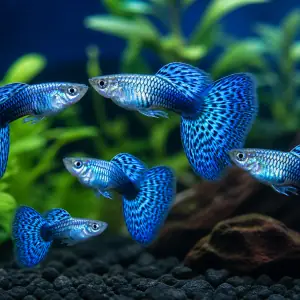
Color, size and fin shape vary with strain, age and each individual fish.
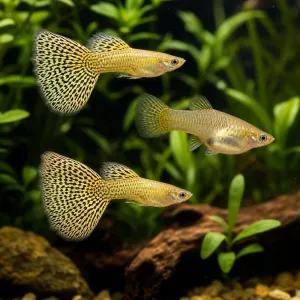
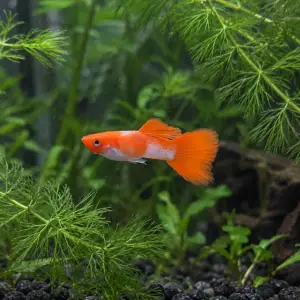
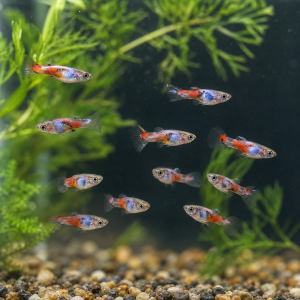
Editorial illustrations for context; they do not depict HiGuppy's exact facility or current fish stock.