Guppy Care Article
Guppy White Stringy Poop: Causes, What It Means & When to Worry
White or clear stringy poop in a guppy can look alarming, but the appearance alone does not prove internal parasites. Feces should be interpreted together with appetite, body condition, recent diet, stress, water quality, and whether the fish is losing weight or behaving abnormally.
Quick answer
One episode of white stringy poop can happen when a guppy has eaten little and passes mostly intestinal mucus. Repeated pale or stringy waste becomes more concerning when it is paired with poor appetite, weight loss, a sunken belly, lethargy, bloating, abnormal swimming, or several fish showing the same pattern. Test the water, observe feeding closely, and avoid deworming or medicating from feces appearance alone.
What does normal guppy poop look like?
Normal feces vary with food. Darker flakes, pellets, algae-based foods, live foods, and frozen foods can all change color and texture. A healthy guppy that is eating well usually passes waste that reflects its recent diet and does not repeatedly trail long, pale strands.
A single unusual stool matters less than a trend. Watch what happens over the next feedings and compare the affected fish with the rest of the tank.
Common reasons for white or stringy guppy poop
1. The fish has not eaten much
When the intestine contains little food, the fish may pass mucus that looks pale, translucent, or stringy. This can happen after shipping, during a stressful tank move, after bullying, or when a sick fish stops eating. In this situation, the important question is not just what the feces look like, but why the guppy is not eating normally.
2. Stress or a recent environmental change
Transport, a large temperature swing, poor water quality, aggressive tankmates, or a sudden change in routine can reduce appetite and change digestion. Check ammonia, nitrite, nitrate, pH, and temperature using the Guppy Water Parameters Guide.
3. A recent food change or digestive irritation
A sudden diet change, overfeeding, spoiled food, or feeding items the fish does not tolerate well can alter waste. Return to a simple, high-quality routine and feed controlled portions rather than repeatedly switching foods. HiGuppy’s Guppy Feeding Guide covers a balanced feeding approach.
4. Internal parasites
Internal parasites are one possible cause, especially when abnormal waste appears together with progressive weight loss, a sunken abdomen, poor growth, reduced appetite, lethargy, or repeated decline despite otherwise stable husbandry. However, parasite infections vary widely, and the visible stool alone cannot identify which organism is present.
University of Florida IFAS notes that heavier nematode infections in fish can be associated with wasting, stunted growth, lethargy, abnormal swimming, or death. Those broader signs are more meaningful than using “white poop” as a stand-alone diagnosis.
5. Internal disease or intestinal inflammation
Bacterial disease, protozoal disease, chronic organ problems, or intestinal irritation can also affect appetite, body condition, and feces. If the fish continues to lose condition or multiple signs appear, the next step should be a more complete diagnosis rather than trying several medications in sequence.
What to check before treating
- Confirm the fish is actually eating. Watch the individual take food and swallow it, rather than assuming because food disappears from the tank.
- Track body condition. Look from the side and above for a sunken belly, prominent backbone, progressive thinning, or abnormal swelling.
- Test the water. Ammonia and nitrite should be checked whenever appetite or behavior changes.
- Review the diet. Note any new foods, overeating, spoiled food, or long fasting periods.
- Check other fish. One affected guppy suggests an individual problem; several fish with weight loss or abnormal waste raises concern for a shared husbandry or infectious issue.
- Look for additional symptoms. Rapid breathing, flashing, clamped fins, sores, bloating, loss of balance, or visible parasites change the differential diagnosis.
When should you worry more?
White stringy poop deserves closer attention when it persists for several feedings and is accompanied by weight loss, a sunken belly, refusal to eat, lethargy, abnormal swimming, repeated bloating, or multiple affected fish. In valuable breeding stock or recurrent outbreaks, an aquatic veterinarian or qualified fish-health professional can help distinguish parasites from other internal disease.
Use the Guppy Diseases Guide to compare the full symptom pattern.
Should you deworm a guppy for white stringy poop?
Not automatically. Different internal parasites require different treatment approaches, and not every case of pale feces is parasitic. Unnecessary medication can stress the fish, affect the aquarium, and delay the correct diagnosis. If treatment is justified, use a product labeled for the suspected condition and follow the label exactly.
Should you isolate the fish?
Isolation can be useful when one guppy is losing weight, refusing food, or needs closer observation. A stable hospital or quarantine tank makes it easier to monitor what the fish eats and passes without competition from tankmates. Do not move a weak fish into an uncycled container that creates a new water-quality problem. Review HiGuppy’s quarantine and observation process.
How to support recovery while you investigate
- Keep temperature and water chemistry stable.
- Maintain strong biological filtration and good oxygenation.
- Offer a consistent, appropriate diet in small portions.
- Reduce bullying and feeding competition.
- Remove uneaten food and maintain normal water-change routines.
- Record appetite, body shape, feces, and behavior daily so you can tell whether the fish is improving.
For long-term prevention, follow the Complete Guppy Care Guide.
White stringy poop vs internal parasites: how to separate the intents
Think of white stringy poop as a symptom and internal parasites as one possible diagnosis. A fish that passes one pale strand but remains active, eats well, and maintains body weight is a very different case from a guppy that repeatedly passes abnormal waste while becoming thin. Diagnosis should be based on the full clinical picture, not a single visual clue.
FAQ
Does white stringy poop always mean worms?
No. Pale mucus can appear when a fish has not eaten, and abnormal waste can also occur with stress, diet changes, intestinal irritation, parasites, or other internal disease.
Can stress cause stringy poop in guppies?
Stress can reduce feeding and alter digestion, so it can contribute indirectly. Check water quality, temperature, aggression, and recent shipping or tank changes.
What if my guppy has white poop but is still eating?
Continue observing the fish’s body condition and future stools. One unusual stool with normal appetite and weight is less specific than a persistent pattern with weight loss or lethargy.
What if several guppies have white stringy poop?
Review shared factors such as diet and water quality first, then consider infectious or parasitic causes if the fish are also losing weight, eating poorly, or declining.
Trusted fish-health references
This article is educational and does not replace diagnosis by an aquatic veterinarian. The discussion of internal parasites and wasting signs is reviewed against University of Florida IFAS guidance on nematode infections in fish and general fish-health guidance from the Merck Veterinary Manual.
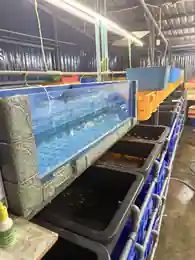
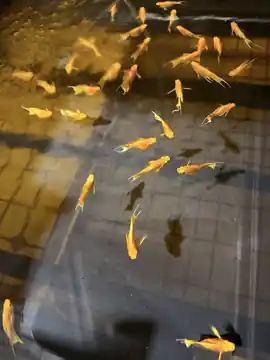
Real HiGuppy photographs
Inside the facility behind our guppy guides
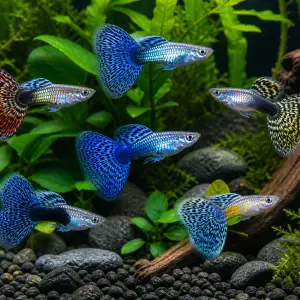
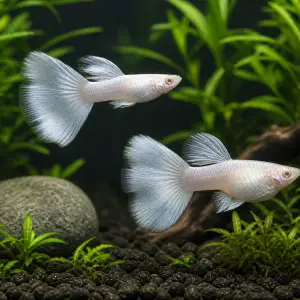
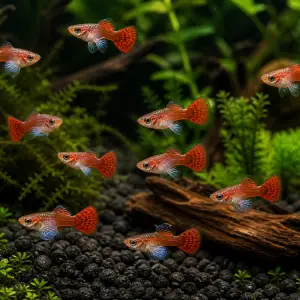
These photographs show real HiGuppy holding, breeding and observation work. They document our facility and fish stock; they are not presented as the exact individual fish or strain discussed on every page.