The HiGuppy Journal
Yellow Guppies: Color Types, Tank Care & Buying Guide
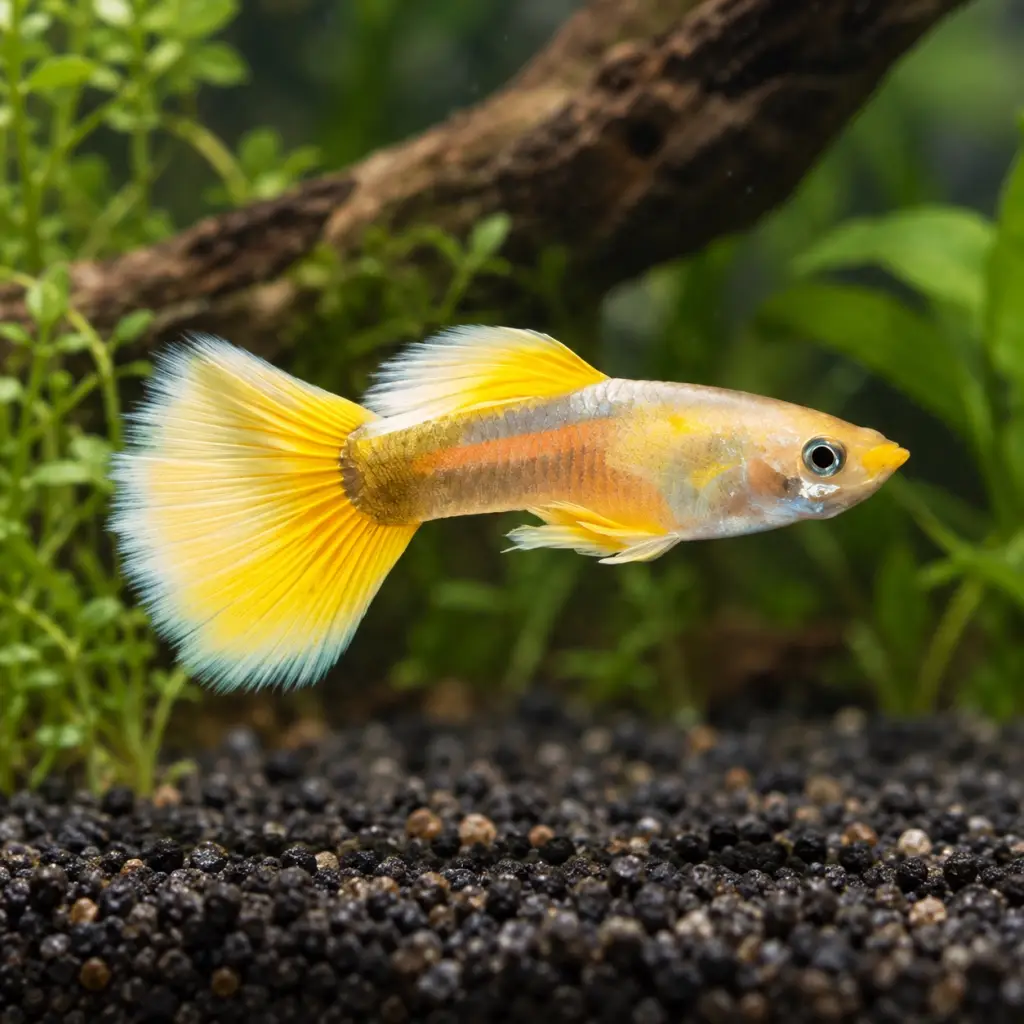
What are yellow guppies? Yellow guppies are selectively bred guppies (Poecilia reticulata) showing yellow on the tail, fins or body. They are not one fixed genetic strain: Yellow Tuxedo, Yellow King Cobra and solid yellow fish may look quite different. Their care follows ordinary guppy needs—a cycled aquarium, stable moderately hard water, peaceful companions and a varied diet. Compare actual fish before buying.
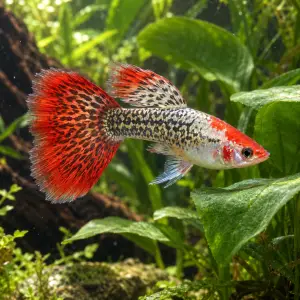
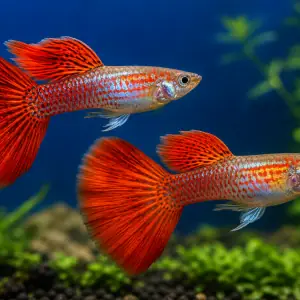
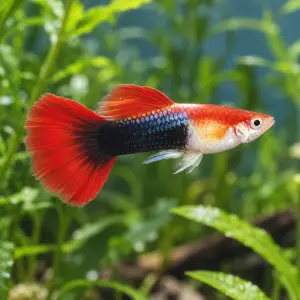
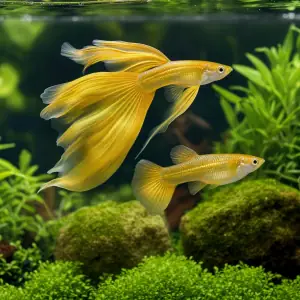
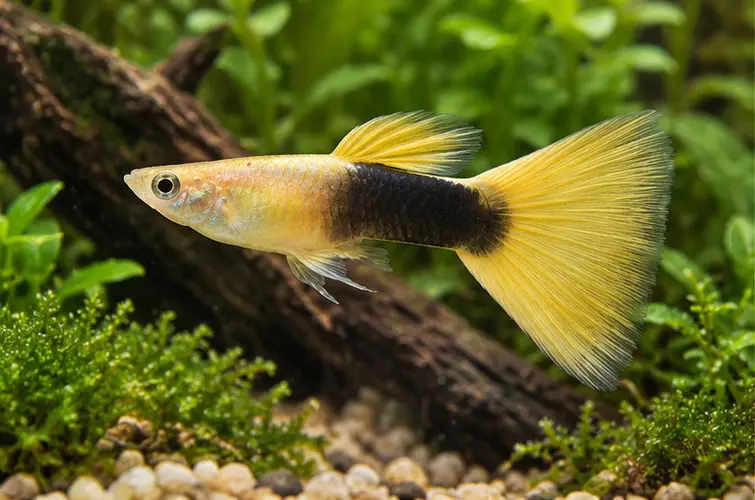
Some yellow guppies look almost golden from head to tail; others show a pale silver body with a yellow fan tail or a dark Tuxedo patch. The label “yellow” describes a color you can see, while Cobra, Tuxedo, Albino or Full Gold can describe additional patterns, pigment traits or breeding lines. This guide helps you tell them apart, choose a suitable tank, maintain their natural color and ask the right questions about real fish for sale. The illustrative photos below are not current-stock photography; exact appearance and availability need confirmation with HiGuppy.
Yellow guppy vs Full Gold: what is the difference?
A yellow guppy does not automatically qualify as a Full Gold guppy. In seller and breeder names, “Full Gold” typically suggests extensive, fairly uniform golden coloration across the body and fins. A standard Yellow Guppy may have a paler or silvery front body and a bright lemon or sunflower-yellow tail. Yellow King Cobra or Yellow Tuxedo adds a visible pattern or a dark body region, so those are not the same visual category as uniform Full Gold.
These are practical trade-name distinctions, not a universal international rulebook. Compare the full body and fins of the actual fish, and ask how the seller defines its labels. For a deeper look at uniformly golden lines, read our Full Gold guppy guide. For the wider variety of red, yellow, blue and metallic forms, use our guppy color types reference.
Five yellow guppy names you may see
These terms often combine a base color, a tail or body pattern, and a fin style. A single fish may fit several labels at once; the full product description and real footage matter more than just one short name.
| Listing name | Typical appearance | What to check before buying |
|---|---|---|
| Yellow Guppy | Yellow tail and/or dorsal fin, often with a pale silver or light body | Ask whether the yellow color is mostly on fins or extends over the body |
| Yellow Tuxedo | Yellow fins with a contrasting dark rear-body patch | Tuxedo or Half Black describes darker rear-body coverage, not a separate species |
| Yellow King Cobra | Yellow fin color with a lace-like or snakeskin/cobra pattern on tail or body | Check the actual cobra markings in a sharp side-view photo |
| Albino Yellow Cobra | Yellow cobra-style markings combined with an albino pigment trait | Confirm eye/pigment characteristics, line history and care from the breeder |
| Full Gold | More extensive golden body and fin coverage with less contrasting pattern | Compare actual body coverage; do not assume every yellow fish is Full Gold |
A Tuxedo fish can still be an excellent beginner display choice, but dark markings should not be presented as a defect in a fish sold specifically as Yellow Tuxedo. Likewise, a cobra-patterned fin is not “dirty yellow”; the pattern is part of the named look.
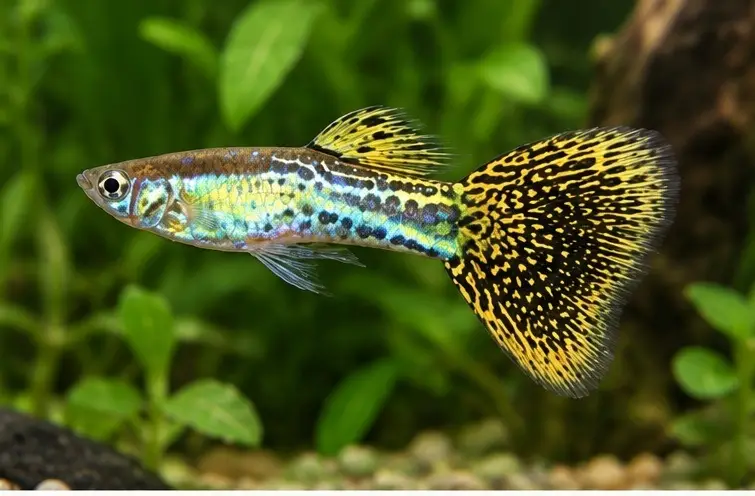
Yellow King Cobra: yellow with detailed patterning
Yellow King Cobra commonly combines warm yellow color with high-contrast lines, spots or rosettes across the tail, and sometimes the body. The degree of pattern varies among fish and breeding lines. Look for clear markings and balanced fins, but do not confuse elaborate pattern with proof of health, a recognized show grade or a guaranteed genetic percentage. If you prefer this style, HiGuppy has a Yellow King Cobra catalog listing; ask for current fish and availability.
Yellow Tuxedo: why the dark body patch belongs there
Yellow Tuxedo or Half Black Yellow usually combines yellow fins with a more darkly colored rear body. You may see the patch look black, deep green or dark blue depending on the fish, genetics, lighting and camera settings. It is better to assess where the patch starts, whether the fish swims normally and how the yellow fins contrast with the body than to judge “more yellow” as inherently better. The pattern family overlaps with Half Black; read the Half Black guide for more background.
Yellow guppy care: the tank and water parameters
Yellow forms are the same species as other ornamental guppies, Poecilia reticulata. Color alone does not create different tank requirements or justify additives to “make fish yellow.” Seriously Fish gives a general species range of 17–28°C (63–82°F), pH 7.0–8.5 and 8–30 dGH. OATA’s guppy/molly care sheet recommends 20–28°C, pH 7.0–8.0 and 8–18 dGH with ammonia and nitrite at zero. These ranges describe appropriate general husbandry, not a mandatory narrow “yellow guppy” setting.
| Parameter | Practical starting range | Important context |
|---|---|---|
| Tank size | Cycled 10 US gal / 38 L for a small adult group; 20 US gal / 76 L offers more room | Actual stocking depends on dimensions, sex ratios, filtration and future fry |
| Temperature | About 24–26°C (75–79°F) | Stable day-to-day values; species-wide range is broader |
| pH | About 7.2–8.0 | Avoid rapid chemistry changes merely to hit a printed target |
| General hardness (GH) | About 8–15 dGH | Check source water; guppies generally suit moderately hard water |
| Ammonia / nitrite | 0 ppm | A properly established biological filter is essential |
| Nitrate | Keep low; track changes against tap-water baseline | OATA advises not exceeding 20 mg/L above usual tap-water level |
| Filtration and cover | Gentle dependable filter, open swimming space plus live plants | Avoid strong flow and sharp plastic that may damage large tails |
Use a fully cycled aquarium before adding fish. A 10-gallon group is not a universal “guppies per gallon” formula; you must account for current fish numbers and fry. Guppies can reproduce quickly when males and females are together. As a starting maintenance routine, many hobbyists change 20–30% weekly with dechlorinated, temperature-matched water; adjust to actual test readings and stocking. Read our water parameters guide for interpreting pH, GH, nitrate and biological cycling.
Light and aquascaping that make yellow easier to see
A deep green planted background can make yellow tails visually stand out. A dark backdrop can create contrast, while a pale substrate can help outline darker body patterns in a Yellow Tuxedo. Neither choice is a health requirement or an automatic color enhancer. Moderate, consistent light helps comparison; very strong light may encourage algae and make fish stressed if the tank offers no shade.
- Use even neutral-white light for photographs instead of comparing one fish under blue LEDs and another under yellow room lighting.
- Add soft plants or floating cover alongside open swimming room so fish can avoid constant exposure.
- Provide a secure lid and avoid sharp decorations that can damage long-finned males.
- Keep the same camera settings when comparing actual current-stock photos, with the whole fish visible rather than only the tail.
A recent unfiltered side-view swimming video is a better purchase reference than a heavily processed macro image. If the online gallery is marked AI-generated or representative, it does not verify the actual fish to be shipped.
Food for yellow guppies: what diet can and cannot do
A suitable varied diet supports body condition, normal development and color expression. It cannot turn a genetically pale tail into a reliable Full Gold breeding line or guarantee a show-quality yellow. Use an appropriately sized quality guppy flake or micro-pellet as a staple and occasional daphnia or brine shrimp for variety, avoiding excessive portions. Most healthy adult fish can be offered one or two small meals daily, adjusting for temperature, age and feeding access.
Do not overfeed a fish because it looks slightly less saturated under a new light. Check ammonia, nitrite and nitrate, observe appetite, and look at the fish in stable lighting. For portions and routine choices, see how often to feed guppies.
When yellow guppies look pale: color, stress or health?
A fish can look less yellow because of lighting, age, sex, ordinary variation within a line or temporary shipping stress. That does not mean every fading fish is sick—and it also does not mean color changes can be ignored when other warning signs appear. Check measurable aquarium conditions before treating color alone as a disease.
| What you notice | Possible explanation | Practical next check |
|---|---|---|
| Color looks different between photos | White balance, background or LED spectrum | Compare under consistent neutral light and a clear side view |
| New arrival looks subdued | Transport stress or different lighting/water | Allow appropriate acclimation and quarantine, monitor behavior and tests |
| Color fading plus clamped fins or poor appetite | Could signal stress or another health problem | Test ammonia/nitrite, observe breathing and obtain appropriate advice |
| Young fish is paler than advertised adult male | Developmental stage or female/juvenile variation | Confirm age/sex and ask for the seller’s adult line examples |
| One line shows more gold than another | Different ancestry and selective breeding | Judge each named line by its actual fish and breeder history |
If breathing is abnormal, fins stay clamped or fish stop feeding, prioritize aquarium and health assessment over decorative lighting or supplements. For safe receiving and observation, see quarantine new guppies.
Do yellow guppies make good tank mates?
They are generally peaceful like other guppies. Their long, bright fins may attract fin-nipping species, so choose companions by adult size, water chemistry, behavior and swimming space rather than color alone. Guppies can share a community with compatible peaceful fish and suitable invertebrates, but young shrimp and newborn fish may be eaten. A tank that works for one small group can become crowded quickly if multiple livebearers breed.
Male-only displays can avoid fry, though males may still pursue one another. If keeping both sexes, give females refuge, monitor behavior and plan for offspring. Explore our guppy tank-mate guide for compatibility checks.
Breeding yellow guppies: what should buyers expect?
Two yellow-looking parents do not guarantee all their fry will be equally yellow. Yellow body and tail appearance can be influenced by multiple inherited traits, and named cobra, tuxedo and albino forms may produce variable combinations. Guppy females can store sperm from earlier matings, so a female’s offspring may not all be from the male currently sharing her tank. If consistency is important, ask for a documented breeding line and examples of its actual offspring.
- Document the pairing: note the source, sexes, parent appearance and any previous male exposure.
- Wait for maturity: juvenile tails may develop more color and pattern over time, so do not promise exact adult shades from very young fry.
- Separate projects: keep distinct named lines separate when parentage matters.
- Prioritize health: choose normal swimming and body structure over extreme pigment or fin size.
- Plan space: provide a mature grow-out tank or responsible homes before producing more fish than you can keep.
The strain consistency guide covers line records, but remember “pure yellow” is a seller description, not a guarantee of 100% identical offspring.
How to buy healthy yellow guppies online
Look beyond the gallery image and ask for details about the exact fish in the shipment. That matters most if you want a particular lemon-yellow tail, an Albino Yellow Cobra or a Yellow Tuxedo with a precise black patch. High saturation in a static photo is not proof of disease-free condition or breeding quality.
- Confirm the precise strain label: Yellow Guppy, Yellow Tuxedo, Yellow King Cobra, Full Gold or another combination.
- Request recent footage of actual available fish swimming and feeding, with the entire body and tail visible.
- Ask whether photo/video is current-stock material, a representative catalog image, or an AI illustration.
- Confirm order quantity, age/size, sex and whether a pair/trio includes the expected sexes.
- Check fish condition: straight body, intact fins, steady breathing and normal food response.
- Ask about breeder history and previous offspring only when line consistency is part of the purchase.
- Verify the current shipping route, costs, transshipper responsibilities and live-arrival terms before payment.
For examples of different named styles, HiGuppy lists Yellow Guppy Male, Yellow King Cobra and Yellow Tuxedo. These are catalog examples, not a guarantee of live inventory or an unchanged price. Confirm current stock and recent videos before ordering.
What to do after yellow guppies arrive
Prepare a cycled, suitable receiving tank or a separate quarantine tank before shipment. Follow the responsible shipper’s live-fish arrival instructions, especially for long transport where the bag water can change in chemistry. Do not assume a prolonged drip acclimation routine is suitable for every long-distance sealed shipment. Transfer fish gently, do not pour transport water into the established tank, keep light subdued initially and monitor feeding and behavior.
A yellow tail may look different during the first hours in new surroundings; focus first on breathing, normal swimming and suitable water conditions. See our quarantine guide and the order’s specific written shipping terms rather than relying on a generic guarantee.
Yellow guppy checklist for beginners
- I know whether I want a yellow tail, a mostly yellow body, a dark Tuxedo patch or a Cobra pattern.
- My aquarium has established filtration, a lid, plants, swimming space and tested moderately hard water.
- I understand that yellow color names do not mean the fish have a unique pH or mineral requirement.
- I have seen actual fish and know which gallery images are AI-generated representative illustrations.
- I checked the fish count, sex/age and shipping terms, with a plan for fry if my group can breed.
Frequently asked questions about yellow guppies
Are yellow guppies a separate species?
No. Yellow guppies are selectively bred forms of Poecilia reticulata. Their yellow coloration and additional Cobra, Tuxedo or Albino labels describe appearance or breeding lines.
Is a Yellow Guppy the same as a Full Gold guppy?
Not necessarily. Many Yellow Guppies have yellow tails on a paler or silver body, while Full Gold commonly implies wider golden coverage of both body and fins. Compare the actual fish because trade names vary.
Are Yellow King Cobra and Yellow Tuxedo guppies the same?
No. Yellow King Cobra often refers to a yellow fish with cobra-like pattern markings, while Yellow Tuxedo refers to yellow coloration combined with a darker rear-body patch. The names can include other traits too.
Do yellow guppies need special food to keep their color?
No special yellow-only food is required. A balanced staple diet and varied appropriate foods support health and normal color expression, but diet cannot guarantee a particular genetically inherited shade.
What temperature, pH and GH are suitable for yellow guppies?
A practical starting point is about 24–26°C (75–79°F), pH 7.2–8.0 and GH 8–15 dGH in a stable cycled tank. Wider species guidance includes 17–28°C, pH 7.0–8.5 and GH 8–30 dGH.
Why is my yellow guppy turning pale?
Apparent fading may reflect lighting, age, sex, transport stress or normal genetic variation. If it occurs with clamped fins, poor appetite or unusual breathing, check water quality and investigate health rather than treating color alone.
Will two yellow guppies produce all-yellow babies?
Not guaranteed. Fry color and patterns can vary among lines, and females can store sperm from previous mating. Ask for documented offspring from the same breeding line if consistency matters.
References and next reading
For the general species, see Seriously Fish: Poecilia reticulata and OATA: How to Look After Guppies and Mollies. For named color forms, refer to the Full Gold guide, color types guide and Half Black/Tuxedo guide. Yellow strain names are aquarium-trade descriptions, not a guarantee of a specific genetic pedigree or current stock.
Behind the care guides
Care begins with steady systems
Our guppy guides focus on practical routines: keep water stable, observe fish closely and allow for natural variation.

Care systems
Steady water, thoughtful care
Gentle filtration and regular observation support healthy aquarium routines.

Natural variation
Every guppy is different
Color, size and fin shape vary with strain, age and each individual fish.
Editorial illustrations for context; they do not depict HiGuppy's exact facility or current fish stock.