The HiGuppy Journal
Algae in a Guppy Tank: Causes and Beginner Control Tips
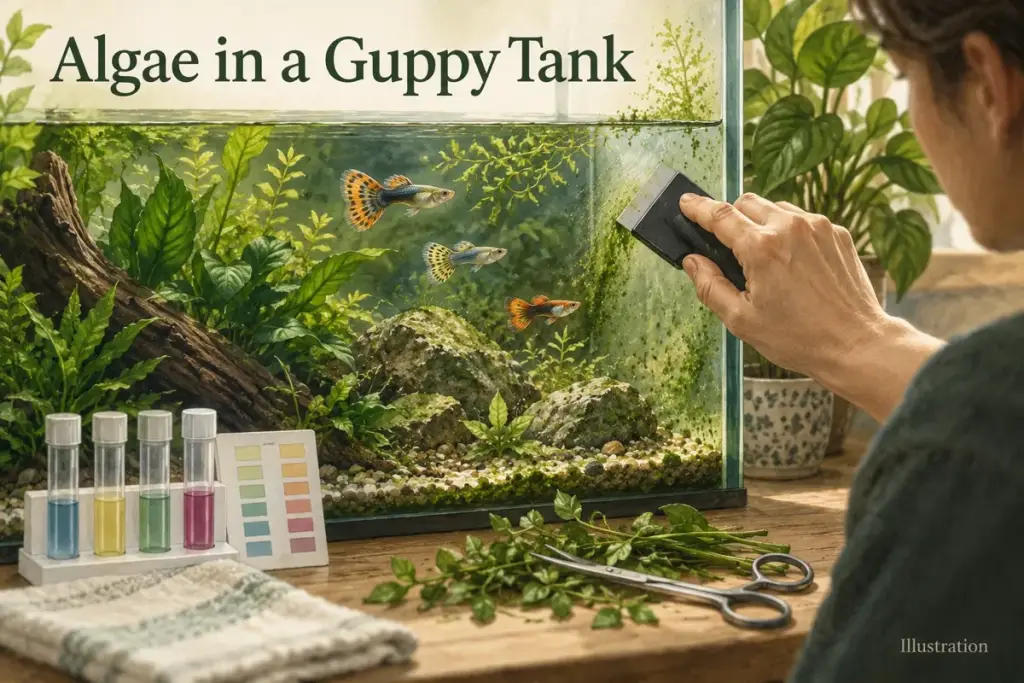
Some algae is normal in a guppy aquarium. When growth becomes excessive, review light exposure, feeding, stocking, water changes, and maintenance together. Remove algae you can reach, correct one likely cause at a time, and keep filtration stable. Adding a snail or algae-eating fish may help with certain surfaces, but it does not fix the conditions that support excess growth.
Algae is a broad label for different growths, and a green film on glass is not the same problem as green water. Aqueon’s algae-prevention guide explains that algae needs light and nutrients; some growth is a normal part of an aquarium system. The goal is a balanced tank that stays easy to care for, not a sterile aquarium.
First, identify where the algae is growing
Look at what you can see before changing the setup. Is growth on the glass, décor, substrate, plant leaves, or suspended throughout the water? Does it return quickly after cleaning? Has anything changed recently, such as a new light, longer daylight, more fish, a new feeding schedule, or less frequent maintenance? A short note about location and timing can reveal a pattern.
If the water itself turns green, treat that as a different issue from ordinary film algae on glass. Aqueon’s green-water guide describes excessive light, nutrient buildup, and maintenance as contributing factors. If the tank looks cloudy or fish behave unusually, check water quality instead of assuming all visible change is harmless algae.
Do not scrape every surface at once if that means disrupting plants, décor, or equipment. Clean a manageable section so you can still observe whether growth is returning. Our Guppy Tank Lighting Schedule can help you set a consistent light routine.
Review light and sunlight
Check whether the aquarium receives direct sun from a window or bright room lighting for part of the day. Natural daylight can add to the light from the aquarium fixture, even if the tank light is on a timer. If you cannot move the aquarium, use a shade or change the room setup where practical.
Use a timer so the aquarium light turns on and off at consistent times. Do not leave it on around the clock, and avoid changing the schedule repeatedly from one day to the next. Aqueon’s aquarium-lighting guide notes that algae is not caused by light alone; nutrient buildup and tank conditions also matter. Plants, light strength, and tank depth affect what schedule works in a specific aquarium.
If the tank has live plants, do not solve algae by plunging the aquarium into darkness without considering plant needs. Adjust one factor, keep a stable day-night routine, and observe whether both the algae and plants respond. If the fixture has adjustable intensity, avoid abrupt extremes; keep changes gradual and easy to reverse.
Check feeding, stocking, and water care
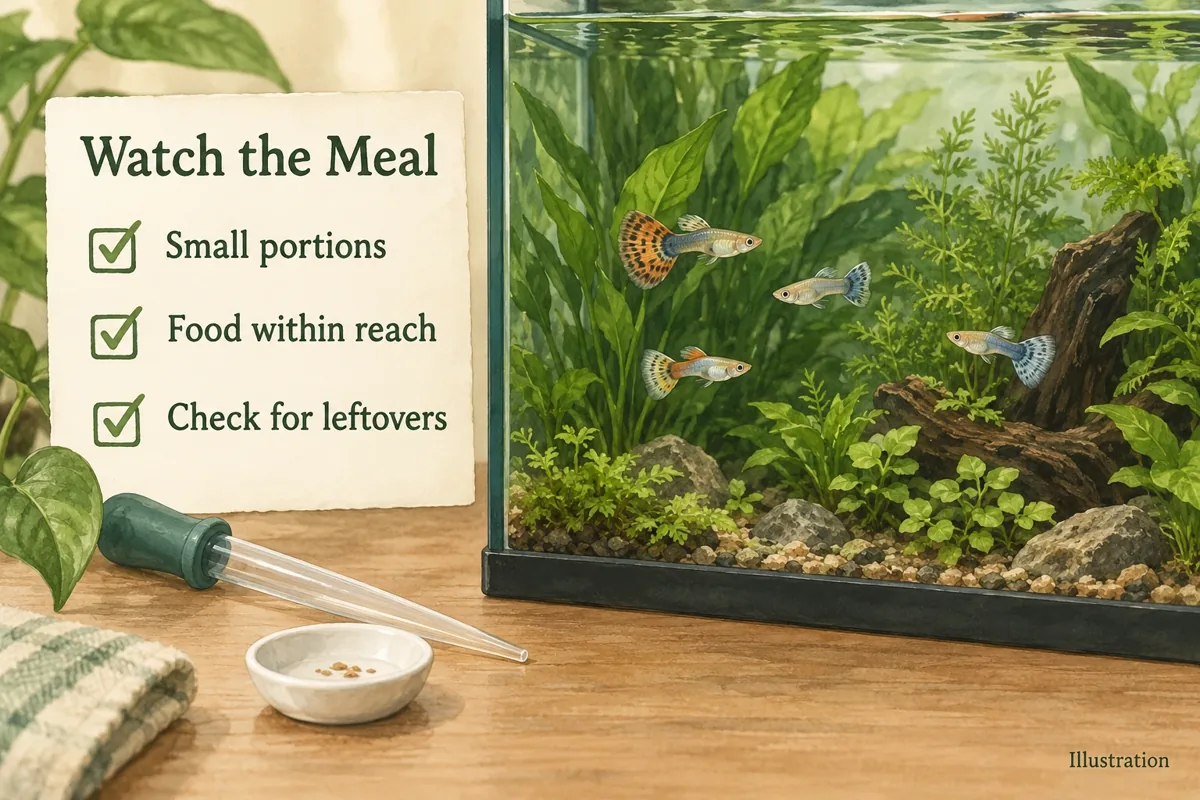
Extra fish food and fish waste can add nutrients that algae uses. Feed a portion your guppies can eat promptly, then remove visible leftovers. Avoid feeding extra because the fish gather at the glass or appear eager; many aquarium fish beg even after a meal. Our overfeeding guppies guide describes common signs that portions or feeding frequency may be too high.
Stocking also changes the amount of waste a filter and maintenance routine must handle. If the group has grown or fry are appearing, review the aquarium’s capacity before adding more fish. Maintain routine partial water changes and clean the filter according to its design. Do not replace all biological filter media at once as an algae-control tactic.
If test kits are available, check the aquarium water and source water for nitrate and phosphate. Aqueon lists fish food, fish waste, infrequent maintenance, overcrowding, and some tap water as possible nutrient sources. Interpret readings using the test instructions and the needs of your aquarium; do not chase a number with drastic water chemistry changes.
Remove algae gently and keep the filter stable
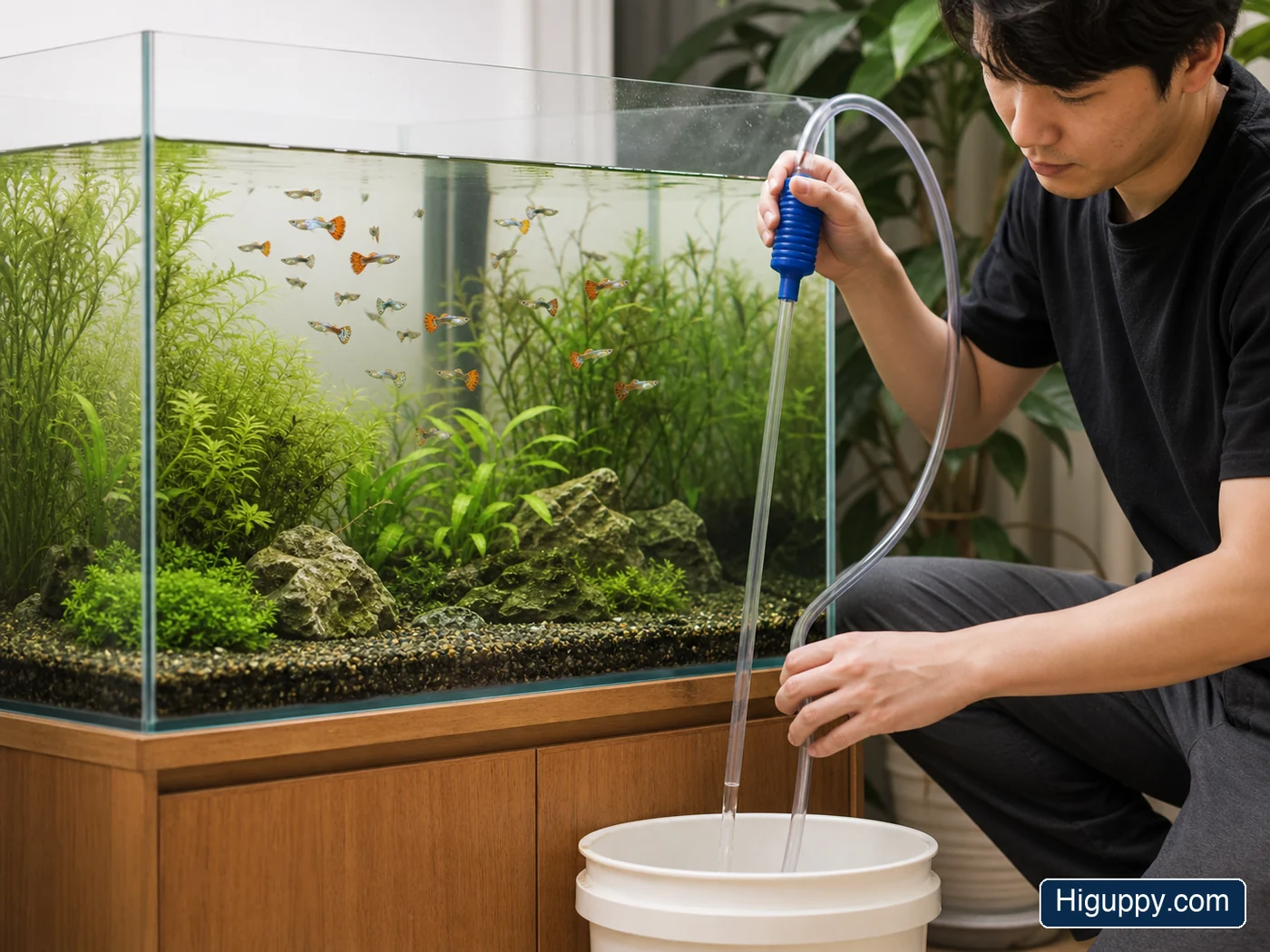
Wipe the glass with an aquarium-only algae pad or scraper, and brush décor that can be cleaned safely in place. Use tools that have never been exposed to soap or household chemicals. Remove loose plant leaves and visible debris during normal maintenance. Work in small areas so you can see the fish and avoid trapping them behind tools.
Do not tear apart the aquarium to remove every patch. Preserve the filter’s biological media and keep the normal maintenance rhythm. If you clean a filter component, follow the manufacturer’s directions for that filter and avoid using untreated tap water on biological material. A sudden reset can create a new water-quality problem while leaving the original algae cause unchanged.
Adding live plants may make sense when you are ready to care for them. Plants use light and nutrients too, but a new plant is not an instant algae treatment. Compare low-maintenance choices in our best live plants for guppies guide and plan their light and trimming needs before adding them.
Use a simple troubleshooting sequence
- Record where the growth appears and what has changed in the tank.
- Set a consistent timer and block avoidable direct sunlight.
- Measure feedings and remove visible leftovers; review stocking and maintenance.
- Clean accessible algae gently while preserving filter function.
- Recheck the same spots and water readings after the aquarium has had time to respond.
Change one likely cause at a time where possible. If you shorten the light schedule, cut feeding, add a cleaner animal, and deep-clean the filter all at once, you will not know which change helped, and several changes may stress the system. For water-care frequency, see our guppy tank water-change guide.
When algae comes with other warning signs
If fish are gasping, losing balance, unusually inactive, or the water becomes cloudy or foul-smelling, check the aquarium’s water quality promptly. Algae alone does not identify a specific water problem. Test ammonia, nitrite, and other routine parameters with a reliable kit, confirm the filter is running, and seek experienced aquarium help if fish are affected.
Avoid adding a chemical algae product without checking its label and compatibility with fish, plants, snails, and shrimp. This article is about routine prevention and cleaning, not treating illness or diagnosing a tank emergency. When animal behavior changes, prioritize the fish and water conditions over cosmetic cleanup.
If the fish look normal and the algae is limited to surfaces, continue with consistent lighting and maintenance while you watch the pattern. The complete guppy care guide provides a broader baseline for filtration, feeding, and water care.
Frequently Asked Questions
Is algae bad for guppies?
A small amount of algae is common in aquariums and is not automatically harmful. Heavy or sudden growth can be a sign to review light, nutrients, maintenance, and water quality. Watch the fish and test the water if behavior or clarity changes.
Why is my guppy tank growing algae so fast?
Possible contributors include long or intense lighting, direct sun, excess feeding, more fish, infrequent maintenance, and nutrients in source water. Check the tank systematically instead of assuming there is one cause.
Will guppies eat algae?
Guppies may pick at surfaces, but they are not a dependable algae-control solution. Feed them a suitable diet and manage the aquarium conditions that support excess algae.
Should I add snails to control algae?
Some snails graze on certain algae, but species differ and need their own care. A snail does not replace cleaning, filtration, or water changes, and adding one will not correct excess light or nutrients.
Should I turn off my aquarium light to stop algae?
Do not leave the light off indefinitely as a universal fix. Set a consistent schedule that suits the fish and plants, avoid unnecessary sunlight, and review feeding and maintenance too. Change the routine gradually and observe the tank.
Behind the care guides
Care begins with steady systems
Our guppy guides focus on practical routines: keep water stable, observe fish closely and allow for natural variation.

Care systems
Steady water, thoughtful care
Gentle filtration and regular observation support healthy aquarium routines.

Natural variation
Every guppy is different
Color, size and fin shape vary with strain, age and each individual fish.
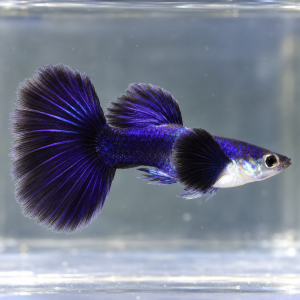
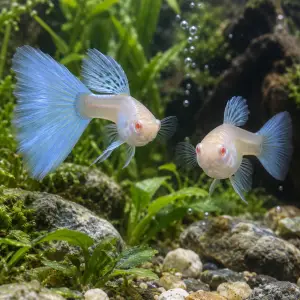
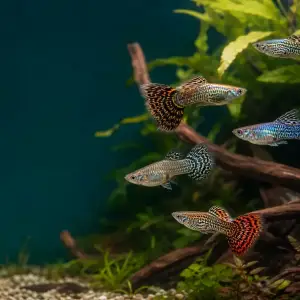
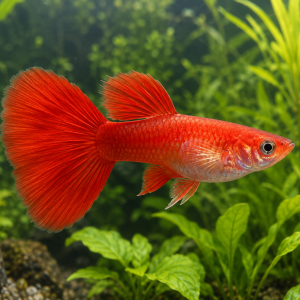
Editorial illustrations for context; they do not depict HiGuppy's exact facility or current fish stock.