The HiGuppy Journal
Female-Only Guppy Tank: Can You Keep Only Female Guppies?
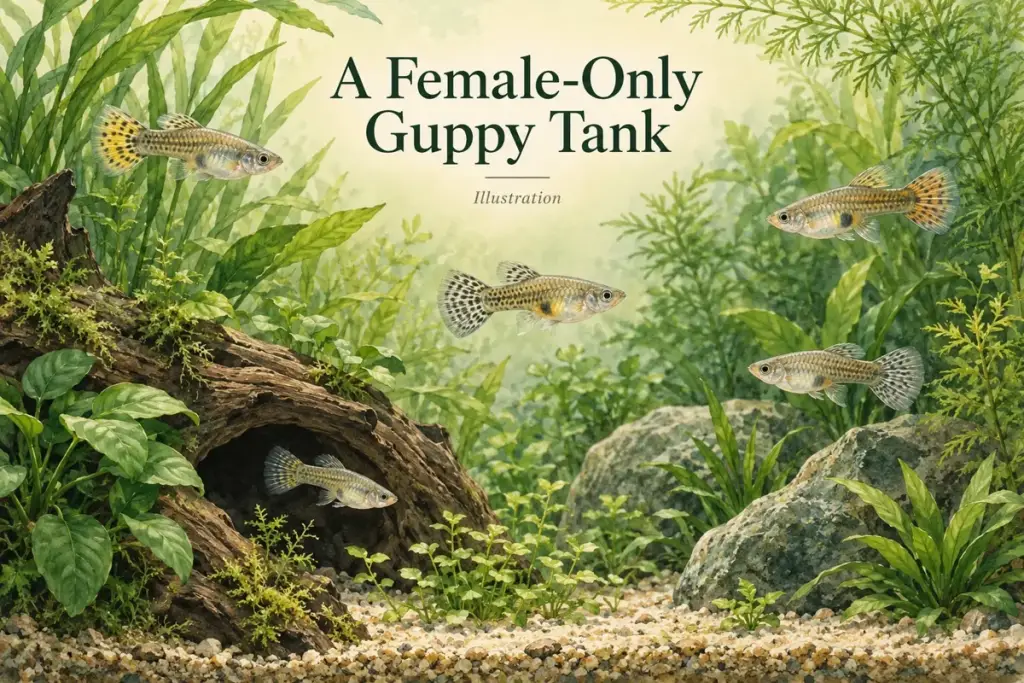
Yes, you can keep female guppies without males. They do not need a male present to remain in a female-only aquarium, but a female that mated before separation may still produce fry later because guppies can store sperm. Keep the tank cycled and appropriately stocked, provide cover, and decide in advance what you will do if babies appear.
This arrangement is most useful when your goal is to avoid planned mating. It still takes observation: females may chase or compete, and fish from a mixed group may have a prior mating history. Plan for both the social needs of the group and the possibility of fry.
Why keep only female guppies?
Some keepers prefer a female-only group because it prevents new mating in the tank and avoids persistent male courtship. It can also simplify a display aquarium when the goal is to keep adult fish rather than raise planned litters. If you are comparing group composition, start with a realistic male-to-female guppy ratio and consider that a single-sex tank has different trade-offs from a mixed group.
A female-only group is not automatically peaceful or maintenance-free. Individual fish can still chase, compete for food, or react to crowding and poor conditions. Watch the whole group after an introduction: check whether every fish can eat, swim freely, and use the tank without being repeatedly cornered. Persistent targeting deserves a closer look at space, cover, and the particular fish involved.
The important catch: females may store sperm
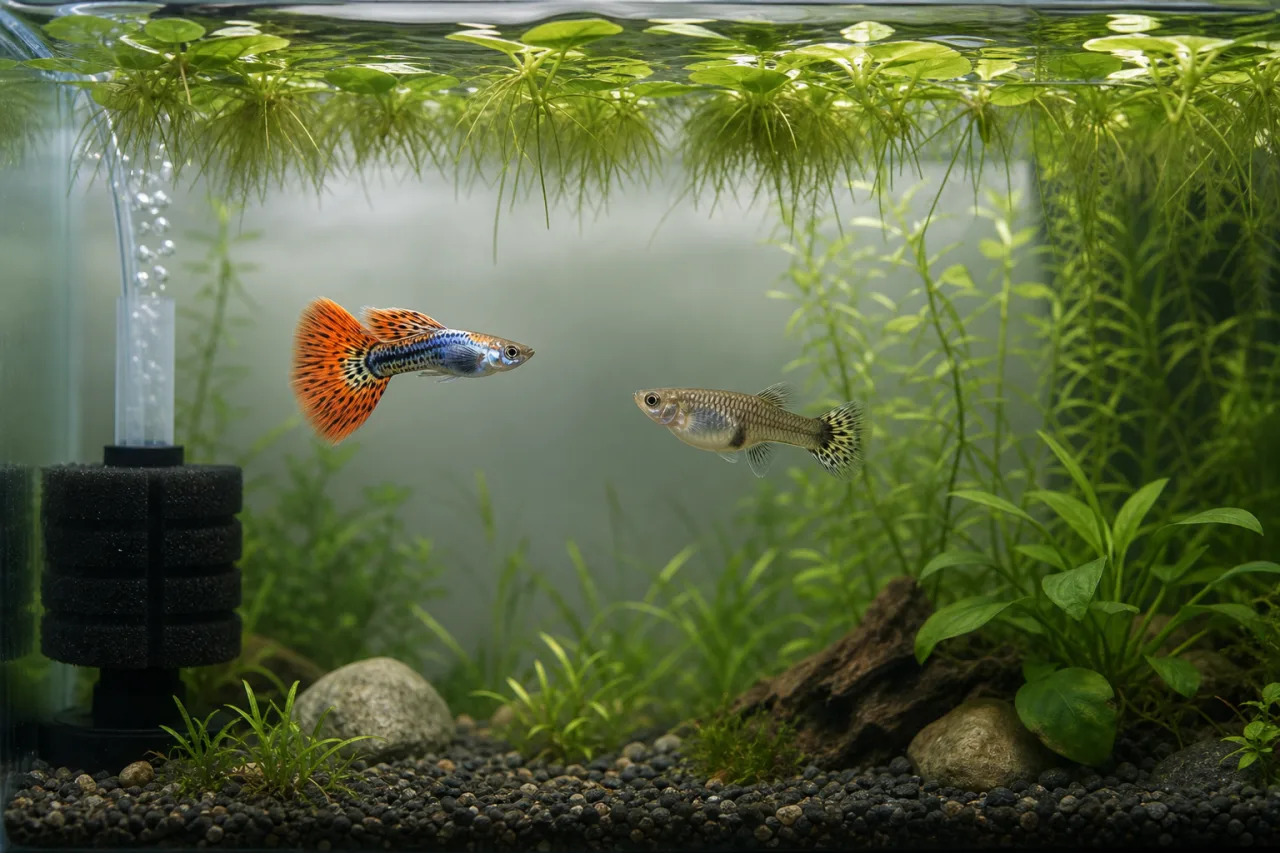
Guppies are livebearers, and female guppies can store sperm after mating. A primary guppy study describes prolonged female sperm storage and fertilization from stored sperm. That means a female who lived with males before purchase or separation may later give birth even when no male is in the current aquarium. The study does not let a keeper predict an exact birth date or how many future broods any individual fish will produce.
This is why a female-only setup is a way to prevent new matings, not a promise that the tank will never contain fry. If you have recently added females from a mixed group, keep a plan for small fry and avoid making a breeding-control decision from appearance alone. A rounded belly or darkened area can have more than one explanation; use a careful observation routine and a reliable guppy pregnancy guide for context.
Set up the tank for adult females
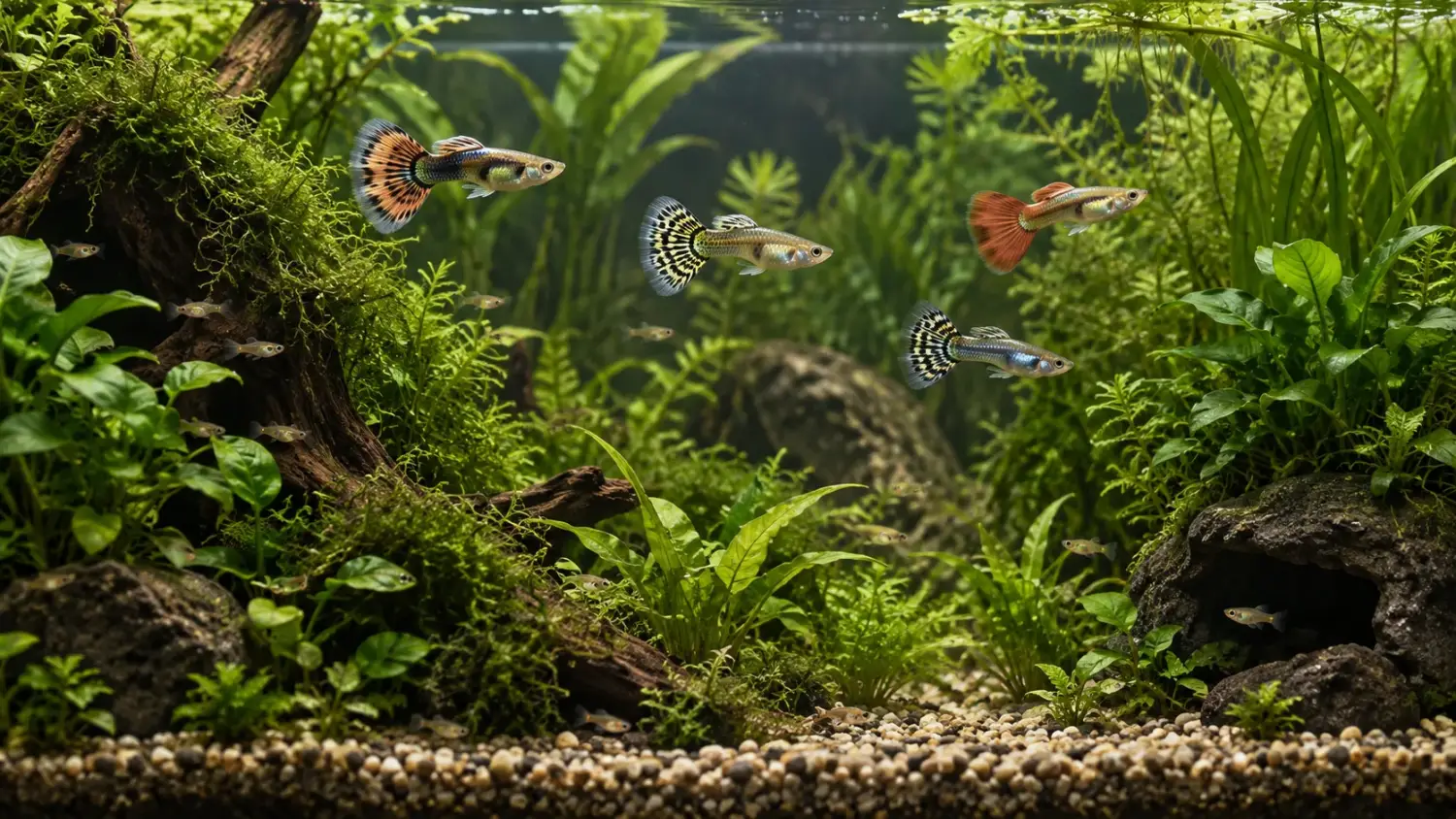
Start with a cycled aquarium, working filtration, stable water, and enough room for the number and size of fish you intend to keep. There is no single stocking number that fits every tank: filtration, footprint, maintenance, adult size, and the behavior of the group all matter. Use the site’s complete guppy care guide and guide to whether guppies can live alone to plan the basic setup.
Add open swimming space along with plants or other safe cover. Cover gives shy fish places to retreat and may give unexpected fry hiding places, while leaving room to observe and clean the tank. See live plants for guppy cover. Adults may still eat fry, so shelter is not a promise of survival.
Keep feeding modest and remove uneaten food. Check the filter intake and water quality during routine maintenance, especially after the group changes. If a fish is new, quarantine and observe it before adding it to the established aquarium; a simple quarantine log helps you keep observations organized.
Make a plan for unexpected fry
If babies appear, first decide whether you can support them in the current tank or have a prepared grow-out space. Fry add mouths, feeding, and future stocking needs. Plants may give them cover, but the adult fish may still eat them and not every fry will find refuge. Do not rely on a small breeder box as a long-term substitute for a stable grow-out environment.
If you do not want to raise the fry, avoid allowing the aquarium to become overcrowded. Identify a responsible rehoming option before the group grows; never release aquarium fish or plants into local waterways. If you keep them, monitor growth, feed appropriately for their size, and make sure filtration and maintenance can handle the added bioload. The guide on whether guppies eat their babies explains why fry survival can differ from one tank to another.
Prevent new accidental breeding
When the source of a fish is uncertain, do not assume every juvenile is female based on a quick glance. Young guppies can be difficult to sex before the anal fin develops a clear shape. Keep new fish separate while you observe them and prepare suitable housing for confirmed males. Avoid repeated chasing; calm, planned moves are easier on fish and keeper.
If your priority is no intentional breeding, buy or keep fish whose sex is confirmed, maintain separate groups, and recheck juveniles as they mature. Sexing mistakes can happen, so check more than once before combining fish. If a female has previously been with males, separation still may not prevent fry from stored sperm.
Female-only tank checklist
- Confirm the aquarium is cycled and the filter is working before adding fish.
- Provide swimming room plus cover, and observe how each fish uses both.
- Quarantine and observe newcomers before combining groups.
- Treat recently acquired females as possible future fry-bearers if they have been housed with males.
- Prepare a grow-out or responsible rehoming plan before fry appear.
- Recheck juveniles before relying on their sex to prevent new mating.
FAQ
Can female guppies live without a male?
Yes. You can keep female guppies without a male in the aquarium. The key caveat is prior mating: a female may have stored sperm and could still produce fry after separation.
Will a female-only guppy tank stop all babies?
It stops new mating when there are no males, but it cannot rule out fry from earlier mating. The timing and number of any later births cannot be predicted from the tank setup alone.
Are female guppies always calmer together?
No. Removing males removes male courtship, but females can still chase or compete. Watch each fish and review space, cover, feeding access, and stocking if one is repeatedly targeted.
Should I remove every fry from a female-only tank?
That depends on whether the aquarium can support the extra fish and whether you intend to raise them. If you keep them, plan filtration, feeding, space, and long-term stocking; if not, arrange responsible rehoming rather than releasing them outdoors.
Behind the care guides
Care begins with steady systems
Our guppy guides focus on practical routines: keep water stable, observe fish closely and allow for natural variation.
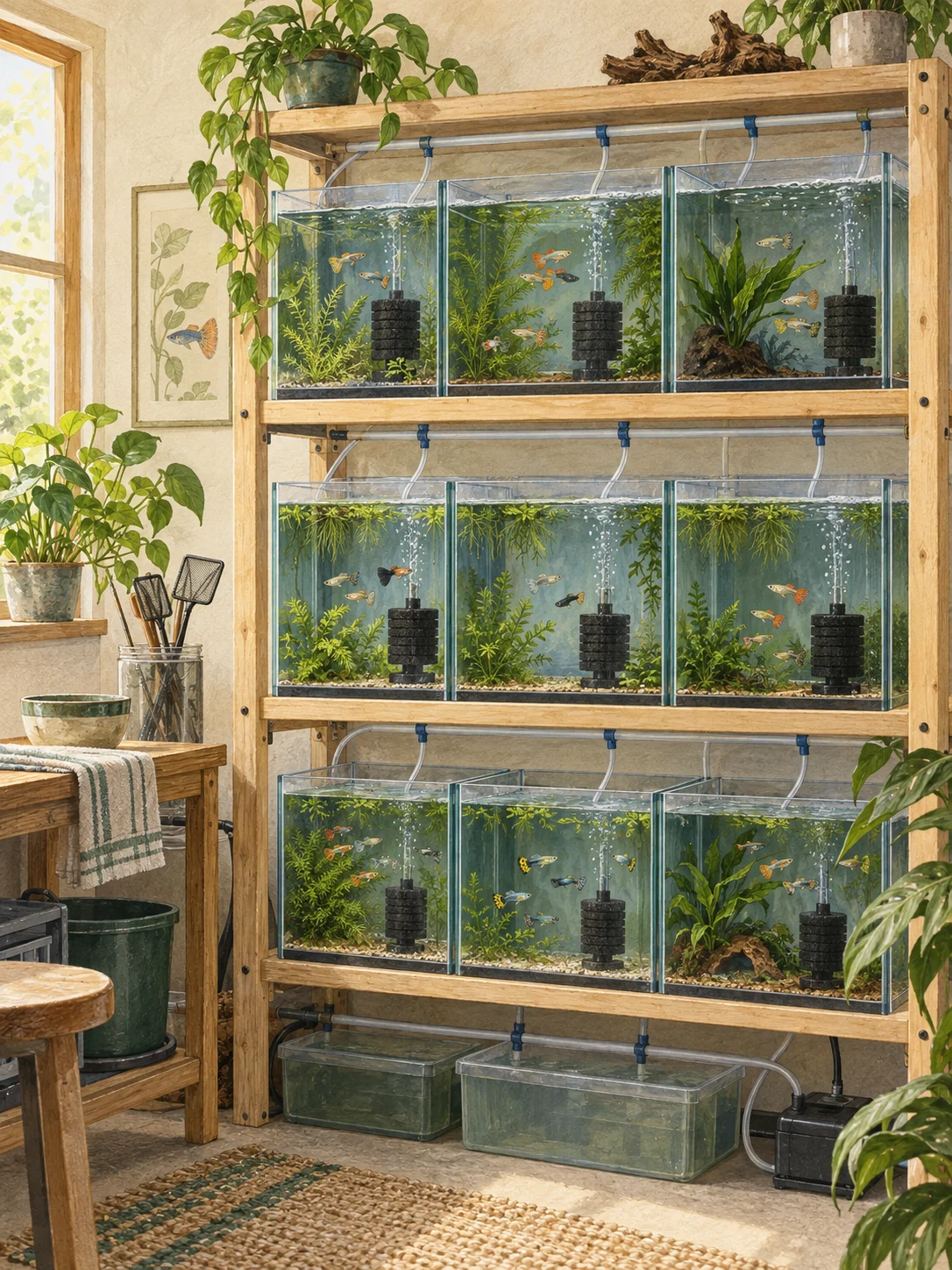
Care systems
Steady water, thoughtful care
Gentle filtration and regular observation support healthy aquarium routines.
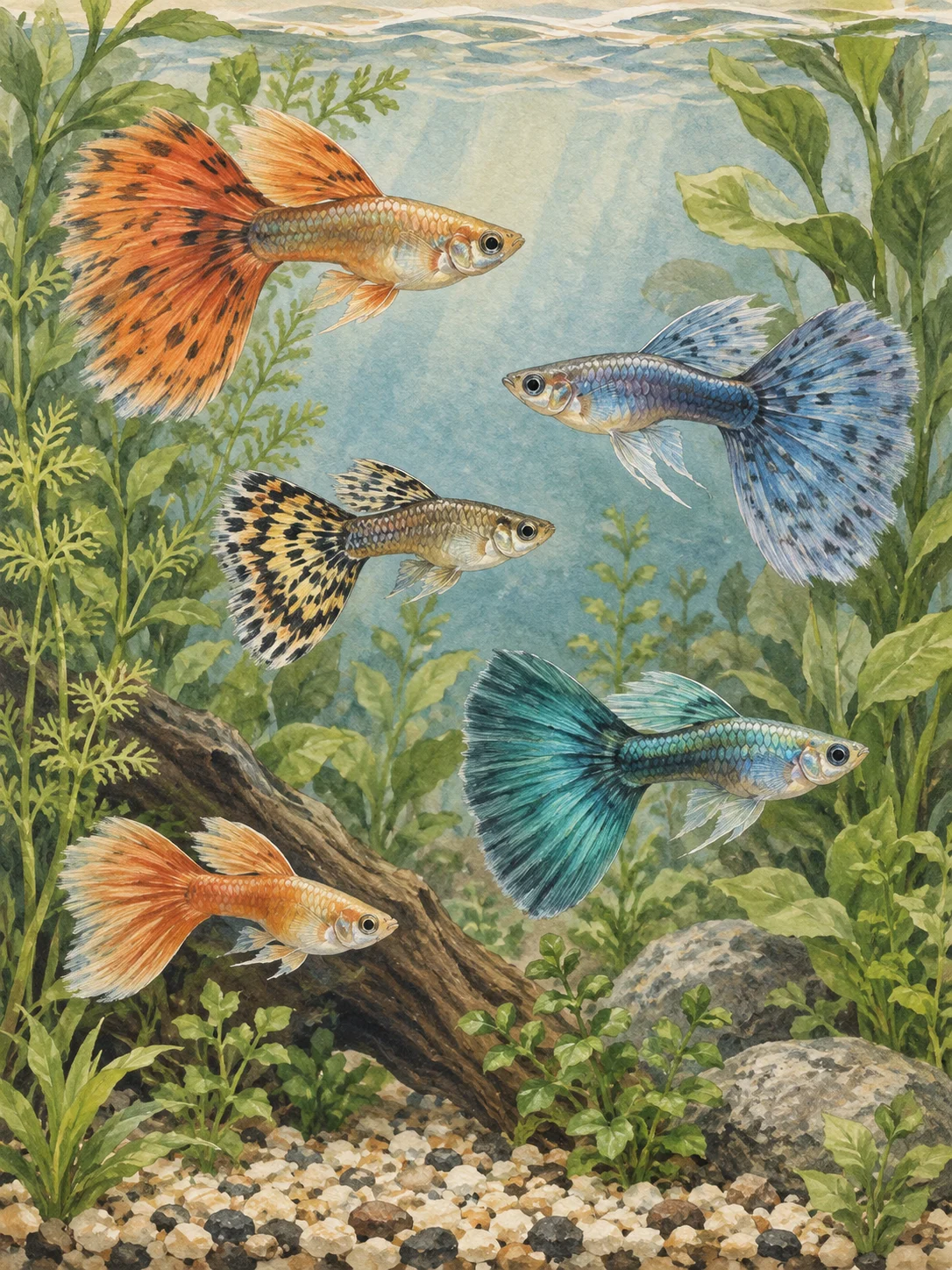
Natural variation
Every guppy is different
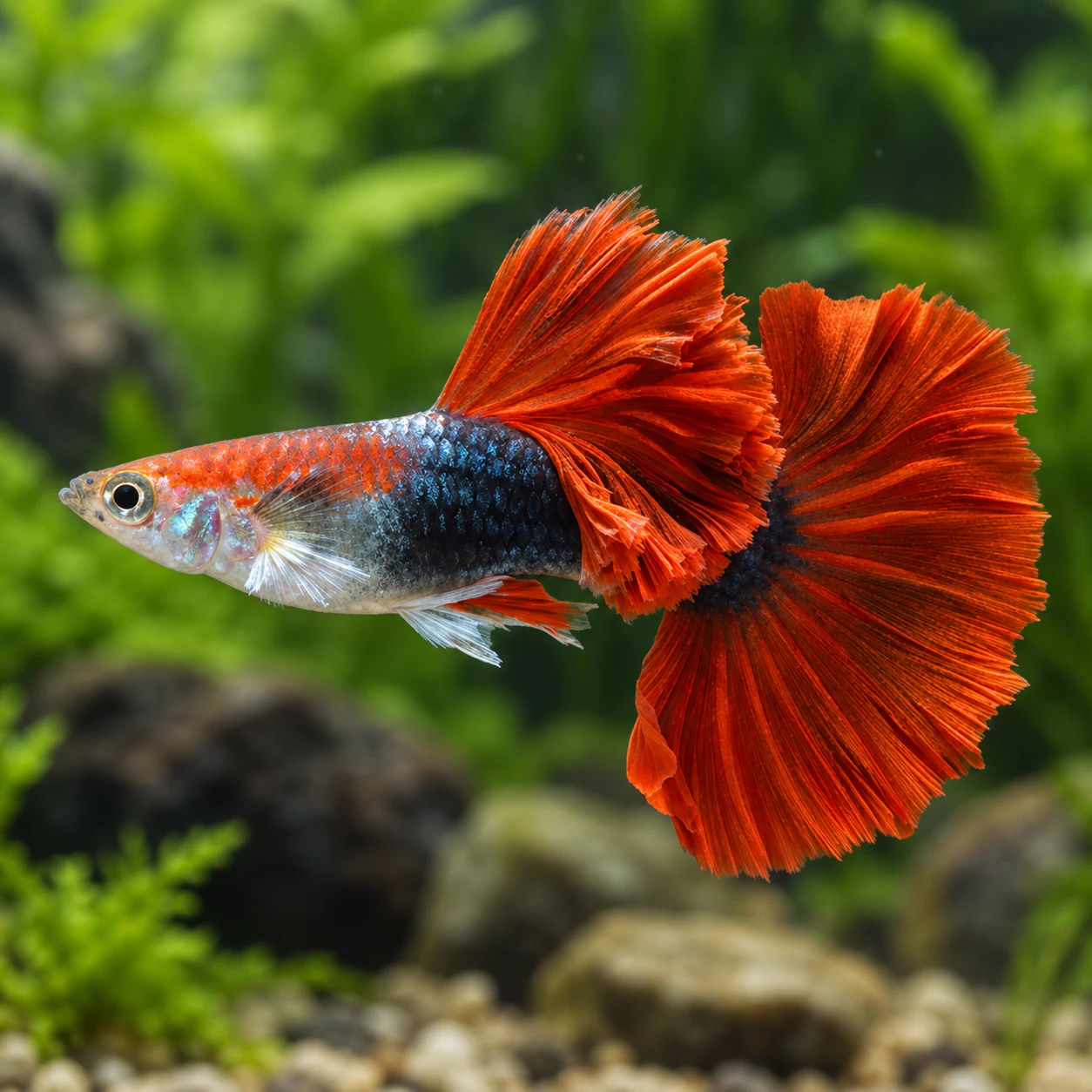
Color, size and fin shape vary with strain, age and each individual fish.
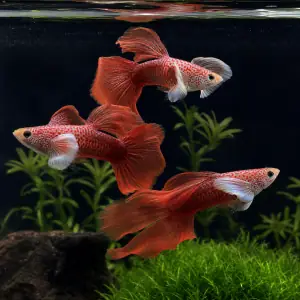
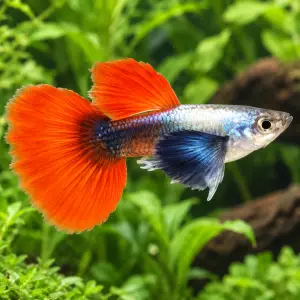
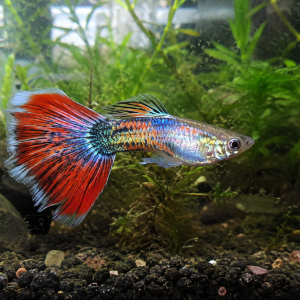
Editorial illustrations for context; they do not depict HiGuppy's exact facility or current fish stock.