The HiGuppy Journal
Male-Only Guppy Tank vs Mixed Community: Which Is Better?
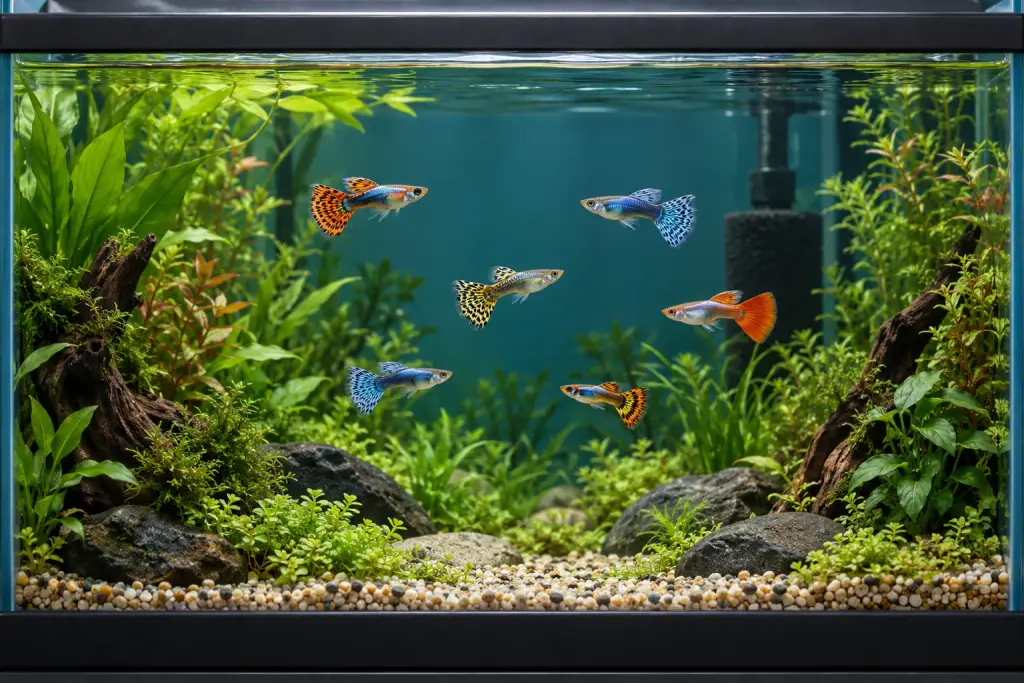
Quick answer: Choose a male-only guppy tank when you want a colorful display with no intentional breeding. Choose a mixed-sex guppy community only when you have room for future fry, a separation plan, and time to monitor population growth. If “community” means multiple fish species, choose peaceful tank mates that will not nip fins or outcompete guppies for food.
A male-only aquarium can be simple, but it is not automatically maintenance-free. Male guppies still need a cycled tank, stable water, suitable filtration, regular feeding, and enough cover to reduce constant attention between fish. The right choice depends on whether your priority is display color, breeding, or a broader community aquarium.
Male-only vs mixed community at a glance
| Your main goal | Starting direction | Main responsibility |
|---|---|---|
| Bright display with predictable population | Male-only guppy group | Watch chasing, provide cover, and avoid overcrowding. |
| Breeding and raising fry | Mixed-sex guppy group | Plan for pregnancy, fry space, separation, and rehoming. |
| Several peaceful fish species | Community aquarium | Match temperament, adult size, swimming level, and water needs. |
| First aquarium with the fewest variables | One compatible group | Cycle the tank and add fish gradually after testing water. |
These are planning directions, not fixed stocking rules. Tank volume, filtration, plant cover, maintenance, fish size, and the condition of the aquarium all affect what is responsible. Use the 10-gallon stocking guide as a starting framework rather than treating one number as suitable for every tank.
Why choose a male-only guppy tank?
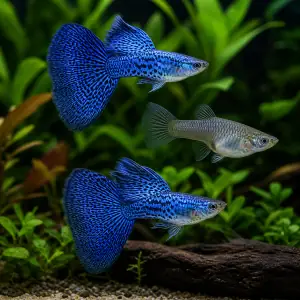
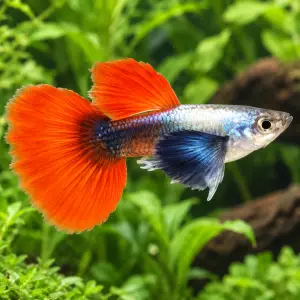
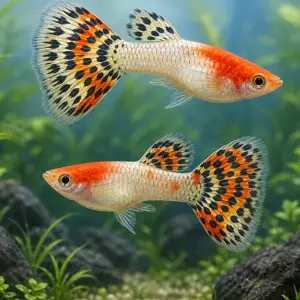
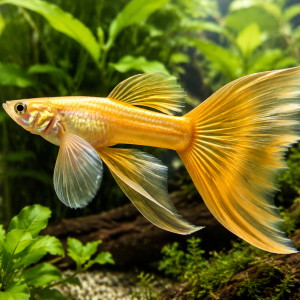
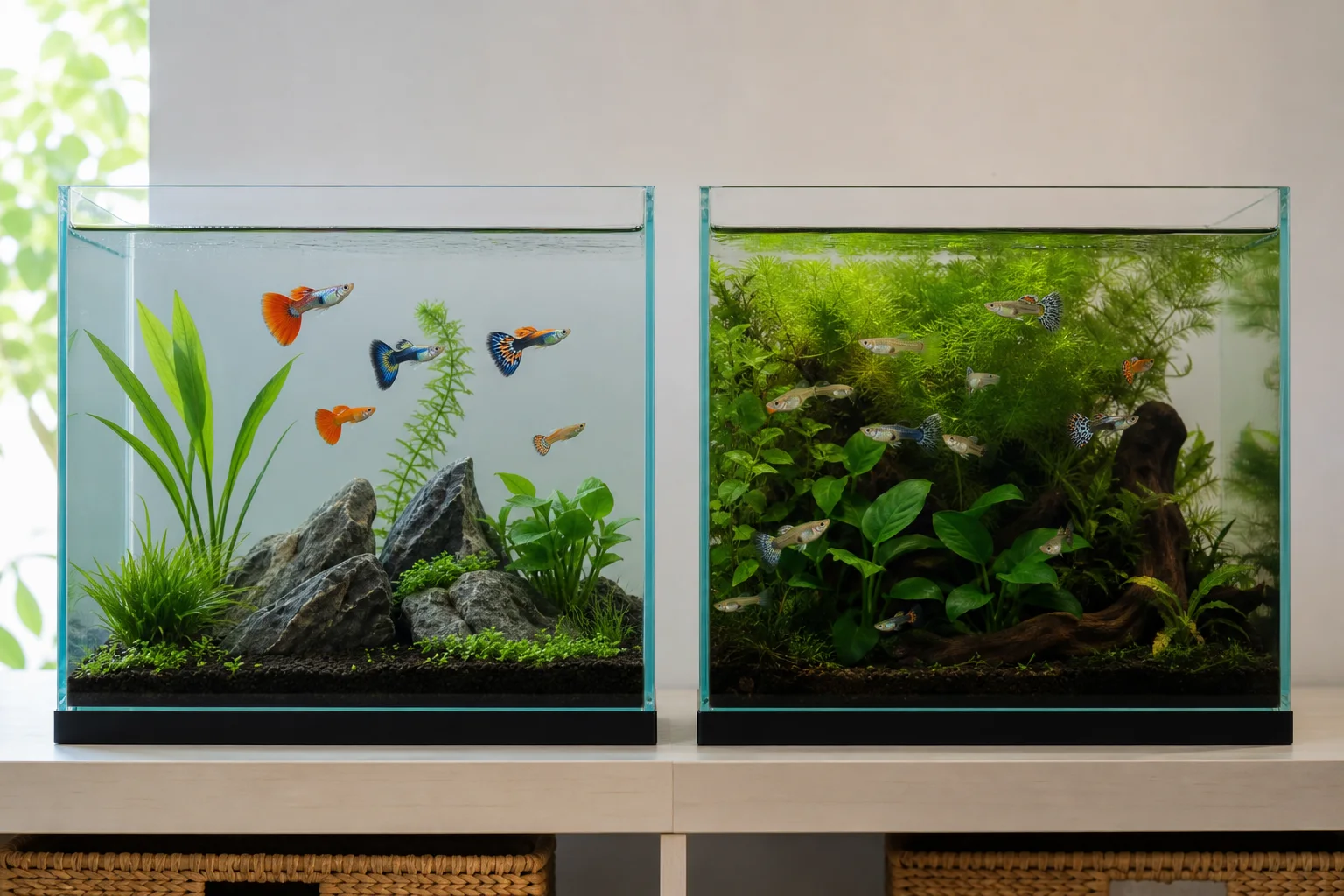
Male guppies are often selected for their visible tail shapes and color patterns. A male-only group also avoids intentional pregnancy and makes population control more predictable. That can be useful for a display aquarium, a first livebearer setup, or a keeper who does not have space for fry.
- No planned fry: removing females avoids the main source of unexpected population growth.
- Clearer buying goal: you can focus on appearance, compatibility, and the space already available.
- Simpler observation: changes in behavior or appetite are easier to track when you are managing one type of group.
- Still social: males may chase, display, or compete for attention, so plants and sight breaks remain important.
What changes in a mixed-sex guppy community?
A mixed-sex guppy tank is a breeding decision even when breeding is not your original goal. Females can become pregnant, and a tank that looks lightly stocked at the beginning may need additional space later. Before choosing mixed sexes, decide where fry would be observed, raised, separated, or rehomed.
Male attention can also be concentrated on one female when the group is too small or lacks cover. A commonly discussed male-to-female ratio may be useful as a conversation starter, but it is not a guarantee of calm behavior. Tank size, plant cover, individual temperament, and the number of females already present still matter.
Read the pair vs trio comparison before choosing a breeding group. Prepare enough space for parents and offspring before bringing a mixed-sex group home.
If community means multiple fish species
Some keepers use “community tank” to mean guppies living with other peaceful species rather than a mixed-sex guppy group. In that case, evaluate each possible tank mate by adult size, temperament, swimming level, water conditions, feeding speed, and fin-nipping risk.
- Avoid fish that are large enough to treat guppies as prey.
- Be cautious with known fin-nippers because guppy tails are easy targets.
- Do not choose a tank mate only because it looks peaceful in a store for a few minutes.
- Leave a backup plan if the fish show persistent chasing, hiding, injury, or feeding competition.
For a first setup, one compatible guppy group is easier to observe than several new species at once. Add any community fish only after the aquarium is stable and you understand the behavior of the existing fish.
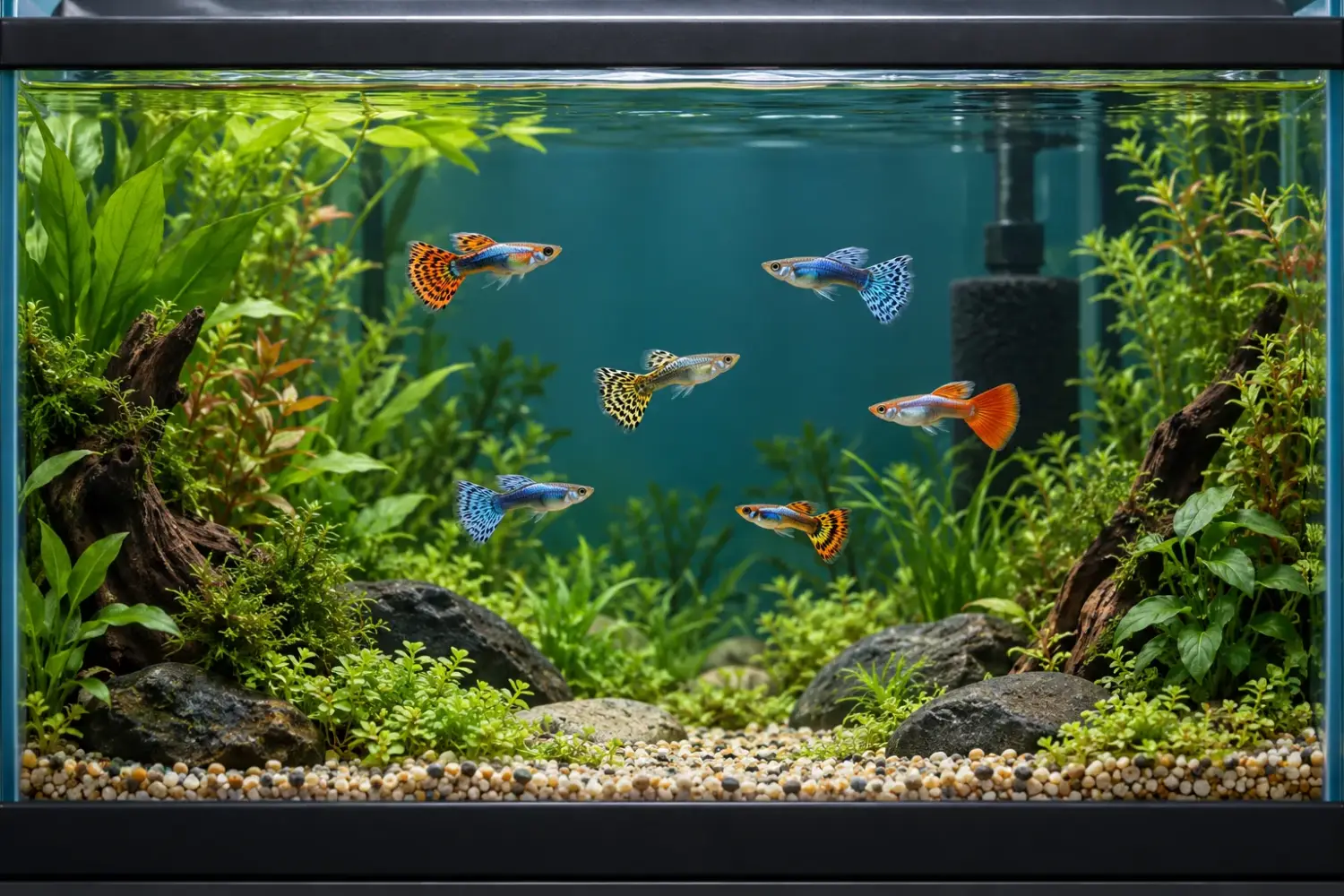
Tank setup for a male-only guppy display
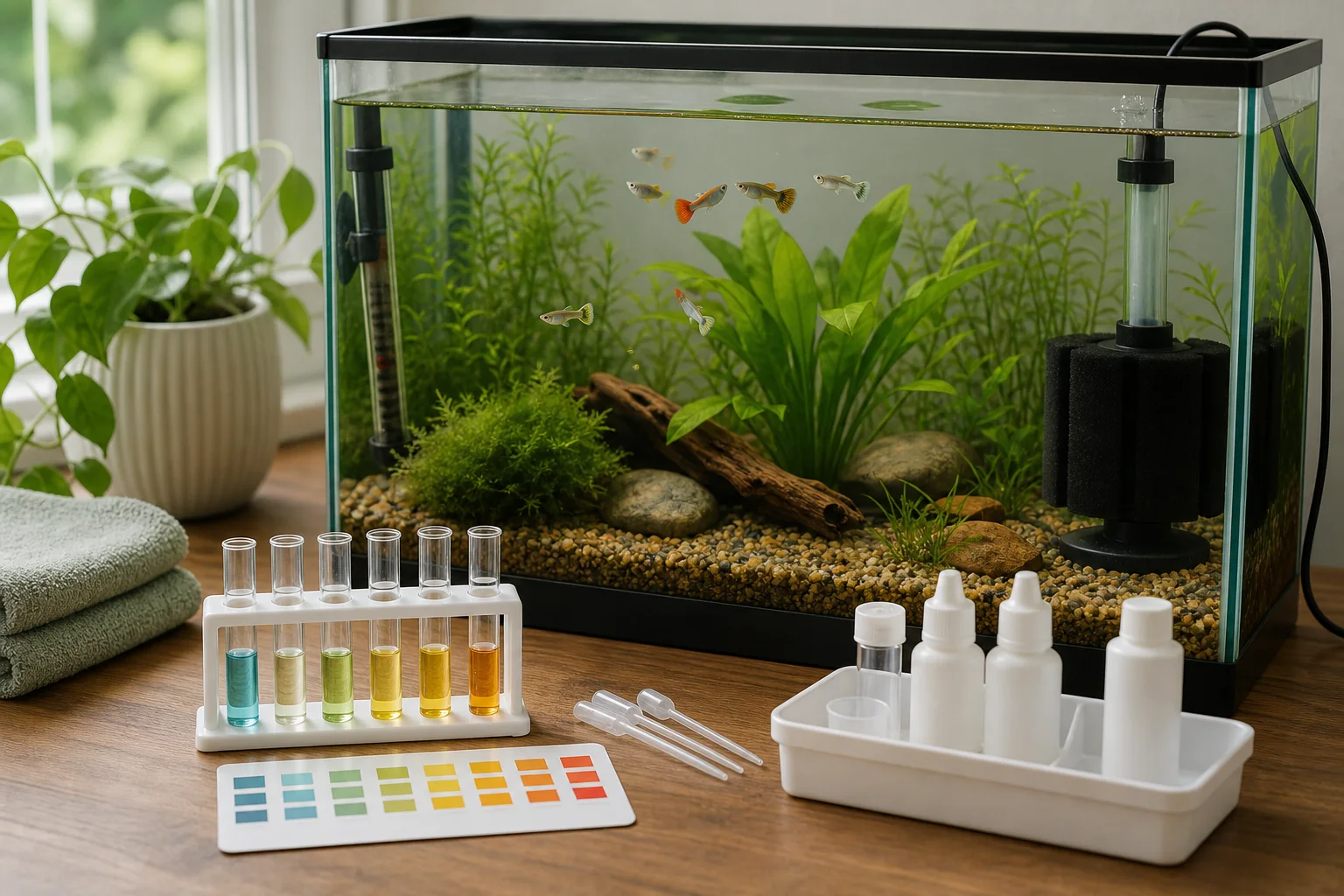
Start with a fully cycled aquarium, gentle water movement, and enough open swimming space for the fish to move normally. Plants, floating cover, and hardscape can break lines of sight without filling every part of the tank. Test the aquarium before adding fish and continue testing when behavior or appetite changes.
- Cycle the aquarium before stocking it.
- Use filtration that keeps water moving without forcing guppies to fight a strong current.
- Add plants or other safe cover with clear space for swimming.
- Keep a consistent light and feeding routine.
- Remove excess food and perform maintenance based on water tests and actual waste load.
- Prepare an observation or quarantine option before bringing home new fish.
- Introduce fish gradually instead of treating the tank’s maximum capacity as a target.
How to reduce persistent chasing
Brief chasing and display behavior can occur in a male-only group. Persistent targeting is different: one fish may spend too much time hiding, lose access to food, clamp its fins, or show repeated stress behavior. First check water quality and the physical layout before assuming the fish simply need to “work it out.”
- Increase visual breaks with plants or decor while keeping the tank easy to clean.
- Check whether the filter flow is forcing weaker swimmers into one area.
- Observe feeding so one fish is not consistently excluded.
- Review the group size and aquarium space instead of adding fish automatically.
- Separate an injured or persistently targeted fish when the setup cannot be made safe.
Arrival and quarantine planning
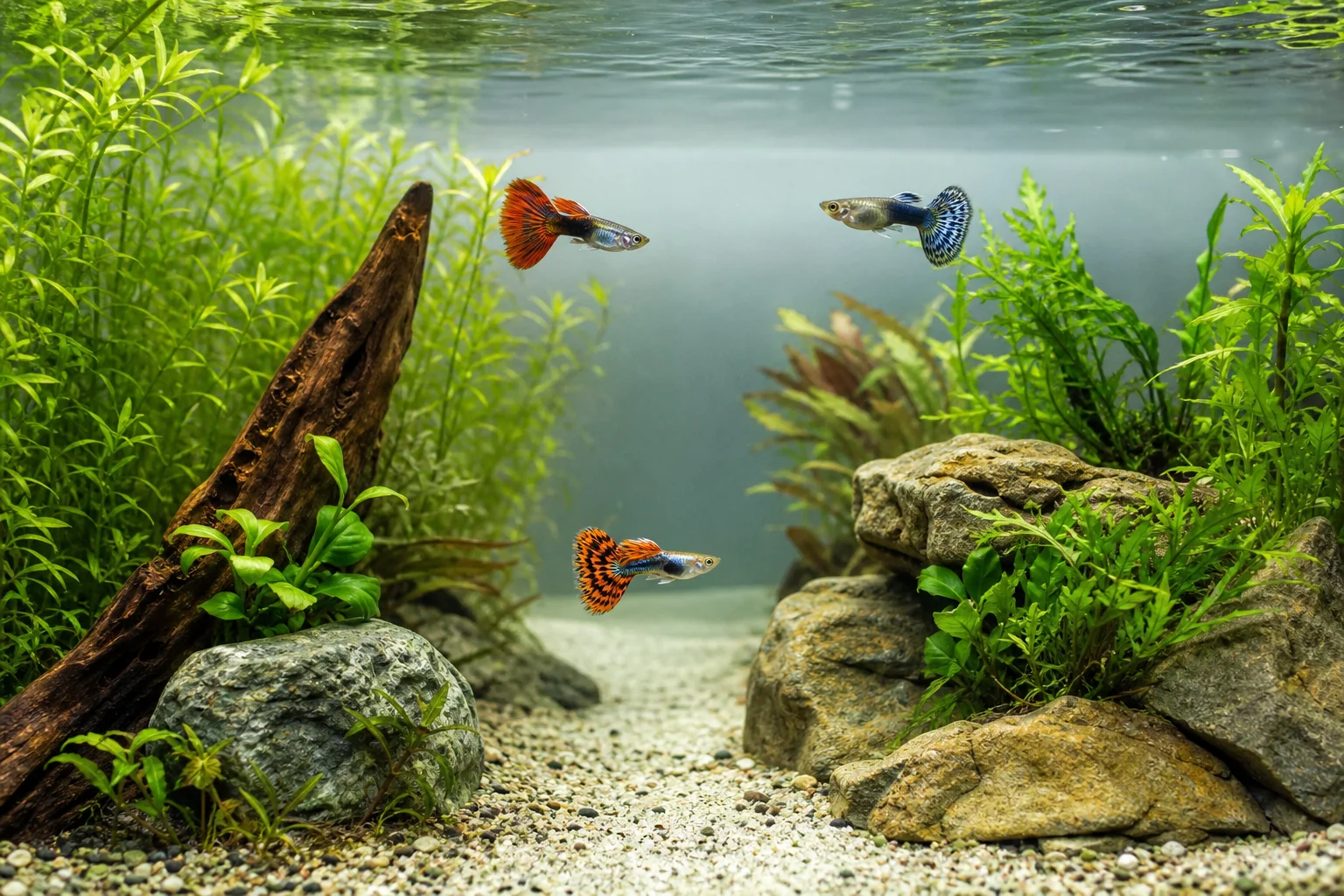
Whether fish come from a local store or an online seller, prepare the aquarium before purchase. On arrival, keep the process calm, follow the current shipping and acclimation instructions, and use an observation or quarantine setup when appropriate. HiGuppy’s Acclimation Guide and quarantine guide explain the first steps without promising a fixed outcome for every fish.
Use the water parameters guide and beginner care guide as ongoing references.
Male-only guppy tank FAQ
Are male guppies easier than mixed-sex guppies?
They can be simpler for population control because there is no intentional breeding. They still need stable water, enough space, cover, and behavior monitoring.
Will male guppies fight?
They may chase and display, but persistent targeting, hiding, injury, or feeding exclusion needs attention. Check water quality, layout, flow, and stocking before deciding what to change.
Can I add females later?
You can, but that changes the tank into a breeding plan. Confirm that you have space and a responsible plan for pregnancy, fry, separation, and future population.
Can male guppies live with other fish?
Sometimes, when the other species are peaceful, appropriately sized, and compatible with the aquarium. Avoid fin-nippers and fish that may outcompete or prey on guppies.
For a predictable colorful display, begin with the aquarium you can maintain well and choose only fish that fit that plan. Then review the beginner tank setup guide before ordering from current HiGuppy listings.
Behind the care guides
Care begins with steady systems
Our guppy guides focus on practical routines: keep water stable, observe fish closely and allow for natural variation.

Care systems
Steady water, thoughtful care
Gentle filtration and regular observation support healthy aquarium routines.

Natural variation
Every guppy is different
Color, size and fin shape vary with strain, age and each individual fish.
Editorial illustrations for context; they do not depict HiGuppy's exact facility or current fish stock.