The HiGuppy Journal
Fancy Guppy Strain Guide: Traits, Health & Breeder Records
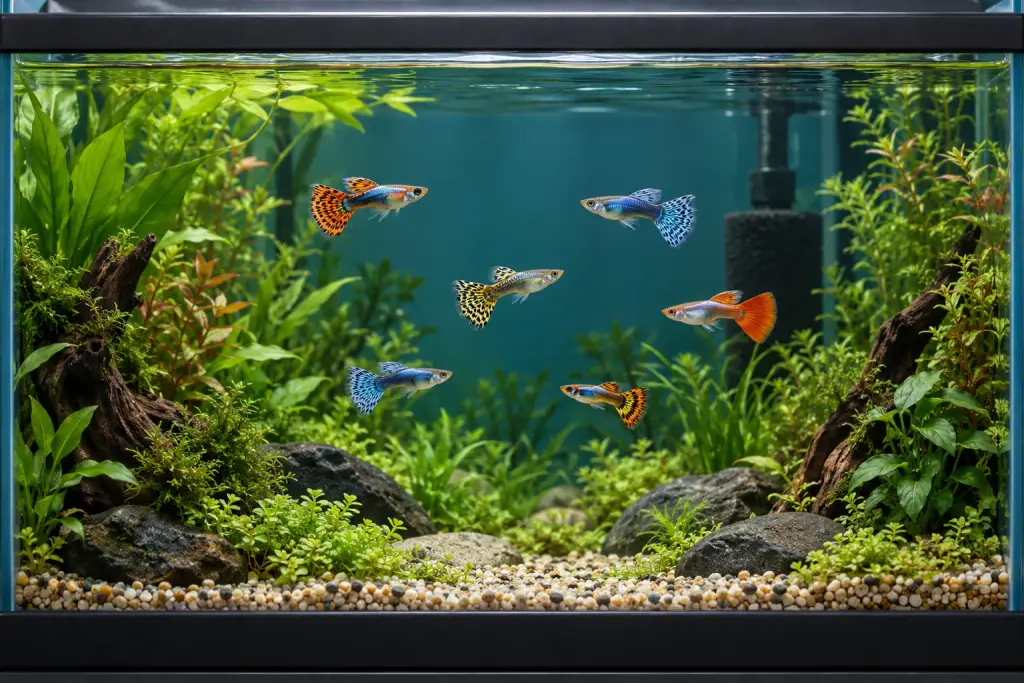
What makes a good fancy guppy strain? A fancy guppy strain is a selectively bred line of Poecilia reticulata whose breeders aim to maintain recognizable colors, patterns, fin traits or body features across generations. A good strain is not judged by color alone: choose active fish with sound body structure, steady breathing, intact fins and documented parentage when available. Strain names and representative photos do not guarantee identical offspring.
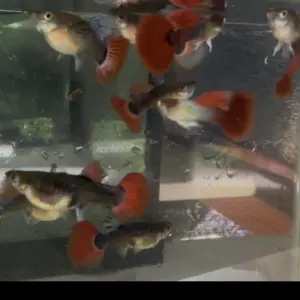
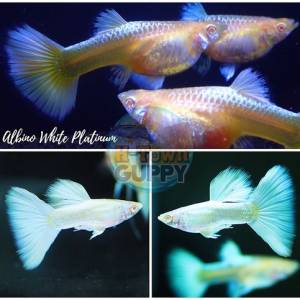
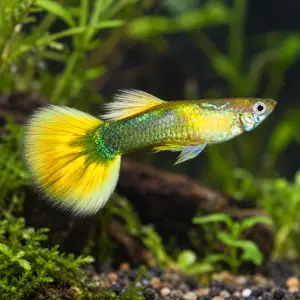
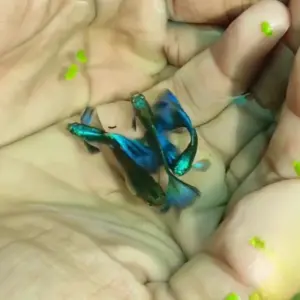
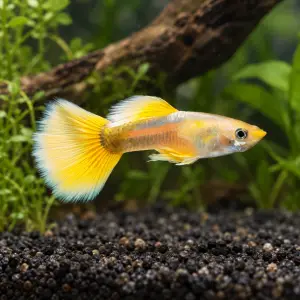
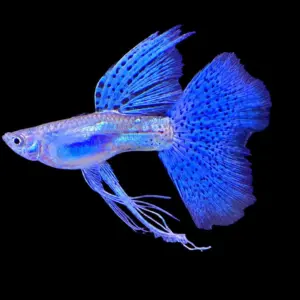
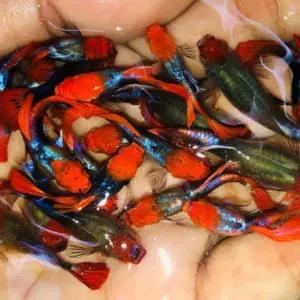
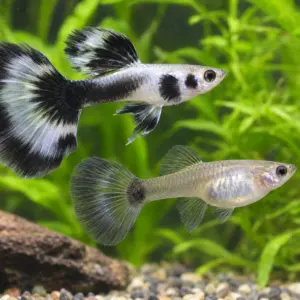
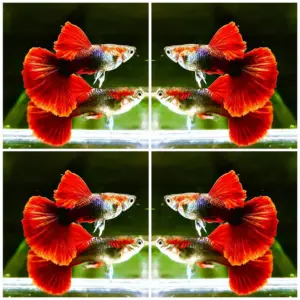
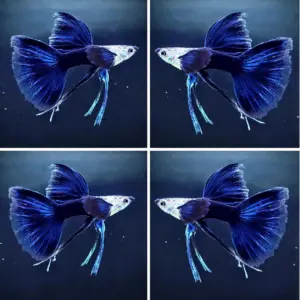
The word fancy describes domesticated guppies chosen for appearance, but it does not identify one species, one genetic formula or an official universal grade. A striking male with a long tail may be impressive for a display tank while still being an unsuitable breeder if his health or swimming is compromised. This guide focuses on how to evaluate a line, build a practical record and select responsibly, rather than repeating HiGuppy’s full guppy strain list. All catalog and editorial images are representative illustrations, not current fish-stock photographs.
Fancy guppy strain, color variety and tail form are not the same thing
Breeders often combine words that describe different attributes. For example, a guppy labeled “Platinum Dumbo Mosaic” may have a silver-toned body, enlarged pectoral fins and a patterned tail. Those words describe visible features; they do not establish that all fish carrying that name share one pedigree or will reproduce those traits at a particular percentage.
| Word on a listing | Usually refers to | What the buyer must still confirm |
|---|---|---|
| Color: Red, Blue, Gold, Platinum | Body or fin coloration | Coverage, shade and lighting of the actual fish |
| Pattern: Mosaic, Grass, Cobra | Placement and size of markings | Which fins/body areas show the pattern; whether it remains consistent as fish mature |
| Fin trait: Dumbo, Ribbon, Swallow | Pectoral size or elongated fin rays | Functional swimming, exact position of the trait and whether females share it |
| Tail form: Delta, Halfmoon, Swordtail | General tail outline | Real movement and symmetry, not just a still photograph |
| Breeder-line name: Moscow, Koi, Dragon | A named selection or appearance tradition | Recent parents/offspring, line records and seller’s actual meaning |
A fancy guppy strain name can be useful shorthand when comparing fish, but it is not proof of a genetic pedigree. If you want a glossary of 30 named examples rather than breeder-quality assessment, use the existing HiGuppy Strains & Types page.
Evaluate health before choosing a fancy guppy strain
Whatever the fancy guppy strain, health comes before color. A healthy candidate should swim upright and move steadily, eat appropriately and breathe without persistent distress. Inspect the spine, body proportions, eyes, scales, tail edges and fins. Then observe the fish’s whole group, because an apparently attractive animal in a tank where several others gasp or show ulcers deserves caution.
- Body condition: avoid clear unexplained wasting, extreme curvature, persistent bloating or severe injury.
- Movement: look for controlled swimming; a large tail is not an advantage if the fish cannot move comfortably.
- Fins: observe symmetry and freedom of movement, not only length; check for progressive fraying or damage.
- Breathing and appetite: compare with the group under ordinary feeding and lighting conditions.
- Stock evidence: ask for a recent real-stock video, noting which listing photos are illustrative or AI-generated.
The OATA guppy/molly care sheet recommends assessing swimming, breathing, eyes and fins, and warns against buying from a tank with visibly sick fish. No photo or 30-second video can guarantee that a fish carries no disease.
Assess the pattern and fin structure from more than one angle
Judging a fancy guppy strain takes more than one angle. A clear side-on view helps compare color coverage, body proportion and tail outline, but not every trait is visible from one side. Large Dumbo pectorals are easiest to judge when the fish turns or swims toward the camera. Mosaic markings should be visible across the opened tail, not only in a tiny cropped area. Use neutral lighting and compare fish at similar ages.
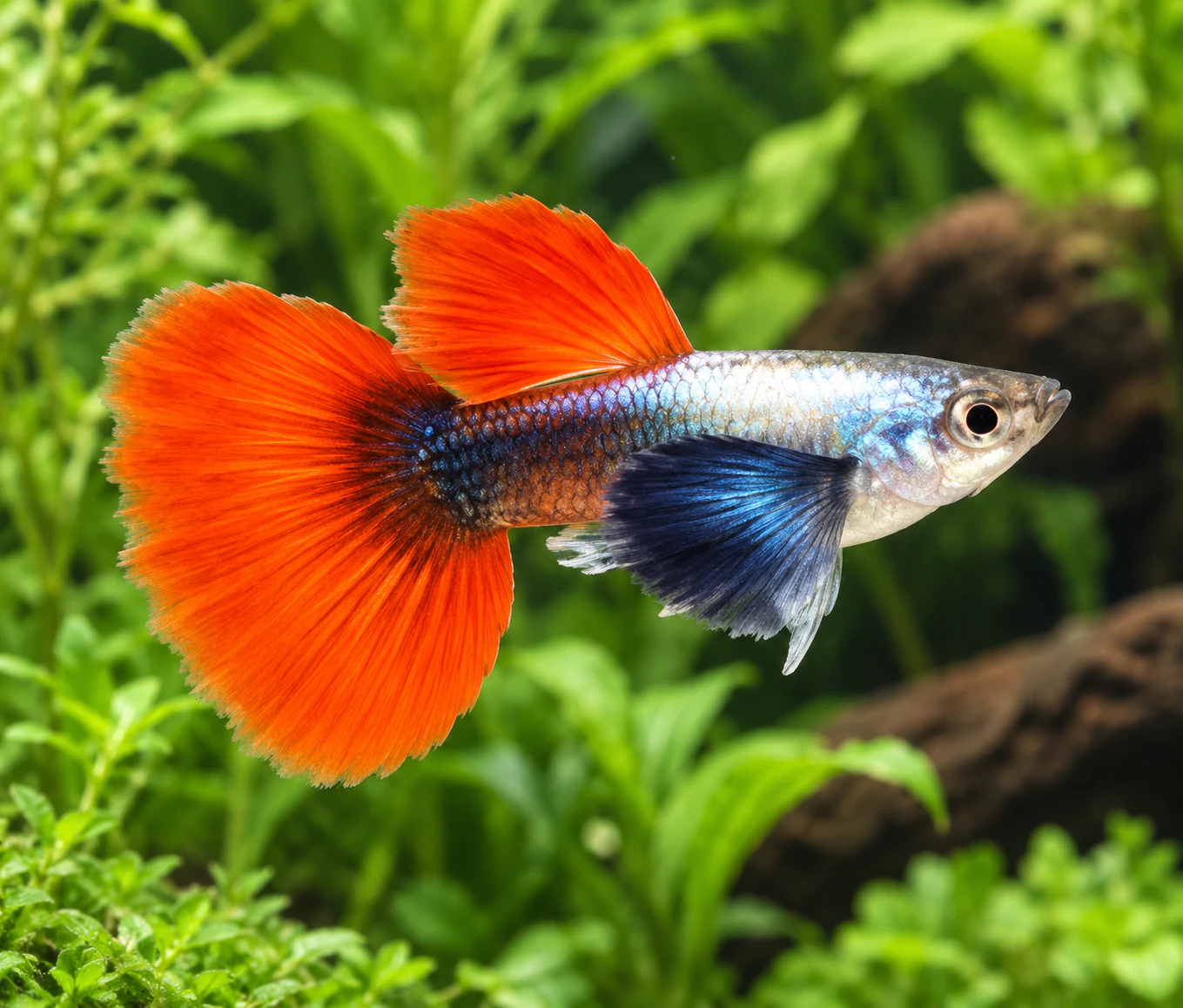
An exaggerated angle or blue LED can make a fin or metallic sheen seem larger or brighter than it would in a consistent viewing setup. Choose the appearance you like, but separate a visual preference from a testable line-quality claim.
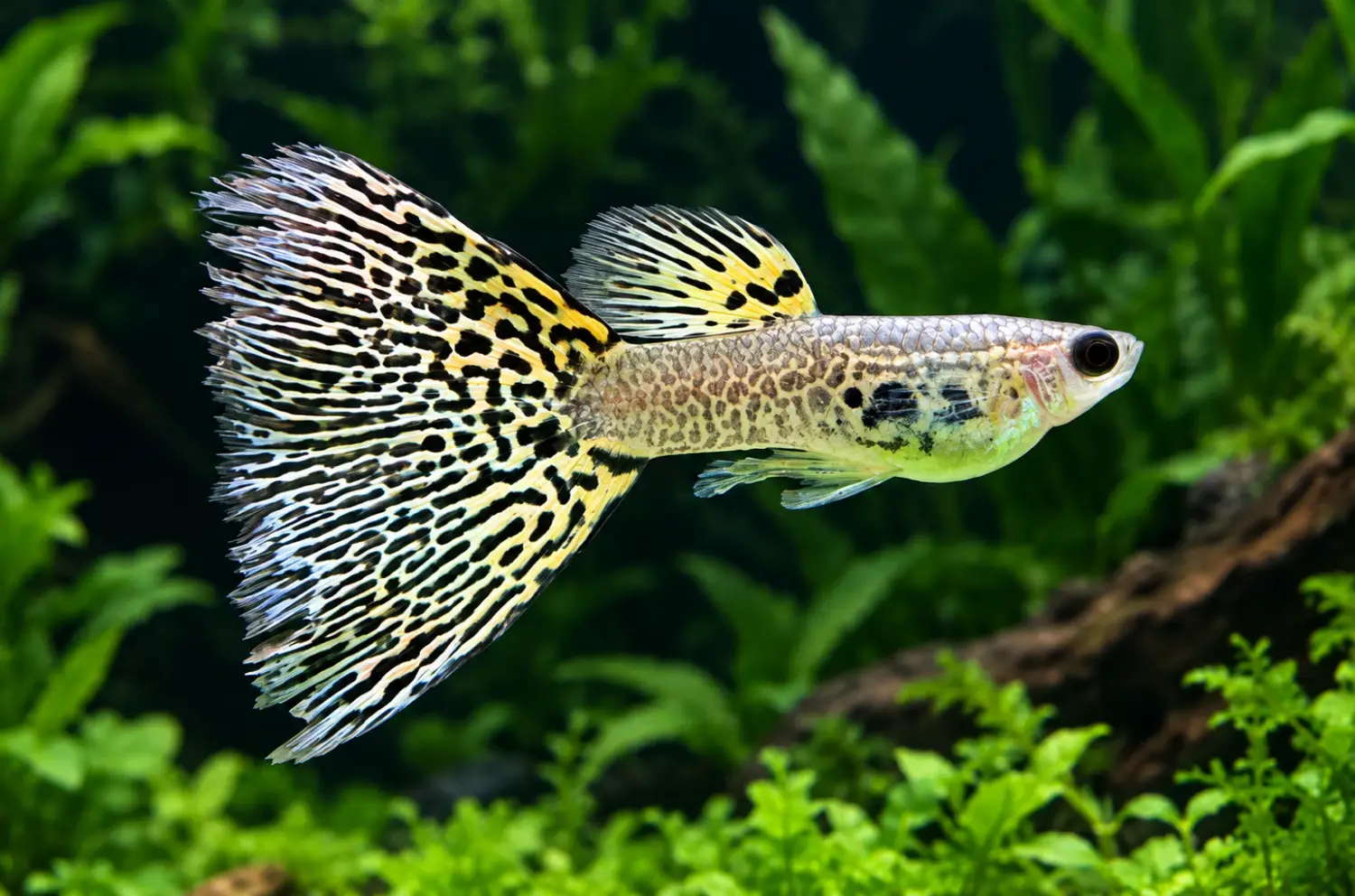
A simple fancy guppy strain checklist is not an official show standard
A practical fancy guppy strain checklist can help compare candidates consistently without inventing an official “Grade A” definition. Different associations and breeding groups may use their own judging systems, and seller grades are not necessarily interchangeable.
| Area | Useful evidence | Do not assume |
|---|---|---|
| Health and mobility | Normal swimming, breathing, feeding and sound body condition | More saturated color automatically means healthier |
| Fin form | Clear views of both sides and open tail, with intact movement | Longest tail is always the best selection |
| Pattern and color | Consistent neutral-light photos and notes over time | One edited image represents every mature male |
| Breeding history | Identified parents, dates and some mature offspring examples | A shared strain name guarantees parentage |
| Practical husbandry | Suitable water, manageable density, available grow-out capacity | One perfect-looking fish proves a line breeds true |
A seller’s designation such as premium or show quality should be treated as a claim needing the seller’s criteria and actual fish evidence. Do not fabricate certificates, awards or grades based only on an illustration.
Why breeding two similar-looking guppies does not guarantee matching fry
Two similar-looking fish from the same fancy guppy strain can still throw varied fry. Color, body pattern and fin form can involve different genetic factors, and inheritance varies across lines. Scientific work on guppy color has demonstrated that selection can alter the distribution of visible traits across generations, but one result from a controlled research population does not give a reliable offspring percentage for a shop’s named strain. It would be inaccurate to call all blue, red or Mosaic offspring a single simple-gene prediction.
For research context, a published guppy selection study found divergence in male orange area after three generations of selection in its experimental lines. Another guppy genomic study describes complexity in color-related variation. These findings support caution about genetic claims, not specific promises about HiGuppy’s catalog fish.
Female guppies may also store sperm from previous matings. If a female has had earlier male exposure, even keeping her with a new selected male may not clearly establish the father of every subsequent brood. Ask about the breeder’s actual line records rather than assuming a pair arrived as genetically controlled breeding stock.
Start a responsible fancy guppy strain record before your first breeding project
The best fancy guppy strain record is simple enough to maintain over multiple generations. Record which animals you actually kept, where they came from and the traits visible once fry matured. It also helps distinguish natural variation from a management issue.
| Record field | Example of what to write | What it helps answer |
|---|---|---|
| Pair/group ID and source | Line A, breeder or lot ID, date received | Which fish were involved and when |
| Adults and previous exposure | Male/female identifiers, estimated age, female’s known history | How confident can you be about parentage? |
| Environment | Tank ID, water tests, feeding and stocking notes | Were care conditions similar between groups? |
| Breeding and brood dates | Observed dates of mating, birth and number seen | Which broods can reasonably be compared? |
| Juvenile development | Photos at comparable age and size, visible fin/color traits | Which features persisted as fish matured? |
| Welfare and placement | Health notes, excess juveniles, available grow-out space | Are selection decisions compatible with responsible care? |
Avoid describing an entire batch as fixed genetics based on only one unusually colorful juvenile. Selection for appearance should never override serious health or mobility concerns. See How to Choose Healthy Guppy Fry for Future Breeding for a related fry-stage checklist.
Line breeding, mixing varieties and keeping records separate
Breeders may maintain a named fancy guppy strain over repeated generations, introduce unrelated animals, or cross different lines for a new appearance goal. Each choice can affect how traits vary in future offspring. Without a careful record, mixing breeders from several visually similar sources makes it harder to evaluate which combinations produced which traits.
- Keep identifiable groups or documented matings when parentage matters.
- Do not assume two sellers use the same definition of Moscow, Dragon, Topaz or other terms.
- Use current fish and mature offspring evidence when comparing claims of consistency.
- Record the health of all offspring, not only the most colorful individuals.
- Have room or responsible homes for healthy juveniles that are not kept as breeders.
- Avoid repeated close breeding solely to intensify color while ignoring condition and behavior.
A pure-looking photograph is not a genetic test. Instead of promising identical fry, describe observed line characteristics and the range of outcomes you have actually seen.
Fancy guppy strain water parameters and tank setup
Fancy guppies remain Poecilia reticulata and need ordinary good guppy husbandry. A mature filter, stable water, suitable swimming space, gentle current and planted or safe refuge support both display and responsible breeding. No fancy guppy strain changes those baseline needs. Broad ornamental-tail strains are sometimes more vulnerable to fin damage from sharp décor or known fin-nipping species.
OATA suggests for guppies roughly 20–28°C (68–82°F), pH 7.0–8.0 and GH 8–18 dGH, with ammonia and nitrite at zero. Its guide recommends an aquarium of at least 45 L for a small group and appropriately larger setups for higher stocking; the right volume depends on fish load and intended fry. A starting routine of conditioned, temperature-matched partial water changes and weekly tests is useful, but adjust based on results rather than chasing exact numbers.
For more detail see the water parameters guide and complete guppy care guide. No strain name by itself requires a magical color-enhancing pH or special chemical additive.
Feeding and color: quality food cannot rewrite a fancy guppy strain
Feeding a fancy guppy strain is ordinary husbandry: a suitable complete guppy food plus occasional safe live or frozen items can support condition and normal color expression. Do not assume overfeeding will create brighter Mosaic patterns or make Blue Moscow fry fully blue. Uneaten food can contribute to ammonia and nitrite problems, so feeding and filtration should be managed together.
The condition of the fish and the stability of its environment are better first checks for color fading than a product marketed as a guaranteed pigment booster. Observe eating, note body condition and compare fish under consistent neutral lighting.
Growing and choosing fancy guppy strain fry without overcrowding
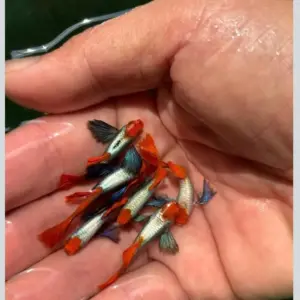
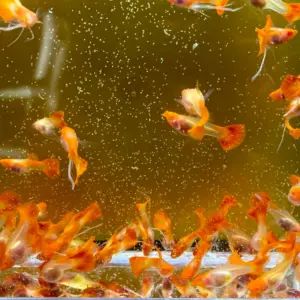
Guppies can reproduce readily. An adult breeding group can lead to many fry, some of which will develop unexpected colors and fin shapes. If you intend to select a strain, plan space before the first brood, not only after juveniles have grown too large for their original tank.
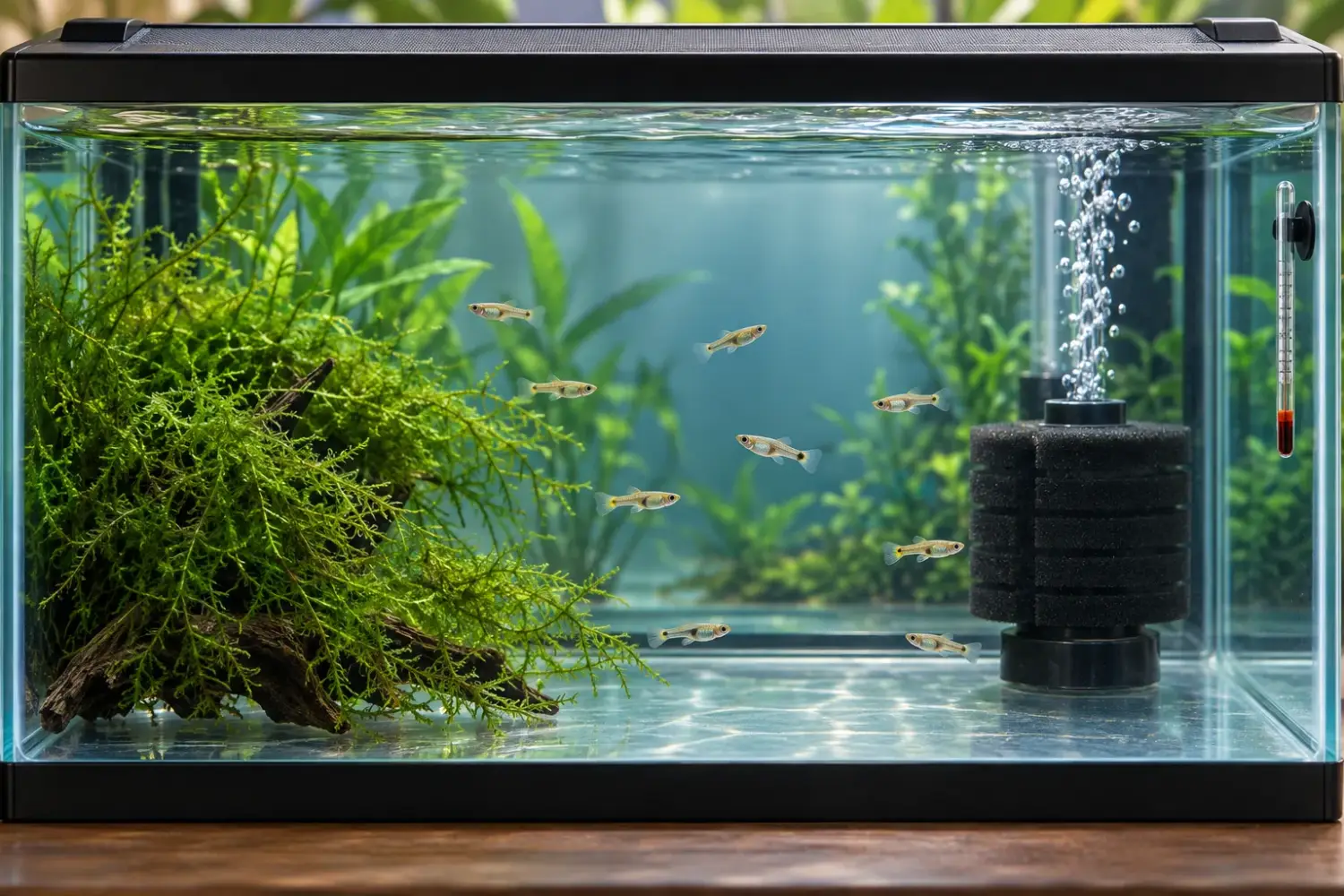
- Use a cycled grow-out system with safe intake filtration for tiny fry.
- Provide food appropriate to fish size while avoiding excessive leftover waste.
- Record changes as fry develop rather than grading them solely at birth.
- Compare similar-age fish under the same light and husbandry conditions.
- Prioritize health and normal movement before retaining fish for breeding.
- Plan responsible homes for healthy offspring not retained in the breeding project.
The guide on adults eating fry explains why newborns in community tanks may need refuge. Survival rates and exact genetic outcomes cannot be guaranteed from a product description.
Buying a fancy guppy strain online: what to verify
Before paying for a fancy guppy strain online, verify what you are actually buying. Distinguish actual stock, representative catalog photos and breeding history. HiGuppy uses AI-generated representative imagery for some strain listings; those images can illustrate a style but are not proof of current inventory, exact sex or a show-grade fish. Ask for current real-fish footage when possible, including swimming, fins and the sex or number being offered.
- Full strain name and which visible traits define it for that seller.
- Current fish count, sexes, size, maturity and whether a pair/trio is already selected.
- Which photos/videos show the exact fish and which are representative examples.
- Parent or grown-offspring evidence if line consistency matters.
- Current quoted total price and how the shipping/transshipper route is arranged.
- Written live-arrival terms for the applicable transport legs.
HiGuppy’s international shipping process runs from Vietnam to a professional transshipper, which inspects the international shipment and handles a separate domestic leg to the buyer. The published Shipping Policy and Live Arrival/DOA Policy explain the respective obligations. An eligible HiGuppy international claim requires the relevant evidence within two hours after professional transshipper physical inspection and verification, not two hours after the buyer’s later domestic receipt.
Common fancy guppy strain mistakes
- Assuming a seller’s color or grade word represents an agreed international genetics standard.
- Choosing extremely elaborate fins while ignoring abnormal posture, breathing or swimming.
- Mixing breeding lines without a parentage record, then making strong claims about fry pedigree.
- Selecting fish using only a highly saturated or AI-generated illustrative photo.
- Buying a pair without preparing mature space for offspring or separate lines.
- Assuming one fish photo proves all future offspring will look the same.
- Treating a generic 10-gallon stocking example as suitable for every breeding or grow-out project.
The better long-term aim is a fancy guppy strain that can be maintained with healthy fish, clear records and an honest description of observed traits, whether your goal is a display aquarium or a small breeding project.
Fancy guppy strain FAQ
Are fancy guppies different species from ordinary guppies?
No. Fancy guppies are selectively bred forms of Poecilia reticulata. Names describe color, pattern, fins or breeding lines; they do not denote separate species — a fancy guppy strain is still Poecilia reticulata.
What makes a fancy guppy strain high quality?
Look beyond vivid color: healthy movement, normal breathing and feeding, suitable body/fin structure, consistent observed traits and honest breeder records are useful criteria. No single shop grade is universally authoritative.
Will two fancy guppies from the same strain always produce matching fry?
No. Traits vary with the particular lines, genetics, mating history and selection; females may store sperm from earlier matings. Ask for records of actual parents and offspring instead of guaranteed percentages.
How do I tell whether a strain photo shows the actual fish?
Ask the seller which media show current available animals versus AI or historical representatives, and request recent real-stock video if possible.
Do fancy guppies need a special pH or temperature?
No special chemistry is required solely because a fish is called fancy. Stable cycled aquarium water with zero ammonia and nitrite, suitable hardness and temperature is the foundation of normal guppy care.
Can a beginner breed fancy guppies?
A beginner can learn with healthy fish in a suitable tank, but should plan mature grow-out space, keep parent/juvenile records and avoid overstocking or promising fixed offspring traits.
How should I choose breeders from my fry?
Compare healthy movement, body and fin structure, feeding and development over time. Record lineage and use observations at comparable ages rather than selecting the first fry to show a bright color.
References and related HiGuppy guides
General care and water ranges: OATA — Guppies & Mollies; Seriously Fish — Poecilia reticulata. Scientific context on selected and color-variable lines: Guppy selection study and Guppy color genetic architecture study. Read also Guppy Strains & Types, healthy breeding fry selection and beginner-friendly strains. These sources do not certify the lineage, grades or real-time availability of particular HiGuppy products.
Behind the care guides
Care begins with steady systems
Our guppy guides focus on practical routines: keep water stable, observe fish closely and allow for natural variation.
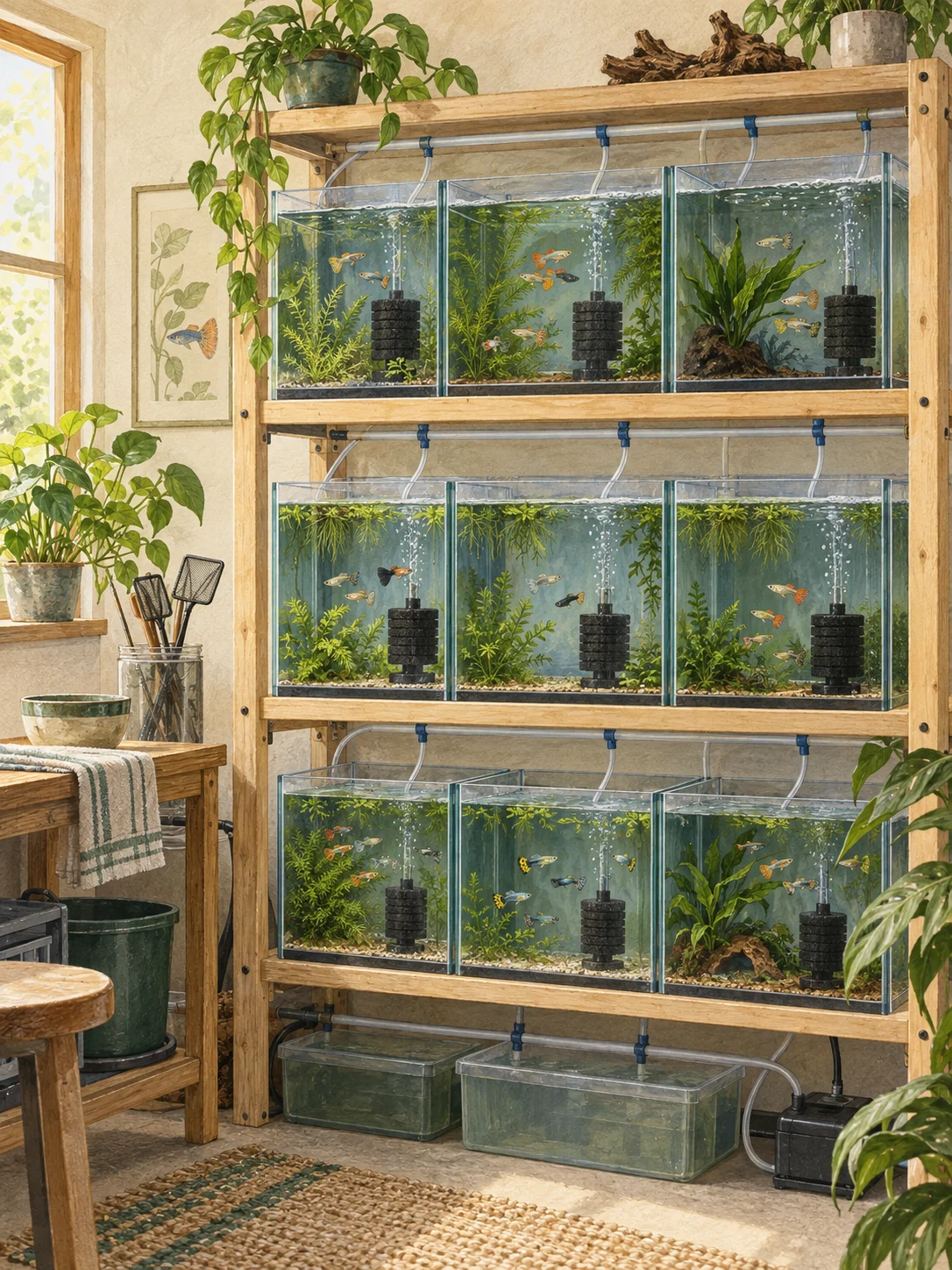
Care systems
Steady water, thoughtful care
Gentle filtration and regular observation support healthy aquarium routines.
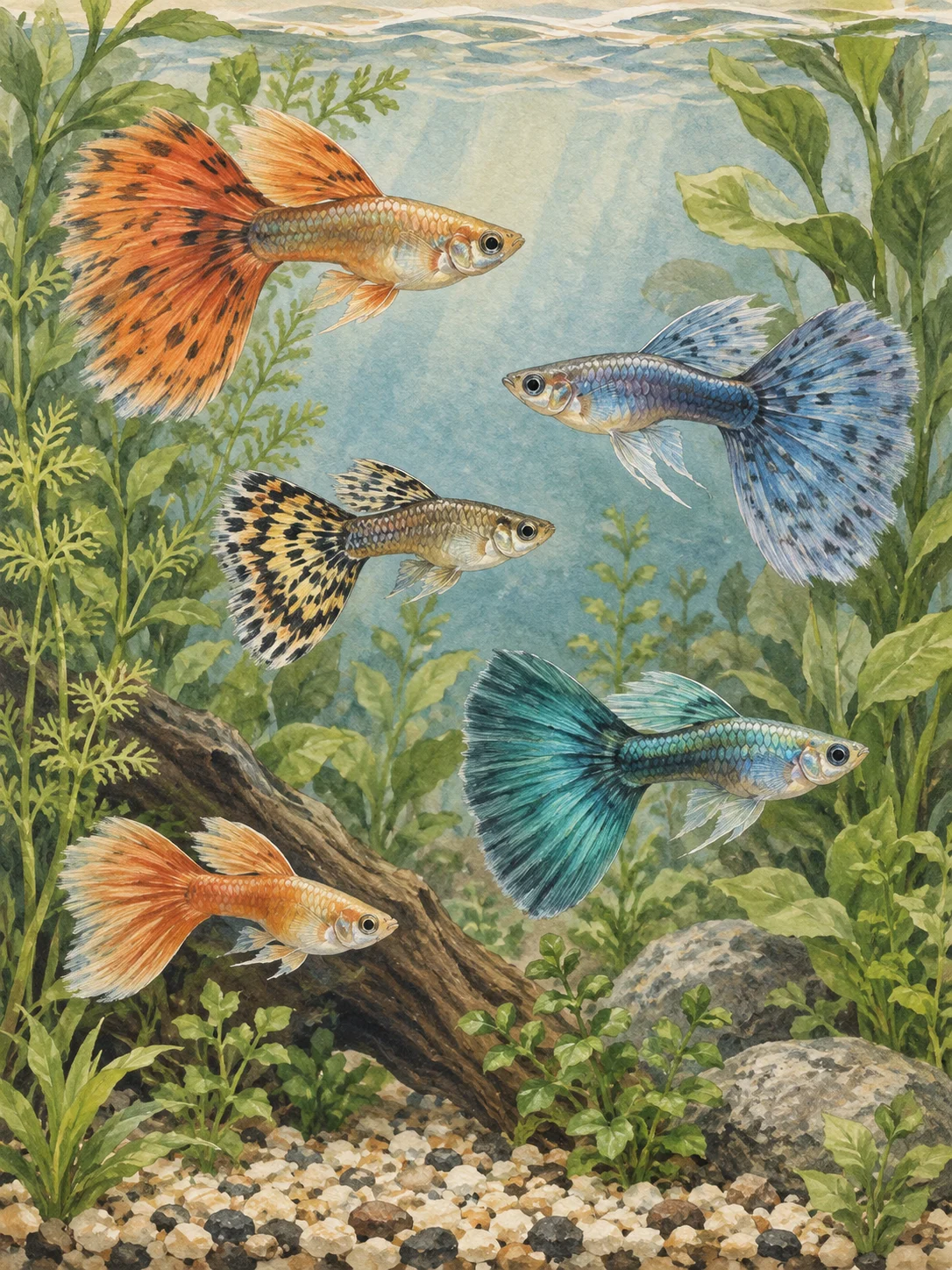
Natural variation
Every guppy is different
Color, size and fin shape vary with strain, age and each individual fish.
Editorial illustrations for context; they do not depict HiGuppy's exact facility or current fish stock.