The HiGuppy Journal
How to Breed Guppies: Step-by-Step Guide
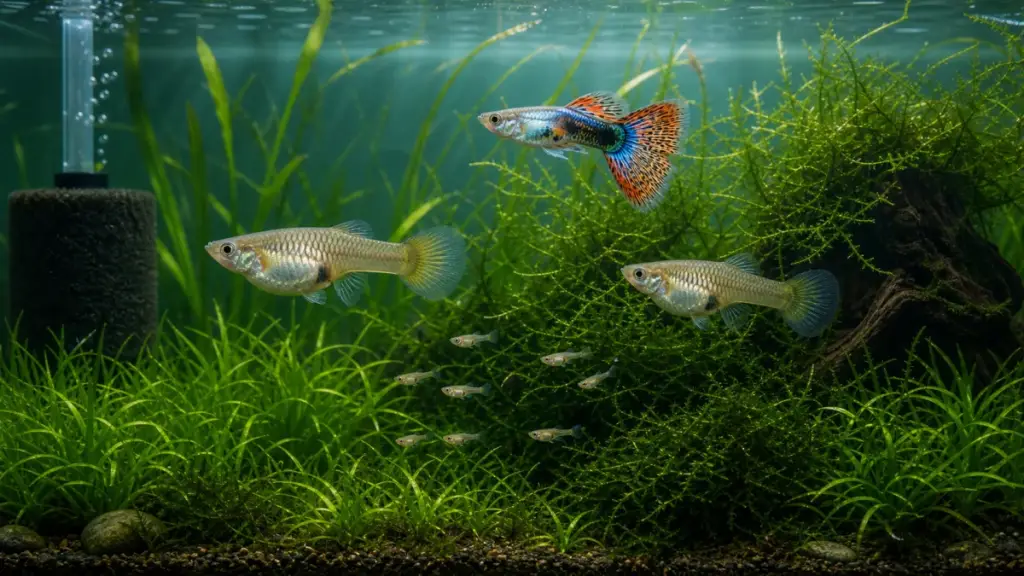
Quick answer: How to breed guppies starts with healthy adults, a cycled tank, and a ratio near 1 male to 2-3 females. Females may produce multiple broods after mating, but brood intervals vary with conditions and individual fish; plan space for young before breeding. Provide plants or fry cover, feed protein-rich foods, and use a grow-out tank to improve survival.
Guppies are prolific livebearers, which makes them one of the most rewarding beginner breeding projects in the freshwater hobby. Learning how to breed guppies means planning for stable water, good nutrition, sensible ratios, and fry care before the first brood arrives.
Learn sex identification in Male vs Female Guppy. For fry care details, read Raising Guppy Fry Guide. For tank equipment, see Best Tank Setup for Guppies and our Breeding Pairs & Trios page.
Pair vs Trio: What Works Best
| Setup | Typical Stocking | Best For |
|---|---|---|
| Pair | 1 male + 1 female | Small breeding project, limited space |
| Trio | 1 male + 2 females | Better female welfare, steadier breeding |
| Colony | 1 male to 2-3+ females | Active home breeding with grow-out plan |
The first choice in how to breed guppies is group shape: a trio is often better than a strict pair because male attention is distributed across two females. That reduces constant chasing and stress on a single female. Pairs still work when space is limited and the keeper monitors behavior closely.
Breeding Tank Basics
Anyone learning how to breed guppies needs a cycled aquarium sized for the adult breeding group and future fry. The OATA guppy care sheet recommends at least 45 liters (about 12 US gallons) for a small group of guppies; breeding groups and grow-out fry may need more space. Keep temperatures stable, ammonia and nitrite at 0 mg/L, and monitor nitrate against source water and the tank’s actual load. Dense plants such as guppy grass, java moss, or hornwort give fry hiding places and improve survival in community-style breeding tanks.
Some breeders learning how to breed guppies use bare-bottom tanks with floating plants for easier cleaning. Others breed in display tanks and move pregnant females to a birthing box only when necessary. Each method has tradeoffs between convenience and stress.
Recognizing Pregnant Females
Spotting pregnancy is a routine part of how to breed guppies: a dark gravid spot and swollen abdomen are common signs. As birth approaches, the spot may darken and the belly becomes squarish. Females can store sperm and produce multiple broods from one mating, so isolating males does not instantly stop pregnancies.
Feeding for Breeding Condition
Feeding is a core step in how to breed guppies: breeding guppies benefit from varied protein sources: quality pellets, frozen baby brine shrimp, daphnia, and occasional live foods. Overfeeding still harms water quality, so feed small amounts multiple times daily. See Best Food for Guppies for a full diet breakdown.
Fry Management and Line Selection
One female can produce many fry, so prepare adequate filtered grow-out space and a humane population plan before breeding. Separate sexes if you do not want further pregnancies, and find responsible aquarists or stores for surplus healthy fish. Do not use intentional predation or culling as routine population control. Fish not selected for breeding still need proper care, and must never be released to natural waterways. For individuals suffering from severe injury or incurable illness, consult an aquatic veterinarian about appropriate welfare decisions. Read our Raising Guppy Fry Guide, OATA rehoming advice and RSPCA aquarium-fish welfare advice.
Line control matters when learning how to breed guppies: separate males early if you want to control line breeding, because young males can mate sooner than many beginners expect. Long-term line improvement depends on selecting for health and structure, not only bright color.
How to Breed Guppies: Step-by-Step Checklist
- Choose healthy adults: Select active fish with normal swimming and breathing, and plan a group that fits the aquarium.
- Cycle and test the tank: Confirm the filter handles the intended bioload, with ammonia and nitrite at zero before adding fish.
- Provide cover and steady feeding: Use gentle filtration, plant or fry-safe cover, and modest portions of varied food.
- Plan for pregnancy: Expect variable timing and remember females may store sperm, so removing males does not immediately end births.
- Prepare fry care: Provide appropriate grow-out space, small fry foods and test-guided water changes; prevent overcrowding.
- Manage surplus humanely: Separate sexes if needed, arrange responsible rehoming and avoid using predation or culling as population control.
Frequently Asked Questions
How fast do guppies breed?
With good conditions, females may produce fry every 25-35 days. Litter size varies widely by female size and health.
Do I need a separate breeding tank?
Not always, but a grow-out or birthing setup improves fry survival and reduces display tank overcrowding.
Will parents eat fry?
Yes, guppies often eat their own fry. Dense plants or separation improves survival.
How many fry per birth?
Common ranges are 20-40 in many home setups, but larger females can produce more under strong conditions.
At what age can guppies breed?
Surprisingly young in some lines. Separate sexes early if you want to control timing and growth.
Can I breed fancy strains as a beginner?
Start with hardy lines while learning water stability and fry management. Fancy strains often need tighter consistency.
Should I use a breeding box?
Useful short term, but long confinement can stress females. Plant-heavy tanks are often less stressful.
How do I improve fry color?
Good genetics, clean water, varied diet, and low stress matter more than color-enhancing shortcuts alone.
Want quality breeding stock to start your line? Browse pairs and trios at HiGuppy.
Now that you know how to breed guppies, continue to the Guppy Breeding Guide.
Behind the care guides
Care begins with steady systems
Our guppy guides focus on practical routines: keep water stable, observe fish closely and allow for natural variation.
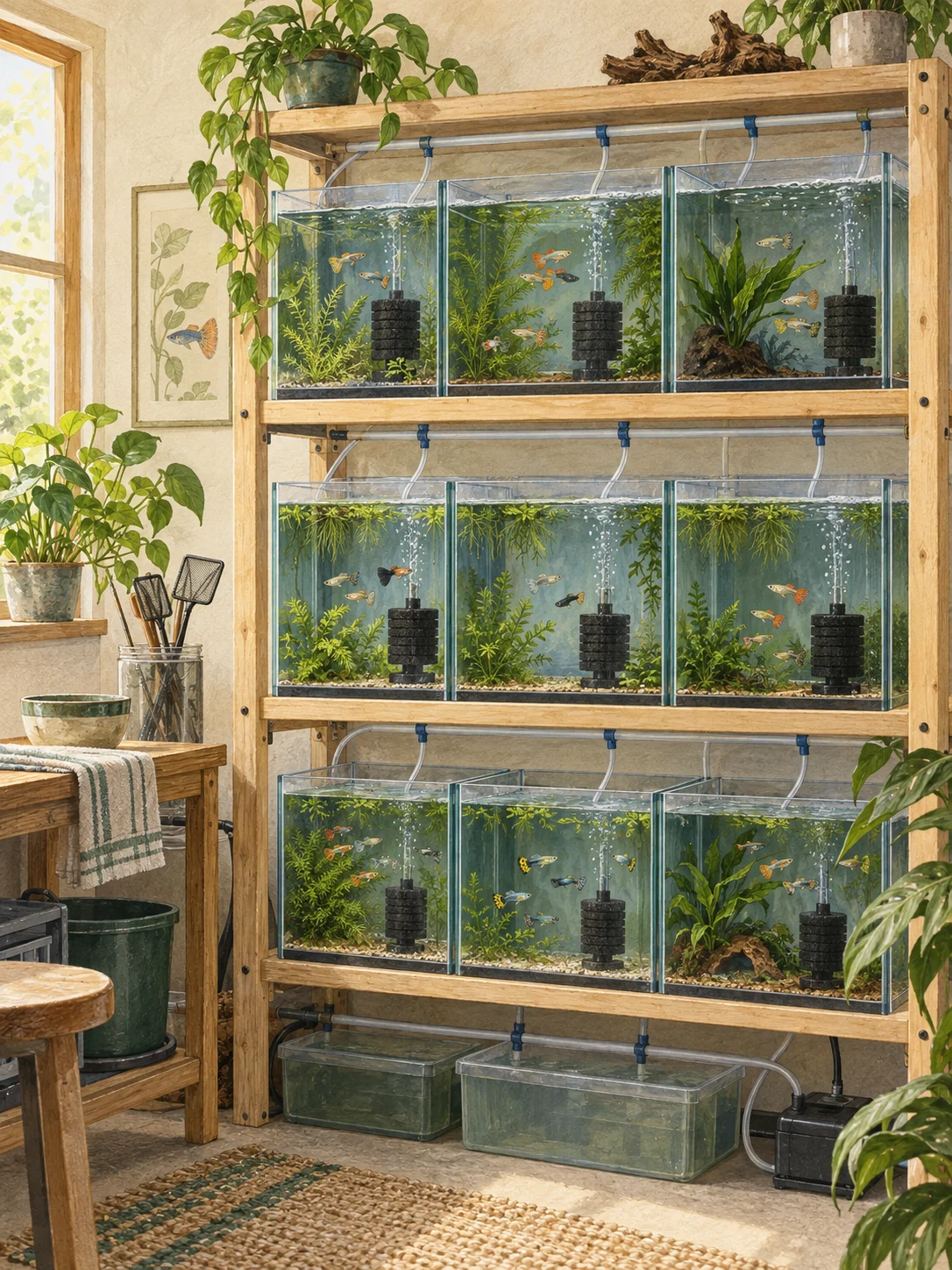
Care systems
Steady water, thoughtful care
Gentle filtration and regular observation support healthy aquarium routines.
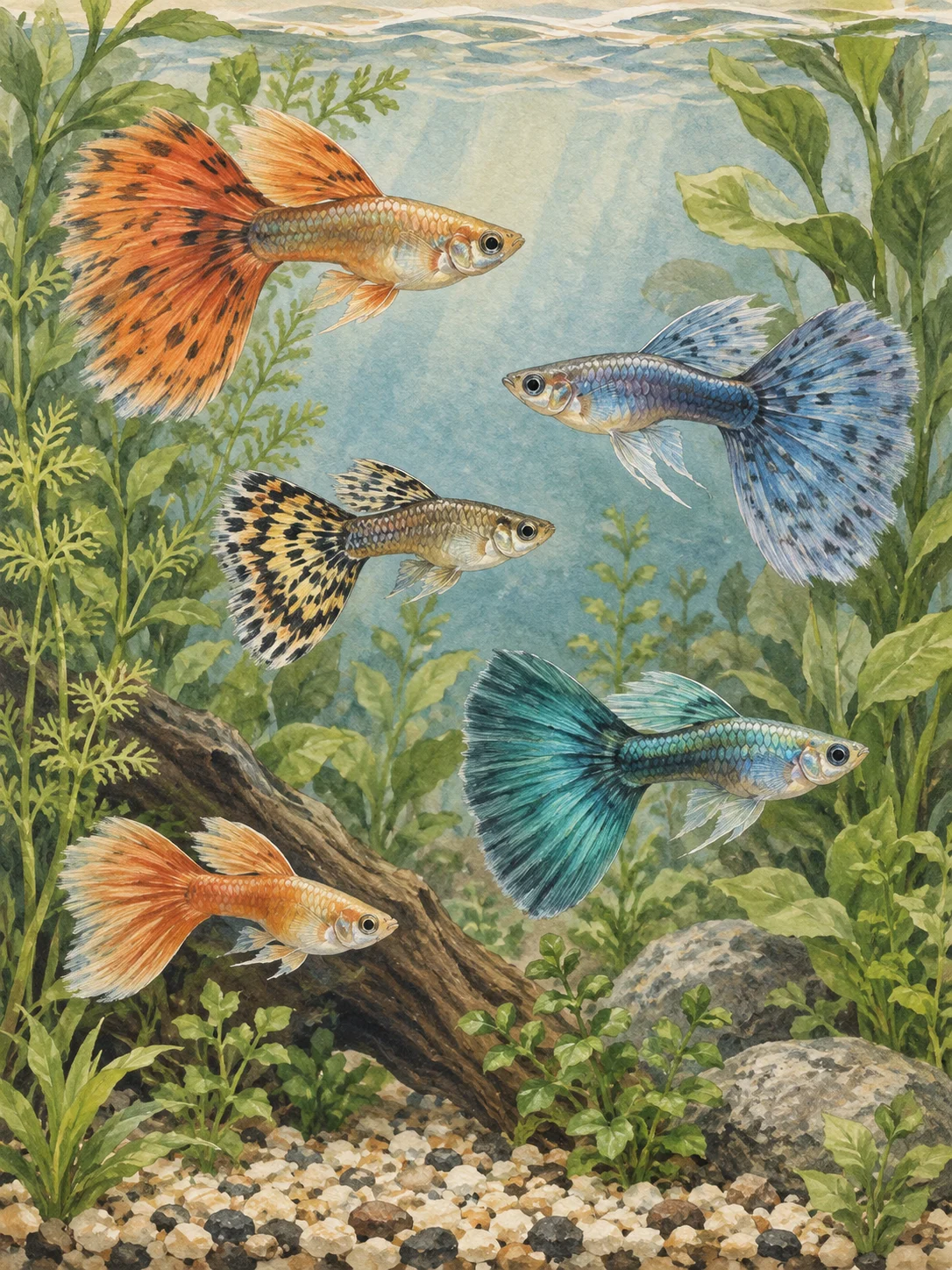
Natural variation
Every guppy is different
Color, size and fin shape vary with strain, age and each individual fish.
Editorial illustrations for context; they do not depict HiGuppy's exact facility or current fish stock.