The HiGuppy Journal
Guppy Health Problems: 15 Observations to Share With an Aquatic Veterinarian
Quick answer: Guppy health problems can have overlapping signs. This page is a symptom overview, not a diagnosis or treatment plan. Contact an aquatic veterinarian for assessment and treatment advice.
Symptoms are not a diagnosis. If a fish appears unwell or you are unsure what is happening, contact an aquatic veterinarian for assessment and advice. This page does not provide medication or dosing guidance.
Guppy health problems often show up as changes in behaviour, breathing or appearance. Several causes can produce similar signs, so this guide is a symptom overview; an aquatic veterinarian should assess suspected illness and advise on treatment.
Guppy Health Problems: Changes to Observe and Share With an Aquatic Veterinarian
The OATA guppy and molly care sheet lists changes in swimming, colour, temperament, breathing, appearance, condition, and feeding as observations to watch. These signs are the usual first clues of guppy health problems; they do not diagnose disease; share them with an aquatic veterinarian.
- Swimming: hanging at the surface, sitting on the bottom, or erratic movement.
- Colour: darker or paler than usual.
- Temperament: more aggression or hiding; see why guppies hide.
- Breathing: gill covers moving faster or slower than usual.
- Appearance: white spots, fluffy growths, or loss of fins or scales.
- Condition and feeding: changes in body weight, condition, or food intake.
Because different guppy health problems can look alike, these observations do not identify a cause or appropriate treatment. If concerned, contact an aquatic veterinarian. For husbandry questions, test water and ask an OATA retailer.
Water quality, aquarium size and introducing fish
OATA’s suggested guppy and molly parameters are 20–28°C, pH 7.0–8.0, ammonia and nitrite 0 mg/L, nitrate no more than 20 mg/L above normal tap-water levels, general hardness 8–18°dH, and carbonate hardness 5–15°dKH. These are husbandry references, not a diagnosis—and poor water sits behind many guppy health problems. See the OATA care sheet.
Testing and routine maintenance
OATA recommends weekly water testing and a weekly partial water change of 25%. Treat replacement tap water with conditioner for chlorine or chloramine. See the water-change guide.
Tank size and filtration
OATA recommends at least 45 litres for a small group of smaller species, more volume for more groups, and a filter for every aquarium. This is not a universal stocking formula; ask an OATA retailer about your setup.
Adding fish gradually
Check aquarium size and water quality before adding fish, increase numbers slowly, and monitor new fish carefully during the first week, especially water quality. Contact an OATA retailer if unsure.
15 Observations to Share With an Aquatic Veterinarian
Use this checklist to record observations of possible guppy health problems and aquarium details for a veterinarian. It does not diagnose a fish or recommend treatment.
| Observation to record | Examples | Why share it |
|---|---|---|
| Swimming | Surface, bottom, or erratic movement | It describes the situation; it does not diagnose. |
| Colour | Darker or paler than usual | It describes the situation; it does not diagnose. |
| Temperament | More aggression or hiding | It describes the situation; it does not diagnose. |
| Breathing | Gill covers faster or slower | It describes the situation; it does not diagnose. |
| Appearance | White spots, fluffy growths, other changes | It describes the situation; it does not diagnose. |
| Fins and scales | Loss or visible change | It describes the situation; it does not diagnose. |
| Body condition | Weight or condition change | It describes the situation; it does not diagnose. |
| Feeding | Reduced intake or interest | It describes the situation; it does not diagnose. |
| Water tests | Readings, units, date, tap-water nitrate | It describes the situation; it does not diagnose. |
| Aquarium | Volume, species, number of fish | It describes the situation; it does not diagnose. |
| Filter | Type and recent maintenance | It describes the situation; it does not diagnose. |
| Recent changes | New fish or aquarium changes | It describes the situation; it does not diagnose. |
| Timing | When change began | It describes the situation; it does not diagnose. |
| Progression | Changing, recurring, or stable | It describes the situation; it does not diagnose. |
| Vet notes | Dated notes, tests, photos if available | It describes the situation; it does not diagnose. |
1. Swimming changes
OATA lists surface hanging, bottom sitting, and erratic swimming—among the most visible guppy health problems. Describe what you see and when; it does not identify a cause. Contact an aquatic veterinarian if concerned.
2. Colour changes
OATA lists darker or paler colour. Record when it began; colour alone does not identify a cause. Contact a veterinarian if concerned.
3. Temperament and hiding
OATA lists increased aggression or hiding more than normal. Record the change; it does not diagnose a cause. Contact a veterinarian if concerned.
4. Breathing observations
OATA says to note gill covers moving faster or slower than usual. This is not a diagnosis; contact a veterinarian if concerned.
5. Appearance changes
OATA lists white spots or fluffy growths as visible changes. Describe what you see; appearance alone does not identify a cause.
6. Fin and scale changes
OATA includes loss of fins or scales among appearance changes. Record when noticed; do not infer a cause.
7. Body weight and condition
OATA recommends watching for body-weight or condition changes. Record what changed; ask a veterinarian if concerned.
8. Feeding changes
OATA lists reduced intake or lack of interest in food. Record the change; it does not establish a cause.
9. Water-test readings
OATA suggests 20–28°C, pH 7.0–8.0, ammonia/nitrite 0 mg/L, nitrate ≤20 mg/L above normal tap-water levels, GH 8–18°dH, KH 5–15°dKH. Share exact results—water problems sit behind many guppy health problems—but these are husbandry references, not treatment thresholds.
10. Aquarium size and fish count
Record volume, species, and fish count. OATA recommends at least 45 litres for a small group of smaller species and more for more groups; ask a retailer about your setup.
11. Filter and maintenance
OATA says a filter is essential and advises against rinsing filter media under tap water. Note filter type and maintenance; this is husbandry guidance, not treatment.
12. Recent additions
Note new fish and aquarium changes. OATA advises gradual additions and careful monitoring during the first week, especially water quality.
13. Timing
Record when changes appeared and how they changed; timing does not identify a cause.
14. Number of fish affected
Note whether one or several fish show changes; the number affected can hint at shared guppy health problems such as a water-quality issue. This does not diagnose a cause; contact an aquatic veterinarian.
15. Notes for the veterinarian
Share dated notes, test results, and photos if available—clear records help a veterinarian narrow down possible guppy health problems. Do not diagnose, medicate, or make an irreversible decision from this article.
Seeking Professional Assessment
Guppy health problems need professional assessment. Do not use this guide to decide whether to medicate, isolate, or otherwise treat a fish. Contact an aquatic veterinarian for assessment and situation-specific guidance.
Medication Decisions
This article does not recommend medicines, combinations, doses, or schedules. Ask an aquatic veterinarian for case-specific guidance.
Aquarium Care and Hygiene: Evidence-Based Checklist
Routine husbandry follows OATA guppy and molly guidance. Human hygiene follows the CDC fish guidance. This is not a prevention guarantee or treatment plan, though consistent husbandry prevents many common guppy health problems.
- Test weekly: OATA suggests 20–28°C, pH 7.0–8.0, ammonia/nitrite 0 mg/L, nitrate ≤20 mg/L above normal tap-water levels, GH 8–18°dH, KH 5–15°dKH.
- Change 25% weekly: treat replacement tap water with conditioner for chlorine or chloramine. See the water-change guide.
- Check the filter: OATA says filtration is essential; do not rinse filter media under the tap. Lightly rinse it in removed aquarium water.
- Check tank size: at least 45 litres for a small group of smaller species, with more volume as groups increase; ask a retailer about your setup.
- Add fish gradually: check water quality first and monitor new fish carefully during the first week.
- Observe without diagnosing: note swimming, colour, temperament, breathing, appearance, condition, and feeding; contact an aquatic veterinarian if concerned.
- Wash hands: CDC says wash with soap and running water before/after fish care, after feeding, handling equipment or cleaning the tank, and before eating or drinking.
- Wear gloves: CDC advises gloves during aquarium care, especially with cuts or wounds. People with weakened immune systems should ask someone else to care for the tank when possible; otherwise wear gloves.
Frequently Asked Questions About Guppy Health Problems
What guppy health problems should I watch for?
OATA lists changes in swimming, colour, temperament, breathing, appearance, condition, and feeding. They do not diagnose disease; contact an aquatic veterinarian if concerned.
Why are several guppies becoming unwell?
Multiple fish showing changes or deaths do not identify a cause. Record timing, number affected, observations, and water-test results and contact an aquatic veterinarian.
Can fish, aquarium water, or equipment carry germs that affect people?
CDC says fish, tank water, and aquarium items can sometimes carry germs that may make people sick. Wash hands with soap and running water before/after fish care, after feeding, handling equipment or cleaning the tank, and before eating or drinking. Wear gloves during aquarium care, especially with cuts or wounds. People with weakened immune systems should ask someone else to care for the tank when possible; otherwise wear gloves. If sick after fish or aquarium contact, tell a healthcare provider. Ask an aquatic veterinarian about fish-to-fish concerns.
Can I use this article to choose a treatment?
No. This article does not diagnose or recommend medicines, doses, or schedules. Ask an aquatic veterinarian for individual advice.
How do I know if my guppy is sick or just stressed?
Guppy health problems and stress can look alike: behaviour or appearance alone may not show the cause. This page cannot distinguish illness from stress; contact an aquatic veterinarian.
Can this page predict recovery from fin changes?
No. Appearance alone cannot establish a cause or prognosis. Contact an aquatic veterinarian if a fish appears unwell.
Is aquarium salt safe for guppies?
This article does not assess salt or other remedies. Ask an aquatic veterinarian before choosing treatment.
Who should assess an irreversible decision?
Do not make an irreversible decision based on this article. Contact an aquatic veterinarian.
Final Thoughts
This page is an observation and husbandry guide for recognising guppy health problems, not a diagnosis or treatment plan. Contact an aquatic veterinarian if a fish appears unwell.
Routine testing, suitable maintenance, and observation support aquarium husbandry and help catch guppy health problems early, but cannot guarantee that fish stay well. Use the OATA care sheet for husbandry and CDC fish guidance for human hygiene. Contact an aquatic veterinarian about an unwell fish; do not diagnose, medicate, or make an irreversible decision from this article.
Behind the care guides
Care begins with steady systems
Our guppy guides focus on practical routines: keep water stable, observe fish closely and allow for natural variation.
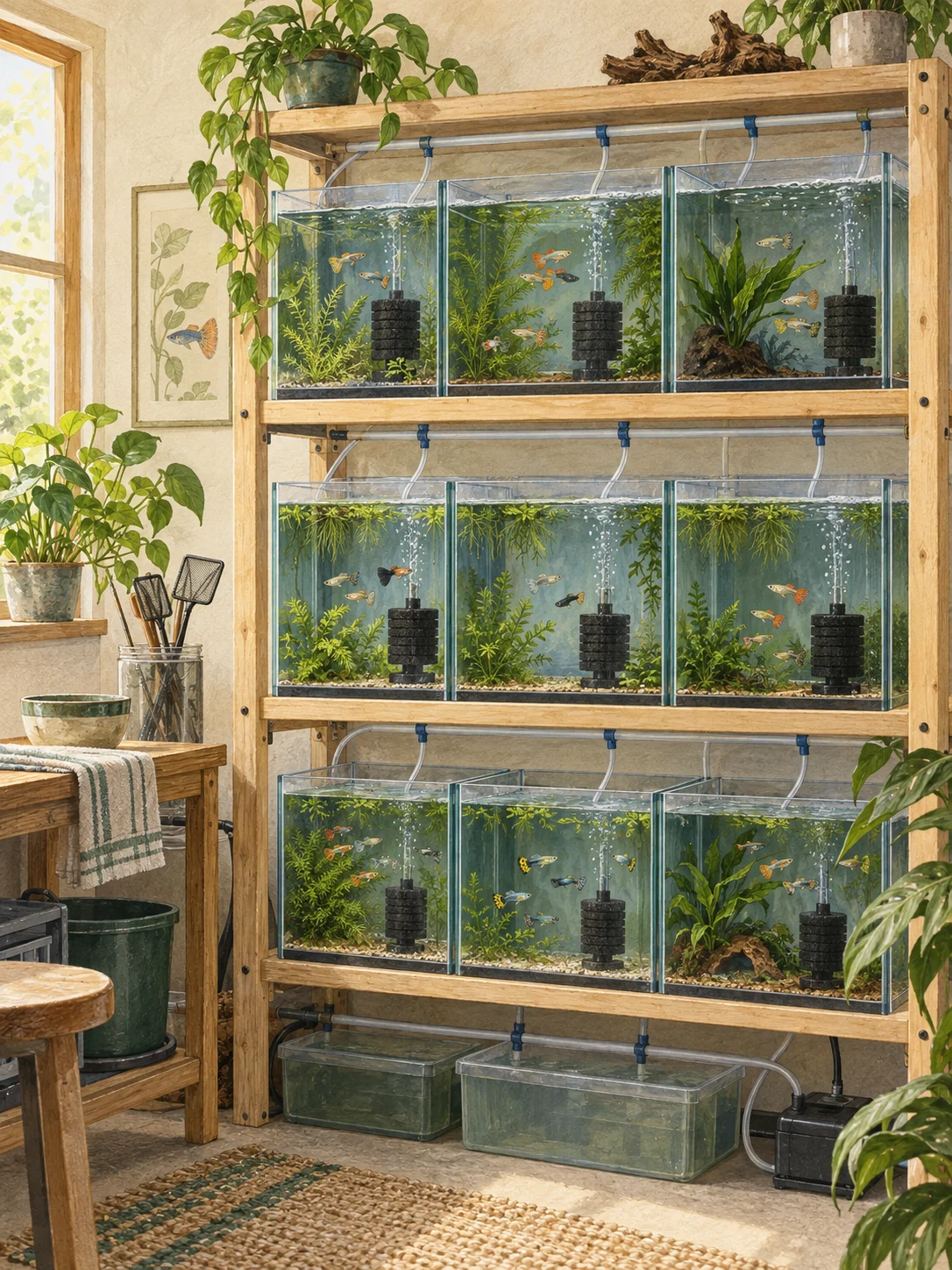
Care systems
Steady water, thoughtful care
Gentle filtration and regular observation support healthy aquarium routines.
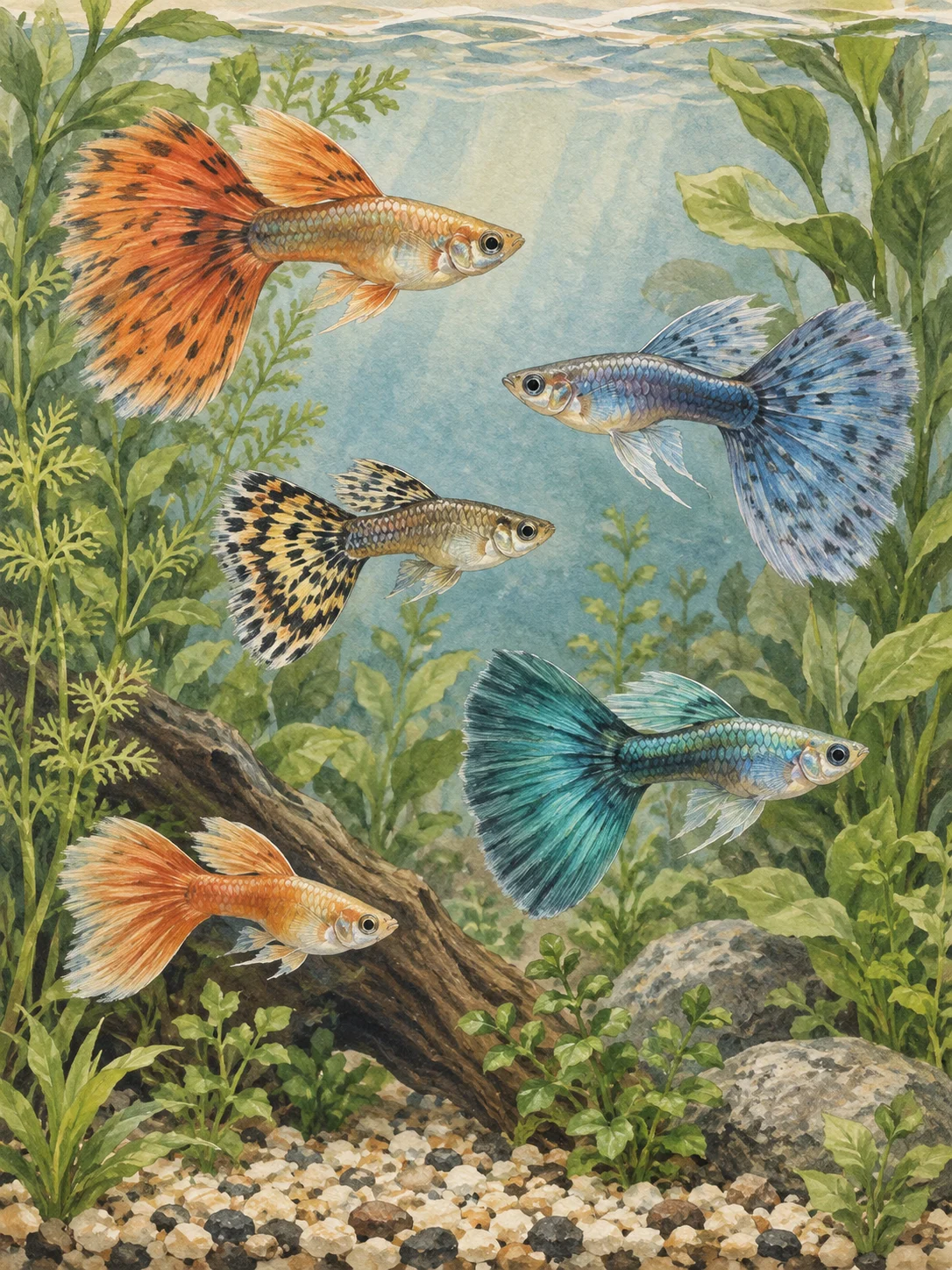
Natural variation
Every guppy is different
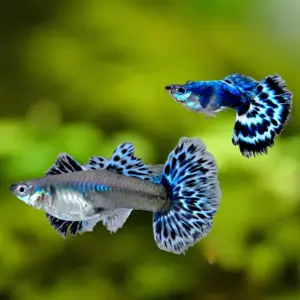
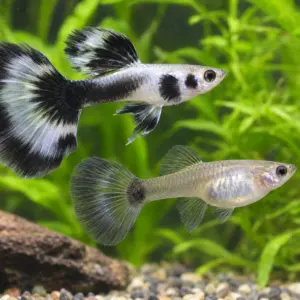
Color, size and fin shape vary with strain, age and each individual fish.
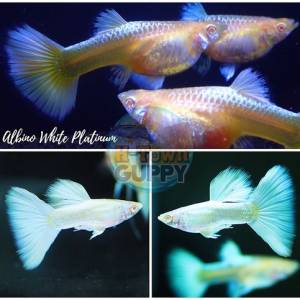
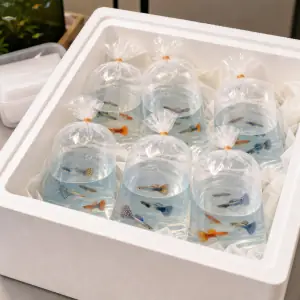
Editorial illustrations for context; they do not depict HiGuppy's exact facility or current fish stock.