The HiGuppy Journal
Do Guppies Need CO2 in a Planted Tank? 7 Proven Growth Tips
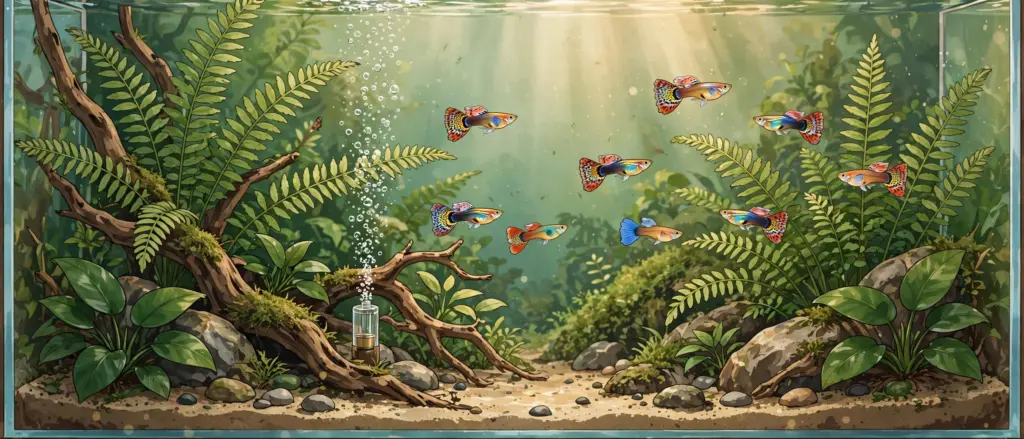
Quick answer: No — guppies do not need CO2. Carbon dioxide is a plant fertiliser, not a fish requirement, and guppies thrive in planted tanks with no injected CO2 at all. CO2 only becomes worth considering when you want fast-growing, demanding plants, and even then it must be kept at controlled levels with good surface agitation — a commonly cited target is around 20–30 ppm, but judge it by your fish’s behaviour, not the number alone — or your fish will suffer before your plants benefit.
If you are setting up a planted guppy tank, one of the first questions you will run into is: do guppies need co2 in a planted tank? CO2 systems are among the most talked-about pieces of planted-tank gear, and it is easy to assume that a tank full of plants must need one. The good news is that the answer is simple, and it will probably save you money: your guppies do not need CO2.
Do Guppies Need CO2 in a Planted Tank?
No. Guppies get the oxygen they need from the water itself, not from carbon dioxide, and they do not use CO2 the way plants do. In nature, guppies live in slow-moving streams, ponds, and ditches in South America and the Caribbean, where CO2 levels are low and fluctuate naturally. They have never needed injected CO2, and they never will — that is the whole answer to do guppies need CO2 in a planted tank.
CO2 injection exists for one reason only: to make aquatic plants grow faster and lusher. Plants use carbon dioxide during photosynthesis, along with light and nutrients, to build new leaves and stems. In a tank with strong lighting and demanding plant species, the small amount of CO2 that naturally dissolves from the air and from fish respiration is not enough to keep up, so growth stalls and algae often takes over. Adding CO2 removes that bottleneck — for the plants.
That distinction matters, because every decision about CO2 should be made for the plants, while the safety limits are set by the fish. So when someone asks, “do guppies need CO2 in a planted tank?” the honest answer is that a low-tech setup — moderate light, easy plants, and regular fertilisation — gives you a gorgeous tank with far less equipment, cost, and risk. CO2 is an optional upgrade for the aquascape, never a requirement for the fish.
Do Guppies Need CO2 in a Planted Tank? What CO2 Actually Does
Think of plant growth as a three-legged stool: light, nutrients, and carbon. If any one leg is short, growth is limited by that leg, no matter how much of the other two you provide. In a typical low-tech tank, carbon comes from the CO2 that naturally dissolves from the air — usually around 3–5 ppm — plus what fish and bacteria produce. That is enough for undemanding plants, but it caps how fast they can grow — the carbon limit is the only honest ‘yes’ hidden inside do guppies need CO2 in a planted tank, and it is about plants, not guppies. Raise the light without raising the carbon, and algae, which needs far less CO2 than higher plants, will use the extra light instead.
Injected CO2 raises dissolved CO2 to roughly 20–30 ppm, lifting the carbon limit so plants can use stronger light and heavier fertilisation. The results are faster growth, fuller and more compact leaves, brighter reds in some species, and plants that carpet the foreground instead of growing tall and leggy. That is the entire payoff: CO2 does not clean the water, feed the fish, or replace water changes. This is the real meaning behind the question “do guppies need CO2 in a planted tank” — it is a question about the plants, not the fish.
The Risks of CO2 for Guppies
CO2 is not dangerous at the right level, but the margin between “helpful for plants” and “stressful for fish” is narrower than many beginners expect. Anyone who later decides to add CO2 should know the risks too — here are the three to take seriously before deciding do guppies need CO2 in a planted tank is worth revisiting.
1. Falling pH and pH swings
When CO2 dissolves in water it forms carbonic acid, which lowers pH. A tank running CO2 typically drops about 1.0 pH point during the day — for example, from 7.6 to 6.6 — and climbs back up overnight when the CO2 is off. Guppies prefer a pH of 6.8–7.8, so a daily swing below that range can stress them. Fish can adapt to a stable pH slightly outside their ideal range, but they cope poorly with a pH that yo-yos every day.
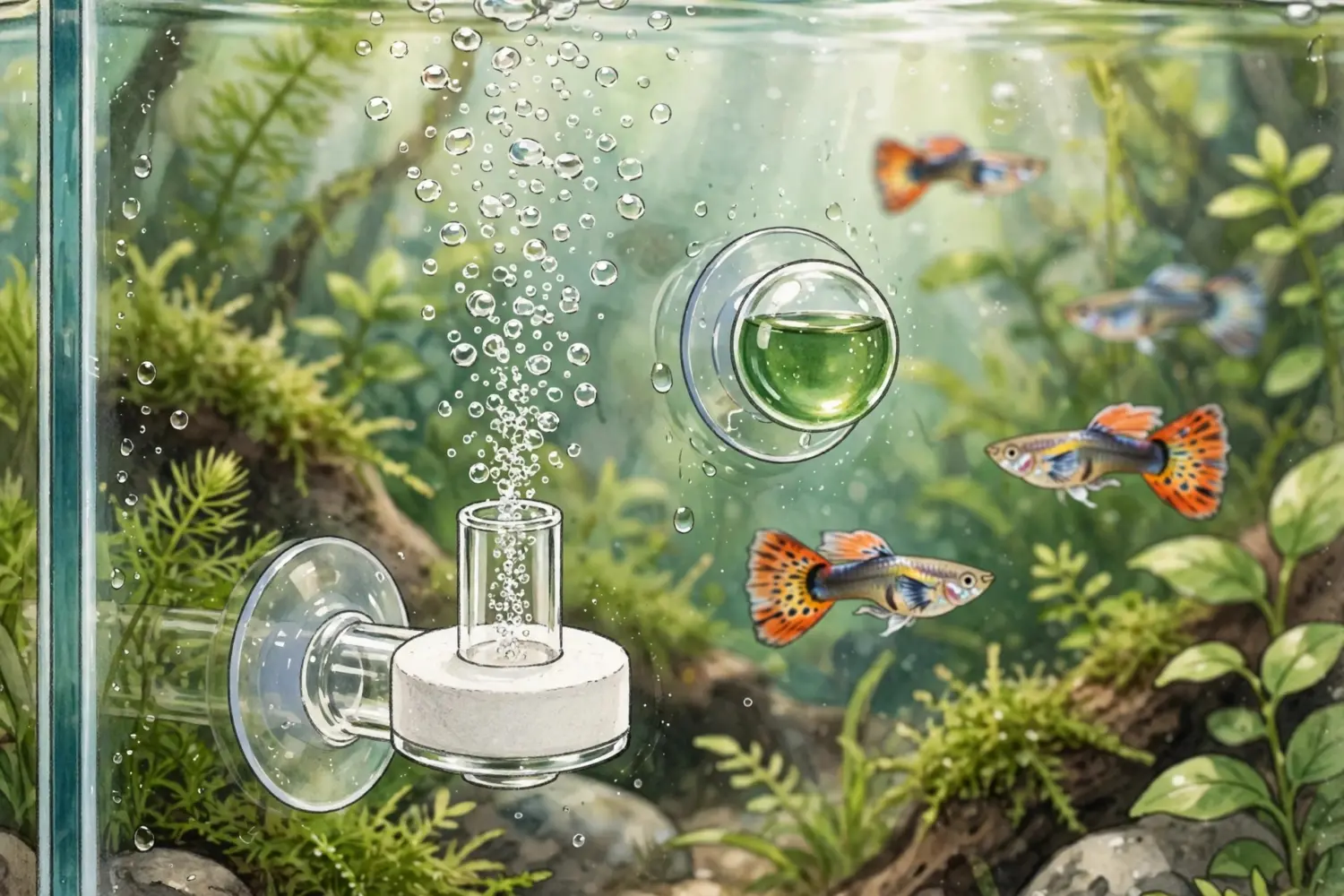
This is why a drop checker matters: this small glass indicator sits inside the tank and changes colour with CO2 levels — blue means too little, green means roughly 20–30 ppm (the target), and yellow means too much. It lags the real level by a couple of hours, but it shows at a glance whether you are in the safe zone — essential safety gear for anyone who asked do guppies need CO2 in a planted tank and still wants it.
| Drop checker colour | Approximate CO2 level | What it means |
|---|---|---|
| Blue | Below ~15 ppm | Too little CO2 for demanding plants; safe for fish, but plants may stall |
| Green | About 20–30 ppm | The target zone: good plant growth with a safe margin for guppies |
| Yellow-green | Above ~30 ppm | Caution: watch your fish closely and increase surface agitation |
| Yellow | Well above 30 ppm | Too much: turn the CO2 down or off and aerate the tank immediately |
2. Oxygen depletion, especially at night
One more reason do guppies need CO2 in a planted tank is no: plants only consume CO2 and release oxygen while the lights are on. At night, photosynthesis stops, but plants keep respiring — consuming oxygen and releasing CO2 — just like your fish. That is why CO2 should always be switched off at night (a solenoid valve on a timer does this automatically). Guppies are comfortable at 72–82°F (22–28°C), and warm water holds less oxygen than cool water. A filter outlet, air stone, or gentle surface ripple keeps oxygen exchanging with the air around the clock. Never turn surface agitation off to “save” CO2 — that traps CO2 overnight and can leave fish gasping by morning.
3. Gasping, lethargy, and stress
The first signs of too much CO2 are easy to miss: guppies hanging at the surface, rapid gill movement, reduced appetite, and a general loss of energy. In a severe overdose, fish can lose balance and die quickly. If your guppies gasp after increasing CO2, turn it off immediately, increase surface agitation with an air stone or by raising the filter outlet, and do a partial water change. Excess CO2 leaves the water quickly once the surface is disturbed. The lesson for anyone asking do guppies need CO2 in a planted tank is that injected CO2, when used at all, needs watching every day.
Do Guppies Need CO2 in a Planted Tank, or Is Low-Tech Enough?
So do guppies need CO2 in a planted tank to enjoy a planted setup? No — the table below shows why low-tech suits most keepers.
| Feature | Low-tech (no injected CO2) | High-tech (injected CO2) |
|---|---|---|
| Equipment needed | Moderate light, filter, heater, liquid fertiliser | Plus CO2 cylinder, regulator, solenoid, diffuser, drop checker, timer |
| Upfront cost | Low | Moderate to high |
| Plant choices | Easy plants: Java fern, Anubias, Java moss, Amazon sword, Vallisneria, cryptocorynes | Almost any plant, including carpeting species and demanding red plants |
| Growth speed | Slow and steady; trimming every few weeks | Fast; trimming weekly or more |
| Algae risk | Lower, if light is balanced | Higher if CO2, light, or nutrients fall out of balance |
| Risk to guppies | Very low | Low if managed well; real risk of pH swings and oxygen drops if not |
| Maintenance | Weekly water changes, occasional fertiliser | Same, plus CO2 monitoring, refills, and more frequent trimming |
| Best for | Most guppy keepers, beginners, breeding tanks | Aquascapers chasing dense carpets or demanding species |
7 Proven Growth Tips for Guppies in a Planted Tank
For keepers still wondering do guppies need CO2 in a planted tank, the seven tips below are what actually make a planted guppy tank thrive — whether you inject CO2 or not. They are ordered from the foundations up, because getting the basics right matters far more than any single piece of equipment.
Tip 1: Start with easy plants that do not need CO2
Choose plants proven to grow in low-tech tanks: Java fern and Anubias tied to wood or rock, Java moss, Amazon swords, cryptocorynes, and Vallisneria. They grow slowly but steadily with only moderate light and the CO2 already in the water, and they give guppy fry somewhere to hide. For a full list, see our guide to the best live plants for guppies.
Tip 2: Get the lighting right before adding anything else
Light drives everything in a planted tank, and too much light is the most common beginner mistake. Aim for 6–8 hours of moderate light per day on a timer — enough for easy plants and short enough to keep algae under control. If algae appears, shorten the photoperiod first. Our guppy tank lighting schedule has a routine that suits both plants and fish — and getting light right is the first reason the answer to do guppies need CO2 in a planted tank is usually no.
Tip 3: Keep the water in the guppy comfort zone
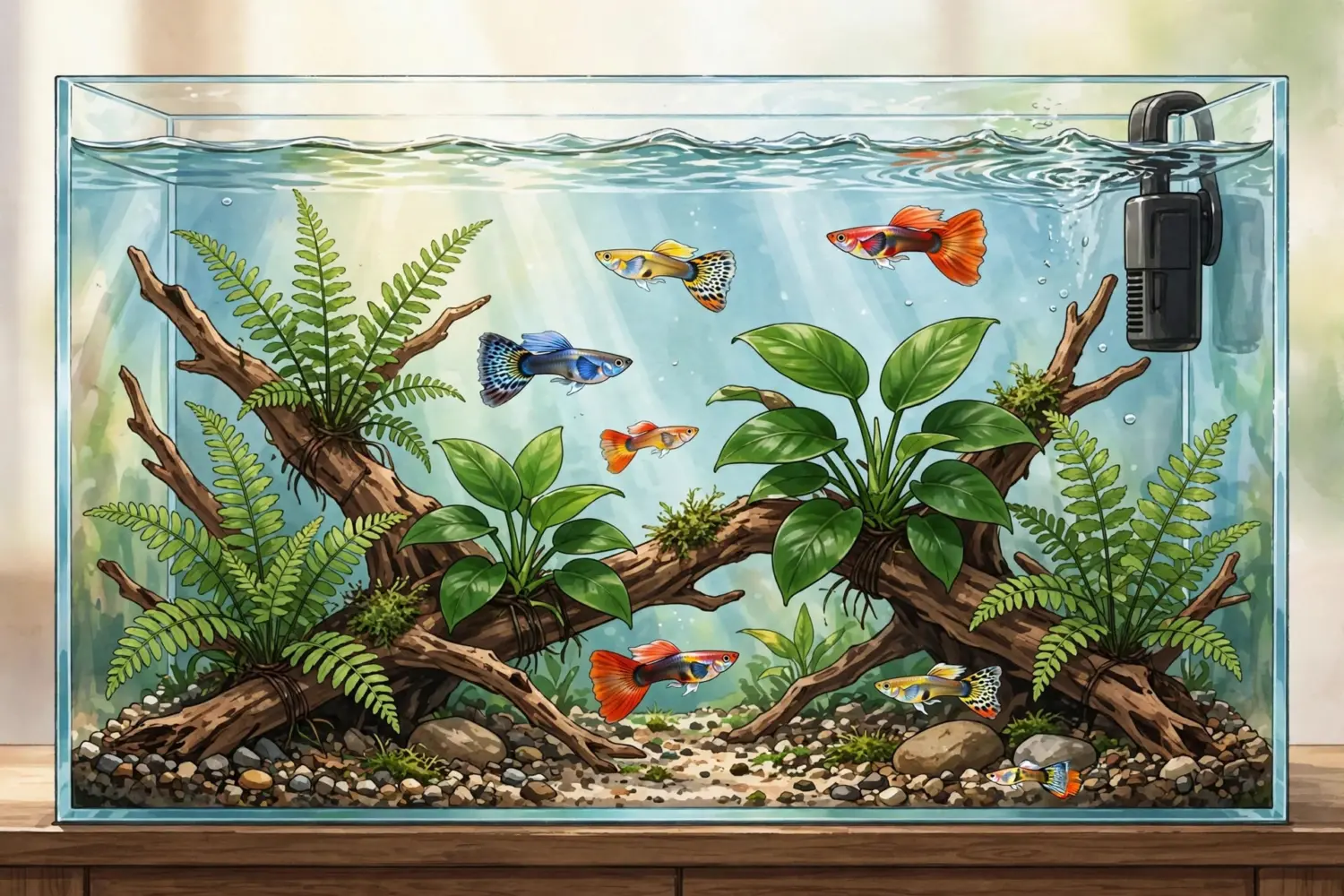
Healthy plants cannot rescue unhealthy water. Keep the temperature at 72–82°F (22–28°C), pH at 6.8–7.8, ammonia and nitrite at 0 ppm, and nitrate below 40 ppm (ideally below 20 ppm). Test weekly. Stable water lets guppies show their best colours, breed readily, and resist disease. Stable water, not injected CO2, is what guppies actually need — another reason the answer to do guppies need CO2 in a planted tank is no.
Tip 4: Feed the plants, not just the fish
Fish waste supplies some nitrogen and phosphorus, but rarely enough potassium, iron, and trace elements for sustained plant growth. A comprehensive liquid fertiliser dosed once or twice a week, following the label, fills the gap. Root feeders such as Amazon swords also benefit from root tabs.
Tip 5: Try liquid carbon as a gentle middle ground
If you want a small growth boost without a CO2 cylinder, liquid carbon products are a popular compromise. They give plants a usable carbon source and can help suppress some algae. They are not a replacement for injected CO2 — the effect is much milder — but they cost little, need no equipment, and avoid the pH-swing and oxygen risks of gas injection. They are their own chemistry rather than literal liquid CO2, and formulations differ, so follow the product label exactly, never exceed the stated dose, and take extra care with sensitive plants and invertebrates.
Tip 6: Keep the surface moving
Gentle surface agitation is one of the most underrated features of a healthy planted tank. It drives oxygen into the water, lets excess CO2 escape, and prevents the oily surface film that blocks light. Aim for a visible ripple across part of the surface.
Tip 7: Trim, replant, and stay patient
Planted tanks reward patience more than spending. Trim stem plants regularly and replant the cuttings to fill gaps, remove dead or melting leaves before they rot, and give new plants two to three weeks to settle — many species “melt” their old leaves and regrow new ones adapted to your tank.
Easy Plants That Thrive Without CO2
These plants are living proof that the answer to “do guppies need CO2 in a planted tank” is no. All grow well at 72–82°F (22–28°C) with moderate light and no injected CO2:
- Java fern — Tie to wood or rock, never bury the rhizome; a favourite hiding spot for fry.
- Anubias — Another rhizome plant for wood and rock; slow-growing and very tolerant.
- Java moss — Perfect fry cover; attach to mesh or wood and let it spread.
- Amazon sword — A large background plant that appreciates root tabs.
- Cryptocoryne — Great midground plants; may melt at first, then regrow stronger.
- Vallisneria — Fast-growing background grass that spreads by runners.
- Water sprite and hornwort — Fast-growing stems that absorb excess nutrients and fight algae.
For placement ideas and care details, our guide to the best live plants for guppies is a good next read.
How to Add CO2 Safely If You Decide To
If the answer to do guppies need CO2 in a planted tank was no, but you have weighed the trade-offs and want CO2 for demanding plants anyway, follow these steps in order. Skipping the monitoring steps is how fish get hurt.
- Set up the full system first. You need a CO2 cylinder, a regulator with a solenoid valve, a diffuser, a drop checker, and a timer.
- Start low. Begin at about one bubble per second for a tank of around 20 gallons, and increase only gradually over several days.
- Time it with the lights. Switch CO2 on about an hour before lights-on and off about an hour before lights-out. Never run CO2 at night.
- Check the drop checker daily. Aim for a steady green; if it turns yellow, reduce the bubble rate and increase surface agitation.
- Keep surface agitation running. It is your insurance policy against overnight oxygen drops.
- Watch your fish daily for the first two weeks. Gasping, rapid gills, or lethargy means too much CO2 — turn it off and aerate.
- Test pH morning and evening for the first week. A drop of about 1.0 point is normal; a larger swing, or pH below 6.8, means reduce the rate.
One more caution: never place a CO2 diffuser directly under the filter intake, and keep the cylinder upright, secure, and away from heat. In short, do guppies need CO2 in a planted tank? No — but if you add it, this routine keeps the risk close to zero.
Frequently Asked Questions: Do Guppies Need CO2 in a Planted Tank?
Do guppies need CO2 in a planted tank to survive?
No. The short answer to “do guppies need CO2 in a planted tank” is no — CO2 is a plant nutrient, not a fish requirement. Guppies breathe dissolved oxygen, and in a well-maintained tank with surface agitation they get all they need.
Do guppies need CO2 in a planted tank with low lighting?
No — low light lowers CO2 demand even further. Easy plants under moderate light grow steadily on the CO2 that dissolves naturally, so injection only becomes relevant if you raise the light or add demanding species.
Do guppies need CO2 in a planted tank if you dose liquid fertiliser?
Not necessarily — liquid fertiliser covers the nutrient leg of plant growth, while carbon still comes from the water. For easy plants, fertiliser plus natural CO2 is enough; injected CO2 matters mainly for fast-growing or demanding species.
Can CO2 kill guppies?
Yes, if levels get too high. CO2 above roughly 30 ppm can stress guppies, and much higher levels can be fatal, because excess CO2 lowers pH and displaces oxygen. The risk is highest at night, when plants stop producing oxygen.
What is a safe CO2 level for a guppy tank?
Aim for about 20–30 ppm, which shows as green on a drop checker. Never exceed about 30 ppm with guppies in the tank. If your drop checker turns yellow, reduce the injection rate and increase surface agitation straight away.
Do low-tech planted tanks need any carbon source at all?
Low-tech tanks already have a carbon source: the CO2 that dissolves naturally from the air, plus what fish, bacteria, and decaying matter produce. That is enough for easy plants such as Java fern, Anubias, and cryptocorynes — which is why do guppies need CO2 in a planted tank stays a no even for dedicated plant keepers.
Should I turn CO2 off at night?
Yes, always. Plants do not photosynthesise in the dark, so injected CO2 at night only lowers pH and oxygen while your fish rest. Use a solenoid valve on a timer so CO2 switches off with the lights and back on an hour before they come on.
Final Thoughts: Do Guppies Need CO2 in a Planted Tank?
So, do guppies need CO2 in a planted tank? No — and for most keepers, that is genuinely good news. A low-tech planted tank with easy plants, sensible lighting, and stable water will give you healthy, colourful guppies without the cost and daily monitoring CO2 demands. For authoritative background, the Tropical Fish Hobbyist guide to carbon dioxide in the planted aquarium is a solid reference.
CO2 earns its place only when your ambitions outgrow low-tech: dense carpets, fast growth, or demanding red plants. If you go that route, respect the limits — around 20–30 ppm, a green drop checker, CO2 off at night, and a rippling surface. Start simple, and add equipment only when your tank tells you it needs it.
Behind the care guides
Care begins with steady systems
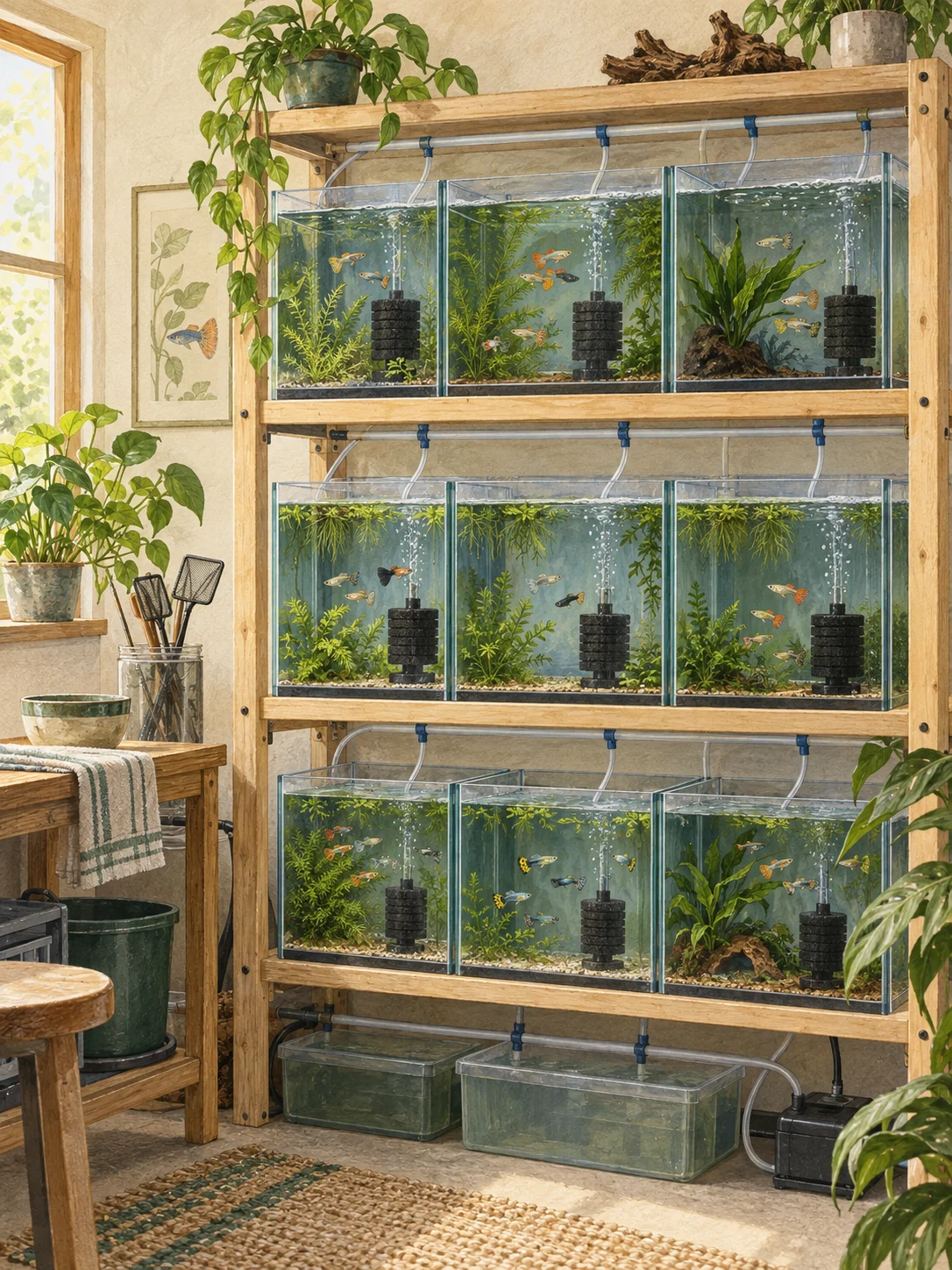
Our guppy guides focus on practical routines: keep water stable, observe fish closely and allow for natural variation.
Care systems
Steady water, thoughtful care
Gentle filtration and regular observation support healthy aquarium routines.
Natural variation
Every guppy is different
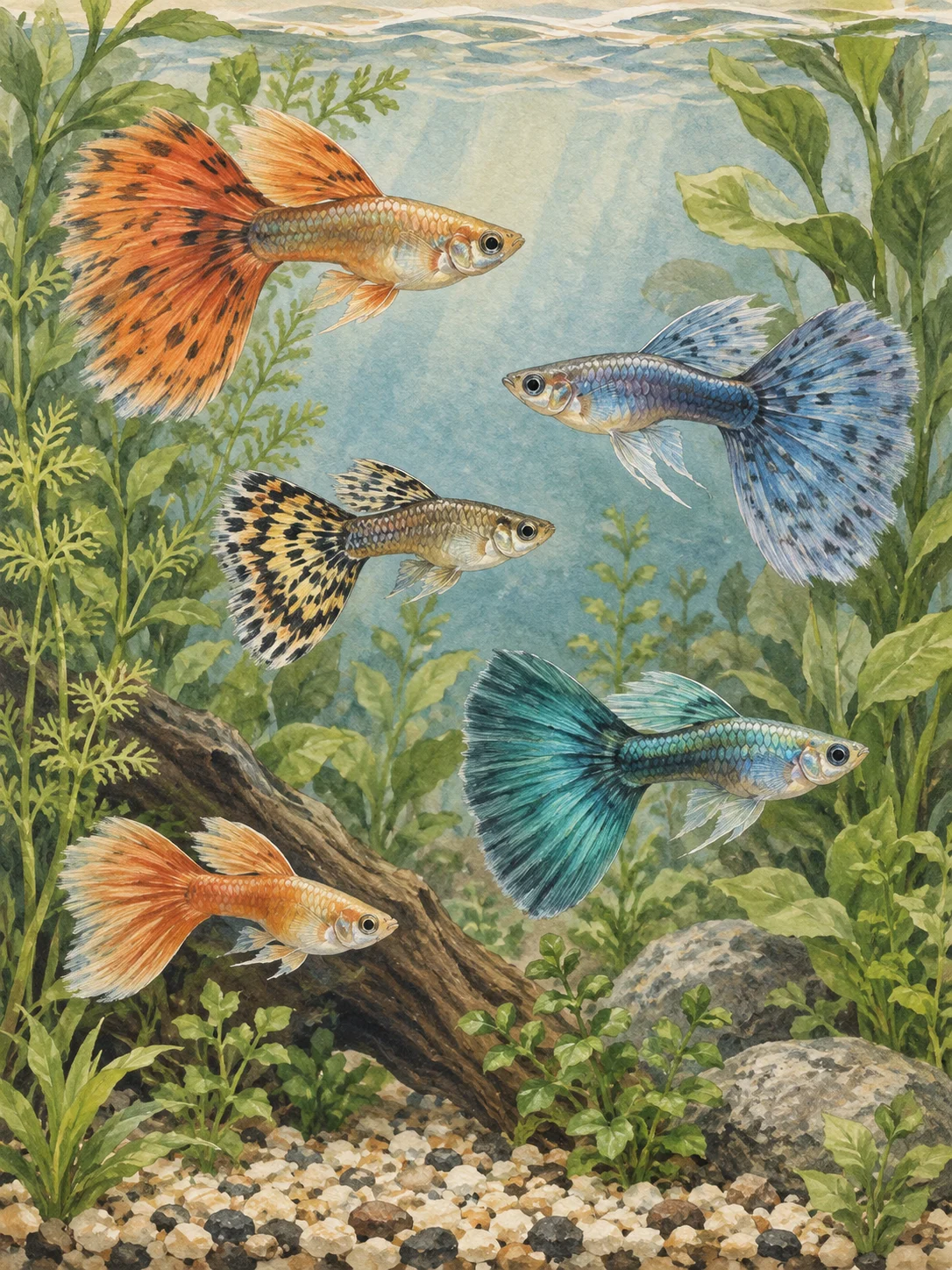
Color, size and fin shape vary with strain, age and each individual fish.
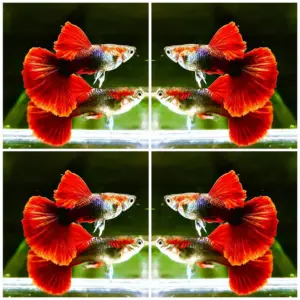
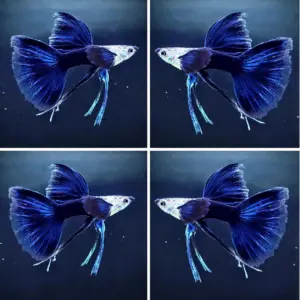
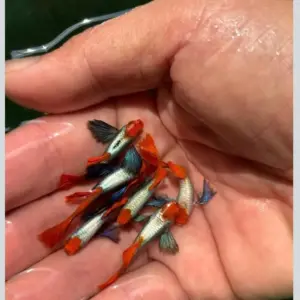
Editorial illustrations for context; they do not depict HiGuppy's exact facility or current fish stock.