The HiGuppy Journal
What Is a Snakeskin Guppy? Pattern, Care and Breeding
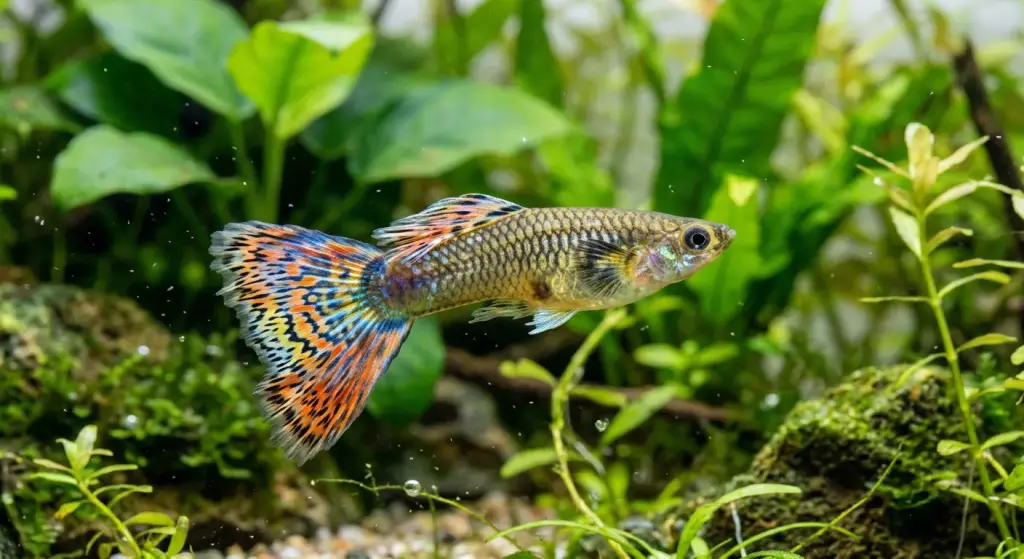
What is a snakeskin guppy? A snakeskin guppy is a guppy with a scaly, mesh-like pattern across the body that looks a bit like reptile skin. It is a pattern type, not a single strain, so you can find it in many colors and tail shapes. For general basics, see our complete guppy care guide and the guppy pattern types overview.
Below you will learn how to spot the pattern, what care these fish need, and how to breed them with predictable results.
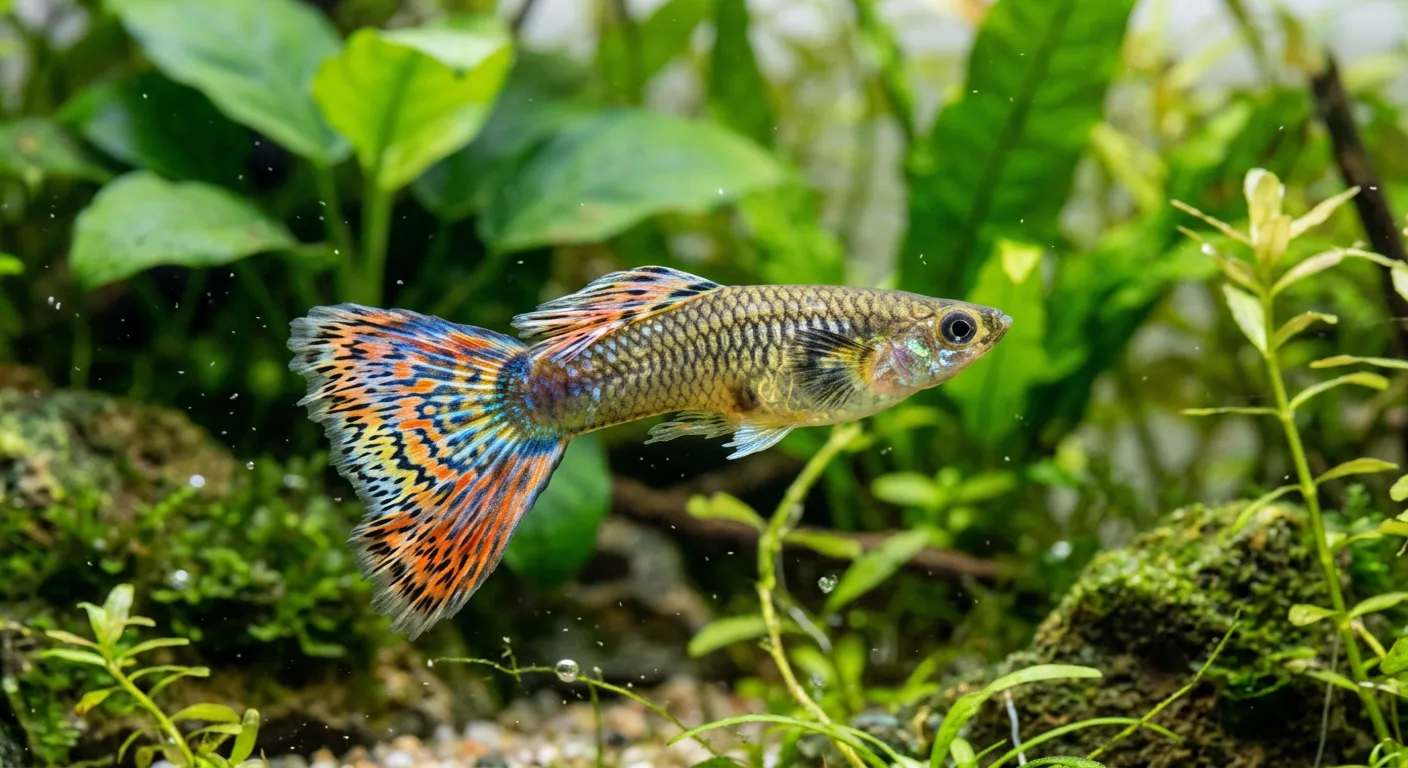
What is a snakeskin guppy? Pattern basics
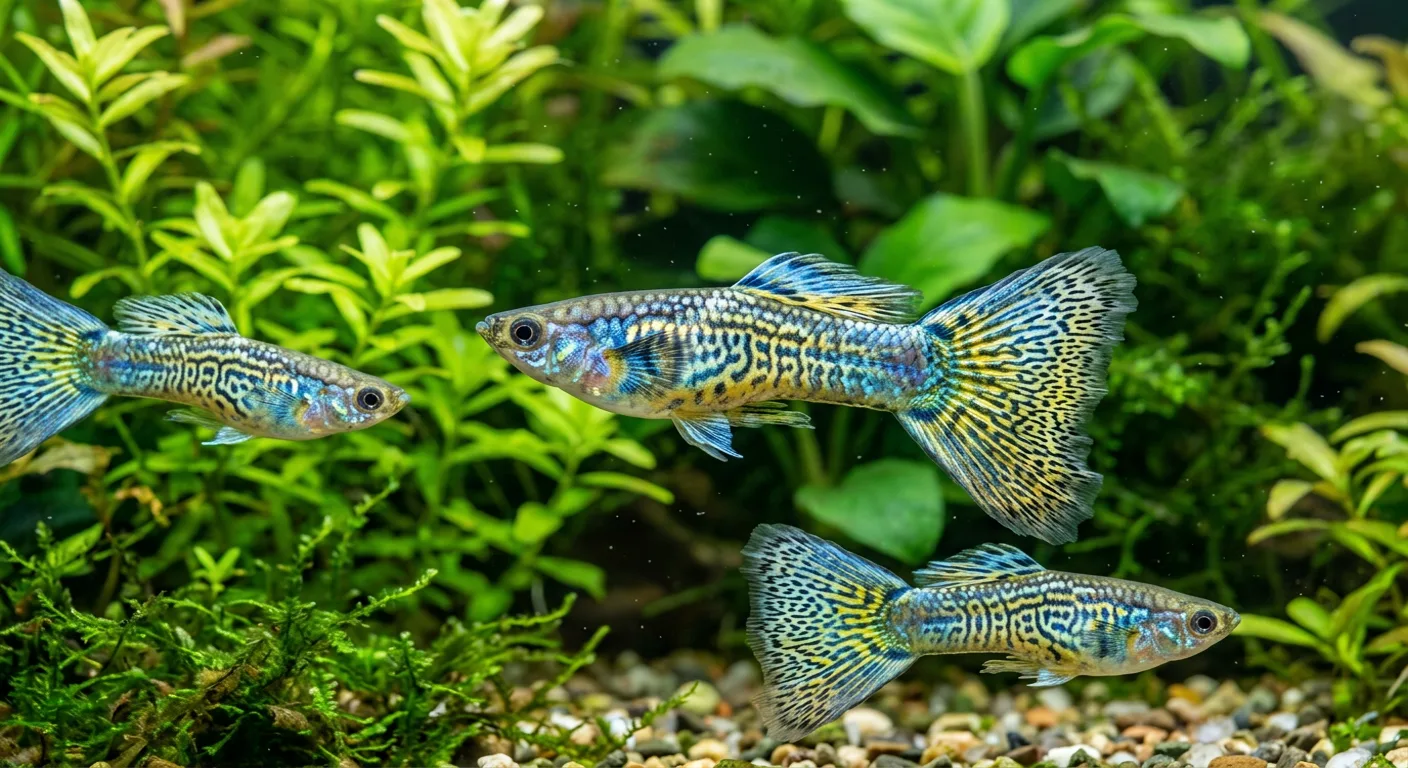
When keepers ask what is a snakeskin guppy, they usually mean the netted or chain-link look on the sides of the body. The lines form small cells that can look like scales on a snake. Many people also call a related look “cobra”, and the two names overlap in the hobby, so sellers sometimes use them loosely. Always check photos of the actual fish.
The pattern is most obvious on males. Females tend to be plainer, but they carry the genes and matter a lot when you breed. If you like patterned fish, our king cobra guppy guide covers a close relative.
How to recognize a snakeskin guppy
| Feature | What to look for |
|---|---|
| Body | Mesh or net-like lines across the sides |
| Colors | Often blue, yellow, green or gold tones; varies by line |
| Tail | Many tail shapes; some have spots or bands too |
| Sex difference | Males show the pattern strongly, females are subtler |
| Look-alikes | Cobra and mosaic patterns can resemble it |
Snakeskin vs cobra vs mosaic
These patterns are easy to confuse. A snakeskin pattern is a fine net over the body. Cobra patterns tend to show bolder bars and bands, and mosaic usually refers to patterning concentrated near the tail base and tail. Naming is not standardized, so ask a seller for clear photos of both parents when you want a specific look. You can compare more options in our blue mosaic guppy guide.
Snakeskin guppy care
A snakeskin guppy needs the same care as any fancy guppy. Patterned fish are not more fragile by nature, but fancy lines can be less hardy if they were inbred, so start with healthy stock and a stable tank.
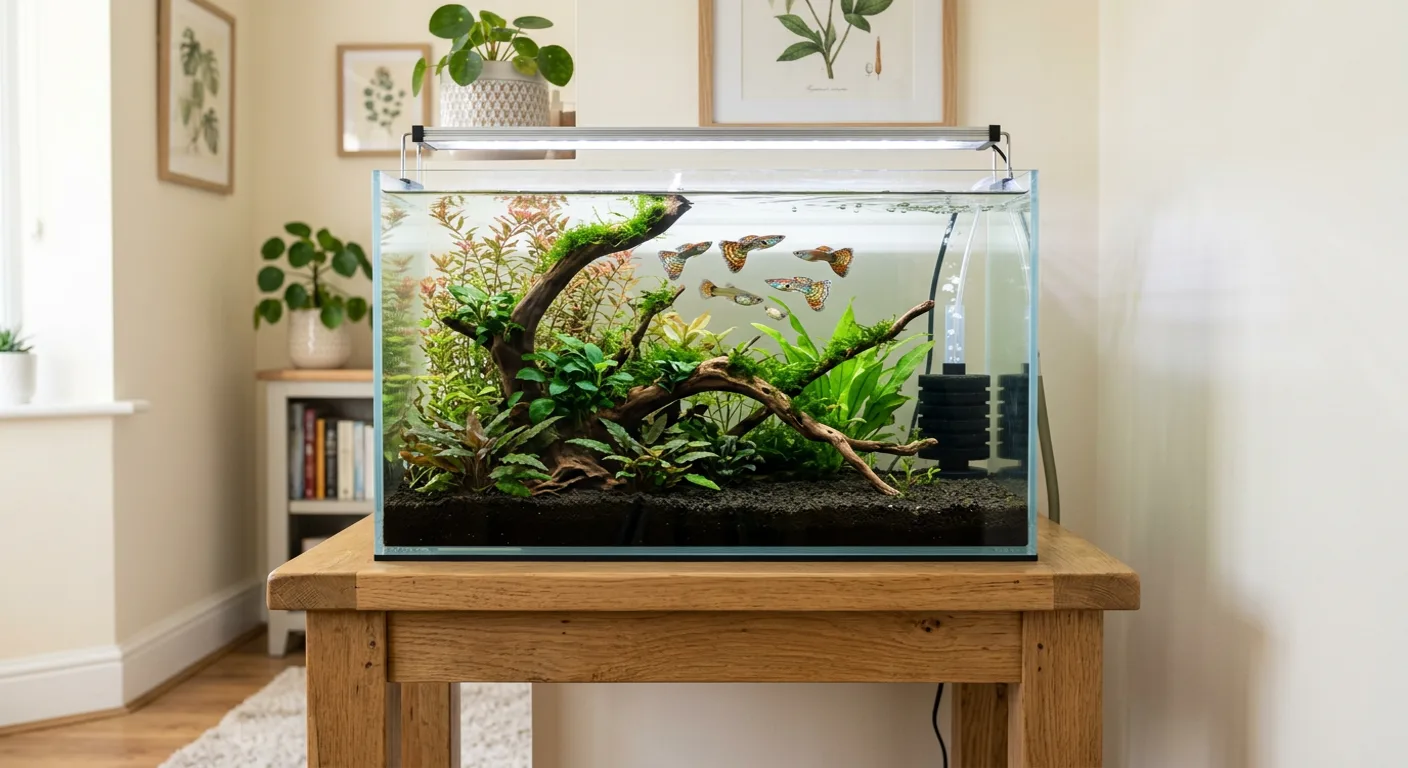
- Tank size: a 10 gallon tank is a practical minimum for a small group.
- Temperature: warm and steady; many keepers aim for the mid-70s to low-80s °F.
- Water: cycled, with regular partial water changes and dechlorinator.
- Food: a quality flake or micro pellet plus occasional frozen or live treats.
- Filtration: gentle flow, such as a sponge filter, to protect long tails.
Read the guppy water parameters guide for details, and quarantine new fish before mixing them in.
Breeding a snakeskin guppy
Guppies breed readily, and pattern genetics can be unpredictable. If you want a consistent snakeskin look, pair a patterned male with a female from the same line, and cull or separate offspring that do not show the trait based on your goals. Results vary from brood to brood, so expect a mix at first.
- Keep about two or three females per male to reduce stress.
- Give plants or a breeding box so fry can hide.
- Feed fry small, frequent meals; see our guppy fry feeding schedule.
Every new generation helps you see which pairs pass the pattern down best.
How a snakeskin guppy changes as it grows
Young fish rarely show their final look. Fry usually appear dull and silvery for the first weeks, and color and pattern build up as they mature. This is why many keepers wait until males are several weeks to a few months old before judging which fish carry the best mesh pattern. Growth speed depends on feeding, temperature and tank space, so do not rush the selection. Our guppy growth stages article shows what to expect at each age.
Good feeding supports color. Variety helps: a quality staple food, a small amount of protein such as frozen daphnia or baby brine shrimp, and no overfeeding. Clean water also keeps the pattern looking sharp, because stressed fish often fade. If a fish loses color suddenly, check water first and then read why a guppy may be losing color.
Tank mates and group setup
Snakeskin guppies are peaceful and get along with other small, calm fish. Avoid fin nippers, which can shred long tails, and avoid large predators. A group with more females than males keeps chasing low. If you are choosing neighbors, the best tank mates for guppies list is a good starting point.
| Setup choice | Good option | Avoid |
|---|---|---|
| Group makeup | 1 male to 2 or 3 females | Many males, few females |
| Tank mates | Small peaceful fish, shrimp | Fin nippers, big predators |
| Decor | Live plants, smooth rocks | Sharp ornaments |
| Flow | Gentle sponge filter | Strong current |
How to choose healthy fish before you buy
Pattern is only part of the picture. Look for fish that swim actively, hold their fins open, eat readily and have clean, undamaged bodies. Avoid fish with clamped fins, white spots, torn tails or a hollow belly. When ordering online, ask for recent photos, confirm the sex ratio and plan your tank before the box arrives. Our guide on how to choose healthy guppy fish online walks through the checklist.
Where to find a snakeskin guppy
Look for sellers who show clear photos of males and ship carefully. You can browse patterned fish in our male guppies collection. Check the listing for color, tail type and pattern before you order. To learn how to plan a full setup, finish with our guppy care resource hub. For background on the species, see Guppy on Wikipedia.
Common mistakes with snakeskin guppies
- Buying on name alone without checking the actual pattern.
- Overcrowding the tank, which hurts color and health.
- Mixing lines randomly and then expecting a uniform pattern.
- Skipping quarantine for new arrivals.
Avoid these and your fish should show their pattern at its best as they mature. Males usually develop their full pattern over several weeks to a few months.
In short, what is a snakeskin guppy worth to a hobbyist? It is a striking pattern that rewards patient selection, steady water and good feeding. Beginners can enjoy it without special equipment, and breeders can work toward a consistent line over several generations. Keep notes on which pairs give the best pattern, separate fry by age so smaller fish are not outcompeted at feeding time, and keep tank maintenance on a regular schedule. Small habits like these matter more than any special product, and they help every guppy in your tank look its best.
FAQ
What is a snakeskin guppy?
It is a guppy with a mesh, scale-like pattern on the body. It is a pattern type that appears in many colors and tails rather than one fixed strain.
Are snakeskin guppies hard to keep?
No. Their care matches other fancy guppies: a cycled tank, warm stable water, good food and regular water changes.
Is a snakeskin guppy the same as a cobra guppy?
Not exactly. The names overlap, but cobra usually means bolder bands, while snakeskin means a finer net pattern. Sellers may use them loosely.
Do female snakeskin guppies have the pattern?
Females usually show it faintly or not at all, but they still carry the genes and affect what the fry look like.
How do I breed snakeskin guppies?
Pair a patterned male with a female from a similar line, provide hiding spots for fry, and expect mixed results in early generations.
Behind the care guides
Care begins with steady systems
Our guppy guides focus on practical routines: keep water stable, observe fish closely and allow for natural variation.

Care systems
Steady water, thoughtful care
Gentle filtration and regular observation support healthy aquarium routines.

Natural variation
Every guppy is different
Color, size and fin shape vary with strain, age and each individual fish.
Editorial illustrations for context; they do not depict HiGuppy's exact facility or current fish stock.