The HiGuppy Journal
Can Guppies Eat Betta Food? What Happens and What to Feed
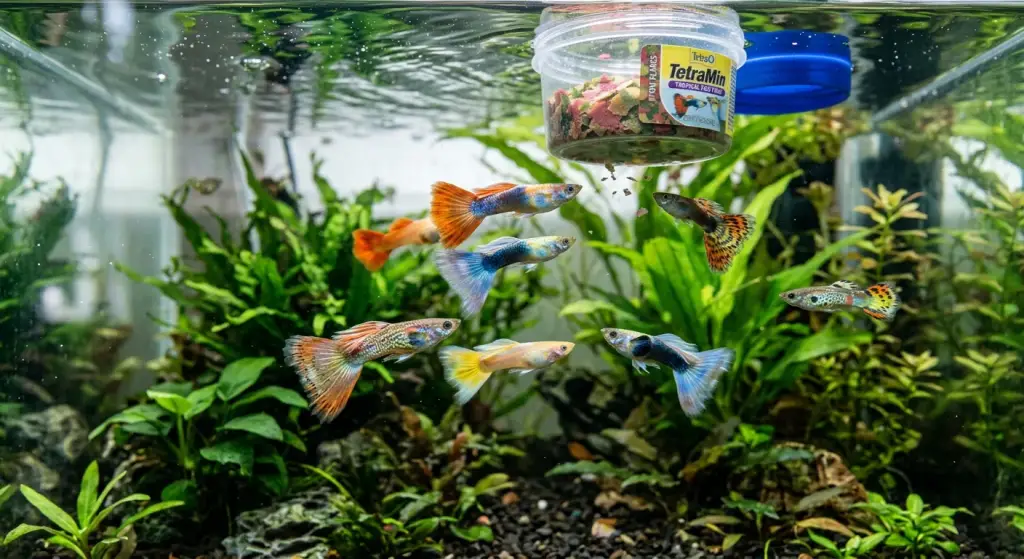
Can guppies eat betta food? Yes, guppies can eat betta food in a pinch, and a few days of it will not hurt them. It should not be their main diet, though. Betta pellets are built for a carnivore, so they run higher in protein than guppies need. See our guppy care guide for the full feeding picture.
If you keep both species, or you ran out of guppy flakes, this guide explains when it is fine, what the risks are and what to feed instead.
Quick answer: can guppies eat betta food?
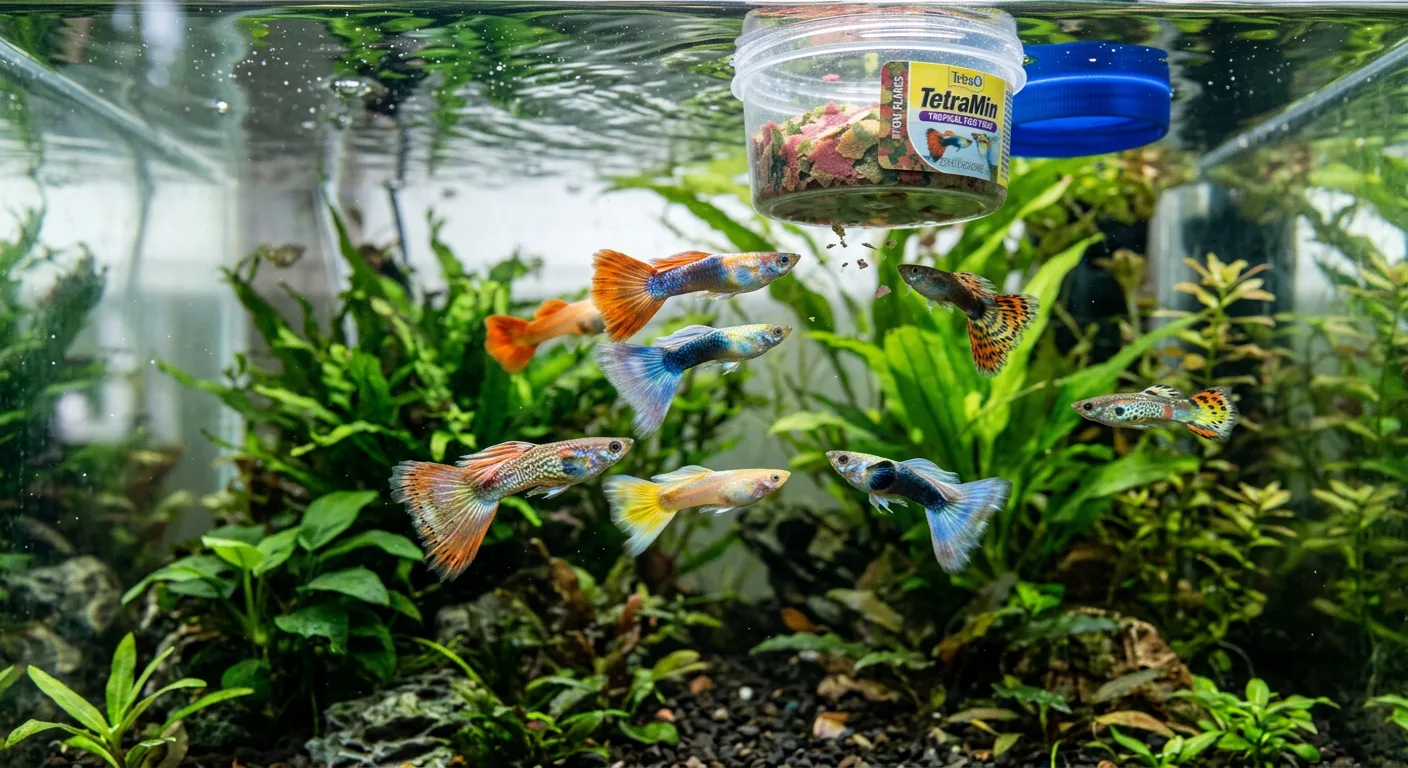
Can guppies eat betta food safely? For a few meals, yes. Both fish are small, tropical and happy with floating or slow-sinking foods. The problem is the long term. Betta food is formulated for a fish that is mostly a meat eater, while guppies are omnivores that also need plant matter.
Treat betta food as an emergency backup, not a staple. If you can, switch back to a proper guppy or tropical flake within a few days.
Why betta food is not ideal for guppies
Higher protein, less plant matter
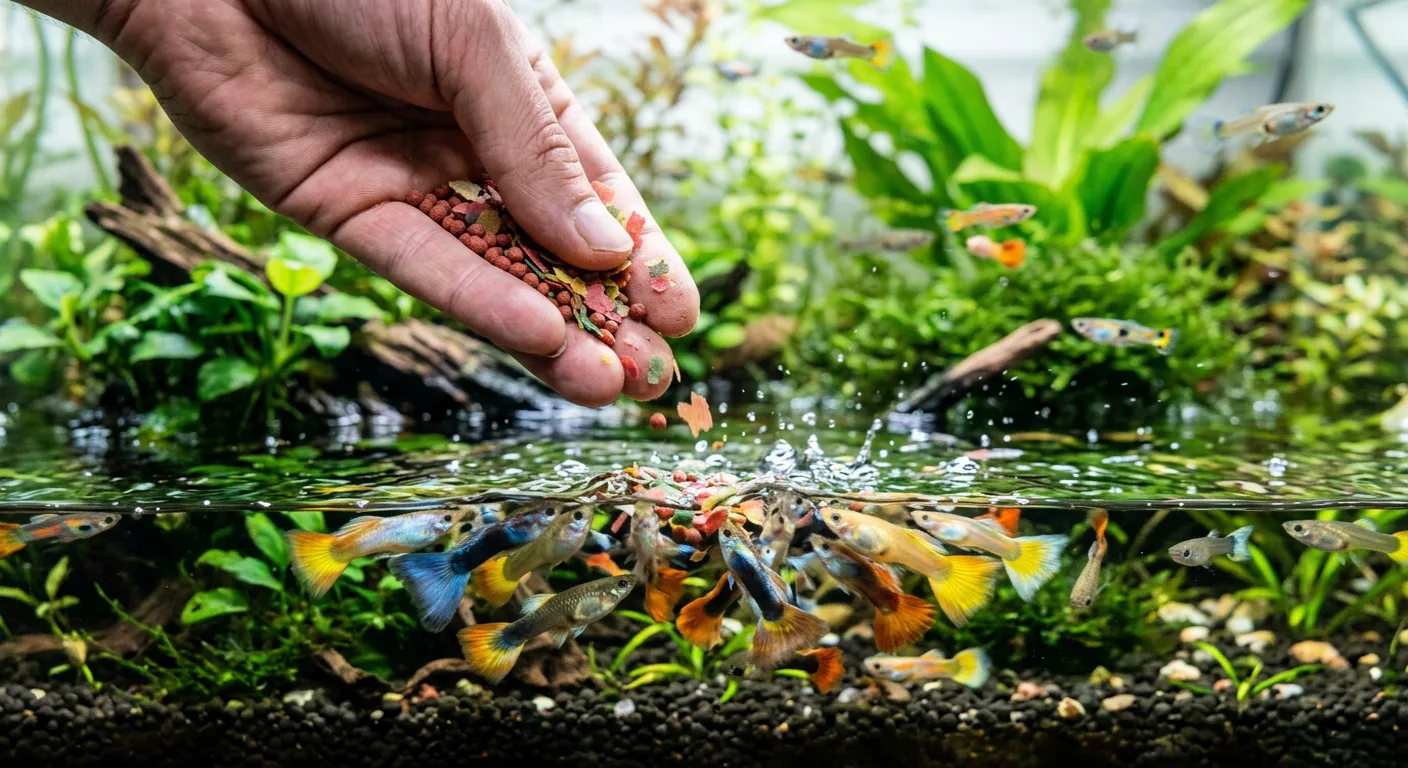
Many betta pellets lean heavily on fish meal and shrimp. Guppies grow well on a mix of protein and plant ingredients such as spirulina. A diet that is mostly protein over weeks can leave them short on the plant side of their needs.
Pellet size and sinking speed
Guppies have small mouths and feed near the surface. Some betta pellets are larger and hard, which is awkward for small guppies and fry. Soak a pellet for a minute so it softens, or crush it.
Overfeeding risk
Pellets swell in the gut. Guppies are quick to beg, so it is easy to give too much. Overfeeding fouls the water and can cause bloating. Our overfeeding guppies guide explains what to watch for.
Betta food vs guppy food at a glance
| Feature | Betta food | Guppy / tropical flakes |
|---|---|---|
| Diet style | Carnivore-focused | Omnivore-focused |
| Typical form | Pellets, some flakes | Fine flakes, micro pellets |
| Plant content | Usually lower | Usually higher (check label) |
| Size for fry | Often too large | Fine or crushable |
| Good as a staple? | No | Yes |
How to feed betta food to guppies if you must
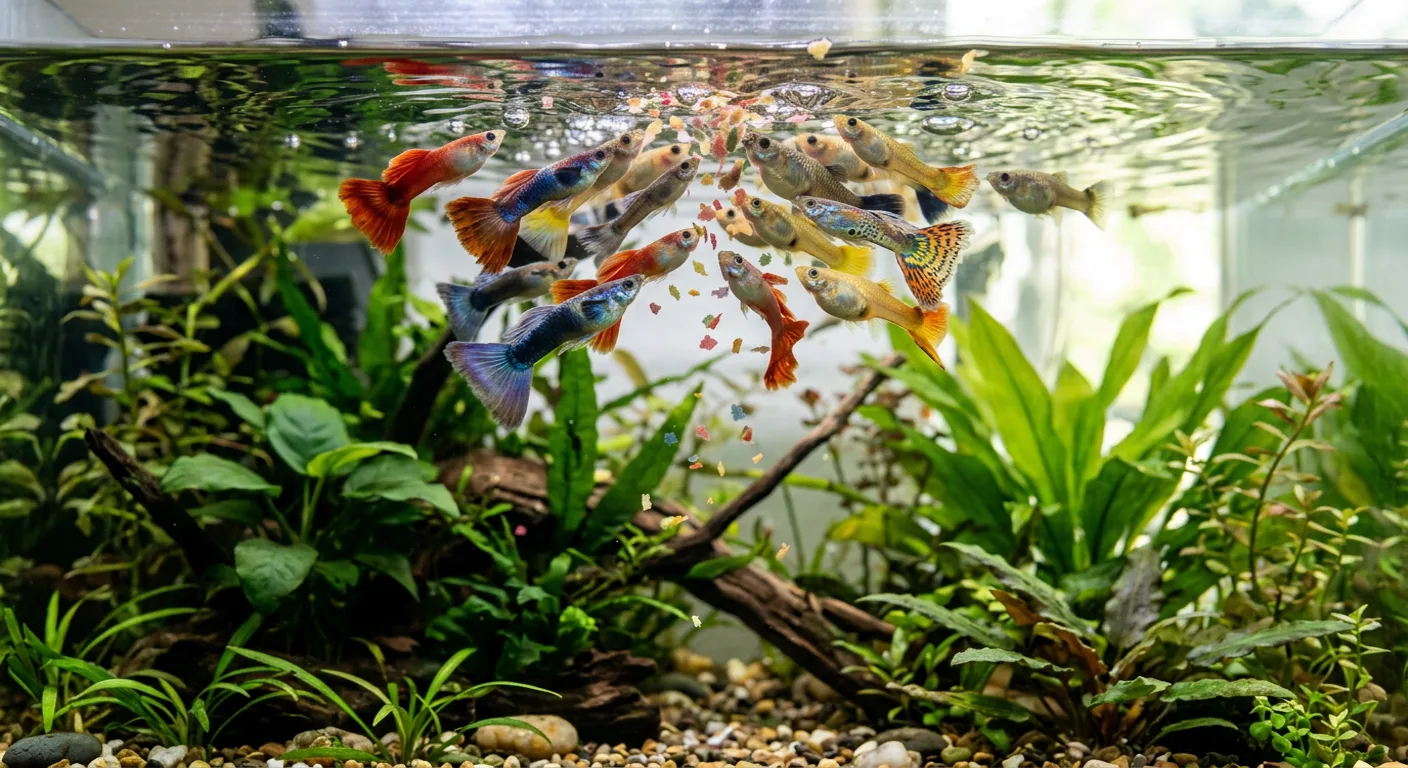
If betta food is all you have, do it carefully:
- Feed a very small pinch once or twice a day.
- Soak or crush pellets so guppies can swallow them.
- Remove uneaten food after two to three minutes.
- Skip a meal if the fish look full or the water is cloudy.
Adult guppies handle a short fast well, so a missed meal is safer than too much food. Our guide on how often to feed guppies sets out a simple routine.
What to feed guppies instead
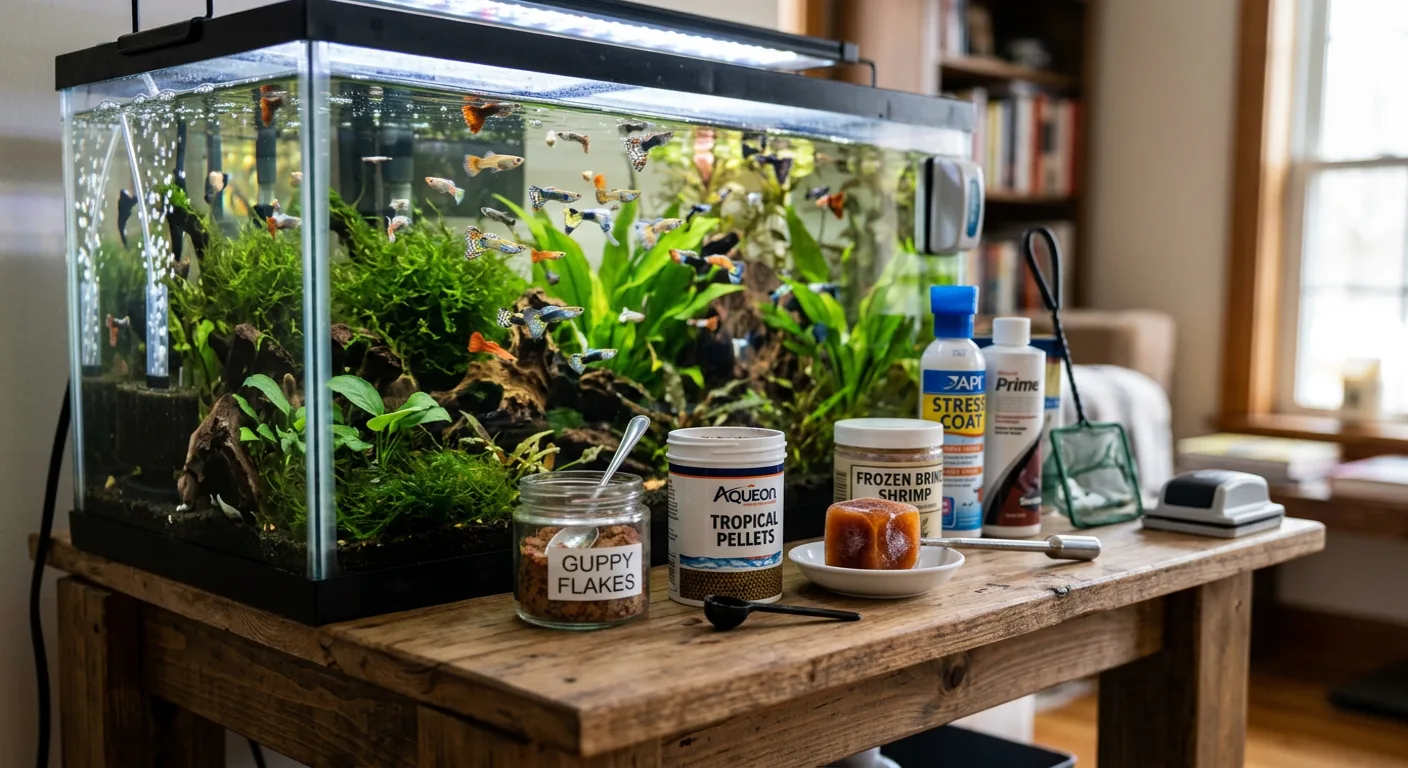
A varied diet keeps color and growth strong. A solid base is a quality tropical flake with some plant content, plus treats a few times a week:
- Frozen or live baby brine shrimp
- Daphnia or bloodworms, in small amounts
- Spirulina-based flakes or blanched veggies, as covered in our guide to vegetables for guppies
For color-focused feeding, see best food for guppy color and growth.
Can guppies and bettas share a tank and food?
Sometimes, but it is risky. Flowing guppy tails can look like a rival to a betta, and some bettas nip them. If you want to try, read can guppies live with bettas first. Even in a shared tank, feed each fish its own food and do not rely on one pellet for both.
Ingredients to check on the label
Not all betta foods are the same. Some are mostly shrimp and fish meal, while others add spirulina, garlic or wheat. Before you share any food, read the ingredient list. If fish meal or shrimp is the first ingredient and plant matter is near the bottom, it leans carnivore. If you see spirulina, algae or vegetable matter near the top, the food is closer to a guppy-friendly mix.
Also look at the feeding directions. Betta pellets are often dosed by the number of pellets, such as two or three per fish. Guppies are smaller than many bettas, so start with even less and watch how the group eats. A good rule is to give only what they finish in about two minutes.
How much and how often to feed guppies
Guppies do best with small meals once or twice a day. Their stomachs are tiny, roughly the size of their eye, so a pinch is plenty. Overfeeding is more common than underfeeding, and it is the main reason aquariums turn cloudy. Using a different food from time to time is fine, but the portion matters more than the brand.
| Situation | What to do |
|---|---|
| Ran out of guppy flakes | Use a tiny amount of crushed betta food for a few days |
| Going away for a weekend | Skip feeding; adults cope with a short fast |
| Feeding fry | Use finely ground flakes or baby brine shrimp |
| Shared tank with a betta | Feed each fish its own food separately |
Variety helps color and breeding condition. If you plan to breed, protein-rich treats such as frozen brine shrimp a few times a week are useful, but they should sit on top of a balanced flake, not replace it.
Signs the diet is not working
- Bloated belly or stringy waste
- Fading color
- Fry that grow slowly or ignore large pellets
- Cloudy water after feeding
If you see these, go back to a proper guppy flake, cut portions and do a partial water change. Healthy, well-fed fish are the best start for any breeding plan or new order from our male guppies range.
The bottom line on betta food for guppies
So, can guppies eat betta food? Yes, briefly and in small amounts. For long-term health, use a flake made for guppies or tropical fish and rotate in frozen foods. For more background on the species, see the Guppy article on Wikipedia, and for everything else, head back to our complete guppy care resource.
FAQ
Can guppies eat betta food every day?
It is not recommended. Betta food is protein heavy, so daily use over weeks can unbalance the diet. Use it only as a short-term backup.
Can guppy fry eat betta food?
Only if it is crushed to a fine powder. Whole pellets are too big. Fry do better on finely ground flake or baby brine shrimp.
Can betta eat guppy food?
Yes, for a short time. But bettas need a high-protein diet, so guppy flakes should not replace betta pellets long term.
What happens if guppies eat too many betta pellets?
They may bloat, produce more waste and foul the water. Stop feeding for a day, change some water and return to flakes.
What is the best staple food for guppies?
A quality tropical or guppy flake with both animal and plant ingredients, fed in small amounts and rotated with frozen foods.
Behind the care guides
Care begins with steady systems
Our guppy guides focus on practical routines: keep water stable, observe fish closely and allow for natural variation.

Care systems
Steady water, thoughtful care
Gentle filtration and regular observation support healthy aquarium routines.

Natural variation
Every guppy is different
Color, size and fin shape vary with strain, age and each individual fish.
Editorial illustrations for context; they do not depict HiGuppy's exact facility or current fish stock.