The HiGuppy Journal
Signs a Guppy Is About to Give Birth: What to Watch For
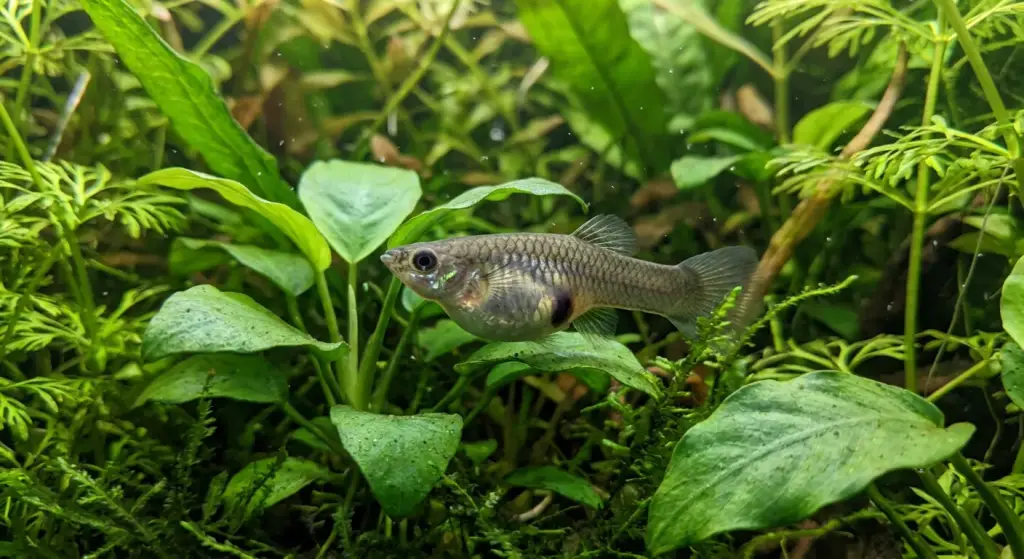
What are the signs a guppy is about to give birth? The clearest signs a guppy is about to give birth are a large, boxy belly, a dark and enlarged gravid spot, hiding or hovering near the surface, clamped fins and a drop in appetite. Our complete guppy care guide covers the basics that keep her healthy.
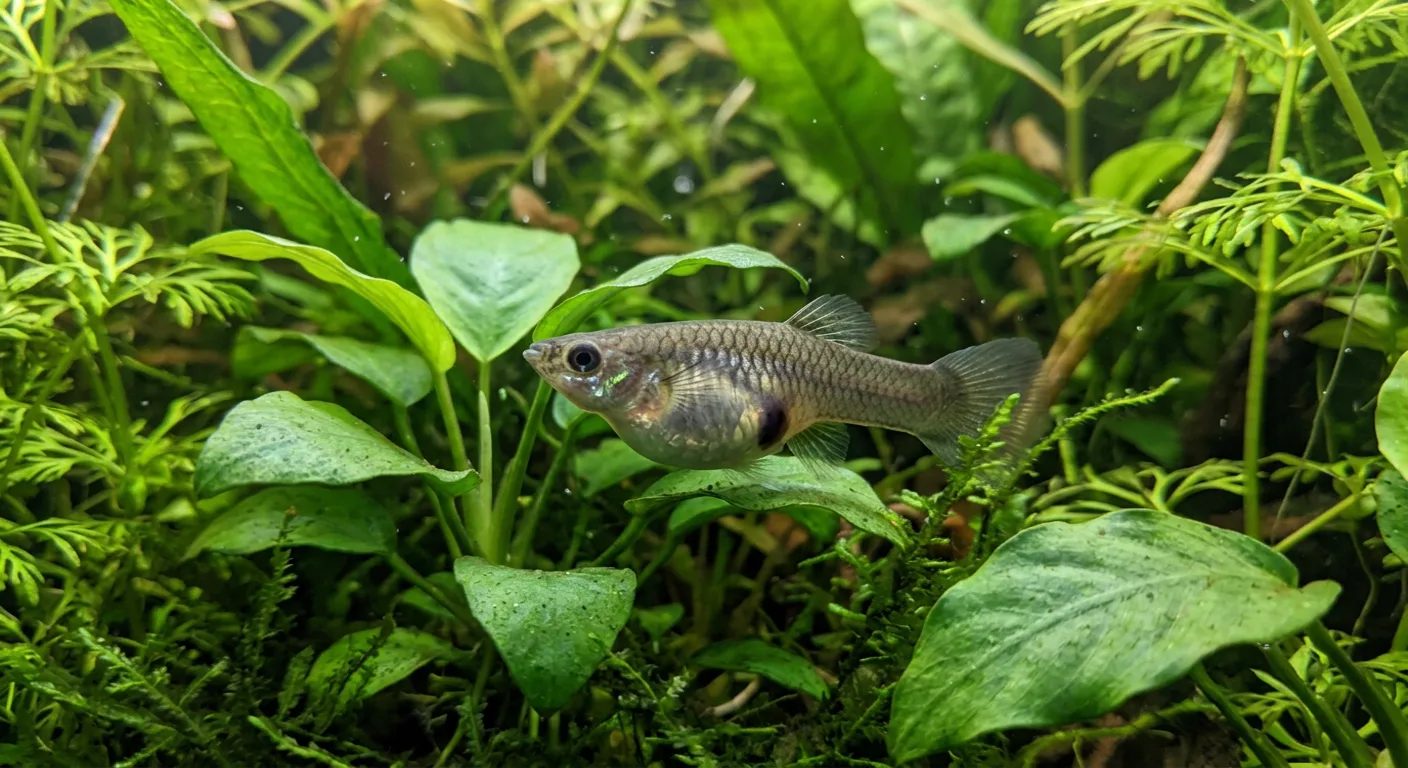
Guppies are livebearers, so females deliver free-swimming fry instead of laying eggs. Pregnancy usually lasts roughly four to six weeks, but it varies with water temperature, age and stress, so treat any number as a rough range. This guide shows what to watch for in the final days, how to prepare the tank and what to do when labor starts.
Signs a guppy is about to give birth
No single sign is perfect, so look for several together. The signs a guppy is about to give birth tend to build over the last two or three days.
A boxy, squared-off belly
Early in pregnancy the belly is round. Close to delivery it often looks angular or square when seen from above, especially behind the pectoral fins. If you are unsure whether she is pregnant or just fat, see our guppy pregnant or fat guide.
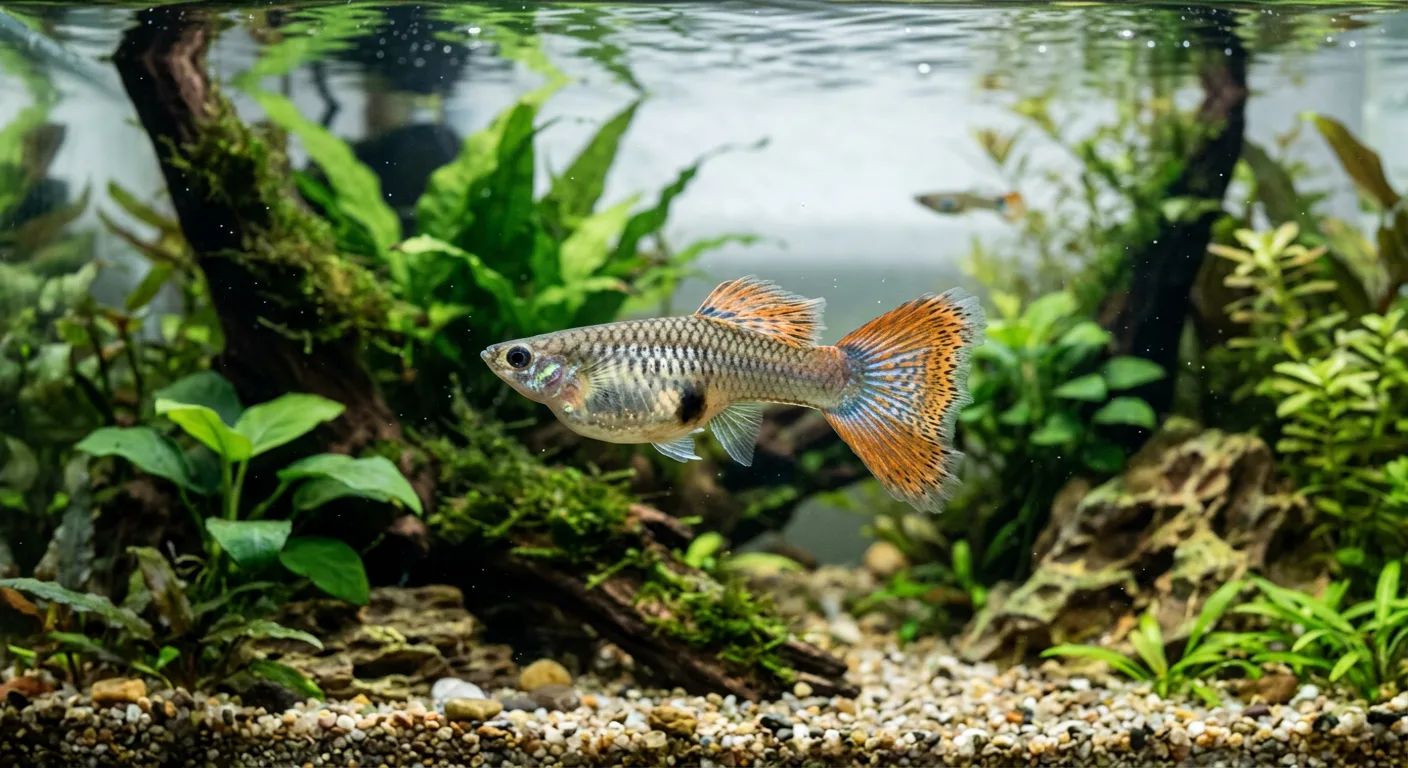
A dark, enlarged gravid spot
The gravid spot is the patch near the vent. It darkens through pregnancy. In some females the spot looks nearly black right before birth, and you may see tiny eye dots through the skin. Visibility depends on body color, so pale or gold females show it more clearly.
Behavior changes
Many females become restless, hide in plants, hover near the surface or stay in a corner. Some stop eating or eat much less. Others shake or hang near the heater. These behaviors alone can also mean illness, so compare them with the belly and gravid spot.
| Sign | What you see | How reliable |
|---|---|---|
| Boxy belly | Square, very full abdomen | Good when combined with others |
| Dark gravid spot | Enlarged, very dark patch near vent | Good, varies by color |
| Hiding or hovering | Stays in plants or near surface | Moderate, can mean stress |
| Appetite drop | Ignores food | Moderate, can mean illness |
| Clamped fins, shaking | Tail held tight, trembling | Moderate, check water quality |
How long before birth do these signs show?
The belly shape and gravid spot change over weeks, while restlessness and appetite loss usually appear within a day or two of delivery. Because every female is different, you cannot give an exact hour. If you want to read more about timing, see our guppy pregnancy stages and gestation article.
How to prepare the tank before birth
Adult guppies will often eat newborn fry, so the safest plan is to give the babies places to hide. You have two main options, and both work.
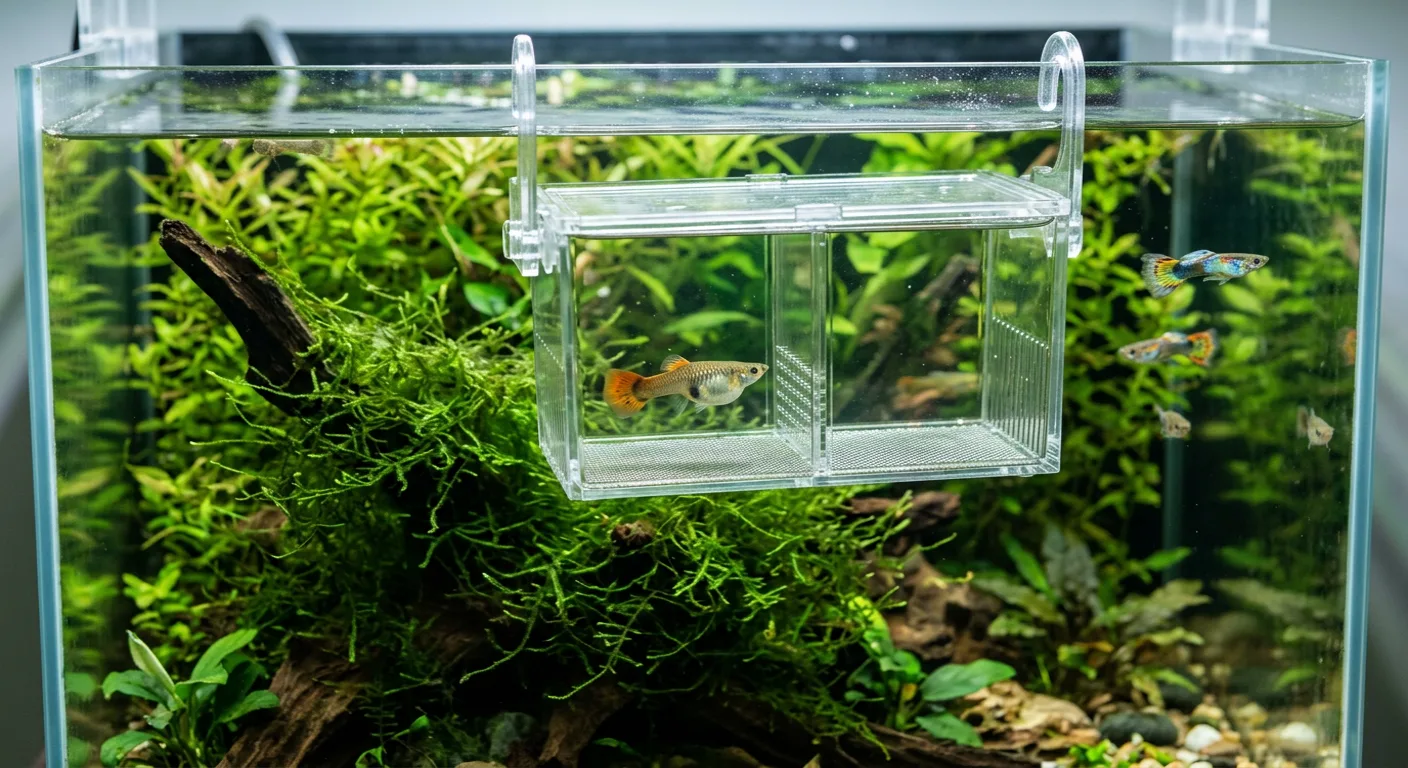
- Dense plants: Java moss, hornwort and floating plants let fry slip away from adults. This is the lowest-stress option for the mother.
- Breeding box or separate tank: A box keeps fry apart, but a cramped box can stress a female and may trigger early or difficult labor. A small, cycled tank with a sponge filter is usually gentler. Our guppy breeding tank setup guide has the details.
Whichever you choose, keep the temperature steady and the water clean. Sudden changes can stress her at the worst time. Do not move her too early, since the signs a guppy is about to give birth can last a few days.
What happens during labor
Labor can take from a few minutes to several hours, and some females deliver in batches over a day or more. You may see her curve her body, tremble and drop fry one at a time. Newborns are about a few millimeters long and swim almost immediately.
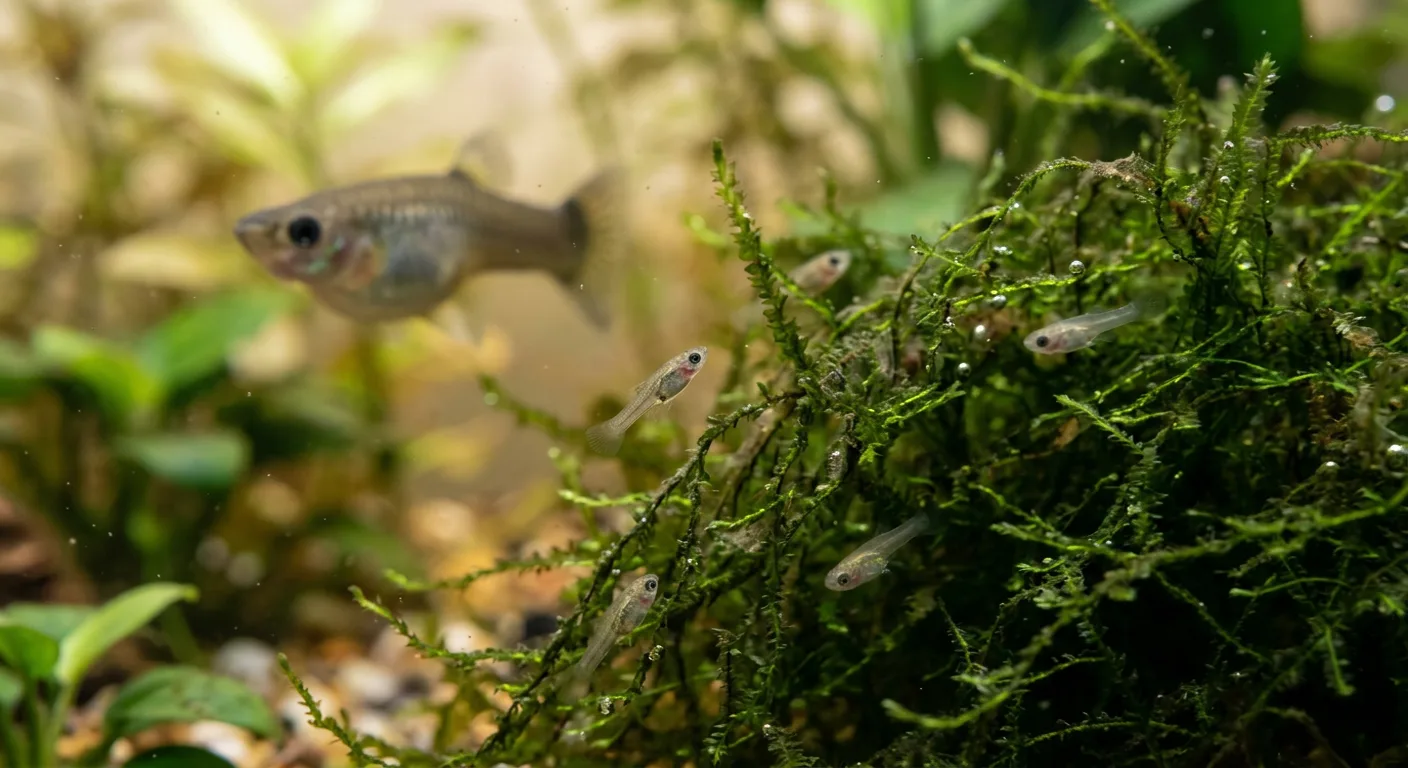
Stay calm and keep the room quiet. If she has been pushing for a long time with no fry, check water temperature and quality first. A related problem is covered in why is my guppy not giving birth.
After birth: caring for mother and fry
- Return the mother to the main tank once she has finished and is resting.
- Feed fry tiny, frequent meals such as crushed flakes or microworms. See the guppy fry feeding schedule.
- Do small, careful water changes with temperature-matched water.
- Give the mother a few days of light feeding and calm conditions.
If you would rather start with healthy breeding stock, browse our breeder trios. For more on the species, the Wikipedia guppy page is a good overview.
When to worry during guppy labor
Most births go smoothly, but a few warning signs deserve attention. If the female stays very swollen for many days past the point you expected, sits motionless on the bottom, breathes rapidly or shows pale, ragged fins, test the water before doing anything else. Ammonia, nitrite and sharp temperature swings can all slow things down and make a pregnant female look unwell.
Fix the basics first: keep the water warm and stable, do a small temperature-matched water change if readings are off, and reduce light and noise around the tank. Avoid handling her unless absolutely needed, because netting adds stress and does not speed up delivery.
Some females also deliver a few fry, pause, then deliver more later. This is normal and does not always mean a problem. Keep watching quietly, keep hiding places available, and remove any dead or unformed fry gently with a small cup or net so they do not foul the water. If she looks unwell after birth, treat her in a calm, separate tank and follow the steps in our general care guidance.
Keeping notes helps for next time. Write down the date you first noticed the signs a guppy is about to give birth, the date fry arrived and how many survived. Over a few litters you will learn how long your own females take and what setup gives the best results. That kind of record makes future births far less stressful for both you and the fish.
Common mistakes to avoid
New keepers often make the same errors when they spot the signs a guppy is about to give birth. Avoid netting her repeatedly, which causes stress. Avoid a tiny, bare breeding trap with no cover. And avoid assuming a fat female is pregnant; check for the gravid spot and boxy shape as well.
For ongoing support, return to our guppy care guide any time you need a refresher on water, food and tank basics.
FAQ
How can I tell when my guppy is about to give birth?
Look for a boxy belly, a dark enlarged gravid spot, hiding, hovering near the surface and reduced appetite. Seeing several of these together suggests delivery is near, usually within a few days.
How long does a guppy take to give birth?
Labor can last from a few minutes to several hours, and some females deliver fry in batches over a day or longer. Duration varies from female to female.
Should I move a pregnant guppy to a breeding box?
It is optional. Dense plants are gentler. If you use a box, move her only when signs are strong and keep her there briefly, because crowding can stress her.
Do guppies stop eating before giving birth?
Many do eat less or refuse food in the last day or two. A long loss of appetite with other symptoms can mean illness, so check water quality and her appearance.
Will the mother guppy eat her babies?
Adult guppies can eat newborn fry. Providing dense plants, a separate tank or a breeding box helps more fry survive.
Behind the care guides
Care begins with steady systems
Our guppy guides focus on practical routines: keep water stable, observe fish closely and allow for natural variation.

Care systems
Steady water, thoughtful care
Gentle filtration and regular observation support healthy aquarium routines.

Natural variation
Every guppy is different
Color, size and fin shape vary with strain, age and each individual fish.
Editorial illustrations for context; they do not depict HiGuppy's exact facility or current fish stock.