The HiGuppy Journal
Quarantine vs Acclimation for Guppies: What Is the Difference?
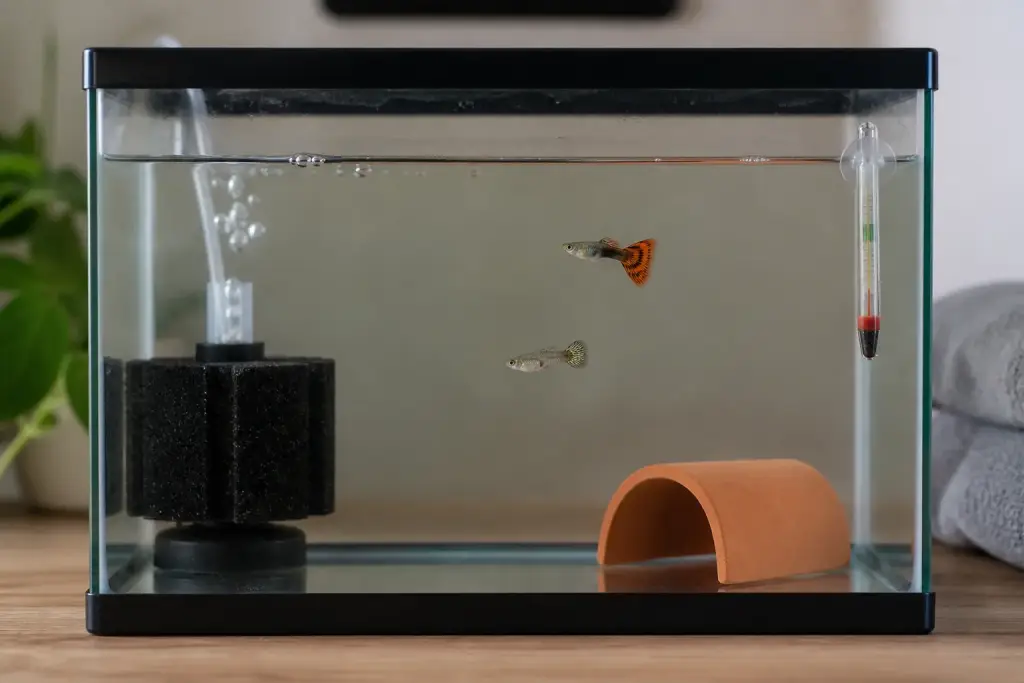
Acclimation and quarantine are different steps. Acclimation helps guppies adjust to the temperature and water conditions of their destination aquarium. Quarantine keeps new fish physically separate while you observe them before introducing them to an established population. In most cases, the sequence is: prepare the quarantine aquarium, acclimate the new guppies into it, observe them separately, and only then consider moving them to the main aquarium.
Acclimation vs quarantine at a glance
| Step | Main purpose | Where it happens |
|---|---|---|
| Acclimation | Help fish adjust to the destination aquarium’s temperature and water conditions | Usually the prepared quarantine aquarium for new arrivals |
| Quarantine | Separate new fish for observation and to reduce the risk of introducing problems to established fish | A dedicated aquarium away from the main aquarium |
Acclimation is a transition process. Quarantine is a period of separation and observation. Acclimation does not replace quarantine, and quarantine does not remove the need to acclimate fish carefully.
What is acclimation for guppies?
Acclimation is the process of moving guppies from their transport water into a prepared aquarium without making the transition unnecessarily abrupt. The fish may have experienced different temperatures, water chemistry, light levels, and movement during transport. A calm arrival routine gives them time to adjust to the new environment.
For a detailed arrival sequence, see the Guppy Arrival Day Checklist. The important distinction is that acclimation is about the immediate move into the destination tank. It does not establish that the fish are ready to join other guppies.
What is quarantine for guppies?
Quarantine means keeping new fish separate from an established aquarium while you watch their condition and behavior. This separation gives you an opportunity to notice concerns before the new fish share water, equipment, and space with the existing population.
The Merck Veterinary Manual: Quarantine and Biosecurity recommends quarantine for pet fish and emphasizes separate equipment and observation. A quarantine aquarium should therefore have its own net, bucket, and siphon rather than sharing tools with the main aquarium.
Quarantine is not a guarantee that every possible fish health problem will be detected. If a guppy shows serious or worsening symptoms, seek guidance from a qualified fish veterinarian rather than relying on a general internet checklist.
The correct order: acclimate first, quarantine second
- Prepare the quarantine aquarium. Make sure it is ready before the fish arrive, with appropriate filtration, stable conditions, and equipment reserved for that aquarium.
- Inspect the shipment. Look at the fish and transport water without assuming that an apparently active fish is free of every concern.
- Acclimate the guppies into quarantine. Use a careful, low-stress arrival routine suited to the transport conditions and the aquarium’s water.
- Keep the new arrivals separate. Do not move them directly into the display aquarium simply because acclimation appeared to go smoothly.
- Observe and maintain the quarantine aquarium. Watch behavior, appetite, appearance, and water quality. Use separate equipment and avoid transferring water or tools between aquariums.
- Move fish only when you are satisfied with the observation period. If concerns appear, pause the transfer and obtain qualified veterinary guidance when needed.
Why the quarantine aquarium must be ready
A quarantine tank is still an aquarium with its own biological and water-quality responsibilities. Moving fish into an unprepared tank can create problems that look like transport stress or disease but are actually related to unstable water conditions.
The RSPCA explains that biological filtration helps convert fish waste into less harmful compounds and that new aquariums or filters may not yet contain enough beneficial bacteria. Its guidance also emphasizes testing during the early establishment period and avoiding excessive cleaning of filter media. Read the RSPCA: Aquarium water quality guidance for the underlying filtration principles.
Before buying new guppies, review your equipment and maintenance routine. The article on the best filter for guppies can help you compare common filtration arrangements, but the quarantine aquarium still needs to be monitored independently from the main tank.
Quarantine and acclimation checklist
- Is the quarantine aquarium prepared before the fish arrive?
- Can you keep the new guppies physically separate from established fish?
- Do you have dedicated quarantine nets, buckets, and siphon equipment?
- Have you planned a calm acclimation routine rather than releasing fish immediately?
- Can you observe behavior, appearance, feeding, and water quality regularly?
- Are the quarantine filter and aquarium conditions being maintained without over-cleaning the biological media?
- Will you delay transfer if a fish appears unwell?
Common mistakes to avoid
Putting new fish straight into the display aquarium
Acclimation may reduce transition stress, but it does not provide a separate observation period. Adding new guppies immediately can expose established fish to avoidable risks.
Using the same equipment everywhere
Nets, buckets, and siphons can transfer water and organic material between aquariums. Dedicated quarantine equipment makes separation easier to maintain.
Ignoring water quality
Quarantine is not useful if the quarantine aquarium itself has unstable conditions. Biological filtration, regular observation, and appropriate testing are part of responsible aquarium management.
Trying to solve serious illness from a generic checklist
Online information cannot replace an examination. Contact a qualified fish veterinarian when symptoms are severe, progressive, or unclear.
Bottom line
Acclimation is how you introduce new guppies to the quarantine aquarium. Quarantine is what happens afterward: separation, observation, and careful maintenance before a possible move to the main aquarium. Treat them as complementary steps, not alternatives. For aquarium supplies and current shop information, visit HiGuppy’s shop.
Behind the care guides
Care begins with steady systems
Our guppy guides focus on practical routines: keep water stable, observe fish closely and allow for natural variation.
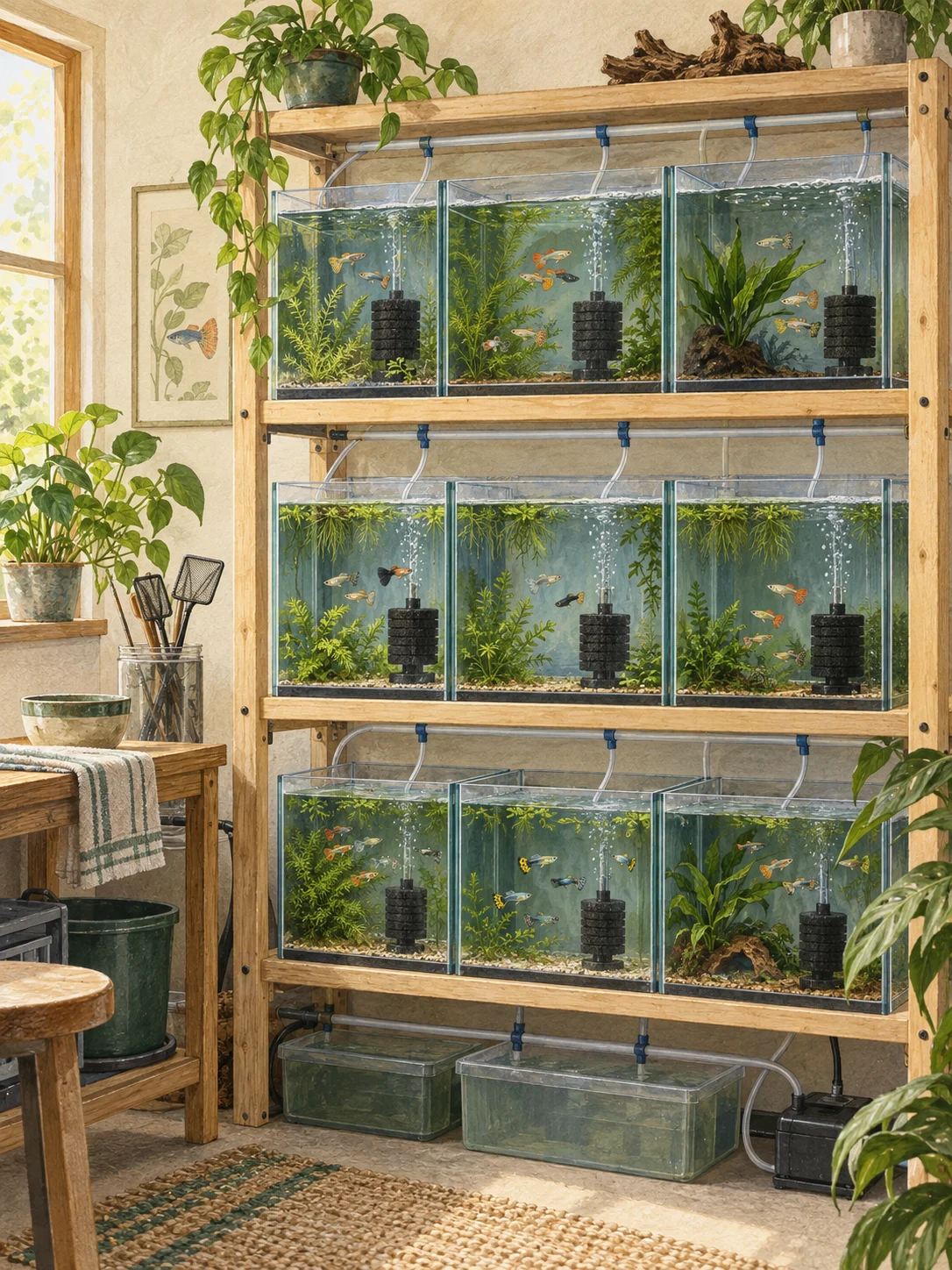
Care systems
Steady water, thoughtful care
Gentle filtration and regular observation support healthy aquarium routines.
Natural variation
Every guppy is different
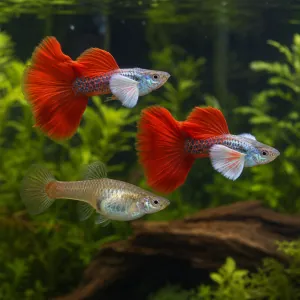
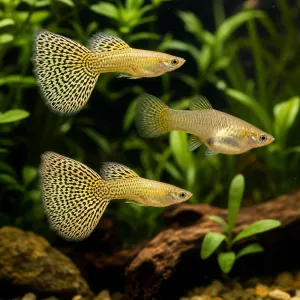
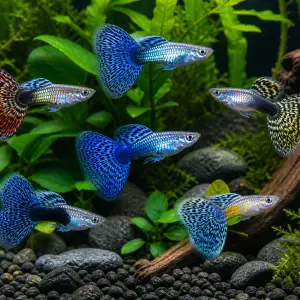
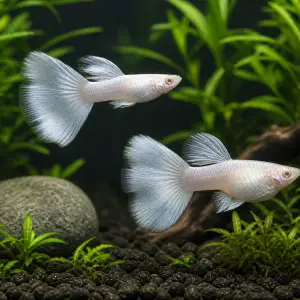
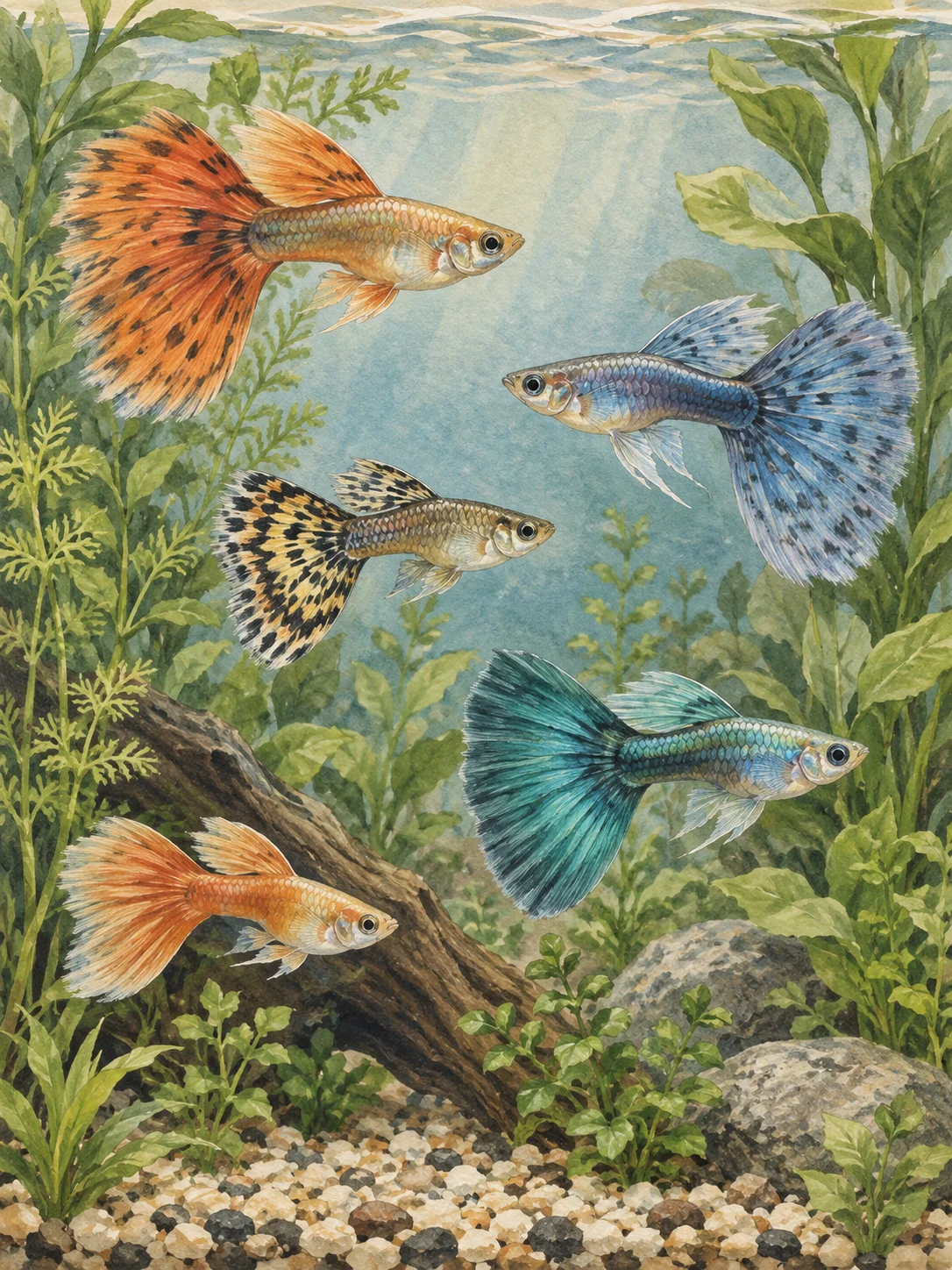
Color, size and fin shape vary with strain, age and each individual fish.
Editorial illustrations for context; they do not depict HiGuppy's exact facility or current fish stock.