The HiGuppy Journal
First Week With New Guppies: What to Watch After Delivery
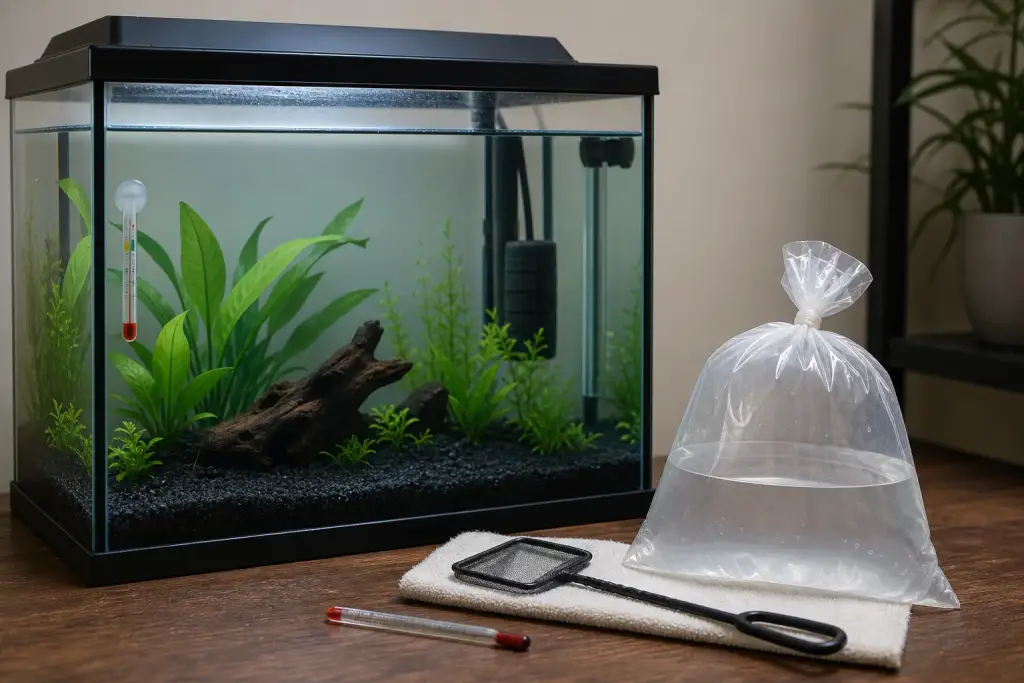
The first week with new guppies is mainly an observation period: watch their behavior, check the aquarium, and record changes instead of assuming that every unusual movement means illness. Keep new fish separate when possible, use dedicated quarantine equipment, and review the tank’s water quality regularly. If a fish is severely distressed, deteriorating, or showing serious symptoms, contact a qualified fish veterinarian.
What to do during the first week
Keep the routine calm and consistent. Observe the fish before feeding, during feeding, and again later in the day. Note whether they are swimming normally, staying hidden, breathing unusually hard, rubbing against objects, or being excluded by tank mates. A short daily record makes gradual changes easier to recognize than memory alone.
If the new guppies are in quarantine, keep them physically separate from established fish. The Merck Veterinary Manual: Quarantine and Biosecurity recommends separation, dedicated nets and other equipment, and observation during quarantine. It also advises obtaining the fish’s history and examining them early in the quarantine period. Do not share nets, siphons, buckets, or other equipment between tanks unless they have been properly cleaned and disinfected.
Daily observation checklist
- Swimming: Is each guppy moving with the group, holding its position, and using its fins normally?
- Breathing: Is any fish repeatedly staying near the surface, filter outlet, or another area as if seeking better flow or oxygen?
- Body and fins: Look for new spots, sores, torn fins, clamped fins, swelling, unusual color changes, or a persistently abnormal posture.
- Appetite: Record whether each fish shows interest in food. Remove uneaten food rather than repeatedly adding more.
- Social behavior: Watch for chasing, fin-nipping, isolation, or one fish being prevented from reaching food.
- Water and equipment: Check that the filter is running, the heater and thermometer appear normal, and the water is not suddenly cloudy or contaminated with debris.
What to record each day
A simple log can include the date, approximate feeding response, visible behavior, water-test results, and anything that changed. Record observations using neutral language: “stayed near surface for 20 minutes” is more useful than “looks sick.” If more than one fish changes at the same time, note that pattern as well.
Also record any maintenance, including water changes, filter cleaning, equipment adjustments, or additions to the aquarium. This creates a timeline that can help you identify whether a change followed a maintenance event, a feeding change, or the introduction of another fish.
Water quality: the first thing to check when behavior changes
Do not assume that a new fish’s behavior is caused only by transport stress. Water quality can also change after fish are added, especially in a new or immature aquarium. The RSPCA explains that biological filtration helps break down fish waste and that ammonia and nitrite can become dangerous when the biofilter is not established or is overwhelmed.
The RSPCA guide to aquarium water quality recommends regular testing during the early period of a new aquarium and emphasizes protecting beneficial bacteria in filter media. Test according to the instructions for your kit and write down the results rather than relying on the appearance of the water. Clear water does not by itself confirm that ammonia and nitrite are safe.
If your readings are unexpected, avoid making several major changes at once. Recheck the test, review recent maintenance and feeding, and seek help from a qualified aquatic professional or fish veterinarian when the fish are distressed. Follow the product label and current aquarium-care guidance for any water conditioner or test kit you use.
First-week comparison: normal variation or a warning?
| Observation | What to do next |
|---|---|
| Brief hiding after lights or activity | Reduce disturbance and continue observing at the next routine check. |
| Reduced interest in one feeding | Record it, remove uneaten food, and watch appetite and behavior over the next checks. |
| Repeated surface sitting, rapid breathing, or loss of balance | Check water quality and equipment promptly; seek qualified veterinary advice if the problem persists or is severe. |
| New spots, sores, severe fin damage, or marked swelling | Keep the fish isolated where appropriate, avoid guessing at a diagnosis, and contact a qualified fish veterinarian. |
| Multiple fish change at once | Prioritize water testing and equipment checks, then record the timing and results. |
Quarantine and tank-mate decisions
Do not rush to combine new guppies with established fish simply because they look active on arrival. Quarantine allows observation without exposing the main aquarium and makes it easier to notice changes in appetite, appearance, or behavior. For a practical separation workflow, see How to Quarantine New Guppies After Shipping.
Keep quarantine equipment dedicated to that tank. Merck notes that separate equipment and handling practices reduce the chance of transferring problems between groups. If a fish dies or becomes seriously ill, preserve your notes and contact a fish veterinarian for guidance rather than starting an unconfirmed treatment routine.
When the first week is complete
At the end of the week, review the log instead of judging the fish from one moment. Look for stable appetite, consistent swimming, normal interaction, and water readings that fit the aquarium’s established care plan. If there are unresolved warning signs, continue separation and monitoring while seeking qualified advice.
For future purchases, review the current options at the HiGuppy shop and check the site’s current support and policy information before ordering. Keep your arrival notes with the product or shipment details so any follow-up question has a clear timeline.
Behind the care guides
Care begins with steady systems
Our guppy guides focus on practical routines: keep water stable, observe fish closely and allow for natural variation.
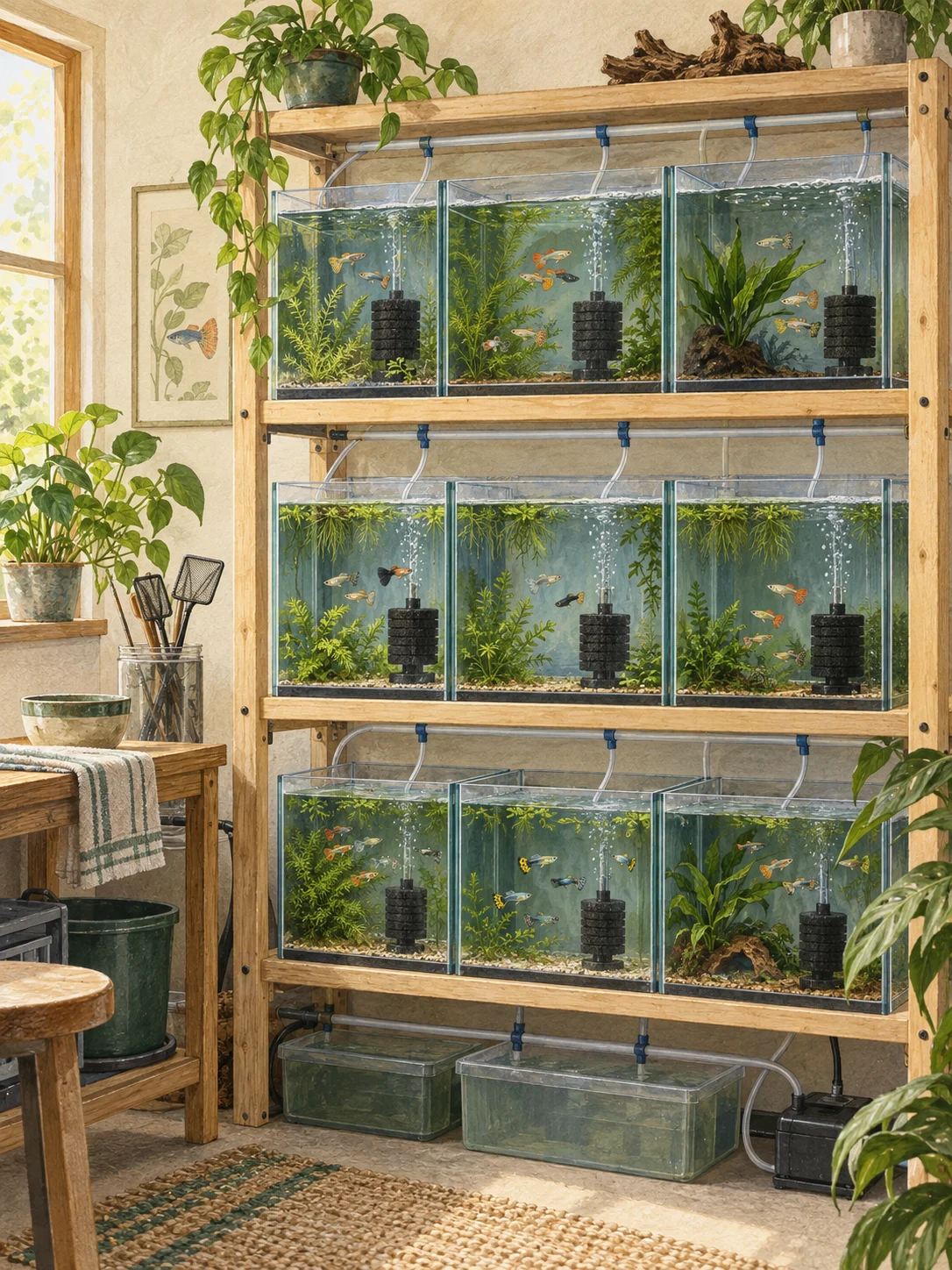
Care systems
Steady water, thoughtful care
Gentle filtration and regular observation support healthy aquarium routines.
Natural variation
Every guppy is different
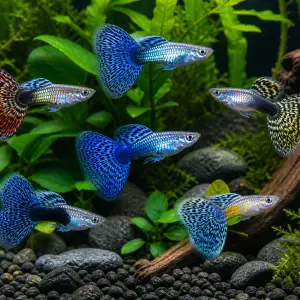
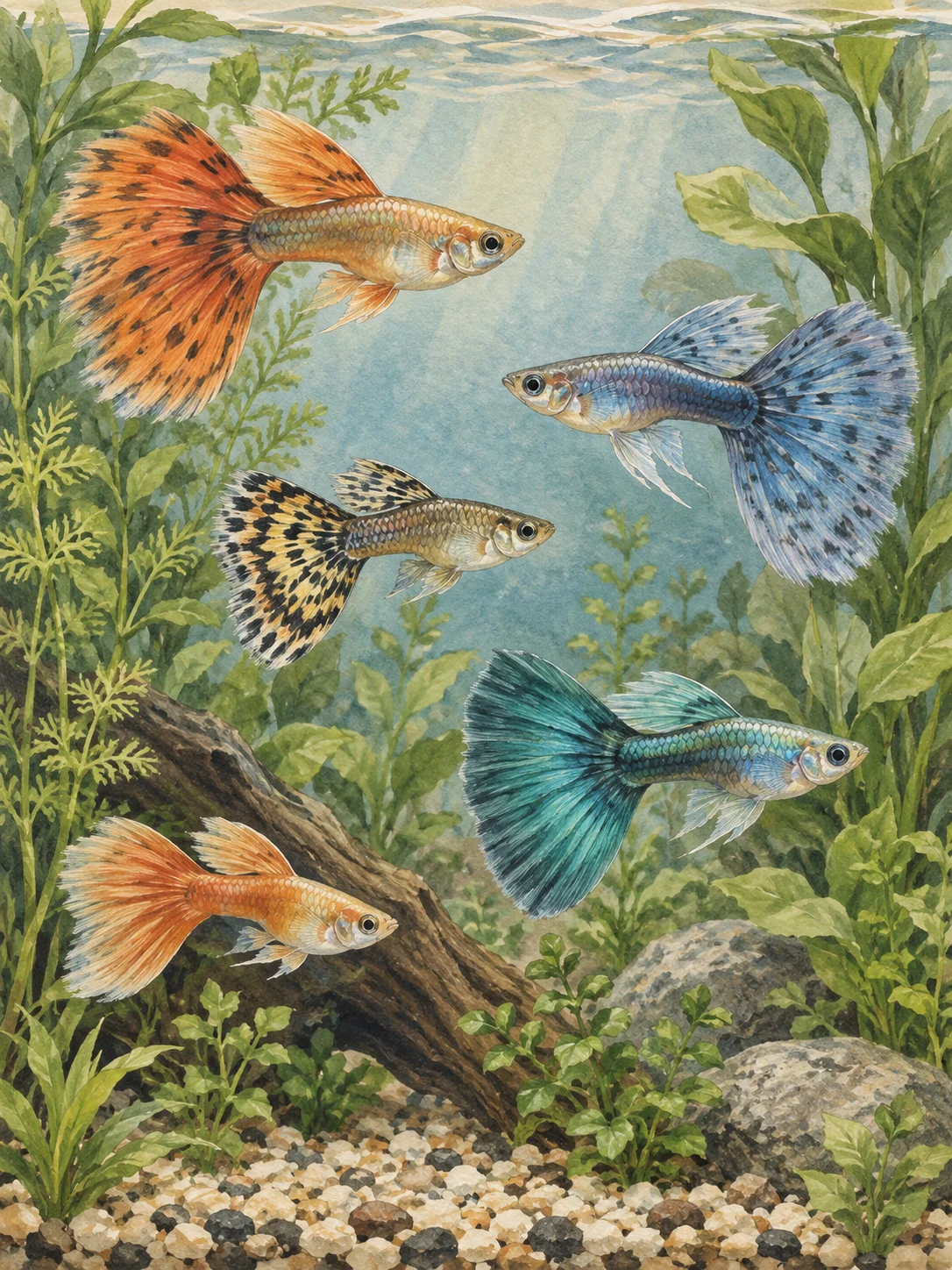
Color, size and fin shape vary with strain, age and each individual fish.
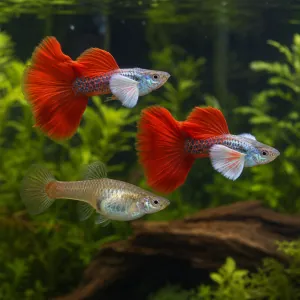
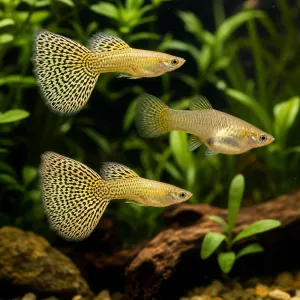
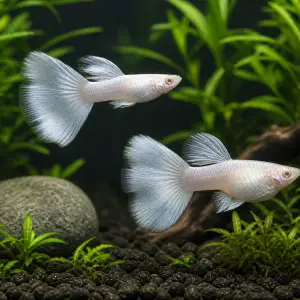
Editorial illustrations for context; they do not depict HiGuppy's exact facility or current fish stock.