Live guppy delivery care
How to Acclimate Shipped Guppies Safely
Use this step-by-step guppy acclimation guide to inspect your shipment, match temperature, transfer fish without adding shipping water, and support new arrivals through their first 48 hours.
At a glance
The safest arrival routine for shipped guppies
Shipping-day care is different from casually bringing a fish home from a nearby store. With a long-distance shipment, complete any required evidence while the bag is sealed, keep the temperature transition controlled, and minimize delay after opening.
Receive promptly
Bring the package indoors as soon as it is delivered and keep it away from direct sun, cold drafts, pets, and children.
Inspect sealed bags
Check movement, posture, leaks, bag damage, water condition, and any fish that may require a live-arrival claim.
Match temperature
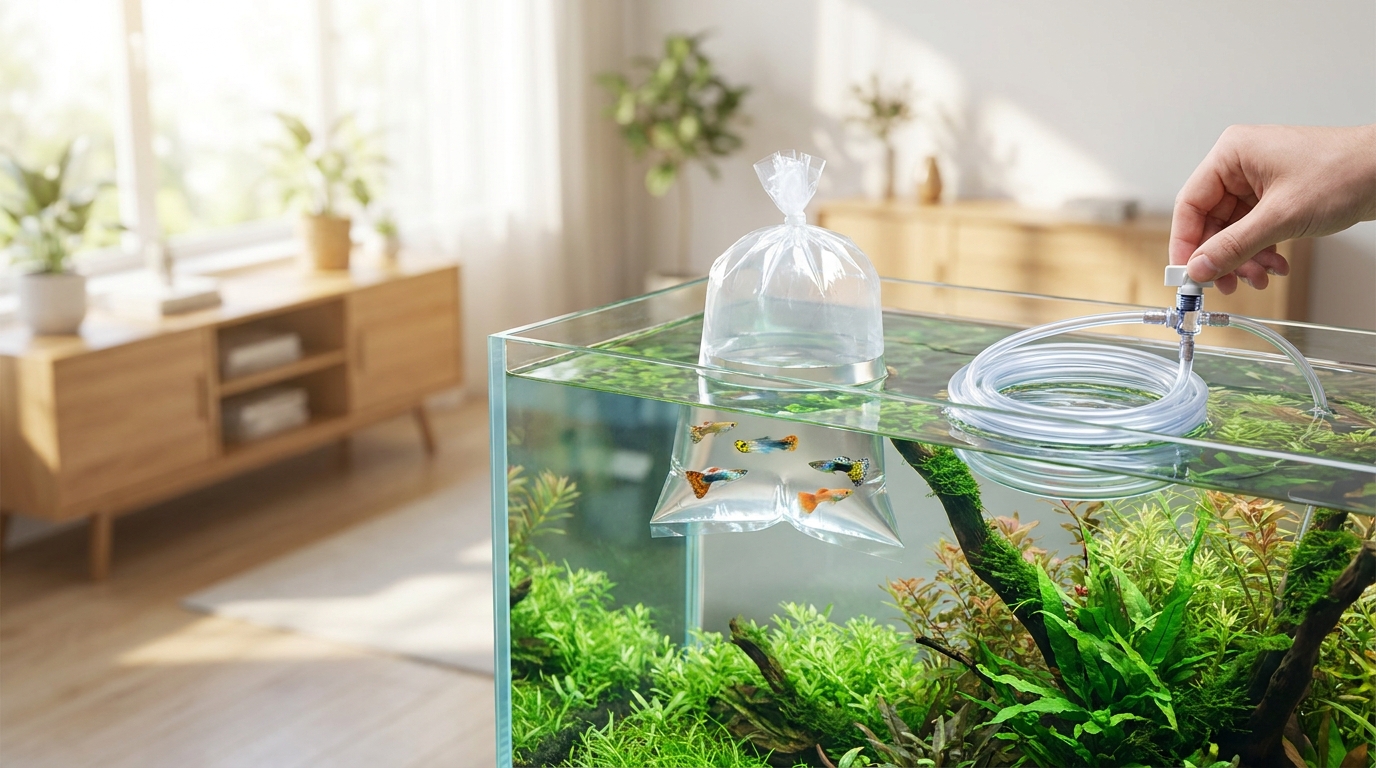
Keep the bag sealed while its temperature comes closer to the prepared aquarium. Avoid prolonged floating.
Transfer cleanly
Move the guppies with a clean net or suitable cup and discard the shipping water outside the aquarium.
| Item | Recommended condition | Why it matters |
|---|---|---|
| Destination tank | A mature, cycled quarantine aquarium | Protects established fish and makes observation easier. |
| Ammonia and nitrite | 0 ppm before arrival | Newly shipped fish need stable, clean water rather than a cycling tank. |
| Lighting | Dim during unpacking and initially after transfer | Reduces sudden visual stress after a dark shipping box. |
| Shipping water | Do not add it to the aquarium | It may contain accumulated waste and should remain separate from the destination tank. |
| First feeding | A very small amount after fish are upright and responsive | Overfeeding immediately after transit can foul water and add stress. |
Prepare before the box arrives
Guppy acclimation starts with a stable quarantine tank
Do not wait until delivery to cycle a tank, find a heater, or test water. A simple setup prepared in advance is safer than an elaborate setup assembled during an emergency.
- Cycle the quarantine aquarium and confirm ammonia and nitrite are zero.
- Set a stable temperature appropriate for guppies and verify it with a thermometer.
- Use conditioned water, functioning filtration, and gentle surface movement for oxygen exchange.
- Prepare a clean net, specimen cup, bucket, towel, thermometer, and water test kit.
- Keep quarantine equipment separate from equipment used in established aquariums.
- Monitor tracking and arrange for someone to receive the shipment immediately.
- Review the Guppy Live Arrival Guarantee & DOA Policy and keep a phone ready for sealed-bag photos or video.
Important before opening any bag
If a fish appears deceased or a bag is leaking, complete the evidence required by the DOA claim process before opening, discarding, or altering the bag. The original sealed-bag condition may be necessary to review the claim.
Step by step
How to acclimate guppies after shipping
These instructions are written for shipped freshwater guppies. Order-specific instructions from HiGuppy take priority when provided.
Bring the box indoors and lower the lights
Move the package to a quiet, temperature-stable room immediately. Turn off or dim the aquarium light before unpacking. Open the outer shipping box carefully, but do not open the fish bags yet.
Goal: reduce environmental shockInspect and document every sealed bag
Before acclimation, look for normal movement, upright posture, bag damage, leaks, unusual water condition, and any fish that appears unresponsive. Photograph the full sealed bag, fish, label, box, and packing when a live-arrival issue may apply.
Do not discard packaging until every fish has been inspected and the arrival condition is clear.
Goal: protect the fish and preserve claim evidenceNeed help with an arrival issue?
Follow the DOA claim steps exactly. Opening an affected bag too soon may make the required evidence impossible to provide.
Equalize temperature with the bag still sealed
Float the unopened bag in the quarantine aquarium or otherwise place it in a controlled environment until the bag water is close to the tank temperature. This often takes roughly 10–20 minutes, but temperature—not a rigid timer—is the better guide.
Avoid direct light, repeated handling, and extended floating. Do not open the bag merely to “give the fish air” while you continue preparing the tank.
Goal: gradual temperature transition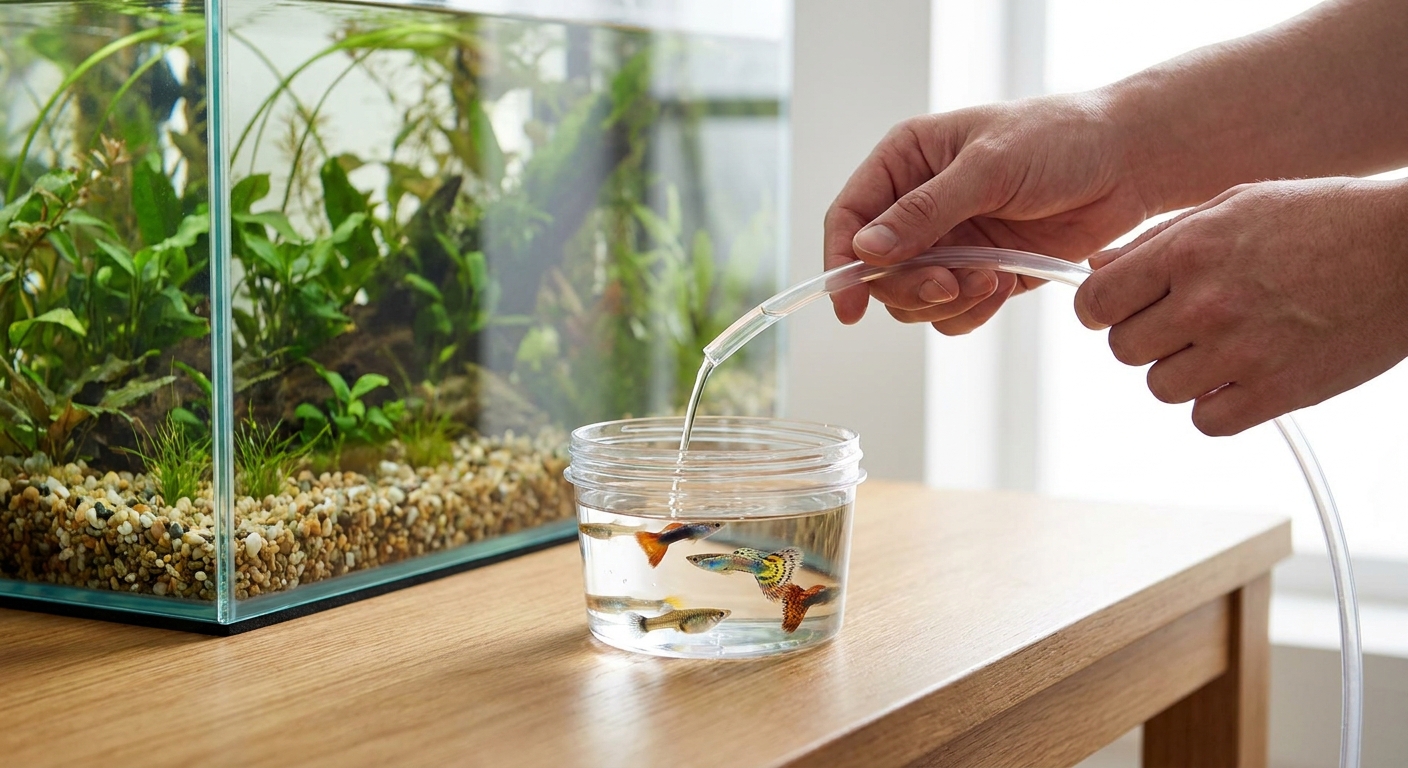
Open once, then transfer promptly into clean water
When the destination tank is ready and the temperatures are close, open the bag and gently move the guppies with a soft net or a clean specimen cup. Keep handling brief and calm.
Do not pour shipping water into the quarantine aquarium. Water chemistry in a transport bag can change after it is opened, so do not leave shipped guppies sitting in opened bag water for a long, automatic drip-acclimation routine unless HiGuppy gives order-specific instructions.
Goal: a clean, efficient transfer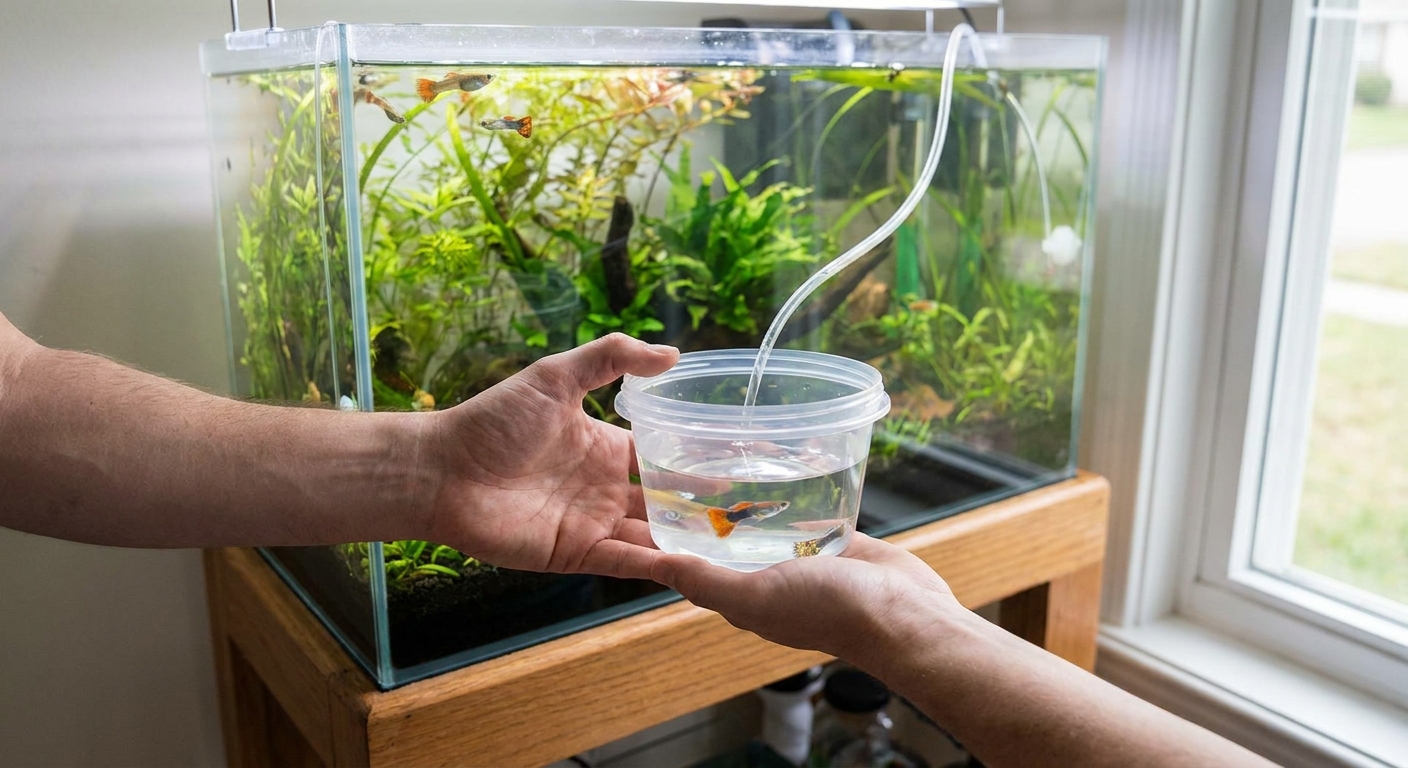
Let the guppies settle in quarantine
Keep lighting low, flow gentle, and the tank covered. Observe breathing, balance, posture, fin position, and interactions without chasing the fish. Avoid unnecessary netting, large unmeasured water-chemistry corrections, or preventive medication combinations.
Offer only a small amount of food after the fish are upright, responsive, and exploring normally. Remove uneaten food and keep water quality stable.
Goal: recovery with minimal disturbanceWhat may be temporary
Pale color, hiding, cautious swimming, or reduced appetite can occur after a dark, stressful trip. Stability and observation are usually more helpful than changing several things at once.
Method choice
Should you drip-acclimate shipped guppies?
Not automatically. Slow water mixing can be useful for some short local transfers or when a seller provides a specific protocol, but a long drip after opening an overnight shipping bag can keep fish in deteriorating transport water longer than necessary.
For a HiGuppy shipment
Complete sealed-bag inspection first, match temperature while sealed, then make a prompt, clean transfer unless your order includes different instructions.
For fish from another source
Ask the seller how long the fish traveled and what acclimation method they recommend. Do not assume a local-store routine is appropriate for every shipped fish.
Aftercare
What to do during the first 24–48 hours
The transfer is only the beginning. Stable water, low stress, and careful observation help you notice problems early without overwhelming the fish.
Keep lights low. Confirm the fish can remain upright, breathe steadily, and move away when gently approached.
Test temperature and water quality, avoid major changes, and offer only a tiny feeding if the fish appear settled.
Watch appetite, fins, color, breathing, waste, isolation, and aggression. Record photos and test results if a concern develops.
Do
- Use a quarantine tank before introducing new guppies to an established collection.
- Keep temperature and water quality steady.
- Maintain gentle oxygenation and provide cover.
- Separate weak fish from aggressive tankmates when needed.
- Keep notes, photos, and water-test results if behavior worsens.
Avoid
- Pouring shipping water into the aquarium.
- Adding guppies to an uncycled or newly assembled tank.
- Overfeeding on arrival day.
- Mixing multiple medications “just in case.”
- Making several large parameter changes without measurements.
Contact support promptly for severe or persistent distress
Reach out if a fish cannot remain upright, repeatedly gasps despite adequate oxygenation, shows major injury, or continues to deteriorate. Include your order number, delivery time, clear photos or video, tank size and age, temperature, ammonia, nitrite, nitrate, filtration, tankmates, acclimation steps, and observed signs. For urgent medical concerns, contact a qualified aquatic veterinarian.
Frequently asked questions
Guppy acclimation FAQ
How long should I acclimate shipped guppies?
Use temperature rather than a rigid total time. For many shipments, bringing the sealed bag close to the quarantine tank temperature takes roughly 10–20 minutes. Once the bag is opened, transfer the fish promptly instead of leaving them in shipping water for an extended period.
Can I add shipped guppies directly to my display tank?
A separate quarantine aquarium is strongly recommended. It lets the guppies recover and be observed without immediately exposing an established collection to possible disease or parasites.
Why do guppies look pale after shipping?
Darkness, transit stress, cooler or warmer conditions, and a new environment can temporarily mute color. Keep conditions stable and observe. Persistent color loss combined with abnormal breathing, balance, or posture deserves prompt attention.
When should I feed newly arrived guppies?
Wait until they are upright, responsive, and swimming normally, then offer a very small amount. Remove leftovers. A reduced appetite shortly after shipping can be temporary.
What should I do if the shipping bag is leaking?
Bring the package indoors, photograph the unopened leaking bag and full package immediately, and follow the live-arrival claim instructions. Prepare the quarantine tank for a prompt transfer once the required evidence is complete.
Should I add salt or medication during acclimation?
Do not automatically combine salt, antibiotics, antiparasitic products, or other medications during arrival. Use a measured, reasoned treatment plan based on observed signs and the needs of the fish.
Continue preparing
Related HiGuppy care and shipping resources
Prepare first, then welcome your new guppies with confidence
Set up quarantine, save this guide for delivery day, and review HiGuppy’s shipping policies before placing an order.
This guide is intended for freshwater guppies shipped by HiGuppy. Order-specific instructions and the current live-arrival policy take precedence. Aquarium care information is educational and is not a substitute for veterinary diagnosis or treatment.