The HiGuppy Journal
Blue Mosaic Guppy Strain Guide: Color, Pattern, and Care

The blue mosaic guppy combines blue-toned color with a patterned tail, making it an appealing choice for a display aquarium or a carefully planned breeding project. The useful question when choosing one is what the particular fish and line actually look like. A strain name alone cannot establish health, parentage, or the appearance of future offspring.
This guide explains how to assess the pattern, read a listing, and prepare suitable care without treating every fish sold as Blue Mosaic as identical.
What Makes a Blue Mosaic Guppy Stand Out
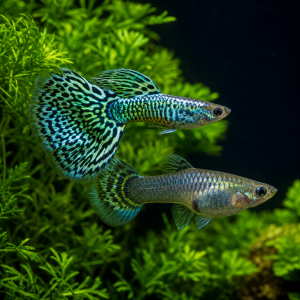
Use Blue Mosaic as a hobby description rather than a scientific classification or a promise of one fixed appearance. In this guide, the name refers to fancy guppies offered for blue-toned coloration and mosaic-style tail markings. Names and additional labels can vary between sellers, so check how each breeder describes the fish.
Look at the arrangement of the tail markings as well as the amount of blue. Are there separate spots, connected dark areas, or a mixture? Can you distinguish the pattern when the fish moves? Which part of the body is blue, and which is silver or another color? These are useful comparison questions, not universal grading rules.
For a concrete example of variation, breeder Terry Aley documented an experimental Blue Mosaic cross with a metallic-looking body and spotted tail. He explicitly described his line as unstable. That observation concerns his own fish; it should not be generalized to all Blue Mosaic lines.
Male and Female Appearance
Male guppies are generally smaller and more colorful than females. Mature males have a modified anal fin called a gonopodium; females have a triangular anal fin. These are general guppy traits described in OATA’s guppy care sheet.
Do not assume the female in a breeding set will resemble the photographed male. Ask to see both sexes from the offered line. If the listing shows an adult but offers juveniles, request their approximate age, current appearance, and the seller’s basis for identifying their sex.
Assess the Fish Behind the Photograph
A striking photograph is a starting point. Before choosing a pair, trio, or group, clarify whether the images show the exact fish, representative stock, or parents. A parent photograph can illustrate the seller’s goal without documenting the fish you will receive.
Request a recent, normally lit side-view video when practical. It gives you more opportunity to assess movement and changing views of the tail than a single frame. Compare fish under similar lighting where possible: camera processing, background, and illumination can make two listings difficult to judge fairly.
Look beyond the most saturated patch of blue. OATA’s buying guidance emphasizes intact fins, normal swimming, and steady breathing, and warns against buying from a tank containing sick fish. A photograph cannot rule out disease.
If a seller uses terms such as premium, breeder grade, or show quality, ask what those words mean in that listing. Request evidence relevant to your goal. For a display, that may be current footage and a clear description. For breeding, it includes the line’s history and observations of its offspring.
Ideal Tank Conditions
Prepare a cycled aquarium before bringing the fish home. Test rather than relying on clear-looking water: ammonia and nitrite should be zero. Condition replacement tap water for chlorine and chloramine, and follow nitrate trends through routine testing and maintenance. These principles come from OATA’s freshwater water-quality guidance.
Guppies generally suit neutral to alkaline, medium-hard water. Maintain a steady, suitable temperature. Provide filtration, gentle current, swimming space, and safe cover without sharp edges. Choose compatible companions that will not nip their fins. In mixed-sex groups, females need relief from male attention; stocking choices must also account for reproduction. See OATA’s care recommendations.
Ask about the seller’s water conditions and compare them with your tested aquarium. There is no reason to invent a separate water recipe from the Blue Mosaic name. Use the Guppy Care Guide for setup details and the quarantine guide to plan separate observation before mixing new arrivals with established fish.
Feeding for Color and Condition
Build feeding around an appropriately sized aquarium staple rather than a promise of stronger blue. Offer portions the fish can eat, and observe whether every fish gets access. The Merck Veterinary Manual’s fish nutrition guidance supports flake or pellet feeding, monitoring body condition, and preventing uneaten food from polluting the water.
Judge a feeding routine by appetite, condition, and waste. Buying several products labeled for color does not establish that they meet a particular fish’s needs. If you change foods, record what the fish actually accepts before making another change.
Breeding Selection and Offspring Planning
Decide whether your goal is simply to keep attractive fish or to maintain a documented line. Breeding needs room for adults, growing youngsters, and separation. The IFGA’s introduction to show breeding emphasizes planning around available tank space and selecting fish with sound body and fin structure. Color should not outweigh the ability to swim and feed normally.
Ask how the offered females were raised and whether they previously lived with males. Research on female sperm storage in guppies confirms that females can retain sperm. Consequently, pairing a purchased female with your chosen male does not by itself establish the father of her next brood.
Keep records of the source, pairing, birth dates, and photographs of developing offspring. Ask the breeder what variation they have actually observed instead of requesting a guaranteed percentage of blue offspring. A shared strain label is insufficient evidence for such a prediction.
Before breeding, arrange grow-out capacity and responsible homes for fish you will not retain. Less-preferred markings do not make a fish disposable. Never release aquarium fish outdoors. The fry grow-out guide covers the next stage in more detail.
Quick Buying Checklist
Before ordering Blue Mosaic guppies, confirm:
- Whether photographs show the offered fish, representative examples, or parents.
- The number of fish, sex composition, and approximate age or size.
- What pattern and color variation the seller expects in this particular group.
- The meaning of any grade label and what evidence supports it.
- Current care conditions, accepted foods, and any disclosed health concerns.
- Whether your aquarium and separate observation setup are ready.
- The current delivery arrangements and arrival terms for your destination.
Keep the answers with your order details. They provide a clearer reference than trying to reconstruct a conversation from memory when the fish arrive.
Frequently Asked Questions
Are blue mosaic guppies beginner friendly?
They can be a reasonable choice for a prepared beginner. Start with a manageable group and a cycled aquarium. The IFGA’s beginner guidance also stresses preparing before the fish arrive and choosing stock carefully.
Do blue mosaic guppies need a planted tank?
Live plants are optional. Safe cover and swimming space still matter, and plants do not replace filtration or water testing.
Will juveniles look exactly like the pictured adults?
Do not assume an exact match. Ask whether the image is an adult reference and what the seller has observed as this particular line develops. A reference picture is not an individual color guarantee.
Does the name prove a pure or show-standard strain?
No. Request breeding records for parentage claims. For exhibition goals, check the relevant association’s current classes and judging requirements rather than treating a retail name as an award or certification.
Choosing fish for your aquarium or retail store? Review HiGuppy’s current listings and ask about the offered group before ordering.
Related HiGuppy resources: Guppy Care Guide · Acclimation Guide · Shipping Policy · DOA Policy · Our Fish Quality · Shop Guppies
For a broader comparison, browse the Guppy Strains and Types overview.
Behind the care guides
Care begins with steady systems
Our guppy guides focus on practical routines: keep water stable, observe fish closely and allow for natural variation.

Care systems
Steady water, thoughtful care
Gentle filtration and regular observation support healthy aquarium routines.

Natural variation
Every guppy is different
Color, size and fin shape vary with strain, age and each individual fish.
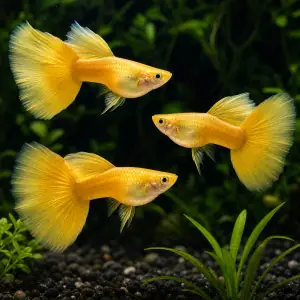
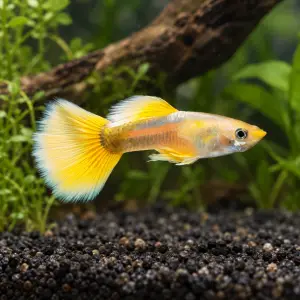
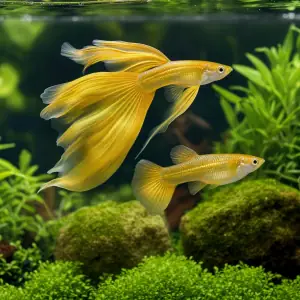
Editorial illustrations for context; they do not depict HiGuppy's exact facility or current fish stock.