The HiGuppy Journal
Can Guppies Live With Zebra Danios? 7 Expert Tank Mate Tips
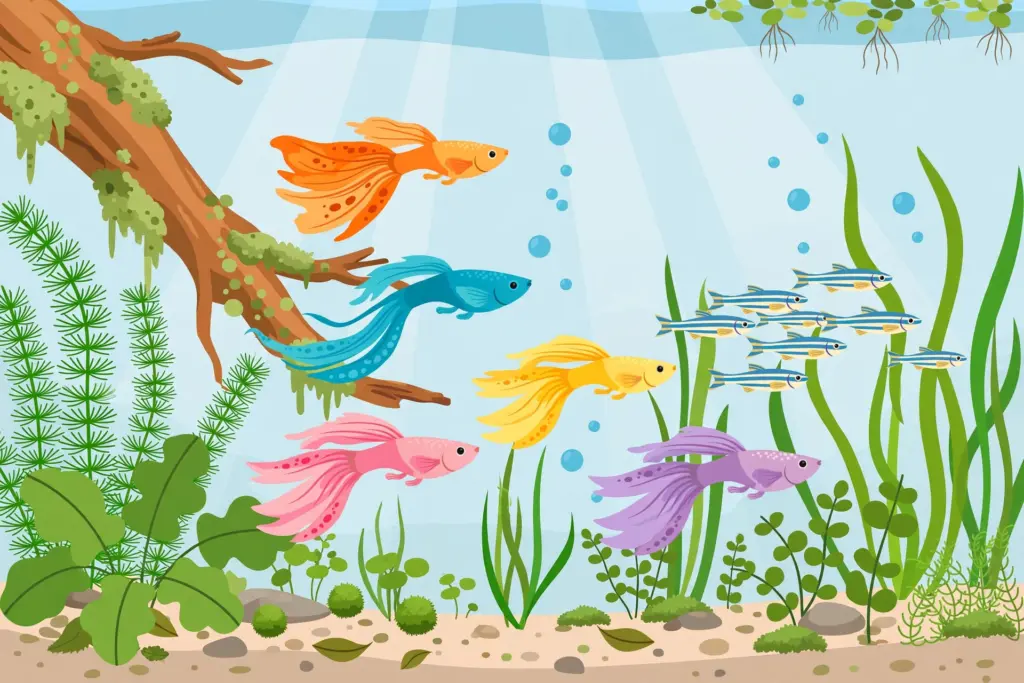
Quick answer: Yes — can guppies live with zebra danios in the same community tank, as long as the tank is at least 20 gallons, the danios are kept in a school of six or more, and there are plenty of plants and hiding spots. The main risks are fin nipping on fancy guppy tails and feeding competition, because danios are much faster swimmers.
So, can guppies live with zebra danios? It is one of the most common questions in community tank planning: both fish are hardy, affordable and beginner-friendly. In practice, the pairing works well — but only if you understand where their needs overlap and where they clash. This guide covers the shared water parameters, the tank size and layout that keeps the peace, feeding, and the warning signs that the combination is not working.
Can Guppies Live With Zebra Danios? The Short Answer
Yes, guppies and zebra danios can live together peacefully in a well-planned community aquarium. Both are peaceful, schooling-friendly fish that tolerate a wide range of water conditions, and their preferred temperature ranges overlap comfortably around 72–77°F (22–25°C). The combination is popular precisely because it works in most cases.
That said, “can live together” is not the same as “will always get along”. Danios are fast and constantly moving, while fancy guppies — especially long-tailed males — are slower swimmers. That speed gap creates two risks: fin nipping and feeding competition. Both are manageable, as explained below.
For the full range of compatible species, see our guide to the best tank mates for guppies.
Guppy vs Zebra Danio: Key Differences at a Glance
Understanding the two species side by side is the fastest way to see where conflicts can arise. The table below compares their core care requirements.
| Feature | Guppies (Poecilia reticulata) | Zebra Danios (Danio rerio) |
|---|---|---|
| Adult size | 1.5–2.5 inches (4–6 cm) | 1.5–2 inches (4–5 cm) |
| Temperature | 72–82°F (22–28°C) | 64–77°F (18–25°C) |
| Shared temperature sweet spot | 72–77°F (22–25°C) | |
| pH range | 6.8–7.8 | 6.5–7.5 |
| Water hardness | Moderately hard water preferred (8–12 dGH) | Soft to moderately hard (5–12 dGH) |
| Ammonia / nitrite | 0 ppm at all times; nitrate kept below 20 ppm | |
| Temperament | Peaceful, slow-moving, social | Peaceful but very active and fast |
| Schooling needs | Groups of 3 or more; mixed-sex groups breed constantly | Schooling fish — keep 6 or more, ideally 8–10 |
| Swimming level | Top and middle water column | Top and middle water column |
| Diet | Omnivore; flakes, small pellets, frozen foods | Omnivore; flakes, micro pellets, small live/frozen foods |
| Lifespan | 2–3 years | 3–5 years |
| Main risk in a mixed tank | Fin nipping on long tails; out-competed at feeding time | Stress and nipping if kept in too small a group |
The overlap is clear: both species thrive in the same temperature window and eat the same foods. The differences that matter are behavioural — speed, activity level and schooling needs.
What Tank Size Do Guppies and Zebra Danios Need Together?
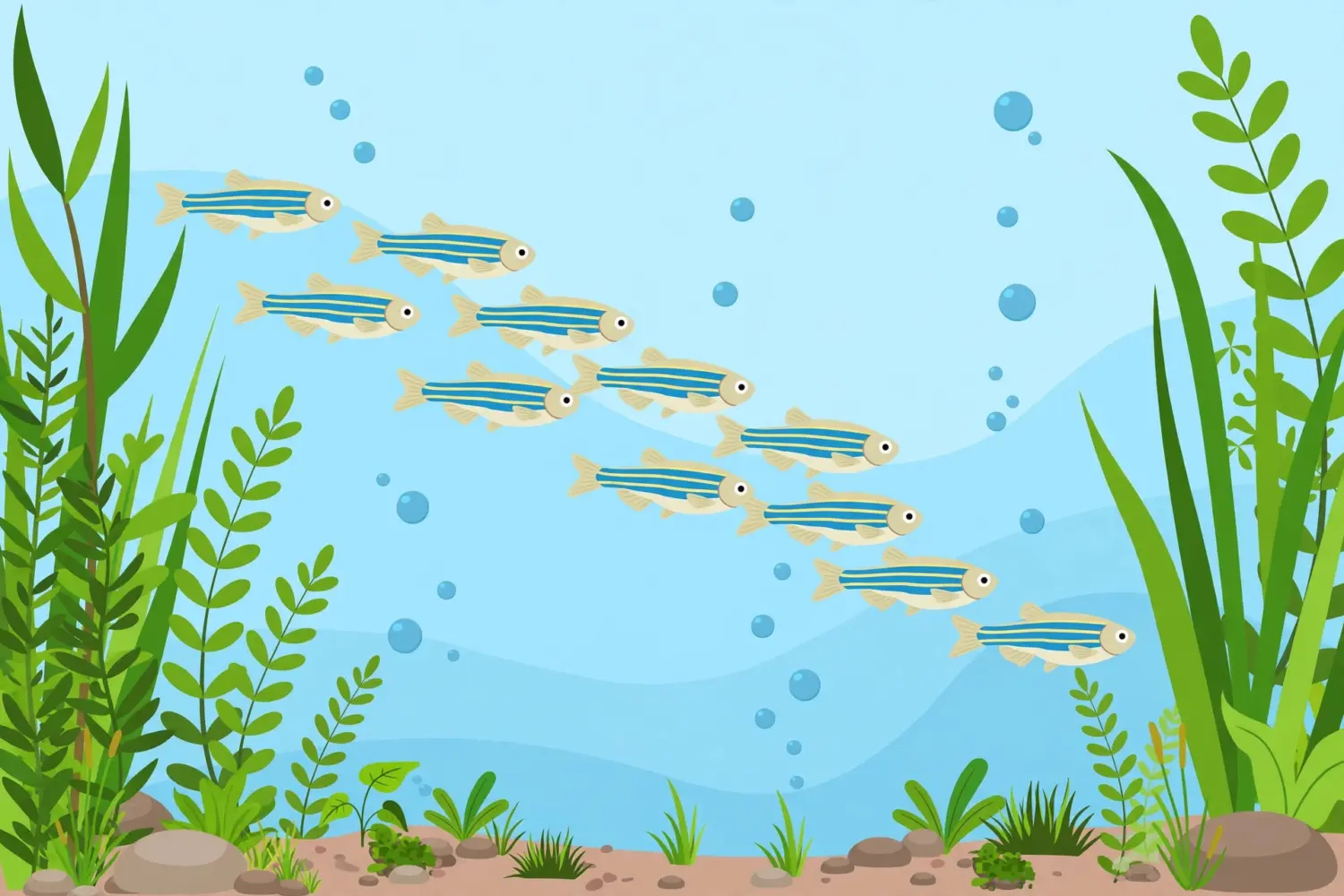
A 20-gallon long tank is the minimum for a mixed guppy and zebra danio community, and a 29-gallon or 40-gallon tank is better. The reason is not bioload alone — it is space for two active species that both use the top and middle of the water column.
Zebra danios are horizontal swimmers. They need length more than height so they can dart, chase and school without constantly bumping into the glass or into slow-moving guppies. A 20-gallon long (30 inches / 76 cm) gives them that runway; a tall 20-gallon does not.
A sensible stocking plan for a 20-gallon long tank
- 6–8 zebra danios — never fewer than six; a proper school spreads their energy among themselves instead of toward the guppies.
- 4–6 guppies — ideally one male to two or three females, or an all-male group if you want to avoid fry.
- Optional bottom dwellers — a small group of corydoras or a single bristlenose pleco uses the bottom level and adds no competition at the surface.
Remember that guppies breed prolifically. A mixed-sex group in a planted 20-gallon tank will produce fry within weeks. Plan for that growth, or keep males only. Overstocking is the fastest way to turn a peaceful mixed tank into a stressed one.
Water Parameters: Finding the Overlap
Water chemistry is the easiest part of this pairing, and it is a big reason can guppies live with zebra danios is such a popular question with a happy answer. Keep the tank in the shared window and both species will thrive.
- Temperature: 72–77°F (22–25°C). Set the heater to 74–75°F (23–24°C) as a comfortable middle ground.
- pH: 7.0–7.5 suits both species and is easy to maintain with regular water changes.
- Hardness: 5–12 dGH, with moderately hard water suiting guppies especially well.
- Ammonia and nitrite: 0 ppm, always. Both species are hardy, but neither tolerates ammonia or nitrite spikes.
- Nitrate: below 20 ppm through weekly water changes of 25–30%.
Cycle the tank fully before adding either species, and add the danios first: they are slightly hardier, and an established school is less likely to harass newcomers. Add the guppies a week or two later.
Fin Nipping: The Biggest Risk and How to Prevent It
Fin nipping is the number-one concern with this pairing, and it almost always targets male fancy guppies with long, flowing tails. Danios are not naturally aggressive, but they are curious, fast and easily bored, and a trailing tail drifting past the school can trigger a nip — especially at feeding time or when danios are kept in too small a group.
How to reduce fin nipping
- Keep a proper danio school. Six is the minimum, eight to ten is better. A well-sized school keeps danios focused on each other.
- Choose short-finned guppies. Endler’s guppies, wild-type guppies and short-fin females are far less likely to be nipped than long-finned fancy males like delta tails or veil tails.
- Break up sightlines. Tall plants, driftwood and decorations create visual barriers so a chased guppy can disappear from view.
- Provide hiding spots. Dense plant thickets, especially fine-leaved plants such as java moss, guppy grass and hornwort, give guppies refuge and shelter fry.
- Feed enough, in more than one spot. Scatter food across the surface so danios cannot monopolise a single feeding point.
- Avoid overcrowding. A cramped tank raises stress and aggression in every species.
Check guppy tails daily during the first two weeks. A few tiny nicks that heal quickly are not a crisis, but ragged, shrinking or bloody fins mean persistent nipping — move either the fancy males or the danios to a separate tank.
Feeding Guppies and Zebra Danios Together
Both species are omnivores with similar diets, which makes feeding simple — but danios are dramatically faster and will reach the food first. The fix is distribution, not different food.
- Staple diet: high-quality tropical flakes or micro pellets, fed once or twice a day in amounts the fish finish within two to three minutes.
- Scatter widely: sprinkle food across the whole surface rather than in one spot, so guppies at the far end still get a share.
- Use sinking food too: a few sinking micro pellets give guppies a second chance once the surface frenzy settles.
- Supplement weekly: frozen daphnia, brine shrimp or mosquito larvae benefit both species, and the hunting behaviour keeps danios occupied.
- Add vegetables: blanched zucchini or spinach, offered occasionally, supports guppy digestion and gives both species something to graze on.
Do not overfeed to compensate for competition. Uneaten food fouls the water quickly, and poor water quality harms guppies far more than missing a few flakes. Watch during feeding for a week: every fish should be eating, and no guppy should look thin or hide constantly at feeding time.
The Best Tank Setup for Guppies With Zebra Danios
A good mixed tank is designed around one idea: open swimming space for the danios, plus dense cover for the guppies.
Layout
- Open centre: leave the middle of the tank clear so the danio school can swim in straight lines.
- Planted edges: place tall plants such as Vallisneria, Amazon sword and water wisteria along the back and sides.
- Floating plants: water lettuce or frogbit diffuses the light, calms both species and gives guppies shade near the surface.
- Fine-leaved cover: java moss or guppy grass in one corner creates a refuge and a nursery for fry.
- Hardscape: a piece of driftwood or a few smooth rocks breaks up sightlines without taking up swimming space.
Equipment
- Filter: a hang-on-back or canister filter rated for the tank size, with a gentle flow — strong currents exhaust long-finned guppies.
- Heater: a reliable adjustable heater set to 74–75°F (23–24°C), with a thermometer to verify it.
- Lid: a tight-fitting lid is essential. Zebra danios are jumpers, and a startled school can clear an open-top tank.
- Lighting: moderate lighting on a 8–10 hour schedule supports plant growth without encouraging heavy algae.
- Substrate: fine gravel or sand; dark substrate makes the colours of both species stand out.
For more on pairing guppies with other small schooling fish, see our guide on whether guppies can live with rasboras — rasboras are slower and gentler than danios.
Which Guppies Are Safest With Zebra Danios?
Not all guppies cope equally well with fast tank mates. If you already keep danios, choose varieties that can hold their own.
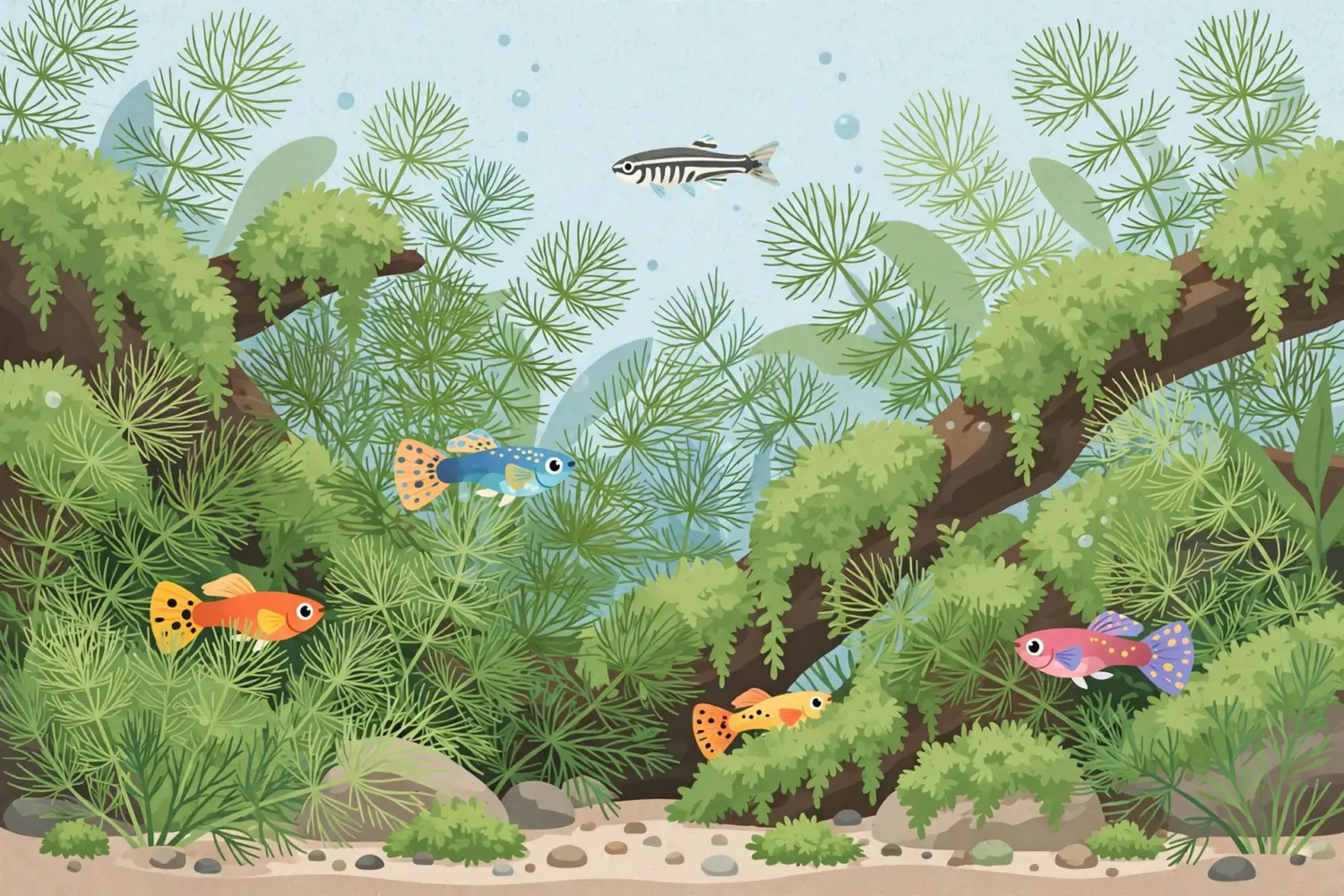
- Best choices: female guppies (short fins, faster swimmers), Endler’s guppies (small, quick, short-finned), and wild-type or feeder-type guppies.
- Workable with care: short-finned fancy males such as round-tail or short delta varieties, provided the tank is planted and the danio school is large.
- Avoid: long-finned fancy males — veil tails, large delta tails and ribbon fins — in tanks with boisterous danios, unless you are prepared to separate them at the first sign of nipping.
Behaviour to Expect in a Mixed Tank
A settled mixed tank is a busy aquarium. Danios school and dart across the open water most of the day, while guppies cruise the upper and middle levels, males displaying to females between feedings.
Some chasing is normal in the first days while hierarchies settle. Brief chases that end quickly are fine; a fish pursued relentlessly, hiding constantly, refusing food or showing clamped fins is stressed. Stressed guppies lose colour, stop eating and become vulnerable to disease.
Step-by-Step: Introducing Guppies to a Zebra Danio Tank
- Confirm the tank is cycled. Ammonia and nitrite must read 0 ppm, and nitrate should be below 20 ppm.
- Set the temperature to 74–75°F (23–24°C) and check that the heater holds it steady for at least 24 hours.
- Make sure the danio school is complete first — six or more fish, settled and feeding well.
- Rearrange a decoration or two before adding guppies, so no fish feels it owns the whole tank.
- Float the guppy bag for 15–20 minutes to equalise temperature, then drip-acclimate or add small amounts of tank water over 20–30 minutes.
- Release the guppies with the lights dimmed and feed both species lightly straight away, scattering food widely.
- Watch closely for the first two weeks. Check fins daily and test water parameters twice a week while the bioload adjusts.
- Have a backup plan. Keep a spare tank, breeder box or divider ready in case a guppy needs to be separated.
Quarantine new fish separately for at least 30 days as a general baseline before adding them to an established tank; longer may be needed depending on species, source and health concerns. Use dedicated equipment. Quarantine reduces exposure risk but cannot guarantee disease-free fish.
When Guppies and Zebra Danios Should NOT Share a Tank
Despite being broadly compatible, there are situations where the answer to “can guppies live with zebra danios” is no — at least in that particular tank:
- Small tanks: anything under 20 gallons gives danios too little swimming room and guppies nowhere to escape.
- Tiny danio groups: one to three danios become stressed and nippy; never keep them in such small numbers.
- Breeding projects: danios will eat guppy fry, and a tank full of long-finned show males deserves a calmer environment.
- Uncycled or unstable tanks: both species suffer when parameters swing, and guppies are the first to show it.
- Already-nippy danios: if your danios have a history of fin nipping, adding slow, long-finned guppies will end badly.
In these cases, keep the species in separate tanks or choose a calmer tank mate for your guppies, such as rasboras or corydoras.
Common Mistakes to Avoid
- Keeping only two or three danios. Small groups are the most common cause of nipping and stress.
- Using a tank under 20 gallons. It looks fine on day one and crowded within a month, especially once guppies start breeding.
- Choosing long-finned males for a fast tank. Beautiful tails are a target; choose short-finned varieties for mixed tanks.
- Feeding in one spot only. The fastest fish win, and the guppies slowly lose condition.
- Skipping the lid. Danios jump, and a single startled leap can be fatal.
- Adding both species to an uncycled tank. Ammonia spikes hit guppies hard and undo all the careful planning.
Frequently Asked Questions
Can guppies live with zebra danios in a 10-gallon tank?
It is not recommended. A 10-gallon tank is too small for a proper danio school of six or more plus guppies, and the lack of space increases nipping and stress. Can guppies live with zebra danios comfortably? Only in 20 gallons or more.
Will zebra danios eat guppy fry?
Yes. Zebra danios are opportunistic and will eat tiny fry they can catch, just as guppies themselves do. If you want to raise fry, use dense plant cover such as guppy grass or java moss, or move pregnant females to a separate breeding tank before they give birth.
Do zebra danios nip guppy fins?
They can, especially long, flowing fancy guppy tails. Nipping is most likely when danios are kept in groups smaller than six, when the tank is crowded, or during feeding. Keeping a full school, choosing short-finned guppies and planting heavily reduces the risk to a minimum.
How many zebra danios should I keep with guppies?
Keep at least six zebra danios, ideally eight to ten, alongside four to six guppies in a 20-gallon long tank or larger. A proper school keeps danios occupied with each other instead of bothering the guppies.
What temperature is best for guppies and zebra danios together?
Aim for 72–77°F (22–25°C), with 74–75°F (23–24°C) as a middle ground. Guppies prefer 72–82°F and zebra danios 64–77°F, so the overlap keeps both healthy and active. For a broader overview of zebra danio care requirements, see the zebra danio care guide from The Spruce Pets.
The Bottom Line
Can guppies live with zebra danios? Yes — in a 20-gallon or larger tank, with a school of at least six danios, short-finned guppies, plenty of plants and hiding spots, and food scattered widely at feeding time. It fails only when the tank is too small, the school is too small, or long-finned guppies have nowhere to escape.
Set the tank up with those rules in mind and watch fins and feeding closely for the first two weeks. If you see persistent nipping, do not wait it out — separate the fish.
Behind the care guides
Care begins with steady systems
Our guppy guides focus on practical routines: keep water stable, observe fish closely and allow for natural variation.
Care systems
Steady water, thoughtful care
Gentle filtration and regular observation support healthy aquarium routines.
Natural variation
Every guppy is different
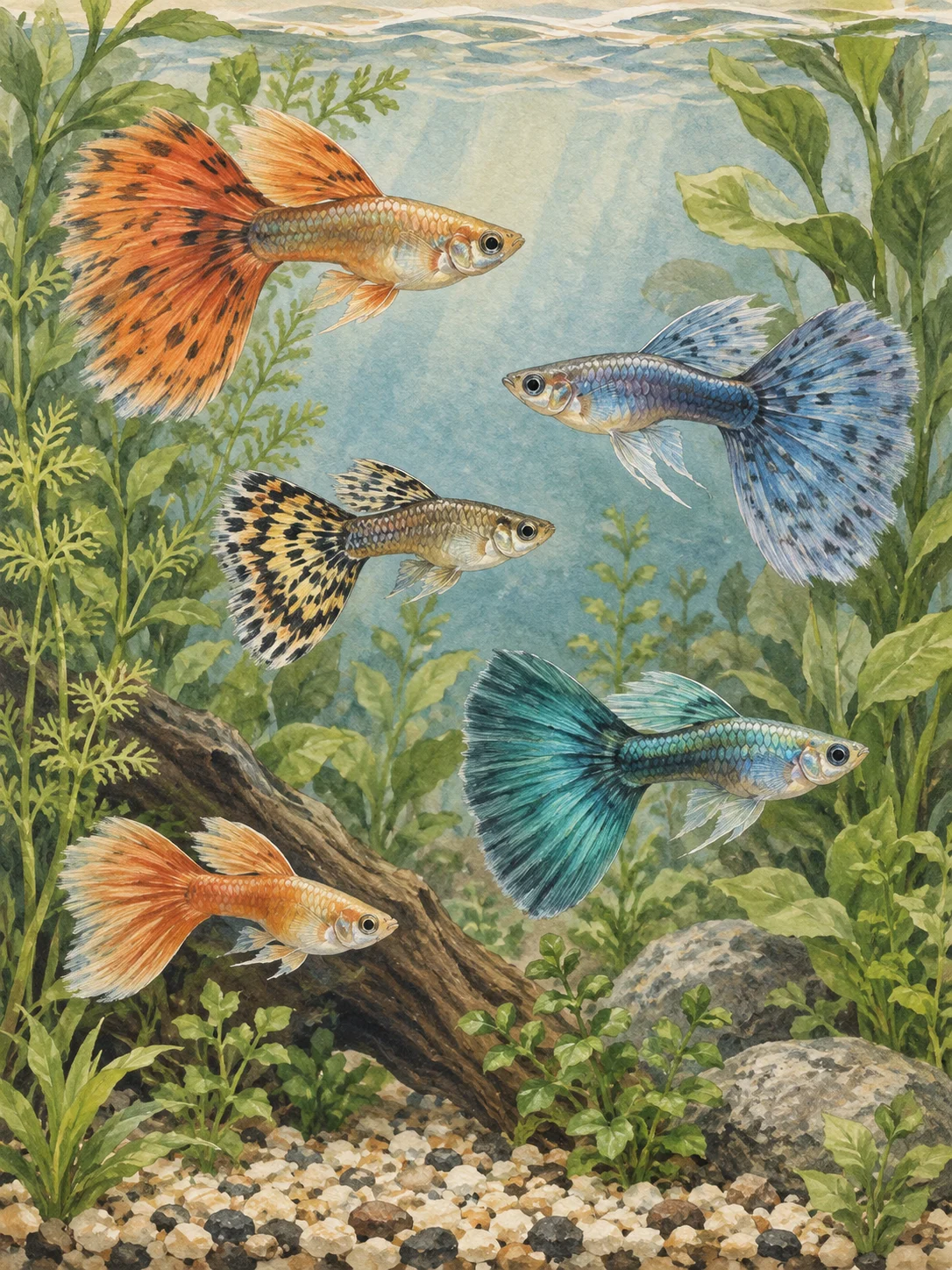
Color, size and fin shape vary with strain, age and each individual fish.
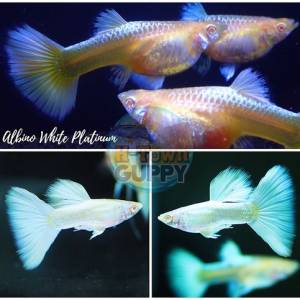
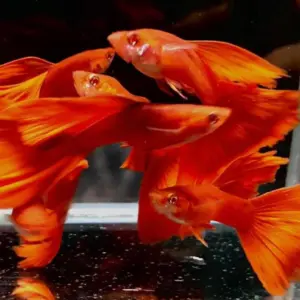
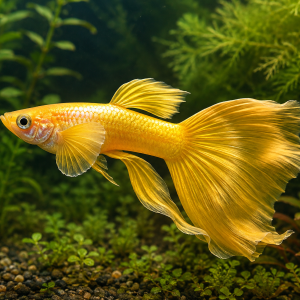
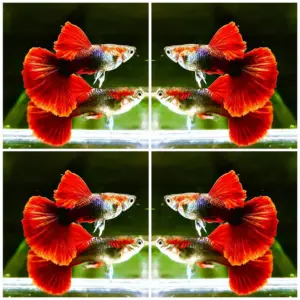
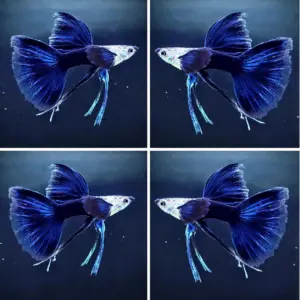
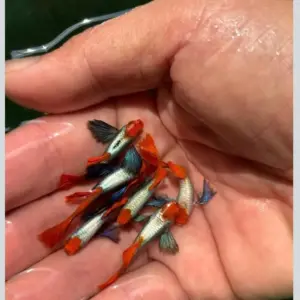
Editorial illustrations for context; they do not depict HiGuppy's exact facility or current fish stock.