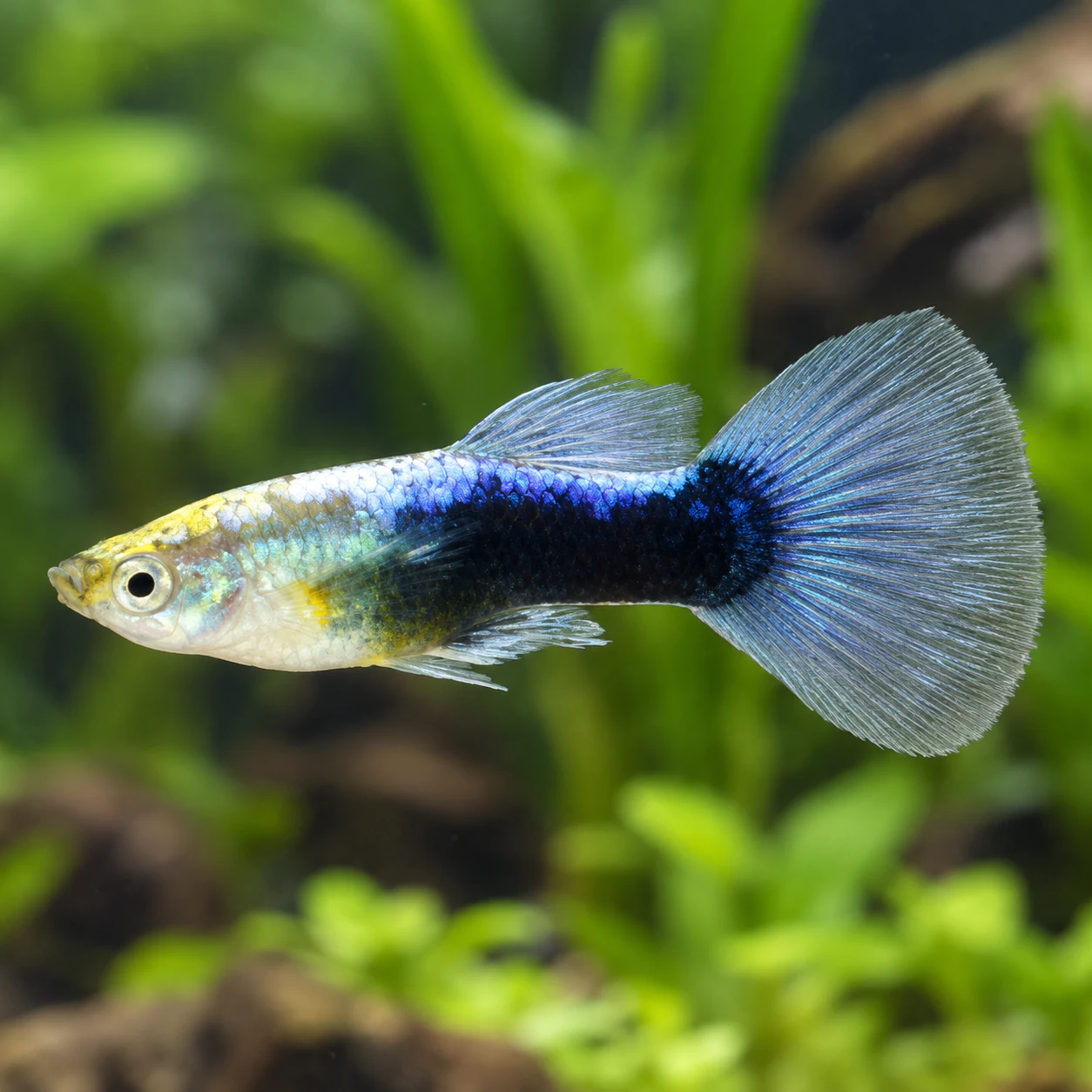
The HiGuppy Journal
Male Guppy Color Development: When Do Young Males Color Up?
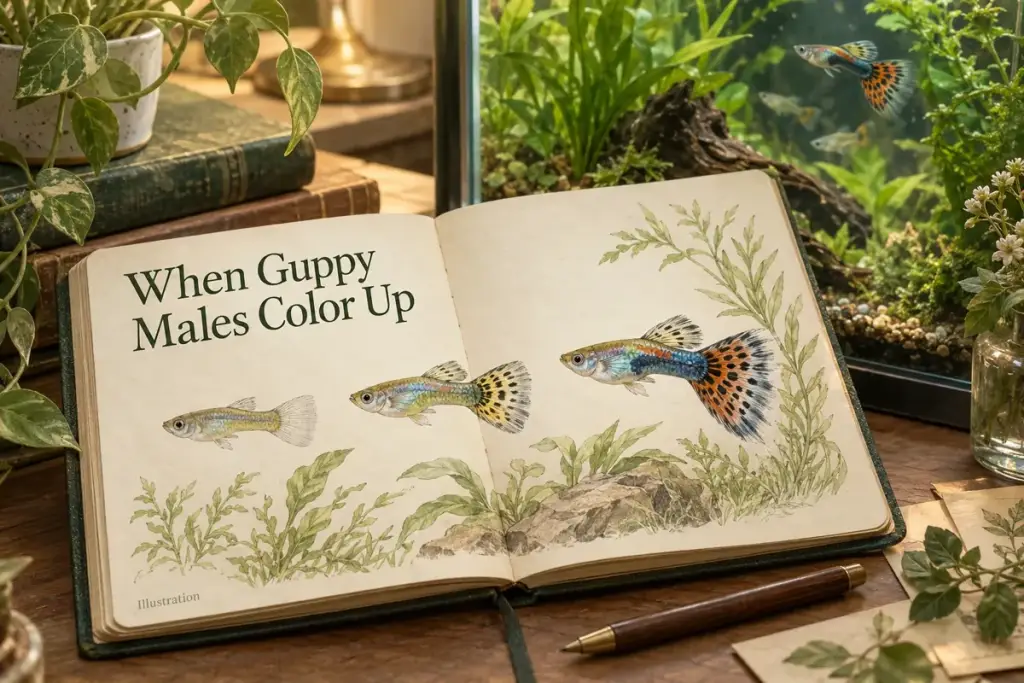
Male guppies typically begin to show ornamental color as they develop toward sexual maturity, but there is no dependable age when every strain colors up. Genetics and individual growth matter, and color may appear in stages. Assess a young male over time under consistent lighting; do not judge health or final breeder quality by color alone.
A plain-looking juvenile can still develop a pattern, and one fish’s timing should not become a deadline for its siblings. Stable care supports normal development, but it cannot make an uncolored young male display a particular trait.
What color development can look like
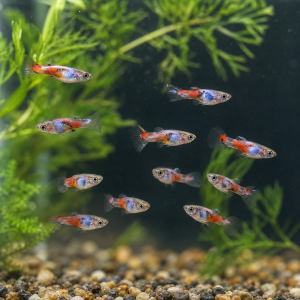
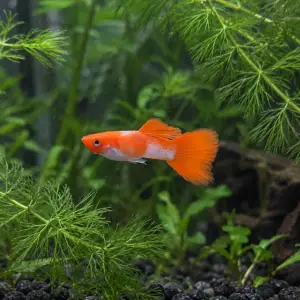
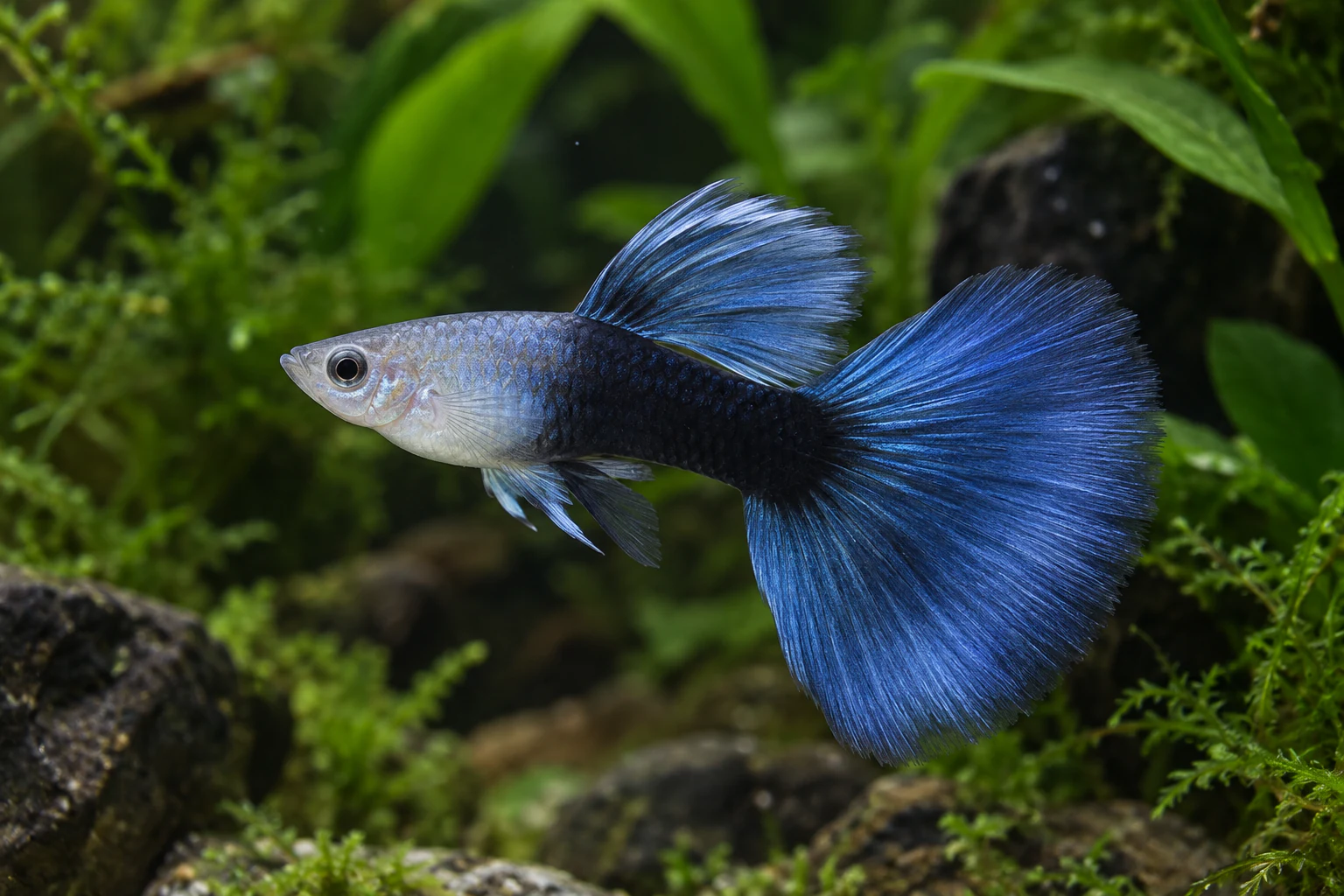
Male guppies can begin life with little obvious ornamental color, then develop body and fin markings as they mature. Follow the location and appearance of those markings on each fish. There is no need to assign every strain a fixed sequence or deadline for color.
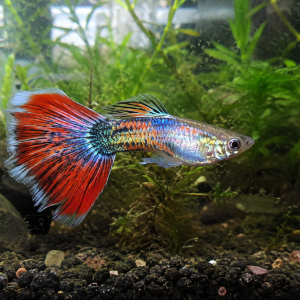
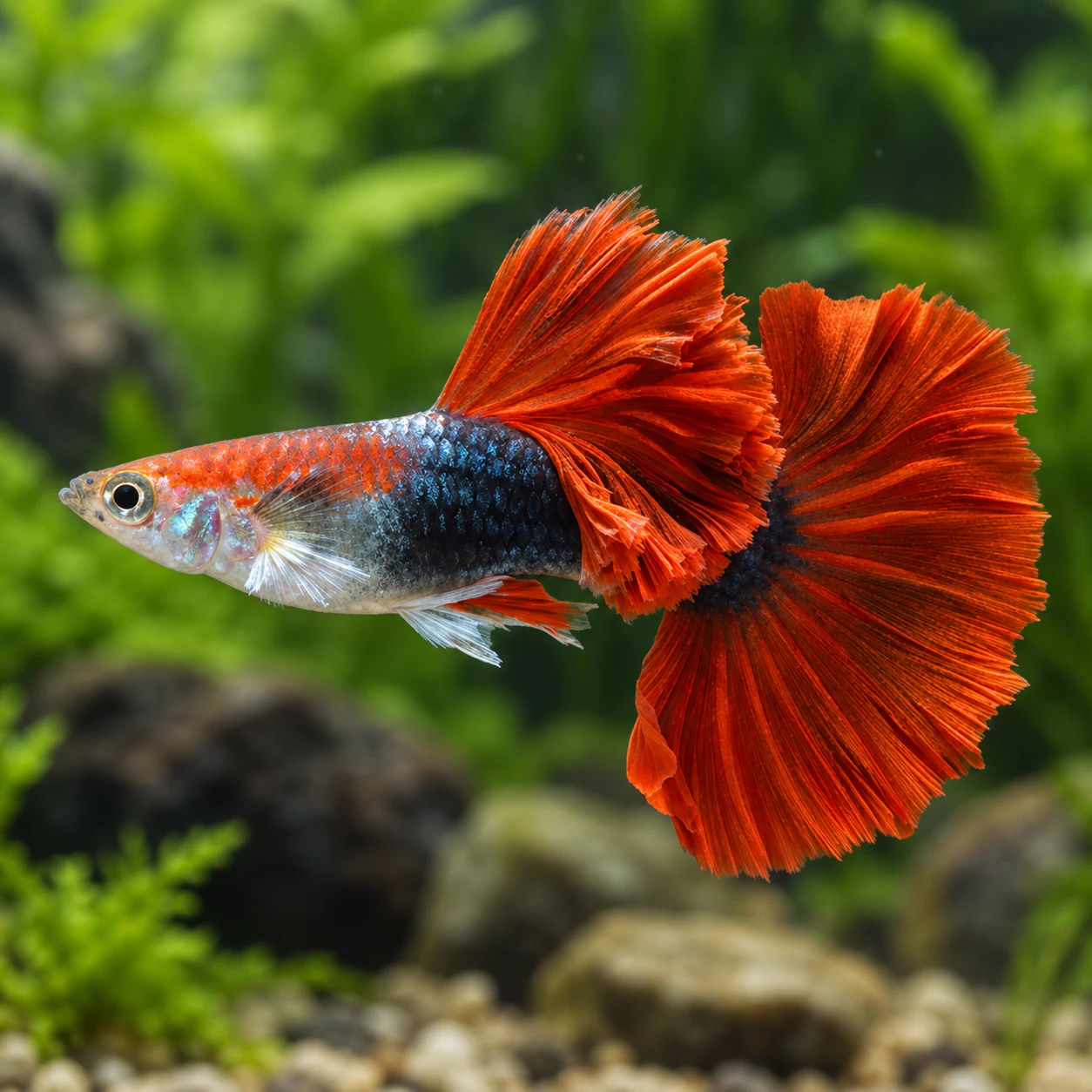
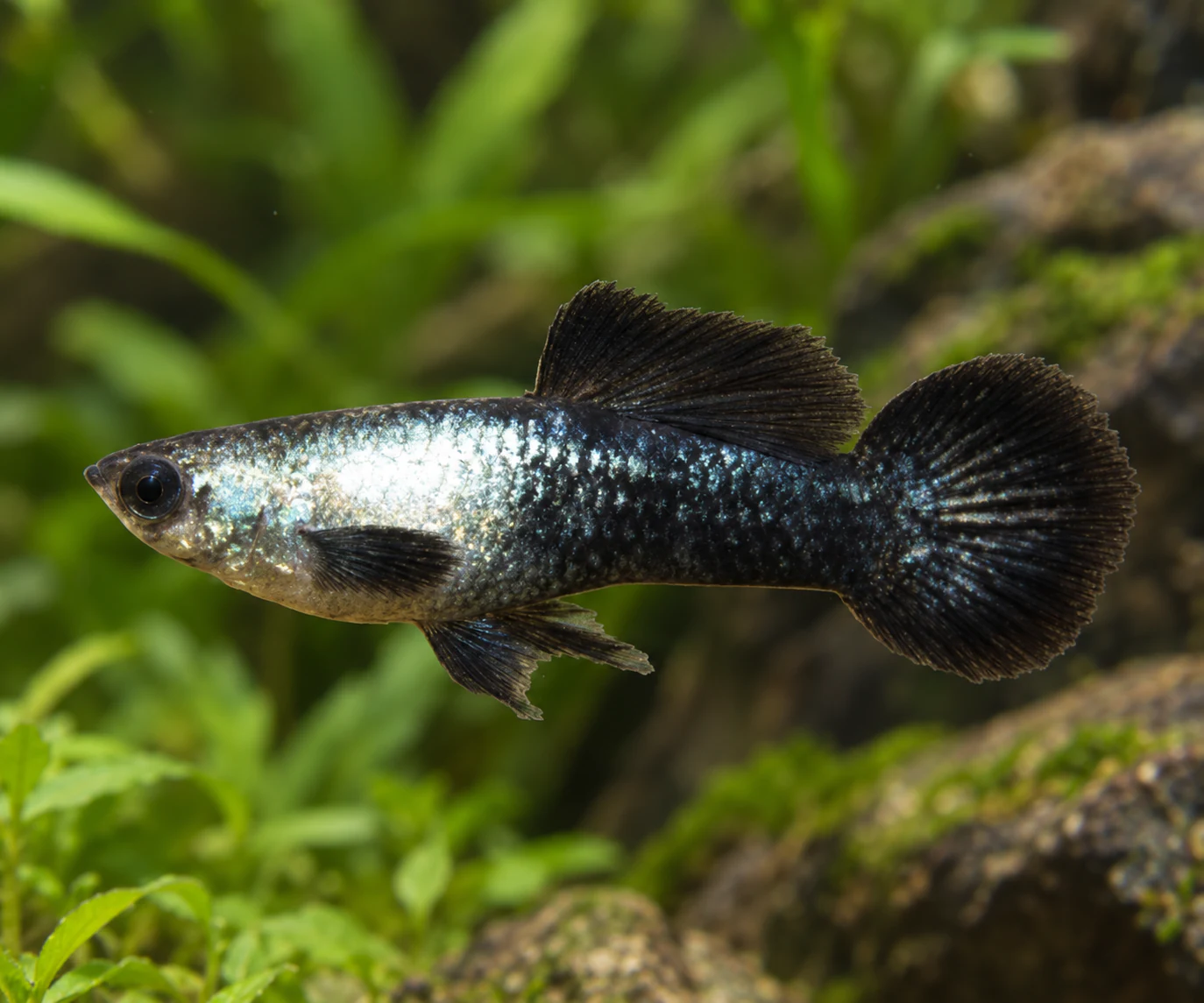
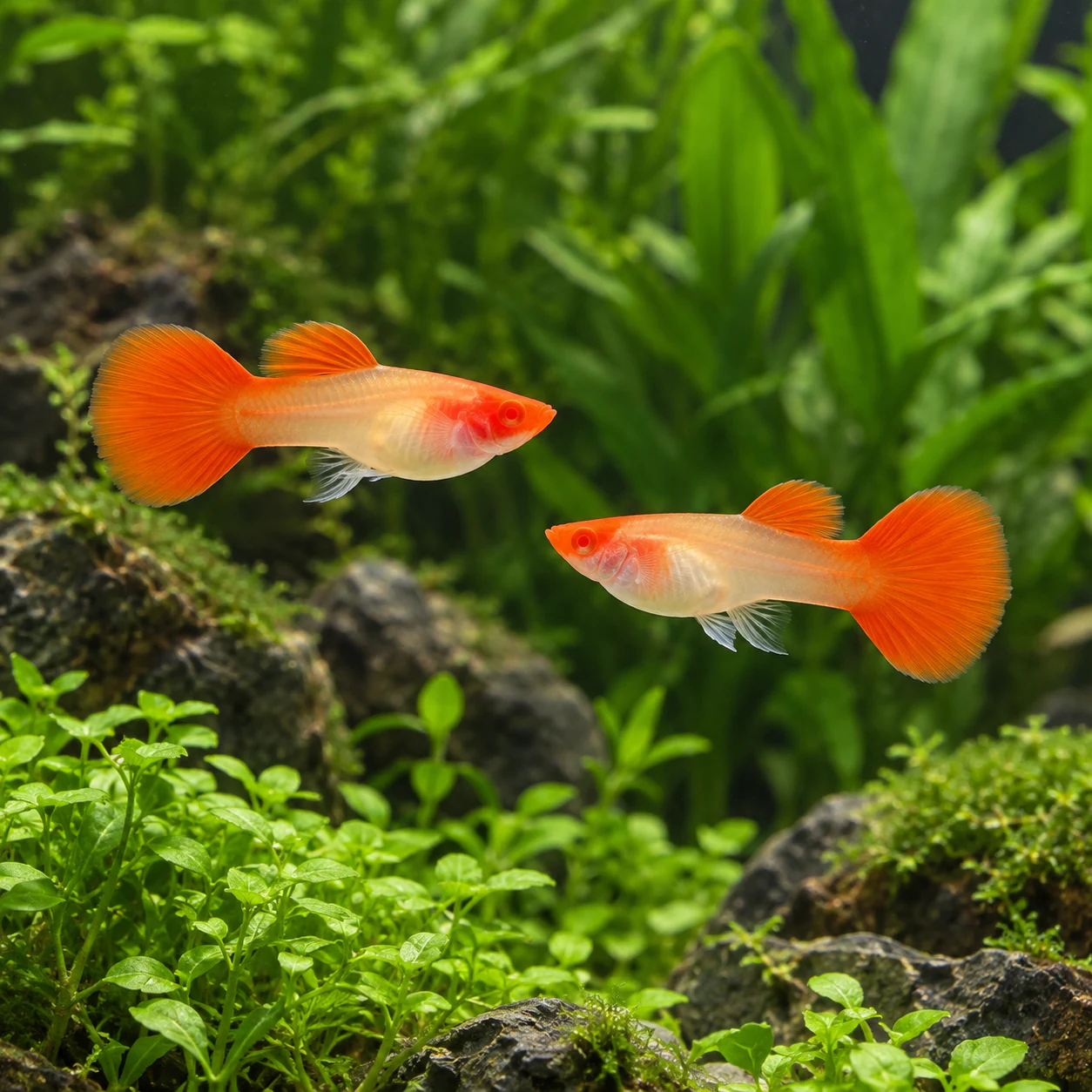
Other guppies may show color in a different location or pattern. A juvenile may develop body color before a dramatic tail pattern, or remain visually subtle longer than another fish in the same group. Compare the fish with its own earlier appearance rather than assuming every male must follow one visual schedule. The site’s guide to guppy pattern types and tail types can help describe what you see once a pattern is clearer.
Why there is no universal color-up age
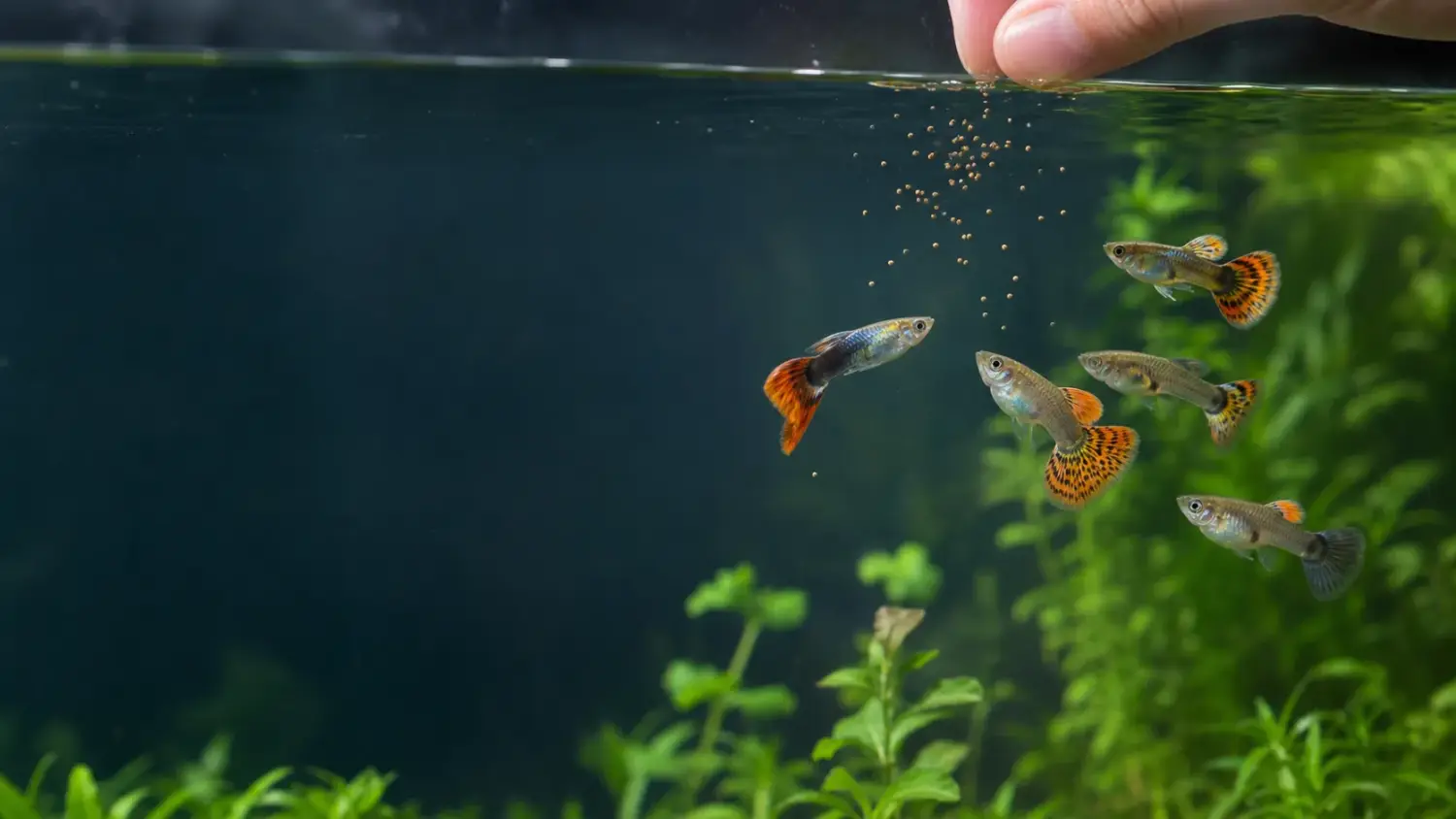
Color development happens alongside growth and maturation, which do not follow one calendar for every fish. Strain, individual development and care conditions make a single age cutoff unreliable. Keep the birth date if known, but base decisions on repeated observations of the fish.
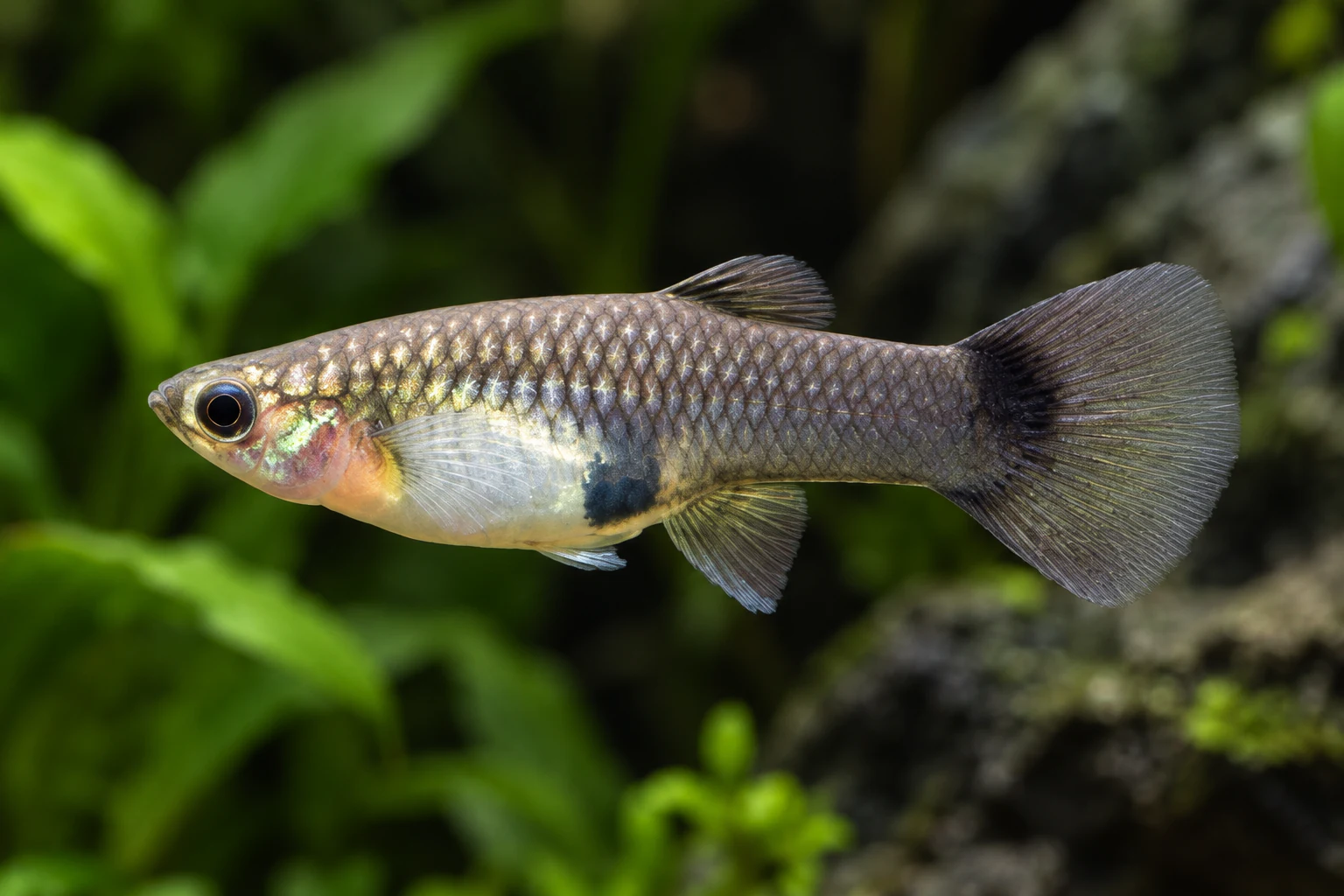
Color genetics are also more complicated than a simple rule such as “all males of this line turn red at six weeks.” A named strain may be selected for visible traits, but individual offspring can vary in how strongly and when they express them. A juvenile that has not yet developed much color should not be called a poor example, a female, or an unhealthy fish based on color alone.
What a keeper can do to support normal development
Focus on stable care rather than trying to force a color result. Keep water quality and temperature appropriate for guppies, use a balanced diet in portions the fish can finish, and provide enough space and filtration for the group. Follow a suitable guppy fry feeding schedule and review the broader guppy growth stages when planning a grow-out tank.
Avoid assuming that a food, light or additive can produce a particular inherited pattern. A balanced diet supports normal care but cannot guarantee a genetic trait or specific shade. Keep portions appropriate, avoid adding supplements simply to chase a color result, and prioritize the fish’s overall condition.
Lighting affects what your eyes and camera record. When comparing a juvenile across time, use the same viewing location and light where practical. Avoid judging a fish from a flash photo, changing white balance, colored tank lights, or a single video frame. Note the date and photograph from a similar angle so you can distinguish actual development from a change in how the image was made.
When color is useful for sexing or selection
Color can support an identification when other features are developing, but it should not be the only sexing clue. Check the anal fin and compare with the adult male-versus-female guppy guide. If you are not certain, continue observing and avoid mixing fish based on a color-only guess.
For breeding decisions, evaluate more than appearance. Look at swimming, body shape, fin condition, growth, and whether the fish has developed enough to assess the trait you care about. Keep clear records for each group and avoid selecting the brightest juvenile just because it colored first. A young fish may change as it develops, and color alone does not establish future health, fertility, or offspring quality.
Juvenile color versus a sudden loss of color
A young male that has not yet developed color is different from an established fish that suddenly looks paler than usual. The latter observation can have many possible explanations, so do not diagnose from color alone. Check recent changes to the aquarium, water readings, behavior, appetite, and other signs. If the change persists or fish seem unwell, get advice from a qualified aquatic veterinarian or experienced fish-health professional. The guide to guppies losing color covers that separate question.
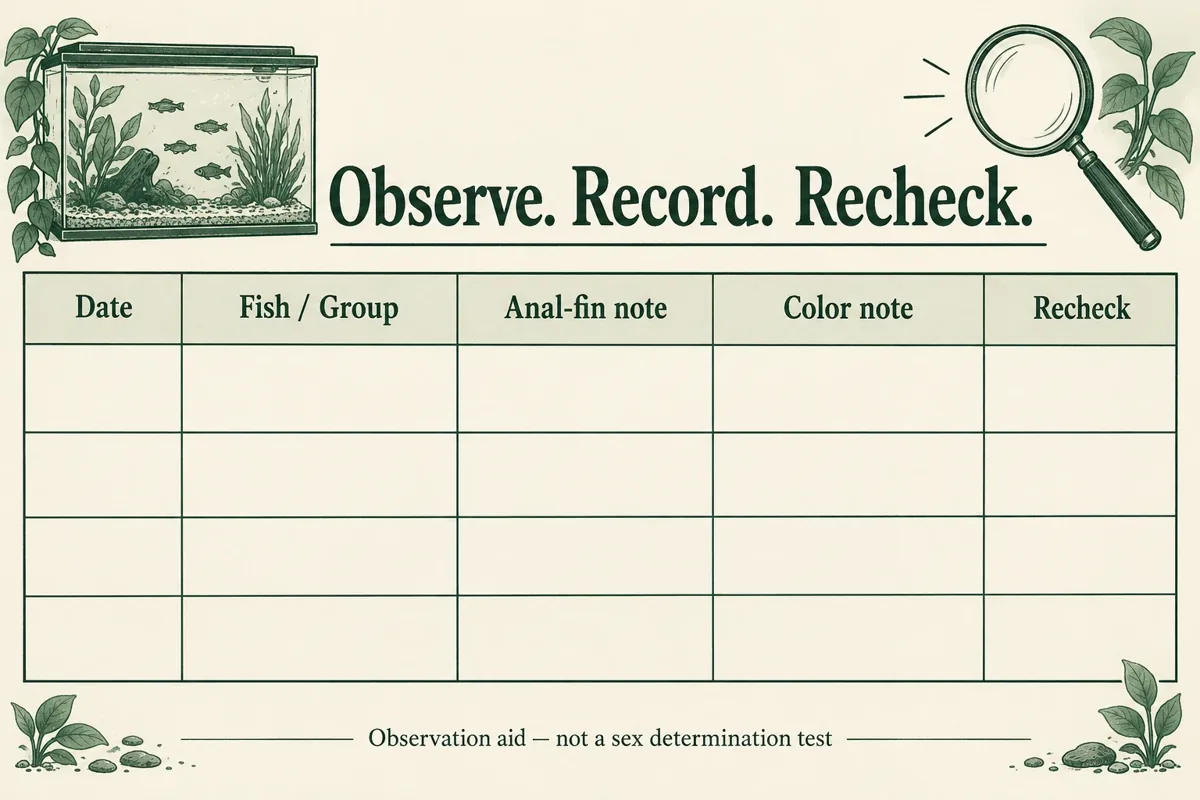
Color-development observation checklist
- Record when the fish was born or added if that information is known.
- Compare the fish with earlier observations, not only with a different strain.
- Use consistent light, angle, and camera settings when taking photos.
- Note color location and pattern separately from fin shape and body development.
- Keep water conditions, filtration, and feeding stable while the fish grows.
- Avoid selecting or sexing a juvenile from color alone.
FAQ
At what age do male guppies get color?
There is no age that applies to all strains and growing conditions. Males often develop ornamental color as they mature, but timing varies. Observe the fish repeatedly and use other visible features when making decisions.
Do all male guppies develop bright colors?
No. The amount, location, and pattern of color vary among strains and individuals. Some males may remain less colorful than others, even as adults.
Can food make a male guppy turn a specific color?
A balanced diet supports normal care, but no food can guarantee that a fish will express a particular inherited color pattern. Avoid treating “color-enhancing” claims as a promise about an individual fish.
Is an uncolored guppy fry female?
Not necessarily. A young male may not have visible ornamental color yet. Use the developing anal fin and recheck over time rather than relying on color alone.
Is a pale juvenile guppy sick?
Not from color alone. Juvenile color may still be developing. If an established fish loses color or shows other changes, check aquarium conditions and behavior and seek qualified help if the concern continues.
Behind the care guides
Care begins with steady systems
Our guppy guides focus on practical routines: keep water stable, observe fish closely and allow for natural variation.
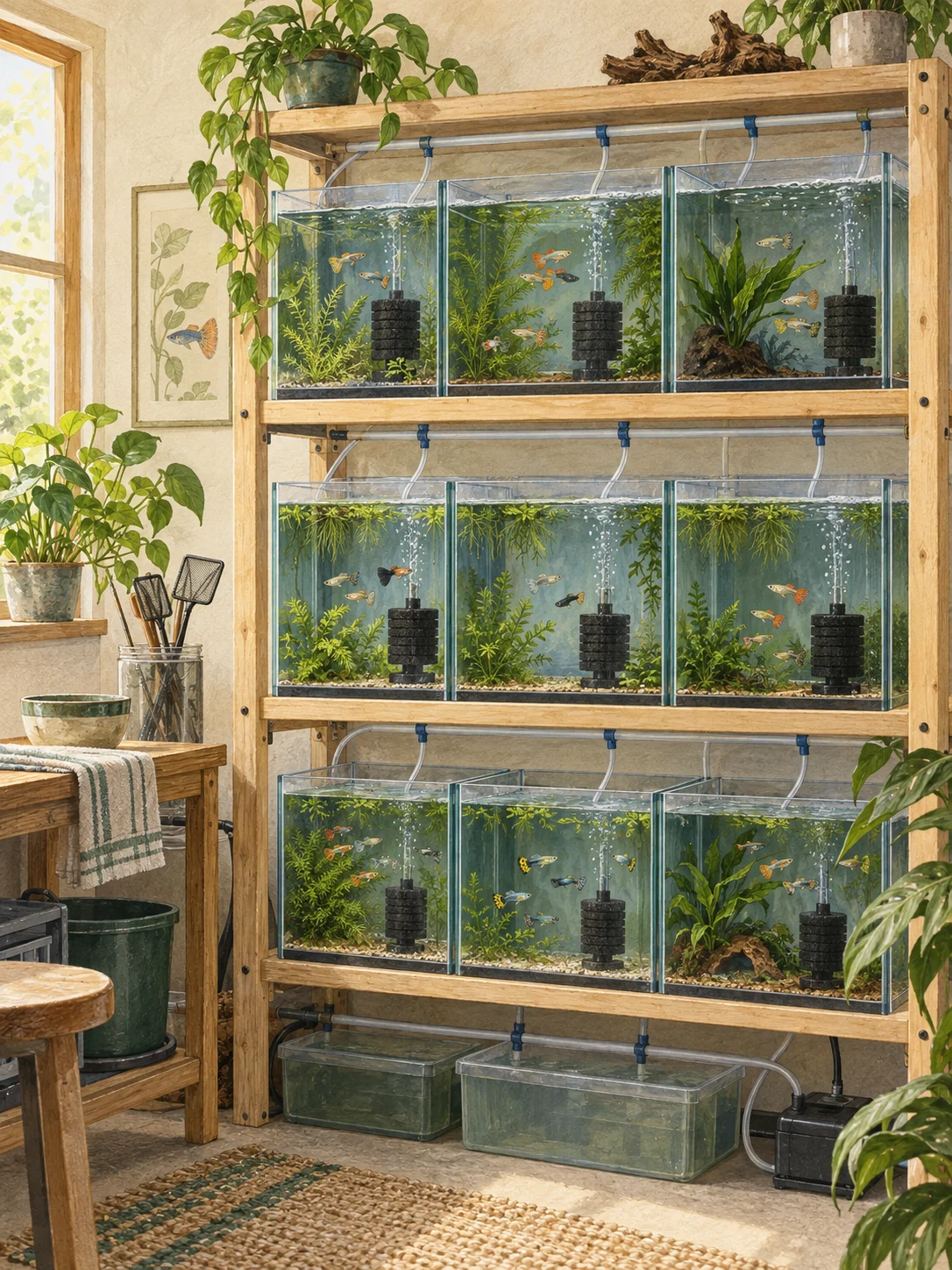
Care systems
Steady water, thoughtful care
Gentle filtration and regular observation support healthy aquarium routines.
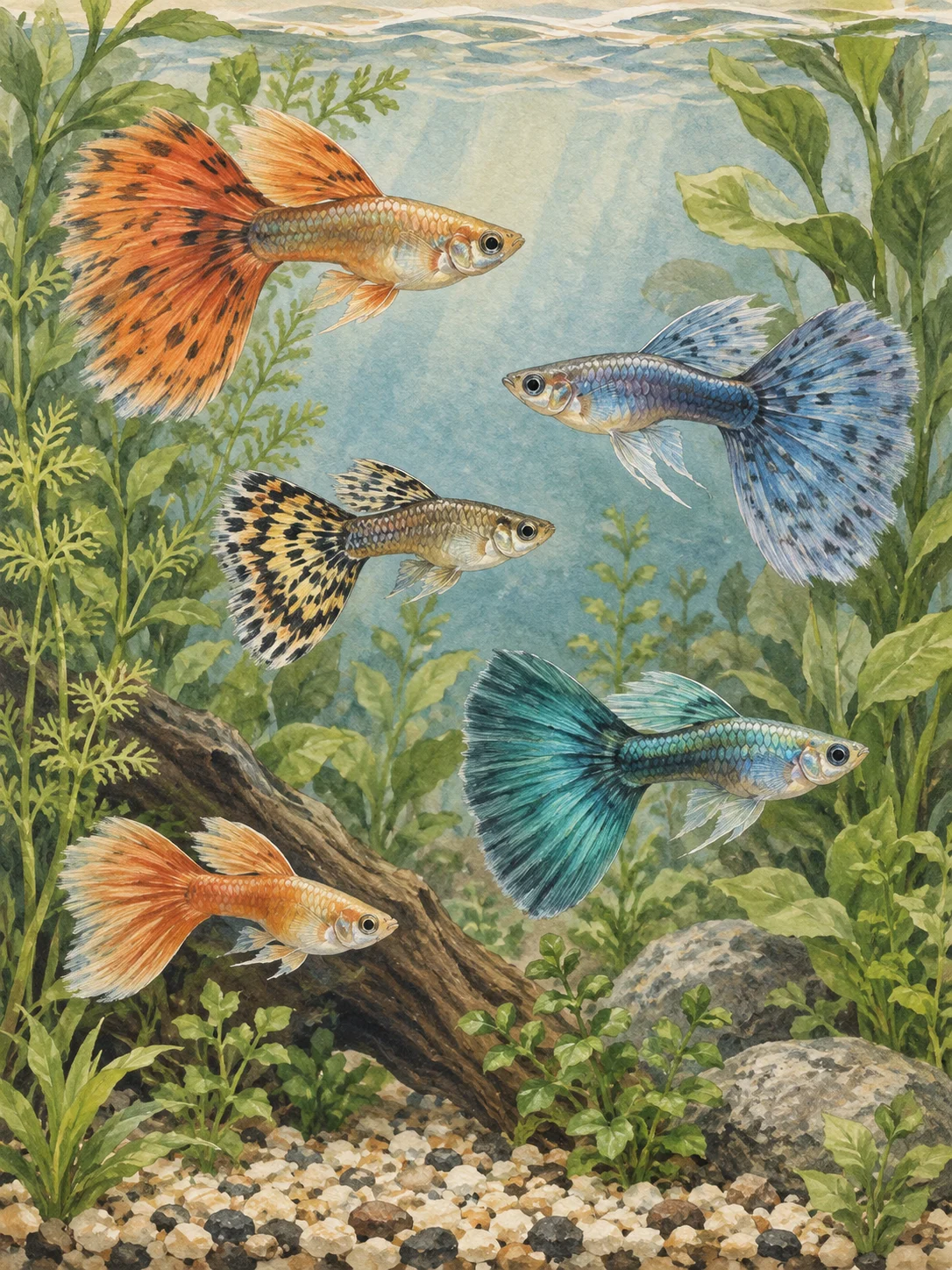
Natural variation
Every guppy is different
Color, size and fin shape vary with strain, age and each individual fish.
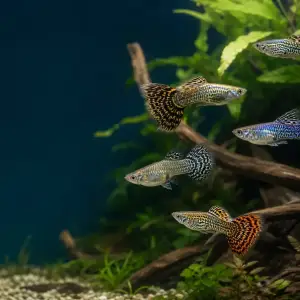
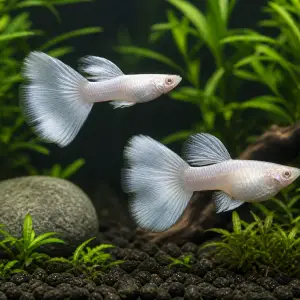
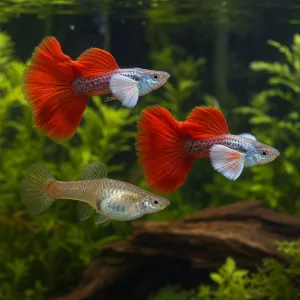
Editorial illustrations for context; they do not depict HiGuppy's exact facility or current fish stock.