The HiGuppy Journal
How to Choose Healthy Guppy Fry for Future Breeding
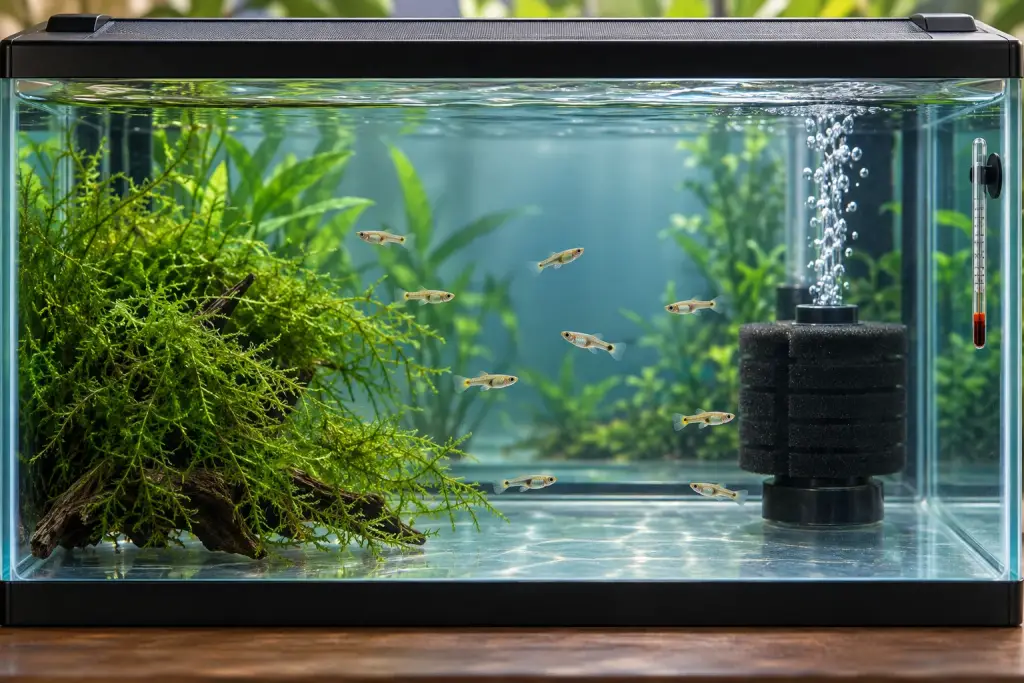
Choose future guppy breeders by observing healthy movement, body and fin structure, feeding access and development over time, then compare the traits you hope to maintain. The first fry to show color is not automatically the best breeder. Keep parentage records, avoid selecting fish with unresolved health concerns, and prepare space for both selected and unselected juveniles.
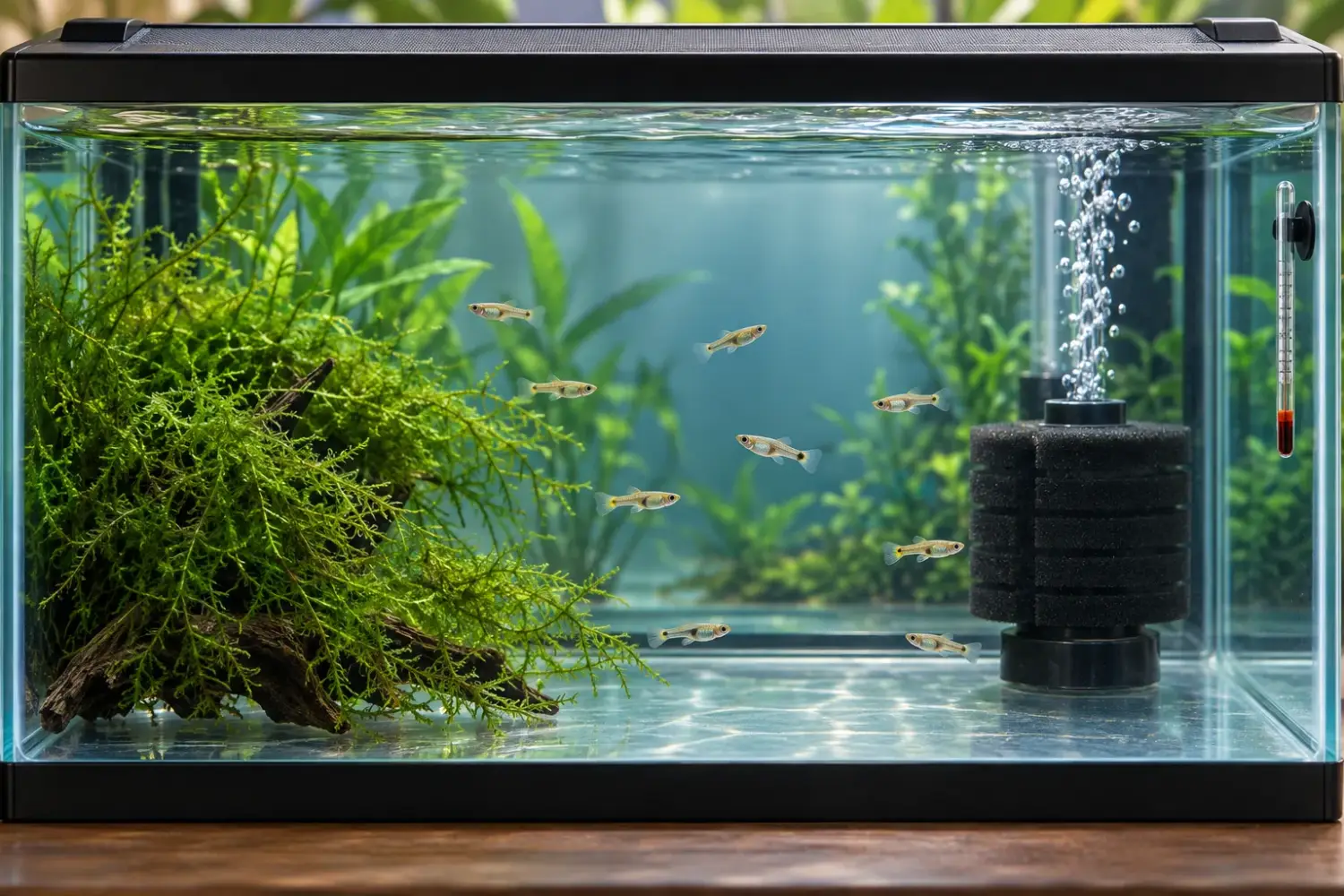
A promising juvenile is a candidate, not a guarantee of fertility, long life or attractive offspring. The useful question is whether the fish repeatedly meets a clear breeding goal while thriving in suitable conditions. This guide focuses on choosing candidates; raising guppy fry covers the everyday grow-out routine.
Define the breeding goal before choosing fish
Write one observable goal, such as a particular tail shape or a clearer pattern, and include normal swimming and sound body structure in the same assessment. “The brightest fish” is too narrow a standard. A large tail that interferes with ordinary swimming is a reason to reconsider the choice even when its color attracts attention.
Keep the goal realistic for the starting fish. Record the source, strain description and parent group when known. If fry came from a mixed tank, label uncertain parentage honestly. A photograph can document appearance, but it cannot prove the sire, genetic purity or what the next generation will look like.
Observe the group before selecting individuals
Watch the fry during normal feeding and quiet periods without chasing them into a net. Check whether each candidate swims comfortably, holds its body normally and reaches appropriately sized food. Compare several observations: a fish startled once by movement outside the glass should not receive the same assessment as a fish that persistently struggles to swim.
Check water quality, flow, crowding and food distribution before deciding that a small or quiet fish has poor inherited quality. A juvenile excluded at feeding may need better food access. A group-wide change suggests reviewing the aquarium first. Do not select only the fastest growers without understanding the conditions in which they grew.
Check body shape and fins carefully
Use a side view to look for a balanced body and an apparently straight spine, then watch the fish turn and feed. Look for repeated difficulty maintaining position, unusual bends, damaged fins or persistent clamping. One observation is not a diagnosis, and an injury is not automatically inherited. Keep fish with unresolved concerns out of the breeding group while the cause is assessed.
If a fish has trouble breathing, loses appetite or develops a worsening abnormality, prioritize its care. Test the water, review recent changes and seek a qualified aquatic veterinarian or fish-health professional when the problem persists or is severe. Breeding is a separate decision and should wait until the fish is well enough to evaluate.
Compare development fairly
Compare candidates from similar cohorts and conditions. Keep dates and consistent side-view photos so you can follow a fish against its own earlier appearance. Guppy growth stages explain why siblings can develop at different rates. Do not use one fixed age or a color deadline to declare a fish unsuitable.
Color and tail pattern may become easier to assess as juveniles develop. Check the anal fin when identifying sex and keep uncertain fish out of planned mating groups. A female that previously lived with males may later produce fry from stored sperm, so do not assign every brood to the most recent male without a reliable history.
Make a short candidate record
For each candidate, record its group code, source, known birth date, visible sex features, feeding access, swimming, body and fin observations, and the target trait. Add a date for the next review. Keep factual notes such as “missed food at two feeds” rather than a permanent label such as “weak genetics.” Update the assessment after care problems are corrected.
Keep more than one promising candidate when your prepared systems can support them. That gives you room to compare later development and avoids making the whole project depend on a single fish. It does not mean retaining more juveniles than you can house well.
Plan for every juvenile before pairing
Prepare labeled breeding and observation groups, enough grow-out space and a responsible plan for healthy fish you will not breed. Rehoming fish because they do not match a visual goal is different from treating a health problem. Never release aquarium fish outdoors or crowd unwanted juveniles into an unstable container.
Use the guppy breeding guide to plan the next stage. Choose breeders only when the target traits can be assessed, their health is suitable and the receiving setup is ready. There is no need to rush a pairing because one fish colored early.
Frequently asked questions
Should I choose the biggest fry as future breeders?
Size alone is not enough. Review age, food access, care conditions, swimming and structure alongside the intended trait. Repeated observations are more useful than a single size comparison.
Can healthy-looking fry guarantee healthy offspring?
No. Visible condition helps you choose candidates but cannot reveal every inherited issue or guarantee breeding results. Keep honest records and assess later generations too.
Should a fish with an unexplained body bend be bred?
Keep it out of the breeding group while the concern is assessed. A bend can have different causes; appearance alone does not establish inheritance or a diagnosis. Prioritize comfortable care and seek qualified help as needed.
Behind the care guides
Care begins with steady systems
Our guppy guides focus on practical routines: keep water stable, observe fish closely and allow for natural variation.

Care systems
Steady water, thoughtful care
Gentle filtration and regular observation support healthy aquarium routines.

Natural variation
Every guppy is different
Color, size and fin shape vary with strain, age and each individual fish.
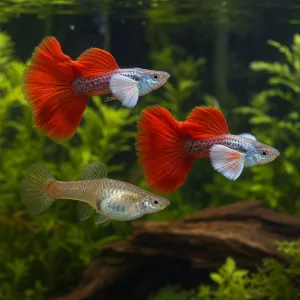
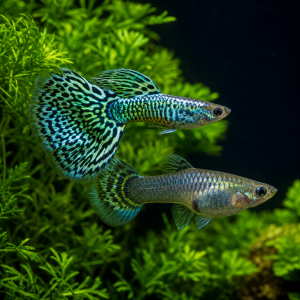
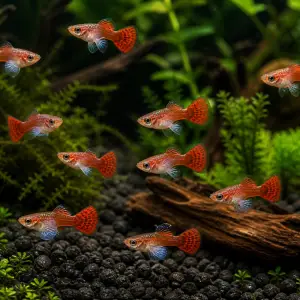
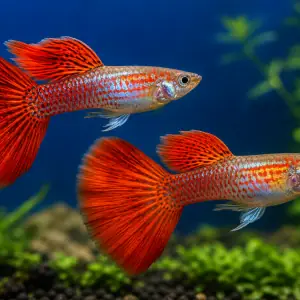
Editorial illustrations for context; they do not depict HiGuppy's exact facility or current fish stock.