The HiGuppy Journal
Guppies for Sale: How to Choose Healthy Fish Online
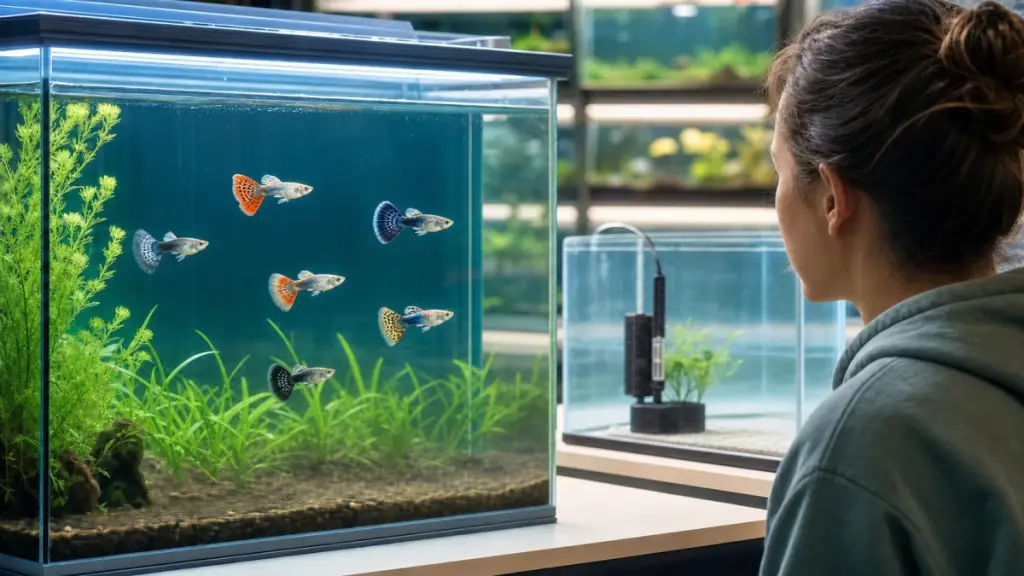
How do you choose healthy guppies for sale? When looking for guppies for sale, compare the exact fish or group offered, not just a colorful product photo. Check the strain name, sex, number of fish, swimming and fin condition, total costs, and the seller’s delivery terms. Choose a source that explains which images are representative, offers recent real-fish footage when available, and gives you enough time to prepare a cycled aquarium before arrival.
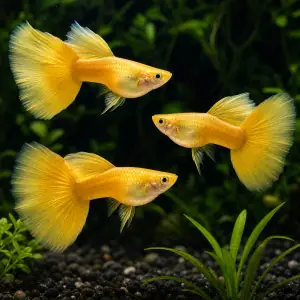
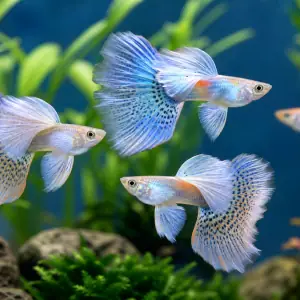
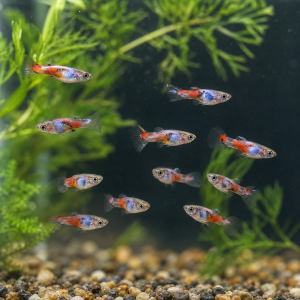
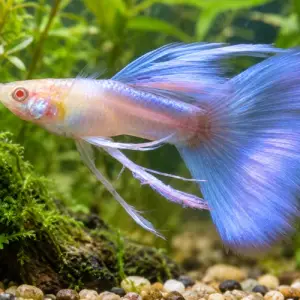
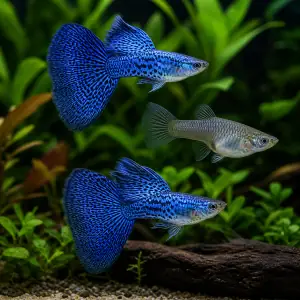
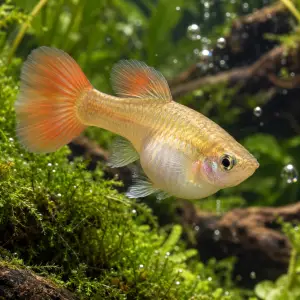
Guppies (Poecilia reticulata) come in numerous color and fin forms, so two listings called “guppies” may include very different fish. A buyer may be choosing one decorative male, a breeding pair, a small group or a wholesale lot, with distinct handling and delivery arrangements. This guide helps you compare real fish, seller information and total order costs before committing. HiGuppy catalog illustrations, including those below, may be AI-generated representative images—not photographs of the fish in current inventory. Always confirm the exact available fish with the seller.
Where to find guppies for sale and how to compare sellers
A nearby aquarium store, a specialized breeder and an online fish shop can all offer healthy fish, but each makes different information easier or harder to check. The useful comparison is not which seller category is automatically best; it is whether you can verify fish health, order contents and what will happen next.
| Buying route | Main advantage | Question before you pay |
|---|---|---|
| Local aquarium store | You can observe current fish, tankmates and feeding behavior in person | When did these fish arrive, and do several tankmates show signs of stress? |
| Specialist breeder | You may be able to ask about named strains, recent offspring and parent fish | Are the fish pictured the actual individuals offered or only examples of a line? |
| Online guppy seller | Different strains and formats can be compared from home | Who handles shipping, what are the total charges and which arrival terms apply? |
| Wholesale supplier | Larger and mixed lots can be arranged with a detailed quote | What fish sizes, quantities, bag/box formats, receiving capacity and route costs are agreed? |
If you want a larger lot for retail or breeding, see HiGuppy’s wholesale enquiry page or wholesale buying checklist. This article addresses individual and small-group buyer decisions; it does not replace a wholesale packing quote or destination import requirements.
First confirm exactly what the listing includes
The headline, gallery and price may not describe the same unit. A photo might show several males even if the listing is for one fish, and a breeder pair can have a different composition from a trio or fry pack. Confirm the number, sexes, maturity or approximate size, selection method and specific strain name. Ask whether the seller chooses the exact individuals, or whether the buyer can review a current group before purchase.
- One male: often chosen for colorful fins, but may be different in size and shape from the photographed example.
- Pair: confirm one male and one female, their approximate size and any prior exposure of the female to other males.
- Trio: confirm the actual sex ratio; not every retailer uses the same trio format.
- Young fish or fry pack: colors and sex traits may still be developing, so adult appearance cannot be guaranteed.
- Mixed strains or larger groups: identify what is selected, quantity per strain and whether the group is meant for display or documented breeding.
For pair-specific questions, read HiGuppy’s guppy pairs buying guide. It has a separate detailed price-table focus; this article focuses on checking the actual fish and seller information across different order types.
How to check if guppies appear healthy before buying
A healthy-looking guppy is usually alert, able to swim steadily, and interested in food under ordinary conditions. Inspect the fish as a whole rather than only the tail color: body shape, breathing, fin position, normal balance and the condition of nearby fish all matter. These visible observations cannot prove fish are free of every parasite or disease, but they help you decide whether to ask more questions or defer buying.
| What to observe | Reassuring observation | Reason to ask for more information |
|---|---|---|
| Swimming | Controlled, normal movement and balance | Repeated sinking, uncontrolled darting, persistent surface gasping or inability to swim normally |
| Fins and body | No obvious progressive fin erosion or unexplained sores | Clamped fins, newly torn edges, ulcers or rapidly changing body shape |
| Breathing and feeding | Normal breathing and response to appropriate food | Consistent refusal to feed or persistently very fast breathing |
| Group and holding conditions | Other fish appear active in a maintained tank | Multiple fish hiding, gasping or showing similar damage at once |
| Seller evidence | Recent clear side-view video of the actual available fish when possible | Only heavily edited or AI-generated catalog artwork presented as proof of current health |
If possible, observe the full tank before focusing on a single fish. For internet orders, ask for a short unfiltered video showing swimming, both sides and the tail. If the seller cannot share current footage, distinguish that uncertainty from a genuine health guarantee; never assume a single still image is a diagnostic test.
For basic animal-health and quarantine context, see the Merck Veterinary Manual’s aquarium fish management guide. If several fish show concerning signs, choose another source or wait rather than diagnosing them from a photo.
Use recent fish videos, not only a representative catalog gallery
Many ornamental fish shops use example photographs to introduce a strain, not to promise that every fish will have identical color, size, tail form or genetic pedigree. This matters especially for juvenile fish, breeding groups and names such as Mosaic, Cobra, Tuxedo or Full Red. When asking for footage, request the complete fish rather than an extreme close-up of the most colorful fin.
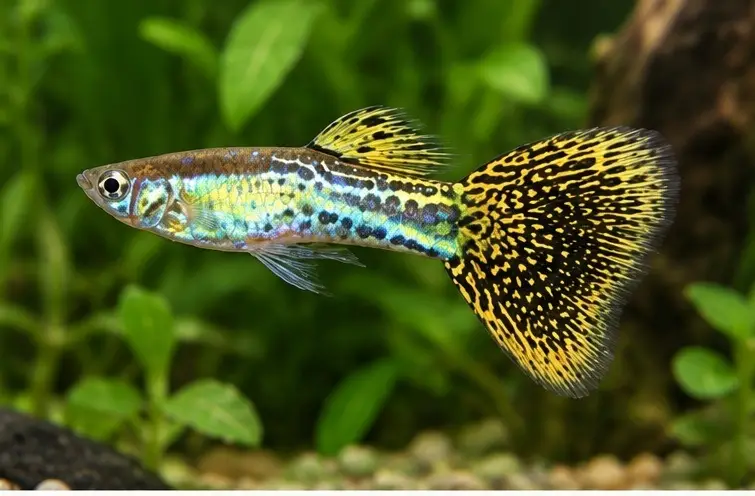
The Yellow King Cobra catalog page is an example of a named look. Its current availability, exact markings and purchase unit still need confirmation. A buyer who values particular markings should ask what the seller considers acceptable variation in the available fish.
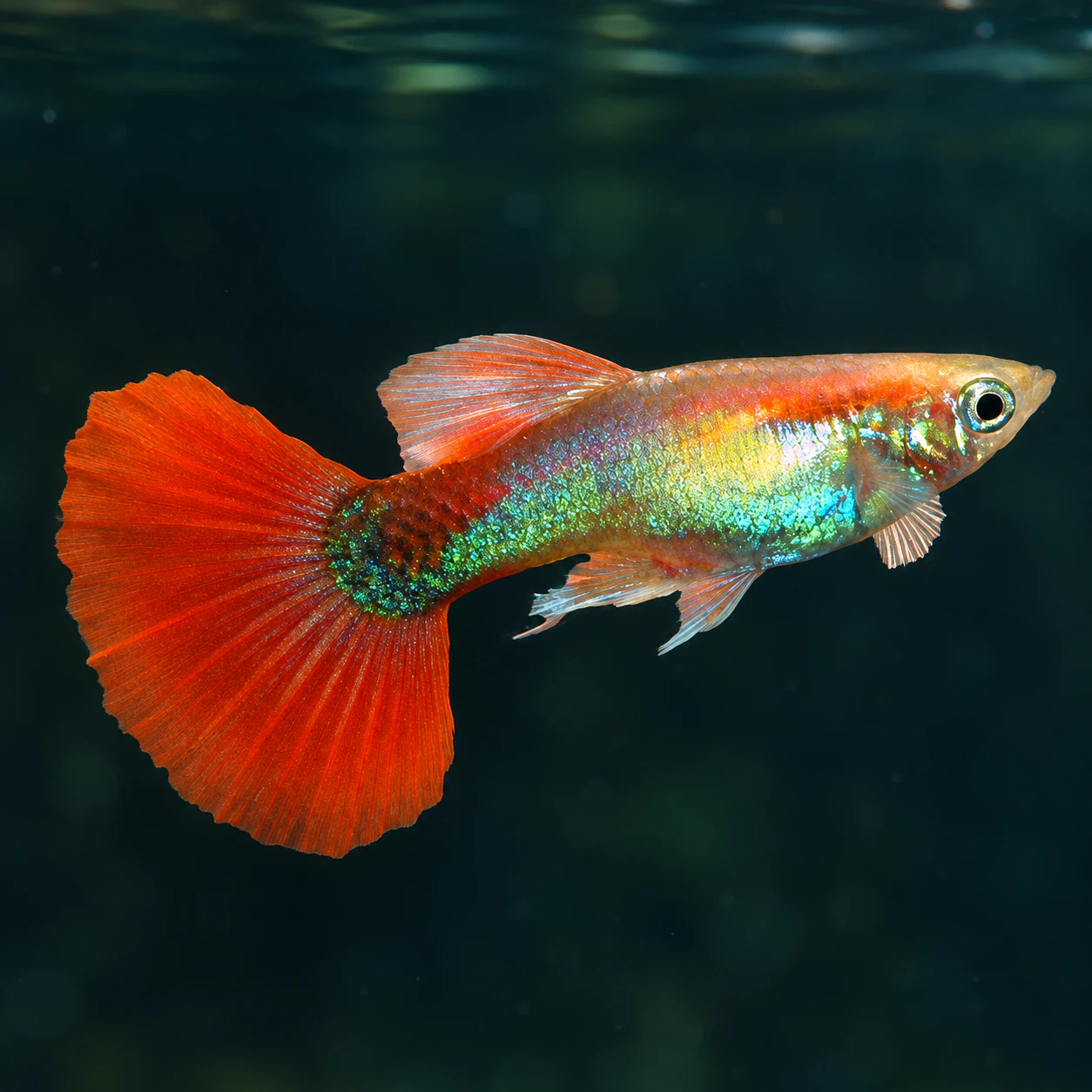
You can also compare the Red Fire Guppy catalog listing with other displayed strains, but an illustration does not confirm real-time stock, health, breeding results or a particular current price.
Choose the strain, sex and group that fit your aquarium
Fancy guppies vary in fin length, body color and pattern, yet all are forms of the same species. Long and broad ornamental fins can be more vulnerable to fin-nipping tankmates or excessive filter current. A planted tank with suitable swimming room can help, but fish compatibility and stocking come first.
Male-only groups avoid surprise fry but still need monitoring for repeated chasing. Keeping males with females makes breeding likely; some females can store sperm from previous matings. If you want a breeding line, ask for breeder information and plan a mature grow-out system before buying the group.
HiGuppy’s shop catalog provides examples of current catalog names, not a promise that every listed strain can be dispatched today. Check availability and the exact fish format before building a stocking or breeding plan around a product photo.
How much do guppies for sale really cost?
Compare the total order, not only a fish-price number in a headline. Individual strain selection, size, sex, grouping and quantity can affect the fish price. For shipped orders, packing, international transport, transshipper handling and local delivery can be separate amounts; taxes or permits may also vary by destination.
| Cost component | What the buyer should confirm | Why it may be separate |
|---|---|---|
| Fish or group price | Exact number, sexes, strain and written offer | A single fish, pair, trio and bulk lot are not interchangeable |
| International shipping/packing | What HiGuppy specifically includes in the written quote | International freight is not automatically included in the fish price |
| Professional transshipper | The receiving/inspection and handling arrangement | HiGuppy uses a professional transshipper on international orders |
| Domestic delivery or pickup | Service and arrival terms provided by the transshipper | The final leg is managed separately after international inspection |
| Destination charges | Applicable import rules, permits, inspections, taxes or other fees | Requirements differ by destination and must be confirmed for the route |
Because pricing and route fees change, this guide does not publish an invented universal current price or claim free shipping. For the differences between fish prices, shipping and tank setup costs, see How Much Do Guppies Cost?. Use the actual HiGuppy checkout or a current written quote and ask the transshipper about its own charges.
HiGuppy international delivery: two transport legs
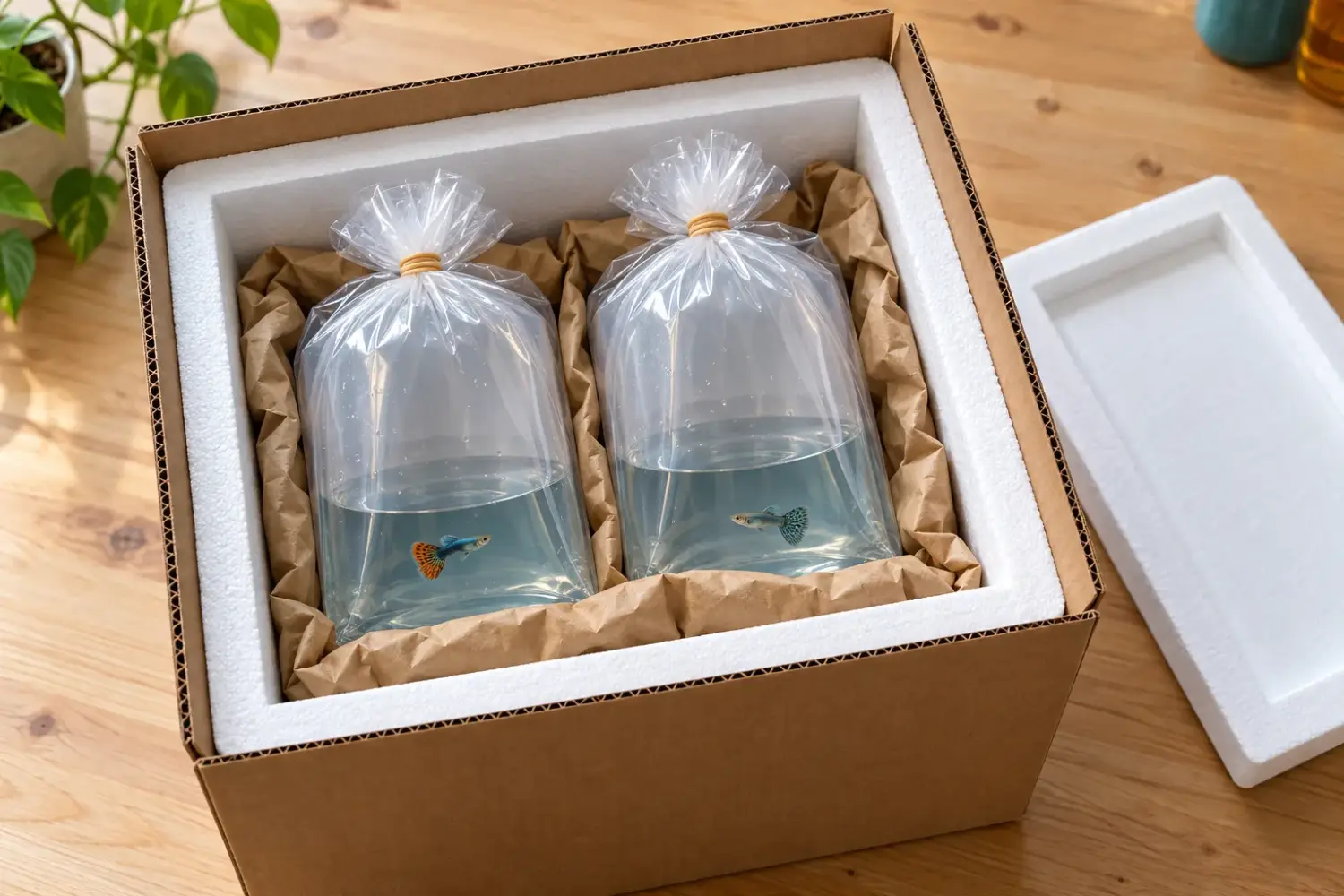
HiGuppy’s published Live Guppy Shipping Policy says live-fish orders originate in Vietnam and are sent to a professional transshipper. The transshipper receives and physically inspects that international shipment, then arranges a separate domestic delivery or pickup to the final buyer. You should know the responsible party and current tracking information for each leg.
| Route stage | Responsible party | Buyer check |
|---|---|---|
| Order confirmation and preparation in Vietnam | HiGuppy | Confirm fish, total fish-order price, destination/transshipper and expected readiness |
| International transport and inspection | International carrier and professional transshipper | Know who receives and inspects the international bags, with the correct shipment identifier |
| Domestic reshipment to the buyer | Professional transshipper | Confirm separate tracking, receiving window, delivery charges and domestic live-arrival policy |
| Final receiving and acclimation | Buyer or designated receiver | Have a prepared aquarium; follow the applicable instructions for the leg being received |
A fixed total arrival date is not guaranteed by the general policy. Weather, customs, holidays, carrier operations or fish readiness may require rescheduling; a seller’s estimate is not the same as a confirmed route. HiGuppy’s packing-process page explains the real pack-out workflow without promising one uniform box arrangement.
Read the live-arrival and DOA terms before paying
The phrase “live-arrival guarantee” is incomplete unless the receiving stage and evidence rules are clear. HiGuppy’s current international DOA policy covers the leg from Vietnam to the professional transshipper. For an eligible claim, the evidence window is two hours after the transshipper physically inspects and verifies the international shipment, with the affected fish documented in its original unopened shipping bag and the required shipment identifiers.
The later domestic shipment is governed by the transshipper’s own receiving and live-arrival terms. It does not restart HiGuppy’s international two-hour claim window, and submitting evidence is not automatic approval of any refund or replacement. Read the DOA Claim Process and the transshipper’s separate policy before dispatch.
For healthy live fish, follow the current receiving and care instructions promptly. Do not leave unaffected living fish in sealed bags merely while waiting for a claim response concerning another bag. Care of survivors and preservation of evidence for an affected bag are separate responsibilities.
Prepare the aquarium before choosing guppies for sale
A stable cycled freshwater aquarium is essential before the fish arrive. The OATA guppy and molly care sheet describes general conditions around 20–28°C (68–82°F), pH 7.0–8.0 and GH 8–18 dGH with ammonia and nitrite at zero. These are species-care reference ranges; match your actual water source and avoid sudden chemical changes just to hit a precise target.
For a small adult group, a well-filtered aquarium of around 10 US gallons (38 L) or larger can be a starting point, while 20 gallons offers more flexibility for swimming and maintenance. The correct size depends on the fish count, dimensions, tankmates, filtration, water testing and any future fry, not a single fixed fish-per-gallon rule. A lid, planted or other safe refuge, moderate flow, and enough open swimming space can improve the setup.
Start the biological cycle before buying, and test the water rather than judging safety by clarity. Merck’s aquarium fish management guidance explains the importance of filtration and water quality. If you are planning a mixed-sex group, arrange additional housing or responsible homes for future offspring rather than overcrowding the tank.
What to do when guppies arrive
Bring the delivered package into an appropriate receiving area promptly, then follow the instructions that apply to the actual shipping leg. At a professional transshipper, document the international shipment as required before altering an affected DOA bag; at the final buyer, use the domestic carrier and transshipper receiving terms.
Prepare a suitable quarantine or observation system, use gentle handling and avoid pouring transport water into your established display tank. Do not assume a prolonged drip acclimation in opened long-distance shipping water is always safer; water chemistry can change after a sealed bag is opened. Follow the responsible shipper’s instructions for the particular route.
For a clear receiving record, read Guppy Arrival Day Checklist and How to Quarantine New Guppies. After transfer, observe breathing, swimming and appetite in stable conditions without repeatedly moving fish.
Red flags in a guppy sale listing
- Unclear unit: a photo shows several fish but the item does not clearly state whether the buyer receives one, a pair or more.
- No distinction between real and illustrative images: AI-generated or older representative photos are presented as exact live inventory.
- Missing shipping-leg information: the seller cannot identify the transshipper or explain how the domestic leg is handled.
- Vague total costs: export and later domestic/transshipper charges are left unclear before payment.
- Overly broad guarantees: a fixed arrival date, identical fish coloration or universal full refund is promised without applicable terms.
- Concerning fish behavior: available footage shows persistent gasping, inability to swim, widespread fin damage or visibly unwell tankmates.
- Pressure to buy before preparation: the aquarium is not cycled or the receiving person cannot be available.
An incomplete answer does not prove bad intent, but it is a reason to clarify before paying. Responsible fish purchasing includes saying no when the animals, route or tank are not yet ready.
The seven questions to send a guppy seller
- Which exact fish, quantity and sexes does this listing include?
- Can you provide current footage of the available fish, and which gallery images are representative or AI-generated?
- What is the approximate size or maturity of the fish, and have they been eating and swimming normally?
- What is the current fish price, and which packing or shipping charges are included in it?
- Who is the professional transshipper, and what additional domestic charges or receiving steps apply?
- Which live-arrival policy applies to each leg, and what documentation and deadlines are required?
- When can the fish be shipped under suitable route conditions, and what happens if dispatch must be postponed?
After receiving those answers, compare the total arrangement with the readiness of your tank. You can browse HiGuppy’s guppy catalog for examples and request the current fish/route details before placing an order.
Quick checklist before you buy guppies
- I know the fish count, sexes and approximate size of the actual offer.
- I know whether the listing pictures show current fish, representative stock or AI artwork.
- I have checked health indicators and requested a current swimming video when possible.
- I understand the total quote, including separate international and domestic stages.
- I have read the relevant DOA and receiving terms for each transport leg.
- My aquarium is cycled and has adequate space for these fish and any future fry.
- I can receive and observe the shipment promptly when the relevant carrier confirms its handoff.
Frequently asked questions about guppies for sale
Where is the best place to buy healthy guppies?
A good source is one that clearly describes the actual fish, lets you assess behavior and condition, and explains all receiving terms. Compare local stores, breeders and online sellers rather than assuming any one category is automatically healthiest.
How can I tell if a guppy is healthy when buying online?
Request recent, clear footage of actual available fish swimming and feeding. Look for normal posture, movement and breathing, but remember that images cannot prove an animal is disease-free.
Should I buy one guppy, a pair or a trio?
It depends on tank size, display versus breeding goals and your capacity for fry. Confirm the exact fish count and sex ratio, because photos and listing terminology alone may not explain the purchase unit.
How much do guppies for sale cost?
Prices vary by strain, age, sex, selection and group format. For shipped orders, ask for the total including any international freight, transshipper handling, domestic shipping and applicable destination fees; do not assume these are all bundled.
Does HiGuppy ship directly from Vietnam to my house?
Its currently published international process routes fish from Vietnam to a professional transshipper, who receives and inspects the international shipment and arranges a separate domestic leg. Confirm the arrangement for your destination.
What is the HiGuppy live-arrival or DOA claim deadline?
The current international policy uses a two-hour evidence window starting when the professional transshipper physically inspects and verifies the international shipment. The later domestic leg follows the transshipper’s own policy, and evidence submission does not automatically approve a refund.
What should I prepare before ordering live guppies?
Prepare a fully cycled, adequately sized aquarium with stable suitable water, filtration and room for the group. Arrange the receiving person, review the current shipping and arrival rules, and plan quarantine or observation before fish travel.
Sources and next reading
Fish-care sources: OATA: Guppies and Mollies and Merck Veterinary Manual: Aquarium Fish Management. HiGuppy order policies: Shipping Policy, Live Arrival / DOA Policy and Guppy Costs Guide. These sources explain husbandry and the current published process; a catalog image or informational article does not guarantee real-time stock or specific order eligibility.
Behind the care guides
Care begins with steady systems
Our guppy guides focus on practical routines: keep water stable, observe fish closely and allow for natural variation.

Care systems
Steady water, thoughtful care
Gentle filtration and regular observation support healthy aquarium routines.

Natural variation
Every guppy is different
Color, size and fin shape vary with strain, age and each individual fish.
Editorial illustrations for context; they do not depict HiGuppy's exact facility or current fish stock.