The HiGuppy Journal
How to Care for Guppies: Step-by-Step Beginner Guide
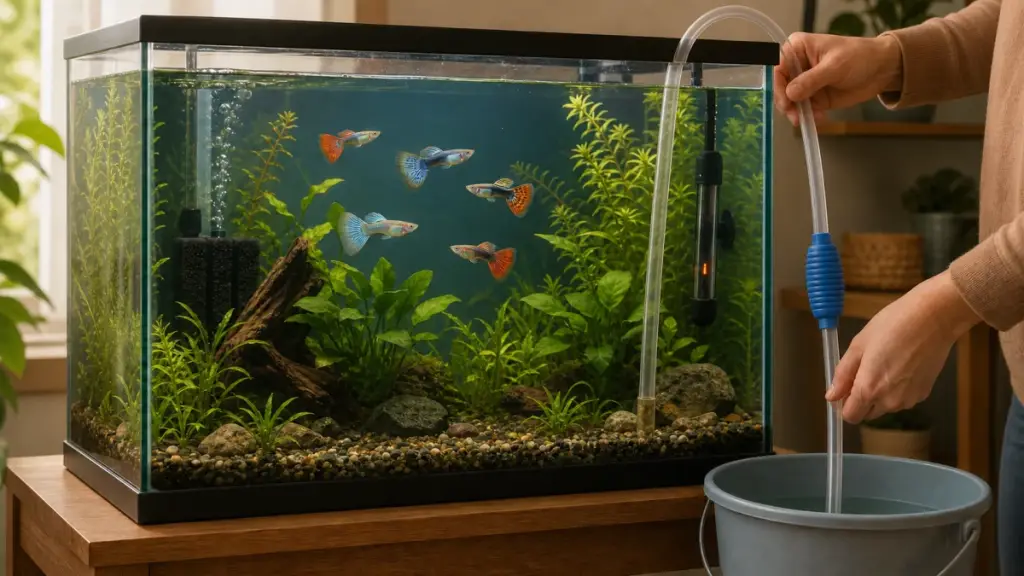
Quick answer: Guppy care works best as a repeatable sequence: prepare a mature biological filter, confirm ammonia and nitrite are not detectable, match the group to available tank capacity, introduce fish gradually, feed modest portions, and test the water on a consistent schedule. Observe behavior and adjust maintenance to measured conditions instead of relying on appearance alone.
Guppies are popular beginner fish for good reason: they are colorful, active, and adaptable. But because guppies are live animals, long-term health depends on stable tank conditions, not only on how bright they look at purchase. A useful care sequence focuses on biological filtration, water stability, gradual introduction, and routine observation instead of quick fixes.
This guide covers the core care basics every guppy keeper should know. For deeper water chemistry, see our Guppy Water Parameters Guide. For equipment and layout, read Best Tank Setup for Guppies. If you are buying fish online, follow our How to Acclimate Shipped Guppies guide before releasing fish into your display tank.
For a broader overview, see the Complete Guppy Care Guide. This page explains how to care for guppies step by step. Use the Guppy Water Change Guide for the maintenance method and How Long Do Guppies Live? for lifespan context.
How to Care for Guppies at a Glance
| Care factor | Decision cue | What to verify |
|---|---|---|
| Biological filtration | Allow the biofilter to mature before adding the planned group. | Test ammonia and nitrite; do not judge by clarity alone. |
| Temperature | Keep a suitable range stable rather than making rapid corrections. | Verify with a thermometer and watch for equipment drift. |
| pH and minerals | Use stable, compatible source water. | Avoid repeated chemical corrections that create sudden change. |
| Feeding | Offer modest portions and adjust to consumption. | Watch uneaten food and the resulting waste load. |
| Water changes | Use partial changes guided by measurements and bioload. | Track water-quality trends instead of one universal calendar. |
Start With the Right Tank Size
Guppies are small, but a tiny unfiltered bowl does not provide the biological filtration or stable volume this routine depends on. Choose tank capacity by adult fish count, filtration, feeding, maintenance capacity, and any expected fry; more water volume generally gives the keeper more room to respond to change.
If you are planning a 10-gallon setup, read How Many Guppies in a 10 Gallon Tank before adding fish. Male-only and mixed-sex groups create different space, social, and reproduction considerations, so plan for adult capacity and possible fry before choosing the group.
Water Quality: The Foundation of Guppy Health
Healthy guppies depend on a fully cycled aquarium. Ammonia and nitrite must stay at zero. Nitrate should be controlled with routine maintenance. A clear tank is not proof of a safe tank, especially in the first weeks after setup.
Test often enough to understand the aquarium’s trend, increasing checks when the system is new, livestock or feeding changes, or a reading is unexpected. Use a test method you can perform and interpret consistently. The full testing workflow is in the Guppy Water Parameters Guide.
Tank-readiness check: Do not add the planned group while ammonia or nitrite is detectable or while the biological filter is still establishing. Confirm water conditions, equipment, and available capacity first.
Feeding Guppies the Right Way
Offer modest portions and adjust frequency to life stage, food type, consumption, and the aquarium’s waste trend. Avoid adding more food than the fish consume, because uneaten food increases the load the biofilter and maintenance routine must handle.
Rotate quality micro pellets, frozen foods like baby brine shrimp or daphnia, and occasional plant-based options for variety. For a full food breakdown, see Best Food for Guppies. Use the food maker’s guidance as a starting point, then adjust conservatively while watching consumption and water quality.
Tank Mates and Social Behavior
Guppies show social and shoaling behavior, but compatibility still depends on the other species, available space, water requirements, and individual behavior. Research each proposed tank mate and observe the group after any change.
Mixed-sex groups need a plan for reproduction and social pressure, while male-only groups still require enough space and observation. Learn identification basics in Male vs Female Guppy and adjust the group if persistent chasing or exclusion appears.
Plants, Hiding Places, and Filtration
Plants or soft decorations can break lines of sight and provide cover. Size filtration for the aquarium’s actual bioload and maintain adequate circulation without creating flow that prevents normal swimming.
Follow the filter maker’s maintenance guidance and avoid replacing all established biological media at once, because a rapid loss of biofilter capacity can allow ammonia or nitrite to rise. Equipment details are covered in Best Tank Setup for Guppies and our Guppy Care Guide.
Signs of Stress in Guppies
- Clamped fins held tight against the body
- Hovering at the surface or sitting on the bottom
- Loss of appetite for more than one day
- Rapid breathing or flashing against objects
- Pale color that does not recover after rest
- Hiding constantly in a normally active tank
When multiple fish change behavior at once, check ammonia, nitrite, the broader water trend, temperature, oxygenation, and recent changes before assuming one cause. Persistent or severe signs need individualized professional assessment. If fish keep dying without a clear cause, read Why Are My Guppies Dying.
Repeatable Guppy Care Checklist
- Test ammonia, nitrite, and the aquarium’s longer-term water-quality trend.
- Use a partial water change when measurements or waste load show it is needed.
- Check temperature and equipment for unexpected drift.
- Observe appetite, fin posture, breathing, and swimming behavior.
- Remove visible debris without disrupting all biological media at once.
- Feed modestly and avoid leaving uneaten food on the substrate.
Frequently Asked Questions
Are guppies good for beginners?
They can suit a prepared beginner who can establish biological filtration, test the water, provide adequate capacity, and follow a consistent observation and maintenance routine.
How often should I change guppy tank water?
Use regular partial changes, then adjust the amount and cadence to test results, stocking, feeding, filtration, and source water. The water-change pillar explains the method.
Do guppies need a heater?
A heater is useful when room conditions cannot keep the aquarium within a stable, suitable range. Verify the water with a separate thermometer instead of relying only on the heater setting.
Can guppies live in a bowl?
A bowl without filtration and stable volume is not appropriate for long-term guppy care. Use a filtered aquarium with adequate water volume instead.
How long do guppies live?
No single number predicts an individual fish. Genetics, age, temperature, water stability, feeding, and other conditions all matter; see the lifespan guide for the evidence and limits.
Why do shipped guppies look pale?
Appearance can change during transport and introduction, so do not use color alone to judge condition. Follow the seller’s current live-arrival policy and the Acclimation Guide; seek individualized help for severe or persistent signs.
Should I quarantine new guppies?
A separate observation system can reduce direct exposure of the established display, but the setup and observation period depend on the fish and circumstances. Use qualified aquatic-health guidance when making a health decision.
What should I do when guppies arrive?
Confirm the destination aquarium is ready, then follow the seller’s current instructions and the Acclimation Guide. Avoid improvising a universal procedure when temperature, packaging, or livestock condition differs.
After confirming tank capacity and care readiness, browse the HiGuppy shop. Each current listing is the source of truth for availability and product-specific details.
Behind the care guides
Care begins with steady systems
Our guppy guides focus on practical routines: keep water stable, observe fish closely and allow for natural variation.
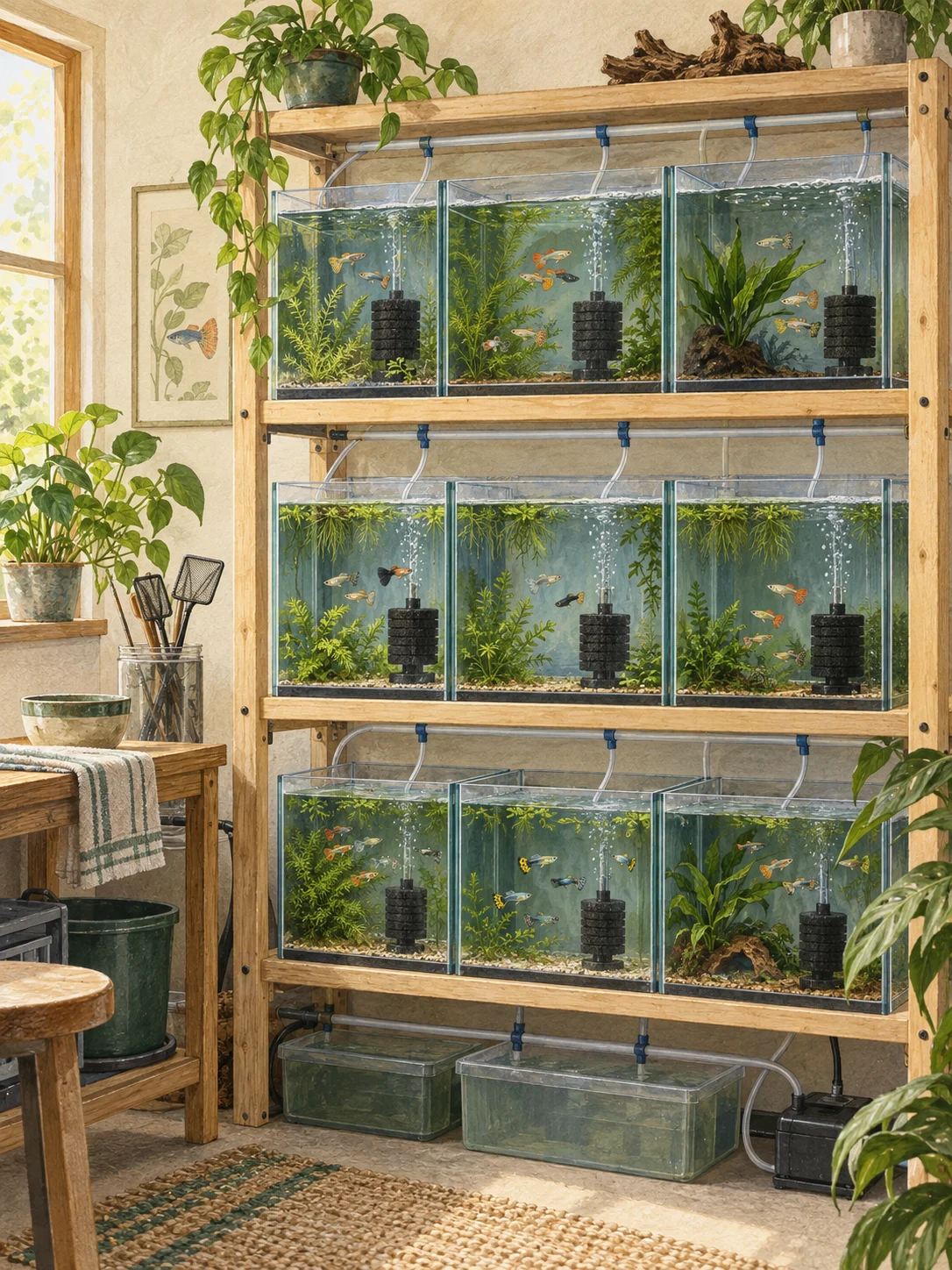
Care systems
Steady water, thoughtful care
Gentle filtration and regular observation support healthy aquarium routines.
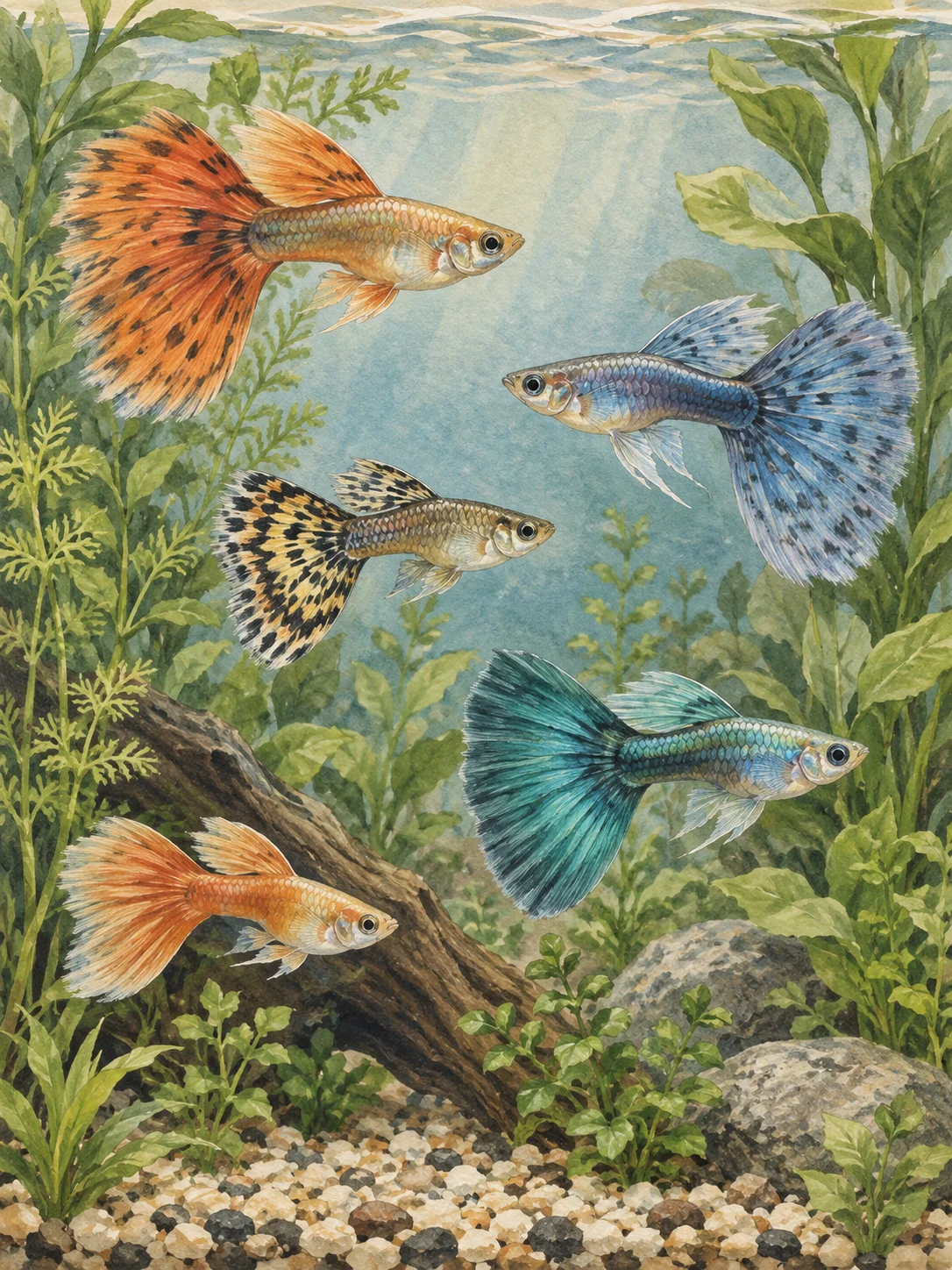
Natural variation
Every guppy is different
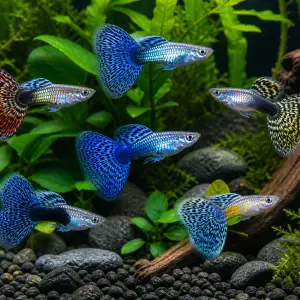
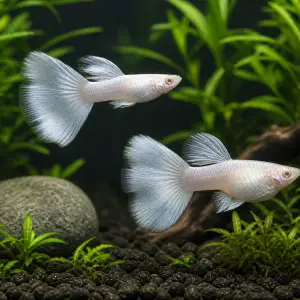
Color, size and fin shape vary with strain, age and each individual fish.
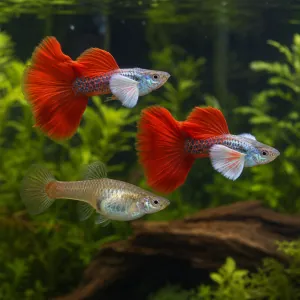
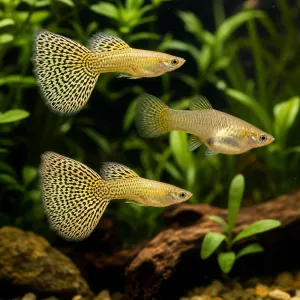
Editorial illustrations for context; they do not depict HiGuppy's exact facility or current fish stock.