The HiGuppy Journal
Weather and Live Guppy Shipping: When to Hold an Order
When should live guppy shipping be delayed? Weather can delay live guppy shipping when heat, cold, storms or carrier disruptions make the planned route unsuitable for fish. Check conditions at the origin, international handoff, professional transshipper and final domestic destination—not only the buyer’s local forecast. HiGuppy may hold or reschedule dispatch based on fish and route readiness; insulation or temperature packs cannot guarantee safe delivery in every condition.
For live fish, a “shipping day” is a decision about the whole route and the people receiving each leg, not merely whether the calendar has an available slot. Weather risk may arise before dispatch, at a transfer hub or after the international shipment reaches a transshipper. This guide gives buyers a practical send / hold / reschedule framework that complements HiGuppy’s separate summer shipping guide and cold-weather heat-pack guide. It does not establish universal safe weather thresholds or new delivery guarantees.
Weather decisions: proceed, hold or reschedule?
A forecast alone does not certify that an animal shipment is safe. An acceptable plan depends on current fish condition, packing design, travel duration, available carriers and someone ready to receive the shipment. The outcome can change if a flight, transshipper or domestic carrier becomes unavailable.
| Decision | Typical situation | Practical next step |
|---|---|---|
| Proceed after confirmation | Fish and packing plan are ready; carrier and transshipper confirm a workable route and receiving window | Keep current tracking and contacts; follow the agreed dispatch and inspection process |
| Hold and reassess | Forecast risks or timing are uncertain, but the shipment has not left HiGuppy | Ask the responsible shipper to review the route and next weather update before fixing a handoff |
| Reschedule | Severe temperature exposure, a storm, service disruption or an unavailable receiver makes the planned leg unsuitable | Confirm a revised dispatch or receiving arrangement rather than sending into the unresolved risk |
| Contact the current handler | Fish are already in transit and tracking or conditions change | Use the responsible carrier/transshipper contact for that leg; do not unilaterally reroute a live-fish parcel |
This is a decision guide, not an automatic cutoff. HiGuppy’s current Shipping Policy explicitly allows dispatch to be held or rescheduled if fish condition, weather, carrier operations or route conditions are unsuitable. It does not promise a fixed total delivery date. Only the party managing a leg can confirm which services and receiving window are actually available.
Why hot, cold and stormy conditions matter to fish
Guppies are tropical freshwater fish, and the water in a transport bag can respond to surrounding temperatures while the fish consume oxygen and generate waste. Weather exposure and unexpected waiting can therefore affect both temperature and water conditions. Research and guidance from University of Florida IFAS Extension on ornamental fish transport describe the importance of limiting temperature fluctuations and planning water, oxygen, containers and travel time together.
A bag or box suitable for one planned movement should not be assumed suitable for any extra day of delay. Similarly, adding a heat pack or cool pack is not a universal substitute for choosing an appropriate dispatch date. If a shipment becomes uncertain, the responsible professional should decide whether it can move, be delayed before dispatch or require another confirmed arrangement.
| Weather or operating concern | What may change | Buyer question worth asking |
|---|---|---|
| High ambient heat or prolonged sun exposure | Temperature of the box and bag water may rise | Has the entire route and any exposed handoff been assessed? |
| Cold weather at the destination or transfer point | Transport water may cool during waiting or sorting | Is insulation/temperature support appropriate for the route? |
| Heavy rain or severe storms | Flights, vehicles, collection points and receiving hours may change | Is the expected transfer and inspection window still confirmed? |
| Holiday/weekend service gaps | Parcels may wait between scheduled movements | Who will actually receive the live shipment at each handoff? |
| Unclear tracking or changed delivery service | Transport duration and who is responsible may become uncertain | Which current carrier or transshipper should be contacted first? |
There is no single outdoor temperature, heat-pack rating or guaranteed transit duration that makes every guppy shipment safe. Even the same city may have different conditions at an airport, in a warehouse or at a home delivery address.
Check each stage of HiGuppy’s route, not just the final address
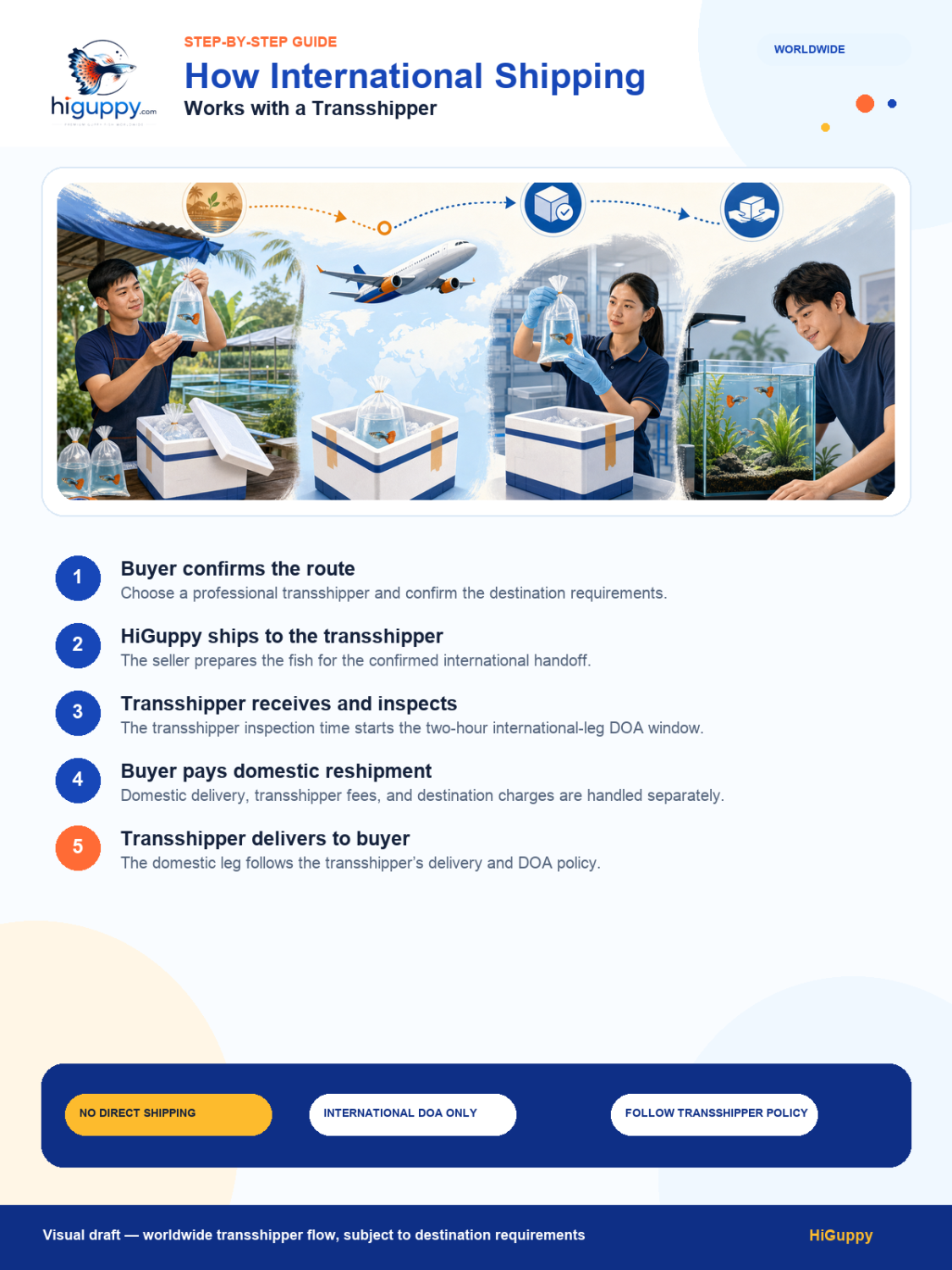
HiGuppy’s published international route is Vietnam → professional transshipper → separate domestic delivery or pickup. These stages involve different handlers and may occur on different dates. The origin forecast is useful, but it cannot replace checking what happens later at the international transshipper and during the domestic leg.
| Checkpoint | Responsible party | Information to confirm |
|---|---|---|
| Before export dispatch in Vietnam | HiGuppy | Fish condition, final packing/temperature plan, carrier handoff and export schedule |
| International transfer and arrival | International carrier and professional transshipper | Expected flight/handling changes, receiving readiness and inspection information |
| After international inspection | Professional transshipper | Domestic carrier, local weather, pickup or delivery window and applicable receiving terms |
| At final domestic receipt | Buyer or designated receiver | Availability to receive promptly, current tracking and prepared aquarium/quarantine system |
The handoff to the professional transshipper is especially important because it separates HiGuppy’s international responsibility from the later domestic service. Use the published shipping policy and the transshipper’s order-specific instructions rather than assuming one tracking number covers every stage.
What weather information should a buyer send before dispatch?
A vague message such as “Will the weather be okay?” makes planning harder than a complete request. The most useful information identifies the destination, transshipper, receiver and timing constraints, while leaving the technical safety decision to the shipper.
- Destination and receiving arrangement: city or postal code plus who manages the domestic leg.
- Expected available dates: when the transshipper can inspect the international delivery and when the buyer can receive afterward.
- Known forecast concern: hot or cold conditions, severe storms, local closures or possible service interruptions.
- Special handoff constraints: holidays, restricted receiving hours or an address where packages cannot be left unattended.
- Order format: fry pack, pair, trio or wholesale lot, along with the confirmed order reference.
- Contact method: a reachable buyer and receiving agent for timely shipment changes.
The seller and transshipper should verify the services and weather actually affecting their legs; the buyer does not have to guess which heat pack, oxygen quantity or exact box layout is appropriate. For an overview of the packing workflow, see How We Pack Live Guppies for Shipping.
When the origin looks fine but the transfer point does not
An international shipment may leave a place with mild conditions yet pass through a hub experiencing unusually cold temperatures, storms or carrier delays. If a transfer point or professional receiving location is unavailable, a mild forecast at the buyer’s home is not enough to resolve the risk. The relevant questions are whether the shipment can be handled as planned, where it may wait and who has confirmed the next transfer.
A sensible pre-dispatch review should consider the expected route and carrier handoff in addition to the fish themselves. The overnight versus two-day shipping guide explains why a service name cannot, by itself, describe the whole international journey.
What insulation and heat or cold packs can—and cannot—do
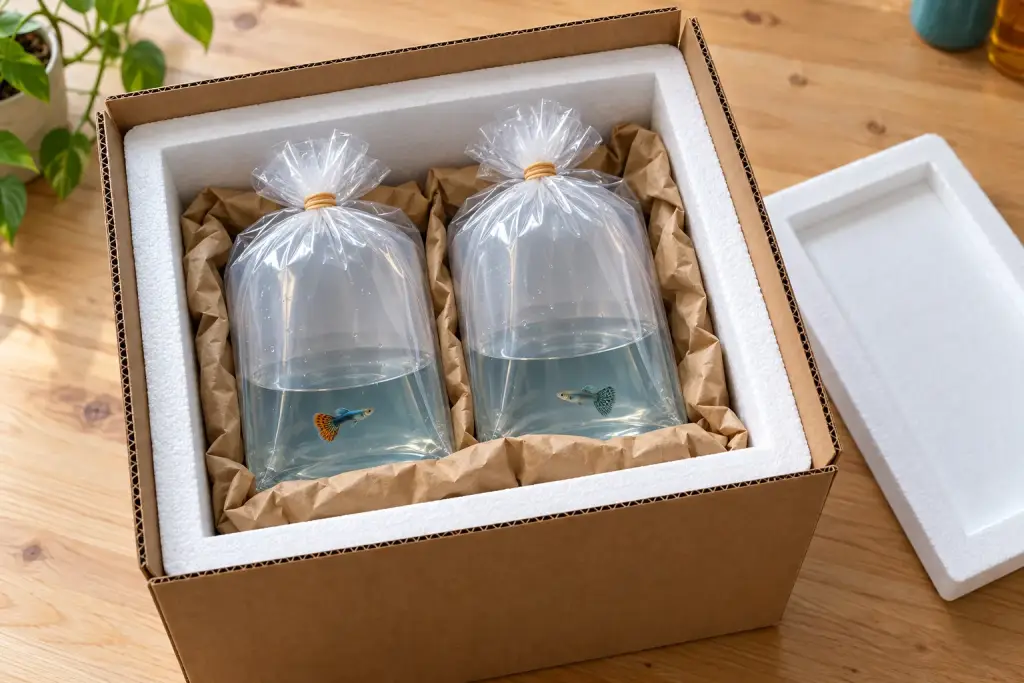
HiGuppy’s published packing process describes protected transport bags inside an insulated box, with heat or cold packs considered when appropriate. The actual bag grouping, insulation and temperature support vary by fish, route, weather and planned transit. Insulation helps buffer environmental change but does not hold a fixed water temperature indefinitely.
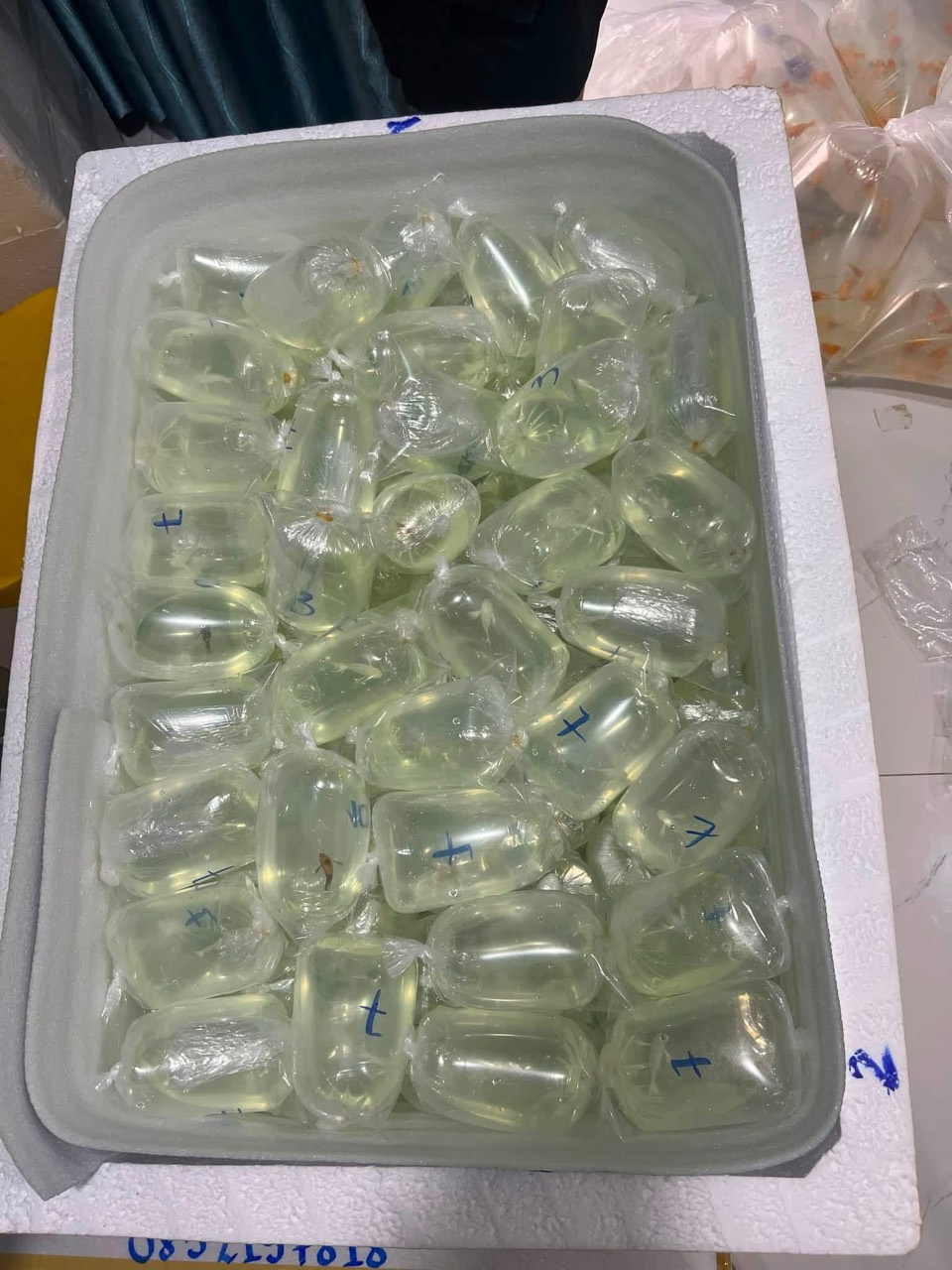
A temperature pack can be inappropriate if it is used for the wrong conditions or installed without adequate separation. Buyers should not assume every parcel contains the same pack, modify professional packing instructions or use a pack as proof that severe weather will be harmless.
For more technical detail about packaging, read the five-step packing overview. For seasonal decisions, the dedicated summer guide and cold-weather guide go deeper.
When a weather hold is preferable to rushing a shipment
A hold can be reasonable when the fish are not ready, the planned carrier cannot confirm a suitable handoff, severe weather is expected along the route, or the transshipper will not be able to receive the shipment promptly. HiGuppy states that such conditions may change its dispatch decision, including after packing materials have been prepared.
That does not mean every rainstorm or cool day requires cancelling a live-fish shipment. The appropriate decision is specific to the actual journey, its packing plan and the handlers available. Ask for a revised date only after the responsible party has confirmed that the alternative is workable.
| Before sending | If confirmed | If unresolved |
|---|---|---|
| Fish visibly ready for the planned journey? | Proceed to check route and pack-out | Hold for appropriate observation; do not force dispatch |
| International carrier and handoff confirmed? | Review expected transfer windows | Ask for a revised route or dispatch review |
| Transshipper able to receive and inspect? | Keep receiving and inspection contacts ready | Do not assume the box can wait unattended |
| Weather suitable for the planned movements? | Use packing and timing plan confirmed by the shipper | Reassess or delay before departure |
| Buyer ready for later domestic receipt? | Coordinate with the transshipper | Arrange a confirmed receiver/date for the domestic leg |
If the order is delayed before dispatch, request an update on the shipment schedule and any order-specific handling arrangements. A hold is an animal-welfare and logistics decision, not an automatic refund, cancellation or guarantee of a new delivery date.
What if weather changes after the fish are already moving?
Once the shipment has entered the carrier network, the available decisions can be different. A buyer may not be able to change an international flight or request a domestic reroute without approval. Start by identifying the current transport leg, recording the most recent tracking event, and contacting the party responsible for that leg.
- Record what changed: date/time, tracking reference, reported carrier disruption and who provided the update.
- Contact the current handler: HiGuppy for its international shipment information, the professional transshipper for its inspection and later domestic service, or the carrier through the authorized contact.
- Confirm receiving availability: keep an appropriate person ready for the handoff when a new schedule is actually known.
- Do not improvise reroutes: avoid changing a delivery address, pickup point or carrier without authorization from whoever manages that leg.
- Keep evidence organized: order number, original tracking and any newer domestic reference should remain linked.
Avoid leaving a live-fish package exposed to weather while discussing a delay. The receiving person should follow the relevant inspection and care instructions promptly once the shipment physically arrives.
Prepare a receiving area before the weather window opens
A stable and fully cycled aquarium or suitable quarantine system is part of responsible receiving. Have treated water, a working heater or thermometer as appropriate, and a calm inspection area prepared before the package arrives. Do not wait until the tracking says “out for delivery” to begin cycling the tank.
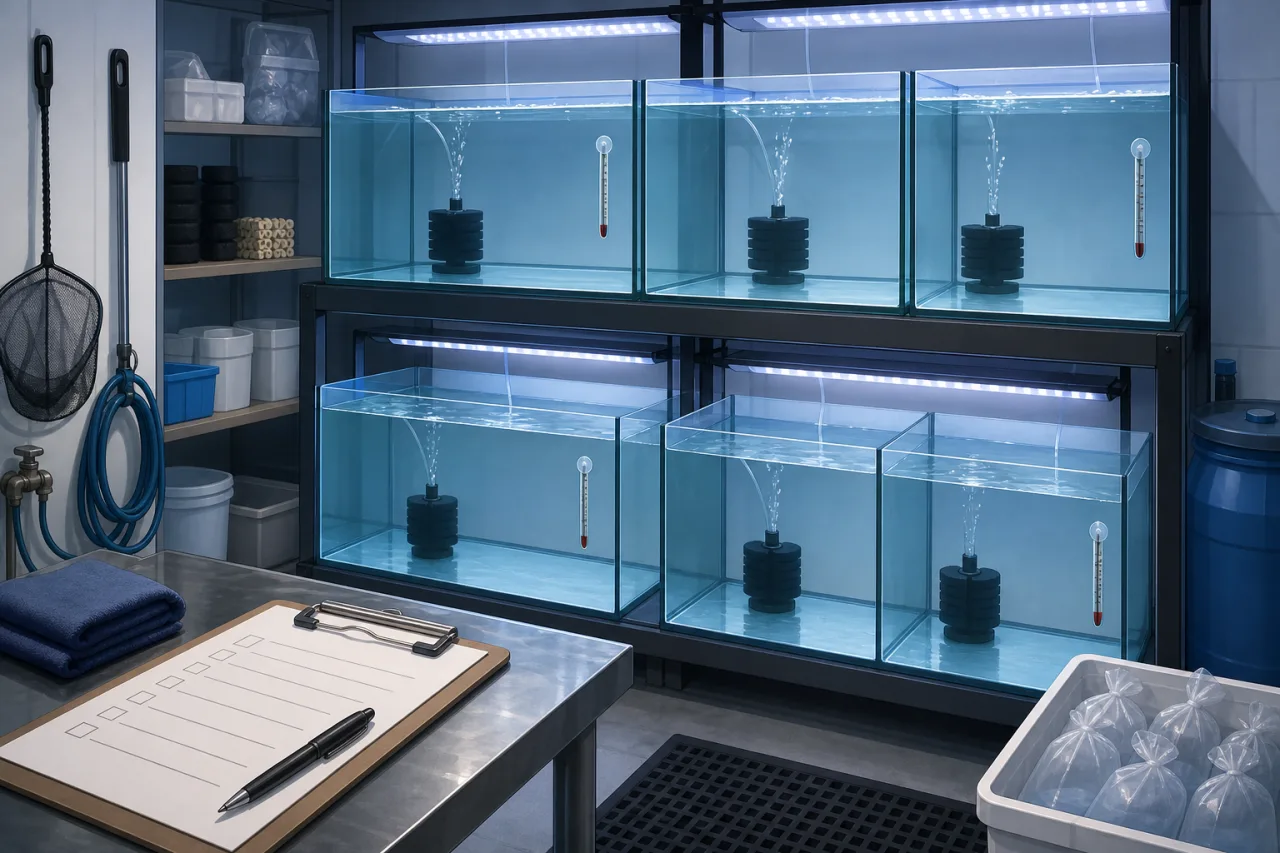
The OATA guppy and molly care sheet describes general water conditions suitable for guppies, including 20–28°C (68–82°F), pH 7.0–8.0, and zero ammonia and nitrite in an established aquarium. Those are aquarium-care ranges, not outdoor parcel-shipping weather cutoffs.
The Guppy Arrival Day Checklist explains how to organize identification, inspection, transfer and observation. An unprepared holding container can create a second welfare problem even if the shipment itself was packed carefully.
The arrival policy depends on which leg you receive
For eligible HiGuppy international-leg live-arrival concerns, the current DOA policy requires evidence within two hours of the professional transshipper’s physical inspection and verification of the international shipment. Required evidence includes the affected fish in its original unopened bag and shipment identification. The later domestic shipment from the transshipper to the buyer has the transshipper’s own arrival rules; it does not restart HiGuppy’s two-hour clock.
Severe weather or carrier disruption is not, by itself, proof that a DOA claim qualifies for a particular remedy. Read the current exclusions and evidence rules, and contact the correct party for the affected stage. For an eligible international-leg claim, consult the DOA Claim Process and send evidence promptly through its prescribed channel.
Keep healthy fish care separate from evidence preservation: do not keep unaffected live animals unnecessarily inside sealed shipping bags while waiting for a support answer. Follow the actual carrier/transshipper instructions, and use quarantine guidance after appropriate transfer.
A copyable weather-check message for the seller
A specific question gives the seller and transshipper something useful to confirm:
“Hello, I am preparing for a live guppy order to [destination]. The professional transshipper is [name], and the receiver is available on [dates]. I am concerned about [heat/cold/storm/carrier delay] during the proposed route. Could you confirm whether dispatch is suitable, if any handoff needs to be held, and who will provide the next schedule and tracking update? I understand that international and domestic receiving terms are separate.”
Do not fill the brackets with guesses. If the seller cannot yet confirm the route or exact date, keep those details marked as pending rather than treating an estimate as a guarantee.
Final weather and live guppy shipping checklist
- I know the route and the professional transshipper handling the international handoff.
- I have checked forecast or operational risk at more than just my home address.
- I know which party can confirm a hold, dispatch or domestic reschedule.
- I understand that insulation and temperature packs are conditional, not risk-free guarantees.
- I have a cycled, ready aquarium and an available person to receive the relevant leg.
- I have read the current international DOA rules and the transshipper’s domestic policy.
- I have current tracking, order references and contact information before fish travel.
Weather and live guppy shipping FAQ
Can HiGuppy delay a guppy shipment because of weather?
Yes. Its published shipping policy allows a shipment to be held or rescheduled when fish condition, weather, carrier operations or route readiness make the planned journey unsuitable. A fixed total delivery date is not promised.
Is there one safe outdoor temperature for all live guppy deliveries?
No universal temperature cutoff applies to every route and packing plan. The fish, bag conditions, transit duration, temperature exposure and receiving arrangements must be considered together by the responsible shipper.
Does a heat pack make cold-weather delivery completely safe?
No. Temperature-support packs may be used when appropriate but cannot eliminate severe-weather, handling or delay risk. The packing method should be selected for the actual journey.
Should I check the weather only where I live?
No. Consider conditions at the Vietnam origin, transfer points, professional transshipper and final domestic handoff. The local forecast is only one part of the route.
What should I do if a carrier changes the delivery date?
Record the tracking update and contact the party responsible for the current leg. Confirm the revised receiving arrangement rather than independently rerouting a live-fish shipment.
Does bad weather automatically qualify for a HiGuppy DOA refund?
No. Claims follow the currently published evidence, timing, eligibility and exclusion rules. HiGuppy’s published policy covers the international leg to the professional transshipper, not all subsequent domestic issues.
When does HiGuppy’s two-hour international DOA evidence window start?
It begins when the professional transshipper physically inspects and verifies the international shipment, not when the final buyer receives the separate domestic delivery. Review the latest DOA policy for full requirements.
Sources and further reading
HiGuppy operating and policy sources: Live Guppy Shipping Policy, How We Pack Live Guppies and Live Arrival / DOA Policy. Professional background: University of Florida IFAS Extension, On-Farm Transport of Ornamental Fish (FA-119) and Preparation of Ornamental Fish for Shipping (FA-120, revised September 2024). General species care reference: OATA guppy and molly care sheet. These technical resources explain transport and fish-care factors; they do not imply any fixed material, shipment schedule or outcome for an individual HiGuppy order.
Behind the care guides
Care begins with steady systems
Our guppy guides focus on practical routines: keep water stable, observe fish closely and allow for natural variation.

Care systems
Steady water, thoughtful care
Gentle filtration and regular observation support healthy aquarium routines.

Natural variation
Every guppy is different
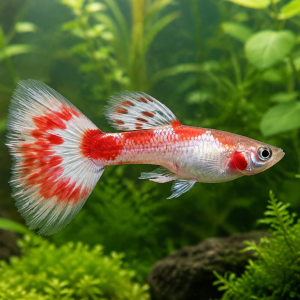
Color, size and fin shape vary with strain, age and each individual fish.
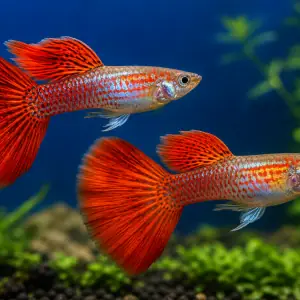
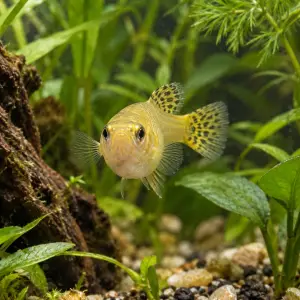
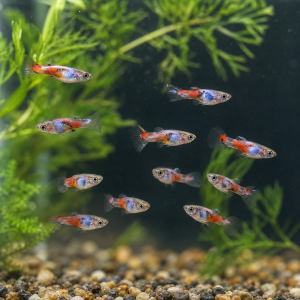
Editorial illustrations for context; they do not depict HiGuppy's exact facility or current fish stock.