Guppy Care Article
Guppy Water Parameters Guide: Stable Numbers for Healthier Fish
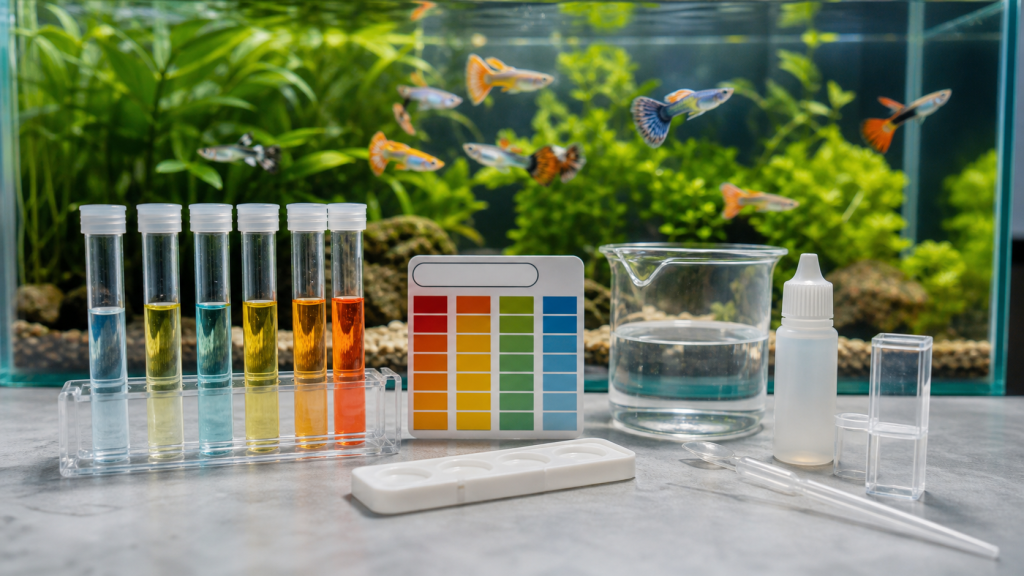
Quick answer: Most guppy tanks do best when water stays stable at 74-78°F (23-26°C), pH around 7.0-7.4, ammonia 0 ppm, nitrite 0 ppm, and nitrate below 20 ppm. Chasing a perfect number every day causes more stress than keeping safe, consistent numbers week after week.
Guppies are often called beginner fish, but healthy guppies still depend on clean and stable water. At HiGuppy, we see the same pattern repeatedly: tanks that hold stable water parameters produce active fish, stronger color, better appetite, and fewer disease issues. Tanks with constant swings in temperature, pH, or nitrate usually struggle even when fish food and equipment are good.
Because guppies are live animals, shipping and acclimation also matter. If your source water is very different from the seller’s water, slow adjustment is essential. For a full care overview, read How to Care for Guppies. For equipment basics, see Best Tank Setup for Guppies. If fish are struggling, troubleshoot with Why Are My Guppies Dying. Also review our Guppy Care Guide and Acclimation Guide before releasing fish into your display tank.
Guppy Water Parameters Reference Table
| Parameter | Ideal Range | Acceptable Range | Action if Out of Range |
|---|---|---|---|
| Temperature | 74-78°F (23-26°C) | 72-82°F (22-28°C) | Check heater and thermometer; avoid swings greater than 2°F per day. |
| pH | 7.0-7.4 | 6.8-7.8 | Do not force rapid pH shifts; focus on stability and buffering. |
| GH (general hardness) | 8-12 dGH | 6-15 dGH | If too soft, remineralize gradually with fish-safe minerals. |
| KH (carbonate hardness) | 4-8 dKH | 3-10 dKH | Low KH can cause pH crash; improve buffering before fish stress appears. |
| Ammonia (NH3/NH4) | 0 ppm | 0 ppm | Immediate partial water change; reduce feeding and check cycle status. |
| Nitrite (NO2) | 0 ppm | 0 ppm | Same emergency response as ammonia; add aeration and monitor daily. |
| Nitrate (NO3) | < 20 ppm | < 40 ppm | Increase water changes, reduce feeding, improve plant growth and cleanup. |
Temperature Stability
Keep daily temperature movement small. Guppies tolerate a range, but sudden shifts are stressful and can trigger disease.
Mineral Support
Guppies are livebearers and generally do better with moderate mineral content than in very soft, unstable water.
Nitrogen Safety
Ammonia and nitrite should always be zero. Nitrate is manageable but must be controlled with routine maintenance.
Temperature: Stable Heat Matters More Than Constant Adjustment
Guppies can survive in a broad temperature range, but thriving is different from surviving. Most home aquariums perform best around 74-78°F. At this range, guppies generally show good appetite, steady activity, and lower stress. Lower temperatures can slow metabolism and growth, while very warm water pushes metabolism higher and can shorten lifespan if maintained too high for too long.
Many keepers accidentally stress fish by making large daily heater changes. A better approach is setting one realistic target and verifying it with a separate thermometer. If your room temperature swings day to night, use a reliable heater and keep the tank away from direct sunlight and air-conditioning drafts.
Warning: Temperature spikes and drops often happen before visible disease signs. If fish start clamping fins, rubbing on objects, or breathing faster, check temperature trend first instead of only dosing medication.
pH and Hardness: Why Guppies Prefer Buffered Water
Most guppies do well in neutral to moderately alkaline water. In practice, a stable pH around 7.0-7.4 is comfortable for many strains. Guppies are adaptable, but adaptation has limits when water changes quickly. Frequent pH correction products can produce unstable conditions and make fish more stressed than slightly imperfect but steady water.
Hardness matters because guppies are livebearers. Very soft water may look fine on day one but often causes long-term issues: weaker immunity, poor breeding performance, and unstable pH due to low buffering. GH and KH testing helps explain problems that basic pH checks miss.
If your tap water is much softer or harder than your fish supplier’s water, acclimate slowly. Shipping live fish is different from shipping dry goods; healthy arrival depends on packing, carrier handling, buyer availability, acclimation, and tank conditions. For arrival-day workflow, follow the full Acclimation Guide.
Ammonia, Nitrite, and Nitrate: Core Safety Numbers Every Keeper Must Watch
Ammonia and nitrite are immediate danger signals. In a cycled aquarium, both should stay at zero. If either appears, fish are exposed to toxic conditions and the response should be practical: partial water change, less feeding, stronger aeration, and daily retesting until values return to safe levels.
Nitrate is less acutely toxic but still important. Long periods above 20 ppm often correlate with dull color, slower growth, fin wear, and weaker disease resistance. Many tanks can run safely at somewhat higher levels for short periods, but long-term consistency below 20 ppm is a strong target for display and breeding quality. For feeding habits that affect nitrate, see Best Food for Guppies.
Liquid reagent test kits usually provide more reliable readings than strips, especially when diagnosing borderline issues. Strips are convenient for quick checks, but if fish behavior is off, verify with a liquid kit before making major decisions.
New tank note: A clear tank is not always a cycled tank. New systems can show zero nitrate and still spike ammonia later. Test frequently during the first weeks and avoid adding too many fish at once.
Practical Testing Routine for New and Established Tanks
- Test daily in newly set up tanks until ammonia and nitrite remain at zero consistently.
- In established tanks, test at least once per week and whenever fish behavior changes.
- Test before and after large water changes if you are adjusting maintenance routines.
- Retest after adding new fish, changing feeding intensity, or modifying filtration.
- Write values in a simple log so trend changes are visible before emergencies happen.
A testing schedule does not have to be complicated. The goal is pattern recognition. If nitrate rises faster than usual each week, that points to root causes such as increased feeding, reduced plant uptake, heavier stocking, or clogged mechanical filtration.
Fix the Cause, Not Only the Number
Many parameter problems return because keepers only treat test results, not maintenance habits. Example: if nitrate rises to 40 ppm every week, an emergency water change helps today, but the long-term fix may be feeding less, increasing water change volume, adding live plants, or reducing stock density. Sustainable routines keep fish healthier than one-time corrections.
| Symptom in Tank | Likely Root Cause | Practical Fix |
|---|---|---|
| Nitrate keeps climbing fast | Overfeeding or too many fish for current maintenance | Reduce feed amount, increase weekly water change volume, improve cleanup routine. |
| pH drifting down over weeks | Low KH buffering | Raise KH gradually with buffering media or remineralization strategy. |
| Recurring ammonia traces | Biofilter disruption or overcleaned filter media | Rinse media in tank water, not tap; avoid replacing all media at once. |
| Fish stressed after every water change | Temperature mismatch or abrupt chemistry shift | Match replacement water temperature and perform slower, consistent changes. |
Important for shipped fish: If your local water differs from the seller’s water, acclimate in stages and never pour bag water directly into your display tank. Slow transition protects fish from osmotic shock and contamination risk.
Weekly Water Maintenance Checklist
- Confirm temperature is stable and heater is functioning correctly.
- Test ammonia, nitrite, and nitrate before feeding heavily.
- Perform a 20-30% water change if nitrate trends above 20 ppm.
- Vacuum visible detritus lightly, especially around low-flow zones.
- Rinse filter sponges or floss in removed tank water, not untreated tap water.
- Observe appetite, fin posture, and swimming behavior after maintenance.
This checklist is simple on purpose. Consistent execution creates stable water, and stable water gives guppies the best chance to thrive through growth, breeding, and seasonal weather changes.
Frequently Asked Questions
What pH is best for guppies?
Most guppies do well around neutral to moderately alkaline water, commonly 7.0-7.4. Stable pH is usually more important than chasing one exact decimal point.
How often should I test guppy water?
Test frequently in new tanks. For established tanks, weekly testing is a strong baseline, with extra checks after adding fish, changing feeding levels, or noticing stress behavior.
Can guppies live in soft water?
They can adapt to some softer setups, but very soft and unstable water often causes long-term problems for livebearers. Moderate mineral support usually improves stability and health.
What causes pH crashes in guppy tanks?
Low KH buffering is a common reason. As acids build from biological activity, pH can drift down quickly if buffering capacity is weak.
How do I lower nitrate without chemical shortcuts?
Use regular water changes, reduce overfeeding, improve mechanical cleanup, and include live plants where possible. These routine changes are usually more reliable than quick fixes.
Do guppies need a heater?
In many homes, yes. A heater helps prevent daily temperature swings and keeps fish stable during night-time or weather-related drops.
Why do shipped guppies look pale at arrival?
Temporary paling is common after shipping stress. Keep lights low, acclimate slowly, and give fish 24-48 hours to settle before judging final color.
Can I use tap water for guppy tanks?
Usually yes, if dechlorinated and within safe parameter ranges. Always test your source water and adjust gradually instead of making abrupt chemistry changes.
Need healthy guppies from a US-based seller? Visit the HiGuppy shop for current listings, and contact support if you want help matching fish to your tank conditions before ordering.
Use the Water Parameters Guide as a companion when checking your tank before adding fish.
Real HiGuppy photographs
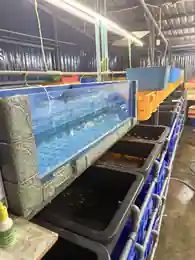
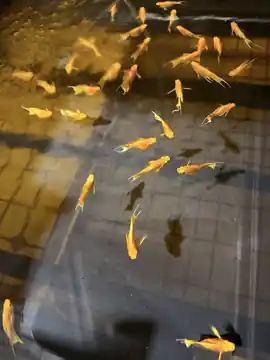
Inside the facility behind our guppy guides
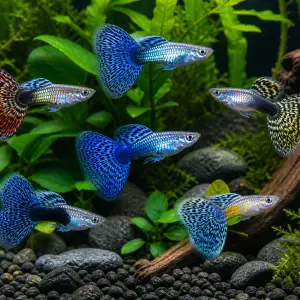
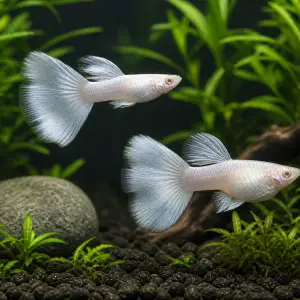
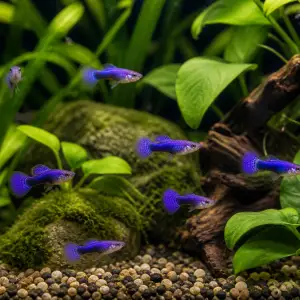
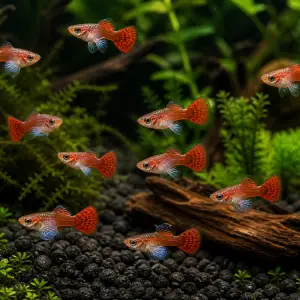
These photographs show real HiGuppy holding, breeding and observation work. They document our facility and fish stock; they are not presented as the exact individual fish or strain discussed on every page.